TL;DR
Your senior dog sniffs breakfast and walks away: record when the change began, the exact food and amount offered, what was actually eaten, and any difficulty picking up, chewing, or swallowing food. Include treats, supplements, medicines, and recent package or recipe changes, then contact your veterinary clinic promptly about the change rather than waiting to complete a log. These notes give you something concrete to share without guessing at a cause.
Senior dog not eating: start with when it changed
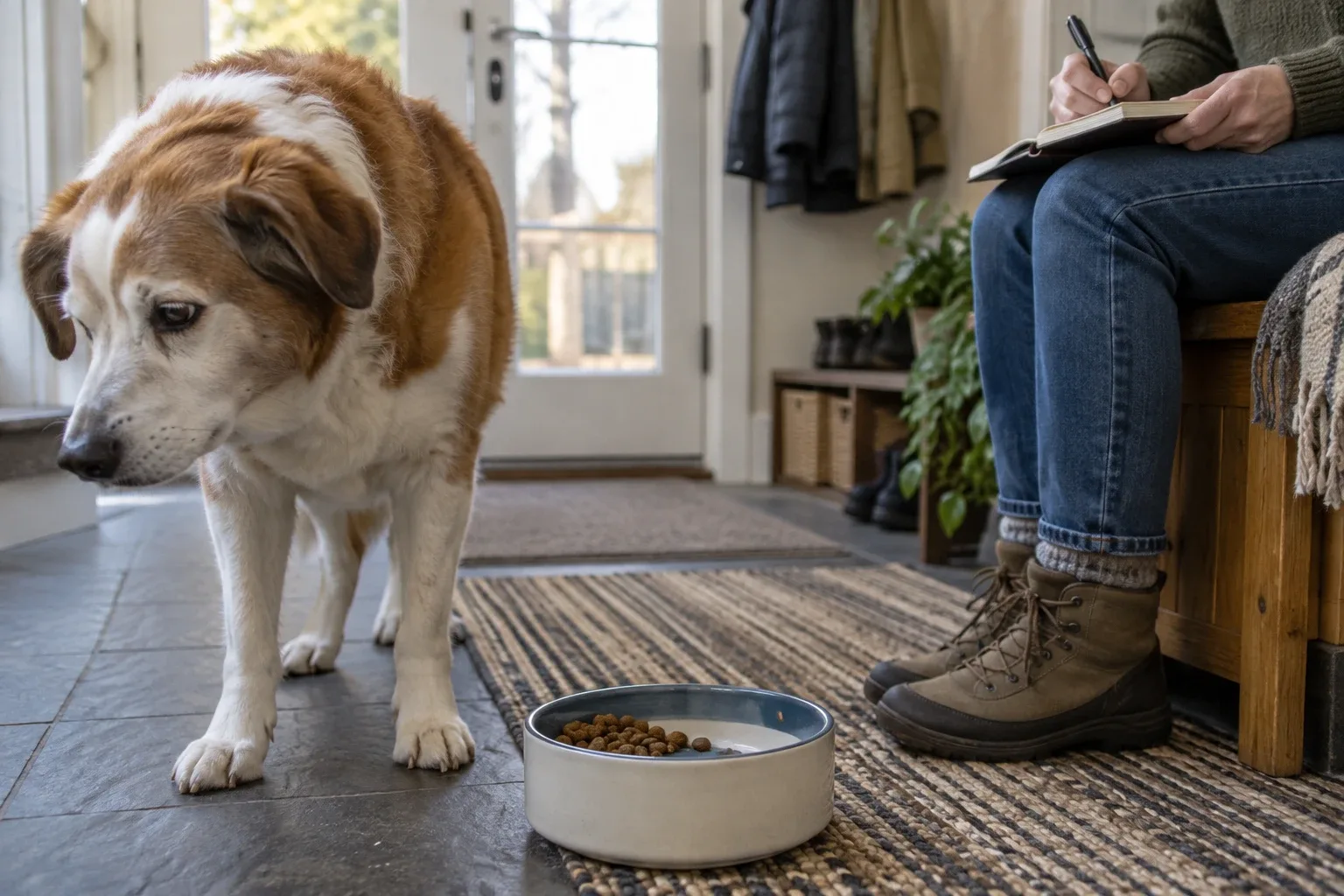
Start with the last meal you are confident your dog ate normally. Then write down the first meal that seemed different, including the date and approximate time. If you are unsure, say so; an honest gap is more useful than a guessed timeline.
Describe what happened instead of assigning a reason:
- “Approached the bowl, sniffed, and left” rather than “being picky.”
- “Picked up food, dropped it, and stopped” rather than “doesn't like kibble.”
- “Ate the topping and left the food underneath” rather than “ate dinner.”
Add anything that changed around that time: a newly opened bag, a different recipe, another person feeding, a moved bowl, or a change in the usual schedule. Record the timing without deciding that the change caused the refusal.
Keep the notes somewhere everyone who feeds your dog can access. Ask each person to record what they offered, including snacks, so the account does not depend on whoever last saw the bowl.
Measure what went into the dog, not just the bowl
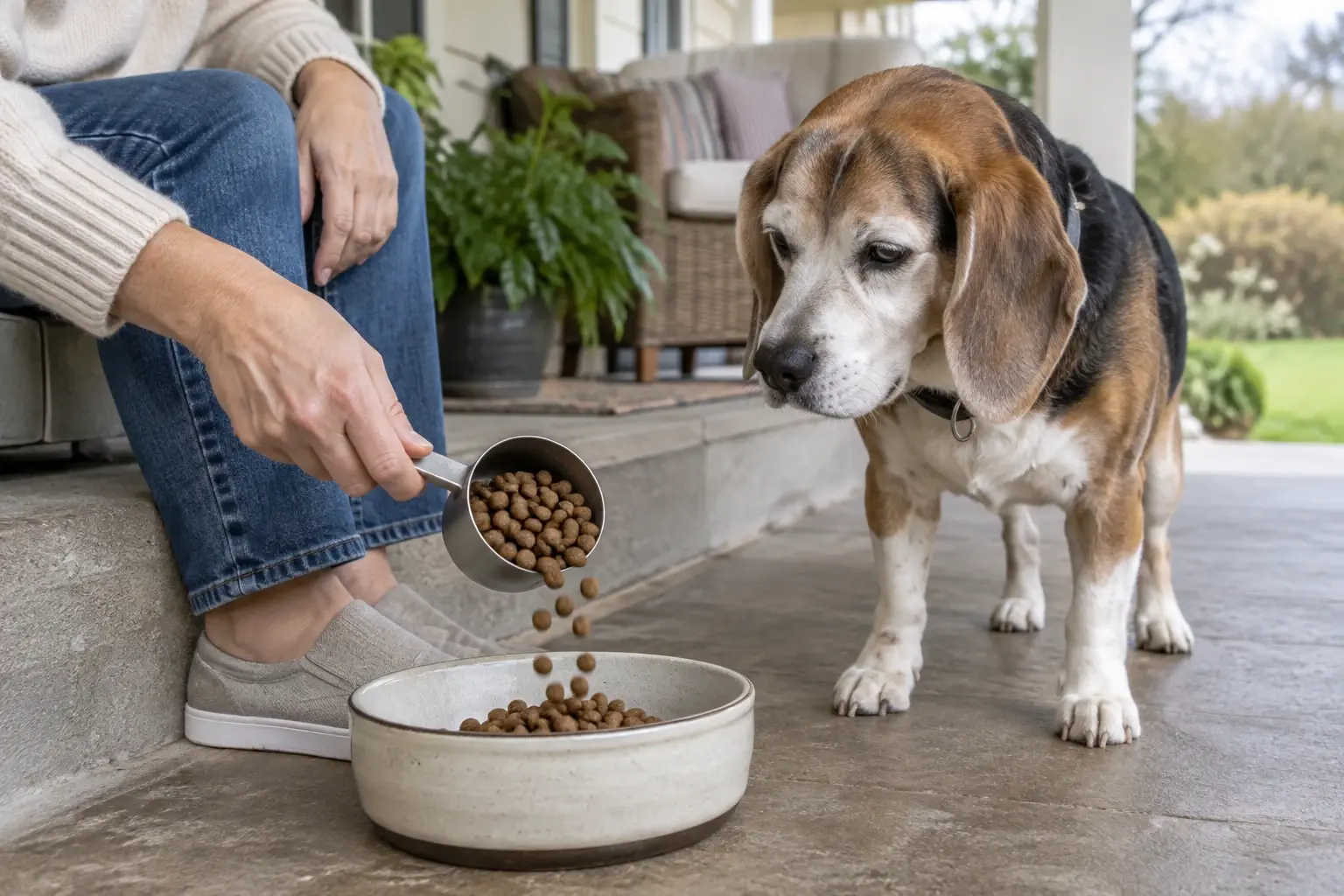
Use the same measuring method for the amount offered and the amount left. Write “cups,” “grams,” or the stated portion of a can beside each entry. “One scoop” is unclear unless you also identify the scoop and its measure.
Copy this meal entry into a notebook or phone:
- Date and time:
- Exact food: Brand, recipe, and dry, wet, or homemade preparation.
- Amount offered and unit:
- Amount remaining in the same unit:
- Amount eaten: Offered amount minus leftovers, noting spills or uncertainty.
- Preparation: Served as packaged, mixed with water, or combined with another food.
- Extras offered and eaten: Treats, chews, table food, toppers, and supplements.
- What happened at the bowl:
Separate foods when you cannot tell how much of each was eaten. Write “ate some wet food; dry-food intake uncertain” instead of treating the whole mixed bowl as consumed. In a home with several dogs, note whether another animal could have reached the leftovers.
If weight is also a concern, bring that observation alongside the intake log. The distinction between food intake, calorie boosters, and muscle-support claims is covered in Senior Dog Supplements for Weight Gain: What Actually Helps; keep those buying decisions separate from documenting today's meals.
Watch picking up, chewing, and swallowing separately
A dog may approach food willingly yet have difficulty picking it up, chewing, or swallowing it. That is different from walking past the bowl without interest, and the distinction is useful to report. (vcahospitals.com)
Observe an ordinary meal without repeatedly presenting food to test your dog. Record whether your dog:
- Reaches the bowl and picks up food as usual.
- Drops pieces or changes the way they chew.
- Pauses, pulls away, or leaves after trying to eat.
- Coughs, gags, or makes repeated swallowing movements.
- Allows food to fall out or brings it back up afterward.
Describe what you see without labeling it as a dental or swallowing diagnosis. If a brief video can be taken without interfering with your dog or delaying care, keep it with the meal notes.
Do not force the mouth open to investigate. For a separate routine focused on comfortable handling and visible observations, Senior Dog Dental Care: A Simple Weekly Worksheet explains how to keep mouth checks gentle. New eating difficulty belongs in your clinic update even if you cannot see anything unusual.
Keep a record of food and label changes
Photograph the packages you are actually using, including the product name, recipe, ingredient list, feeding directions, lot information, and best-by date. If the previous package is available, save those details too.
Make a short comparison list:
- Previous routine: Exact food, usual portion, preparation, and extras.
- Current routine: What changed and when it was first offered.
- Package differences: Recipe wording, ingredients, serving instructions, or preparation directions.
- Storage: When the package was opened and how it has been kept.
The Senior Dog Food for Sensitive Stomach: Label Guide expands on comparing recipes and package transition directions. A label comparison documents differences; it does not establish why your dog stopped eating.
List supplements and medicines separately, with their exact names, labeled serving or prescription instructions, amount offered, and what you know was consumed. For supplements, retain each declared active ingredient and its amount per serving. If quantities are hidden in a proprietary blend, record that limitation rather than estimating them.
When a supplement was mixed into an unfinished meal, mark the consumed amount as uncertain. Ask the clinic for instructions about any medicine your dog may have missed rather than guessing whether to repeat it.
Contact the clinic with a short, usable summary
Lead with the change: “My senior dog last ate normally at ____. Since then, I offered ____ and estimate they ate ____. I also noticed ____.” Add any vomiting, stool changes, altered drinking, reduced activity, or apparent discomfort.
Seek emergency veterinary care if not eating accompanies trouble breathing, collapse, or marked weakness; do not delay to finish the worksheet. (medvet.com) Supplements do not replace diagnosis or treatment, and new or sudden symptoms need prompt veterinary care.
Ask what to offer next, what to do about scheduled medicines, and which changes should trigger another call. Write down those instructions beside your observations.
Starting this record at the first change is a practical form of early attention. It keeps your dog's comfort central and gives you a more useful next step than spending money on a succession of foods or supplements without a clear plan.
FAQ
What if my dog eats treats but refuses meals?
Record both. Name each treat and the amount eaten, then document the regular food separately. Tell the clinic what your dog accepts and how they manage it without assuming that accepting a treat explains the meal refusal.
Should I wait until I have a full day's record?
No. Contact the clinic with what you already know. Leave uncertain fields marked “unknown” and continue recording while following their instructions.
What if I already threw away the old food bag?
Use a saved photo, receipt, or order history to identify it. Mark any details you cannot recover as unknown. Keep the current package and begin recording from the next feeding opportunity.
For individual health questions, your veterinarian remains the best partner.