TL;DR
Your dog still brings you the leash, but you’re wondering whether it’s time for senior care: a dog is considered senior as they enter the later stage of their expected lifespan, with larger dogs generally reaching that stage earlier than smaller dogs. There is no single birthday or dog-to-human age formula that fits every dog. Start reviewing daily care while your dog is comfortable and active, using size, health history, and changes in familiar routines to guide the next steps.
When is a dog considered senior? Size gives context
“Senior” describes a life stage, not a diagnosis. Dogs of the same calendar age can be at different points in their lives because size, breed, and individual health affect how they age.
Use these comparisons as context:
- Small dogs: They generally enter their senior stage later than larger dogs. Continued enthusiasm for play does not remove the need to review teeth, diet, and comfort.
- Medium dogs: Their transition needs individual context rather than automatically borrowing an age cutoff from either end of the size range.
- Large and giant dogs: They generally reach their senior stage earlier. It makes sense to review access, footing, and daily activity sooner.
- Dogs with an uncertain age: Adoption records, health history, and current function are more useful than trying to assign a precise birthday from behavior alone.
A dog can be senior and still enjoy walks, games, and learning. The designation is a reminder to maintain what works well. Preventive care is good for the dog and can be the economical choice for the owner: planning routine care and making useful adjustments early can help avoid some larger expenses later, though it cannot guarantee freedom from illness.
Use familiar routines to establish a baseline
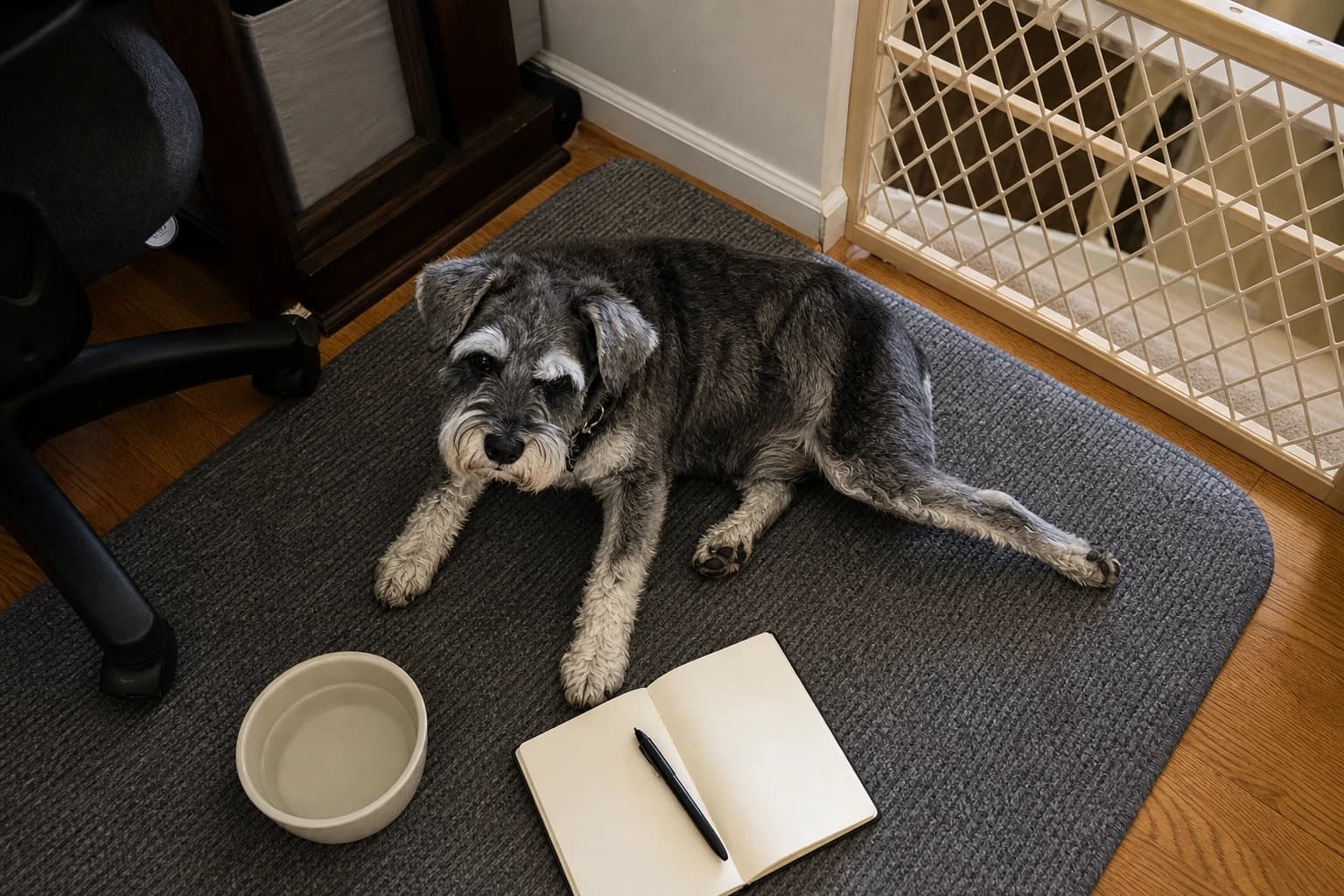
The most useful question after “Is my dog senior?” is “What does a comfortable day look like for this dog?” Dogs cannot tell us that chewing feels awkward or that getting up takes more effort. Familiar activities give you something concrete to compare.
Over three ordinary days, record a few brief observations:
- Getting up: Does your dog rise smoothly after resting, or pause before putting weight through the back legs?
- Walking: Is the usual route still appealing? Note hesitation, slower sections, or an earlier wish to turn home.
- Eating: Is chewing slower, is food being dropped, or does your dog approach the bowl and then leave?
- Finding their way: Does your dog follow the familiar bedtime or bathroom routine, or seem to lose track?
- Settling: Can your dog get comfortable in their usual resting place?
Describe what happened rather than interpreting it. “Paused at the bottom stair after a nap” is more useful than “getting old.” A short video can preserve a movement that is difficult to describe.
Arrange an assessment for new or persistent changes, seek prompt veterinary care for sudden or severe symptoms, and remember that supplements do not replace diagnosis or treatment.
Adjust movement before everyday access becomes difficult
Keep enjoyable movement in the routine, with room to adjust the pace and route. A senior label alone is no reason to end walks or play.
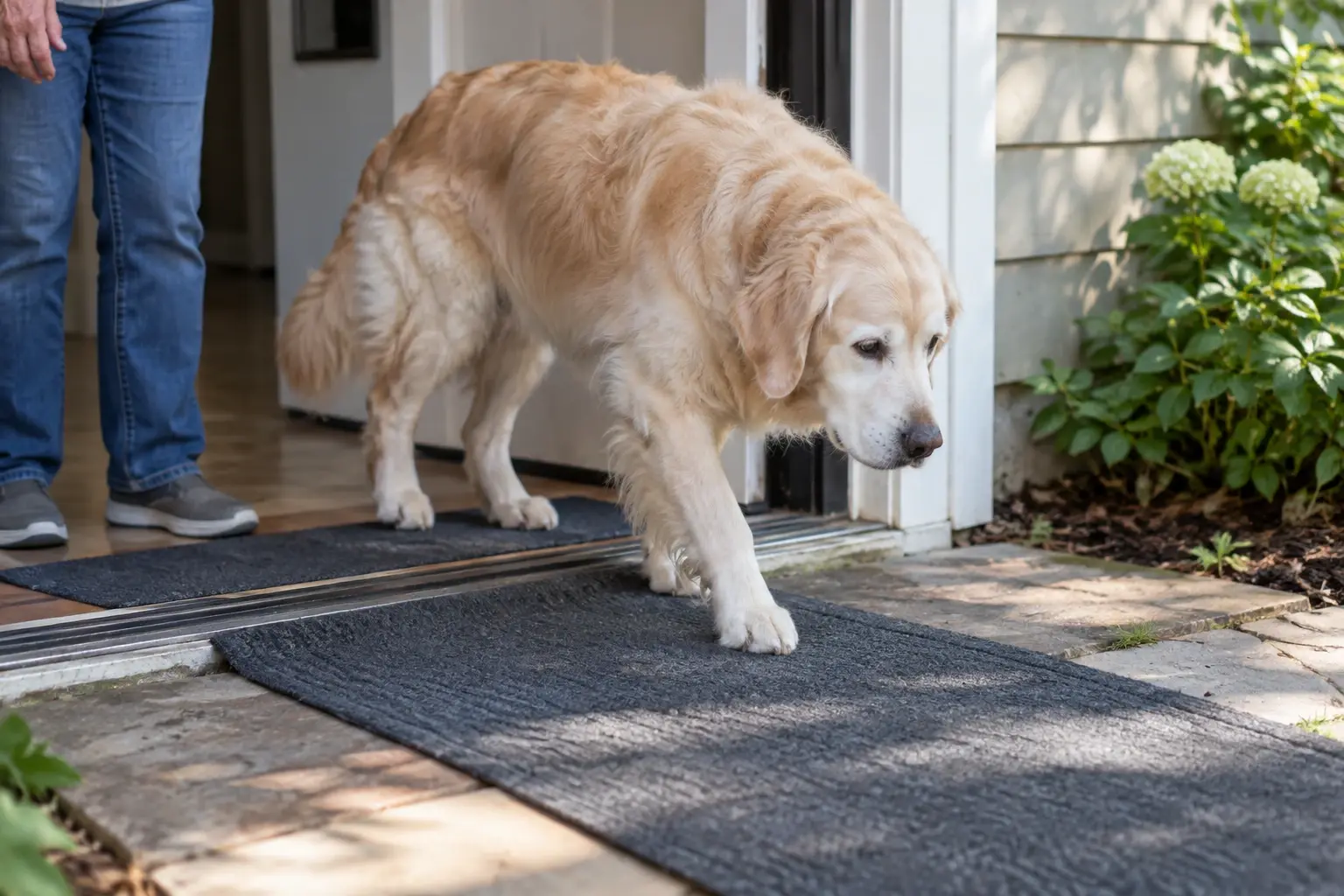
Watch comfort during the activity and after rest. If the usual outing has become demanding, choose an easier route and allow pauses instead of urging your dog to finish. Add traction where paws slip and make access to favorite resting places easier without encouraging difficult jumps.
For outings that exceed a dog’s comfortable walking distance, a stroller may help them remain part of family activities. The senior dog stroller buying checklist explains practical choices such as entry height, fit, brakes, and stability. Buying equipment should follow an identified need; a senior birthday does not create a shopping list.
Review meals and teeth before changing food
Reaching the senior stage is a reason to review feeding, but it does not automatically mean the current food needs replacing. Consider body condition, appetite, comfortable chewing, digestion, and whether the diet is complete for your dog’s needs.
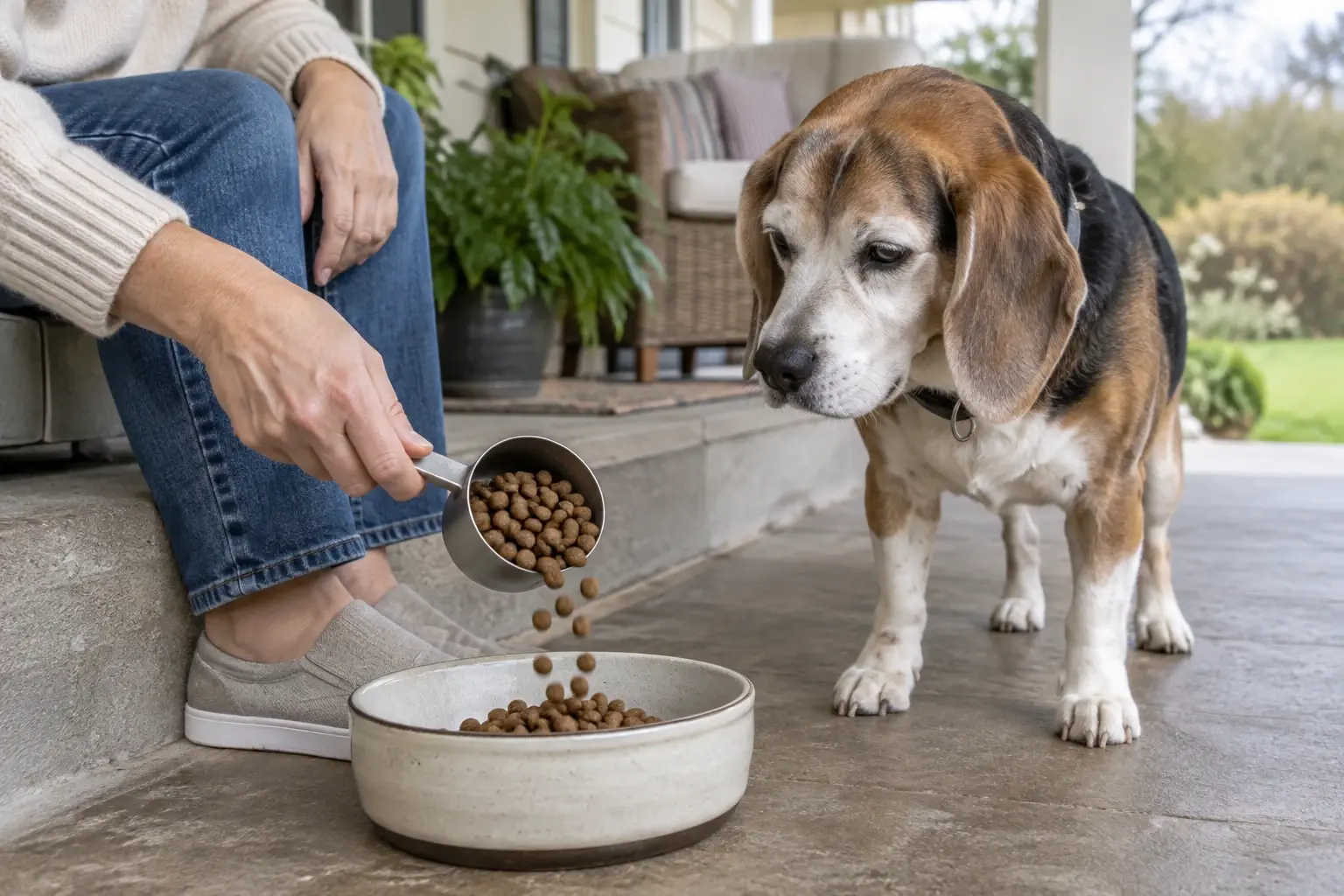
Keep portions consistent enough to notice changes. If meals become difficult, separate the questions: is your dog struggling with the texture, showing less interest in food, or having trouble chewing? Those observations help guide a useful discussion rather than an unnecessary series of food changes.
For smaller dogs, the small-breed senior food guide expands on manageable bite size, complete-food statements, and measurable portions.
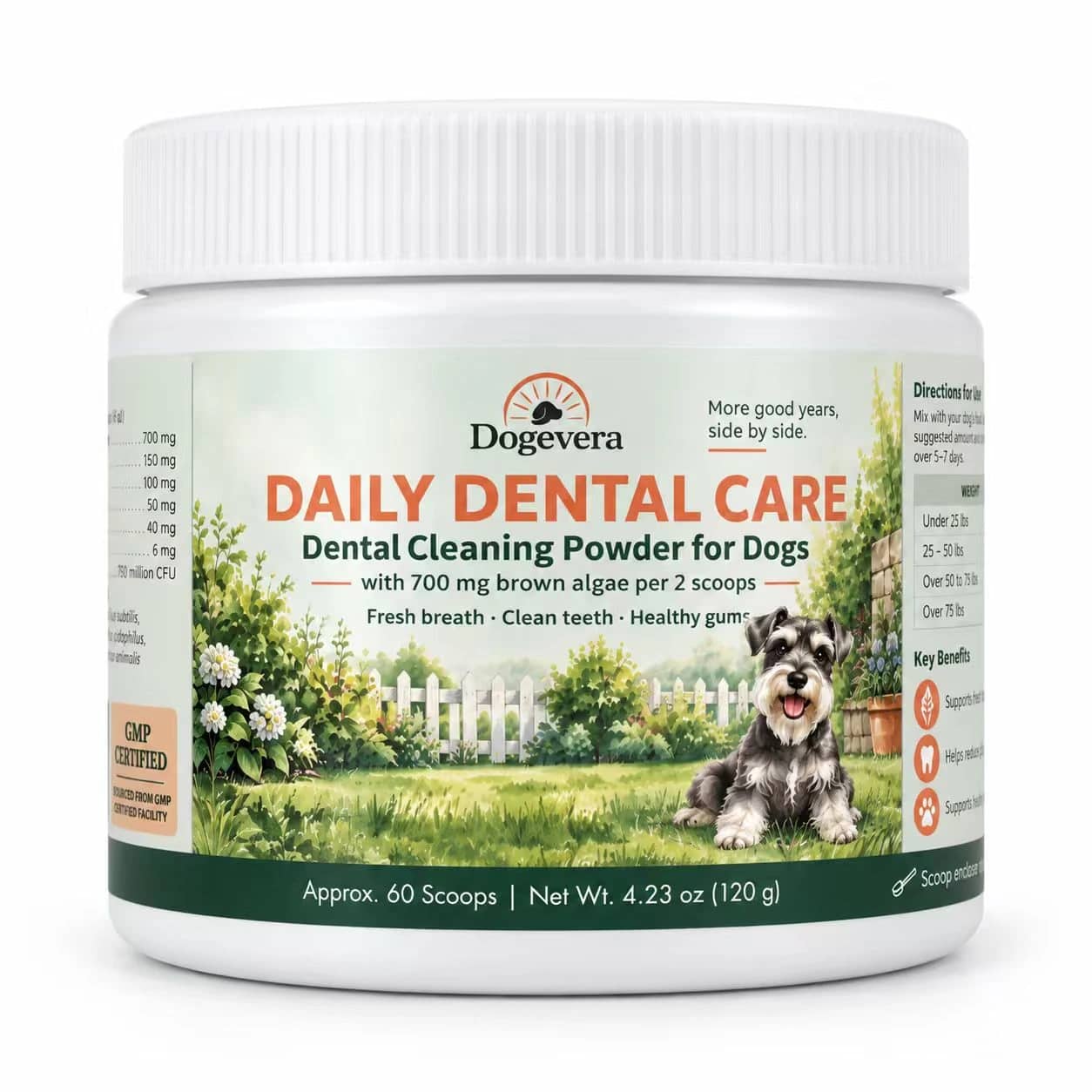
Teeth deserve their own routine even when appetite looks normal. Continue tolerated home care and record changes in chewing or mouth comfort. The senior dog dental care worksheet helps organize brushing practice and observations without treating a softer meal as dental care.
Keep familiar routines and gentle mental activity
Support your dog’s brain by keeping daily life understandable and interesting. Offer familiar games, comfortable sniffing opportunities, and short training sessions your dog enjoys. Let participation guide the activity rather than insisting on completion.
If your dog loses track of a familiar routine, write down the setting and what happened. Difficulty responding can have several explanations, including changes in hearing, vision, comfort, or health; age alone does not identify the cause.
Begin these habits while daily life is going well. Keep essential items easy to find and avoid unnecessary changes to familiar routes through the home. A predictable day still leaves room for enjoyable choices, such as choosing where to sniff or which toy to bring.
FAQ
Should I wait for signs of aging before starting senior care?
No. Start by reviewing the routine and establishing a baseline while your dog is doing well. That makes later changes easier to recognize and lets you spread practical improvements across normal household planning.
Does being senior mean my dog needs supplements?
No. Age alone does not identify a supplement need. Begin with diet, comfortable movement, dental care, and any existing care plan. Consider an additional product only when it has a clear purpose relevant to your dog.
Can a lively dog still be considered senior?
Yes. Enthusiasm and senior status can coexist. Preserve the activities your dog enjoys while watching comfort, recovery, appetite, and familiar behavior. The goal is to support those abilities while they are still working well.
For individual health questions, your veterinarian remains the best partner.