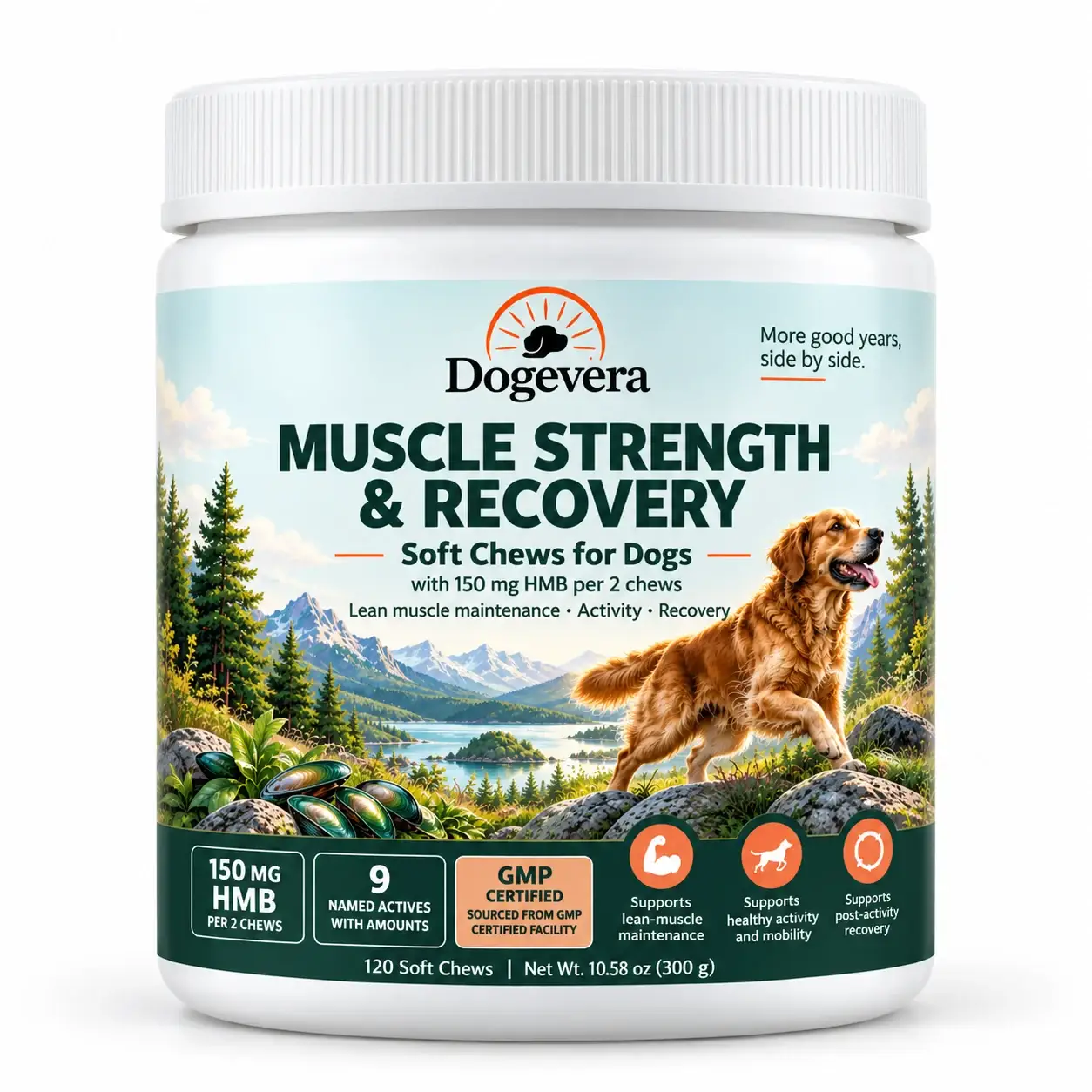
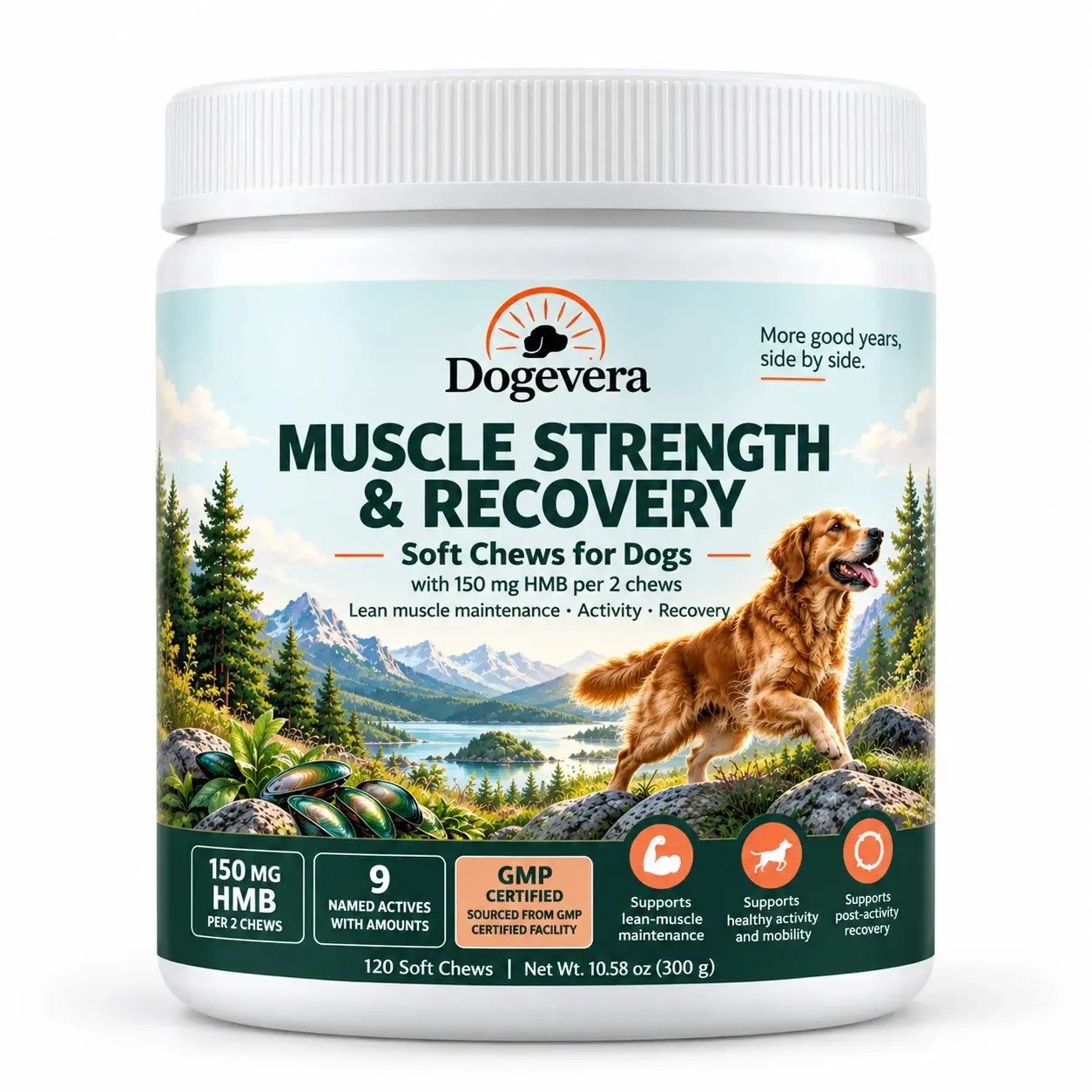
We sell this powder. It was not the product tested in the studies discussed here.
TL;DR
If your senior dog’s back legs seem weak, make slippery or difficult routes safer and write down what changes during ordinary movement. Note when the problem began and what your dog can still do; new or sudden weakness needs prompt professional care, and a veterinarian can assess what is causing it.
What back leg weakness can look like
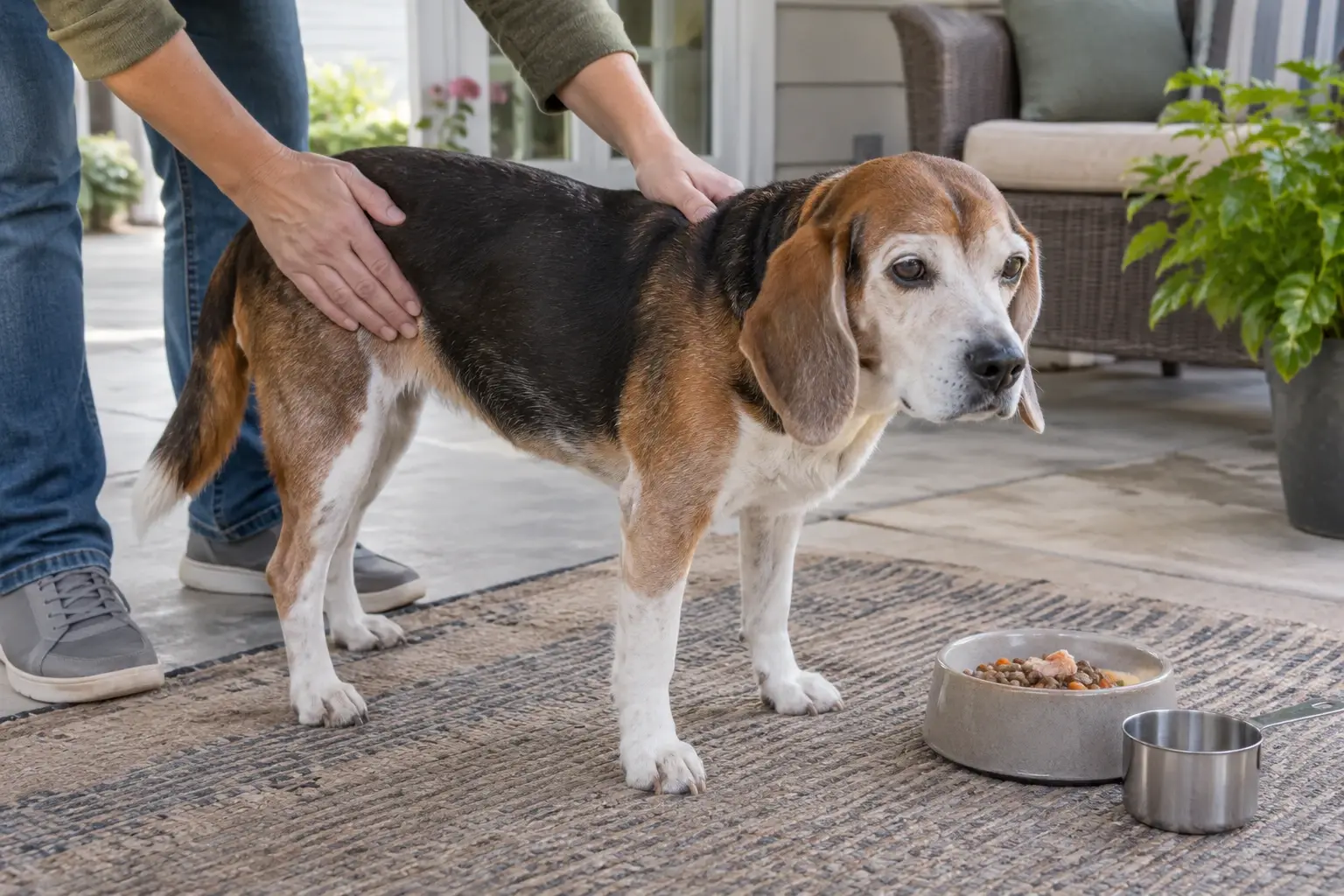
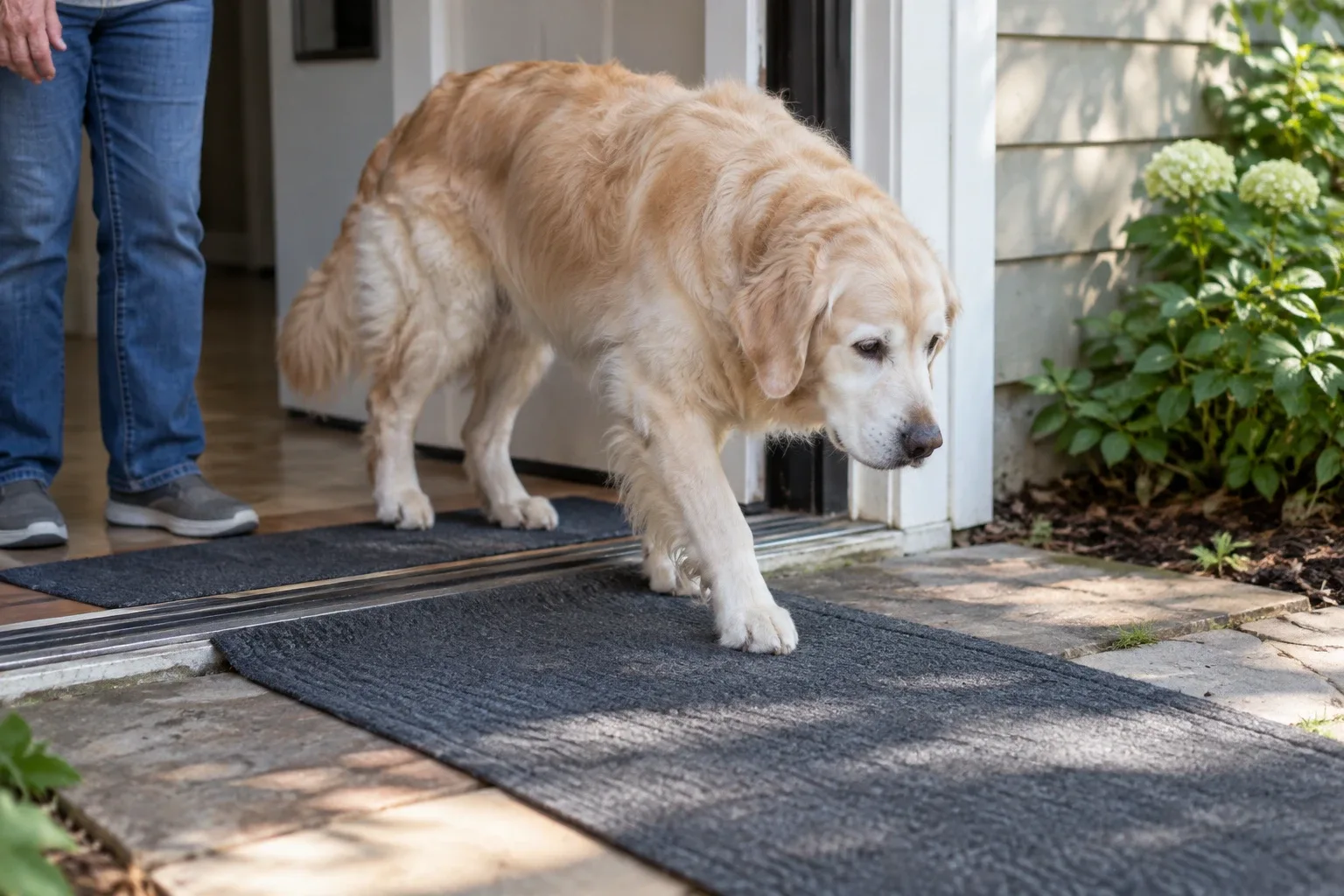
“Weakness” is an owner’s description, not a diagnosis. Your dog may take longer to rise, hesitate at a doorway, wobble on a turn, or struggle to step into the car. You might also notice shorter walks, difficulty on stairs, or a change in how your dog sits or lies down. A gradual change can be easy to miss because it blends into the daily routine.
Watch for patterns rather than trying to decide the cause at home. Is one side affected more? Does movement look different after rest or later in a walk? Does your dog seem willing to move but have trouble, or avoid an activity altogether? These details help describe the change without assuming it is simply old age or a nutritional deficiency.
Shaking while standing and visible thinning of the back legs are different observations that may be useful to describe separately. See the guides to back-leg shaking when standing and back legs that are getting skinny for those specific changes.
A three-day movement checklist
For three days, observe ordinary activities without asking your dog to repeat a difficult movement for a test. Jot down a short note each time you notice a change.
- Getting up: Does your dog rise smoothly, pause, or need extra attempts?
- Walking: Do the back feet seem to scuff, cross, or take shorter steps? Does your dog slow down or turn differently?
- Surfaces: Is movement less confident on smooth floors, grass, or uneven ground?
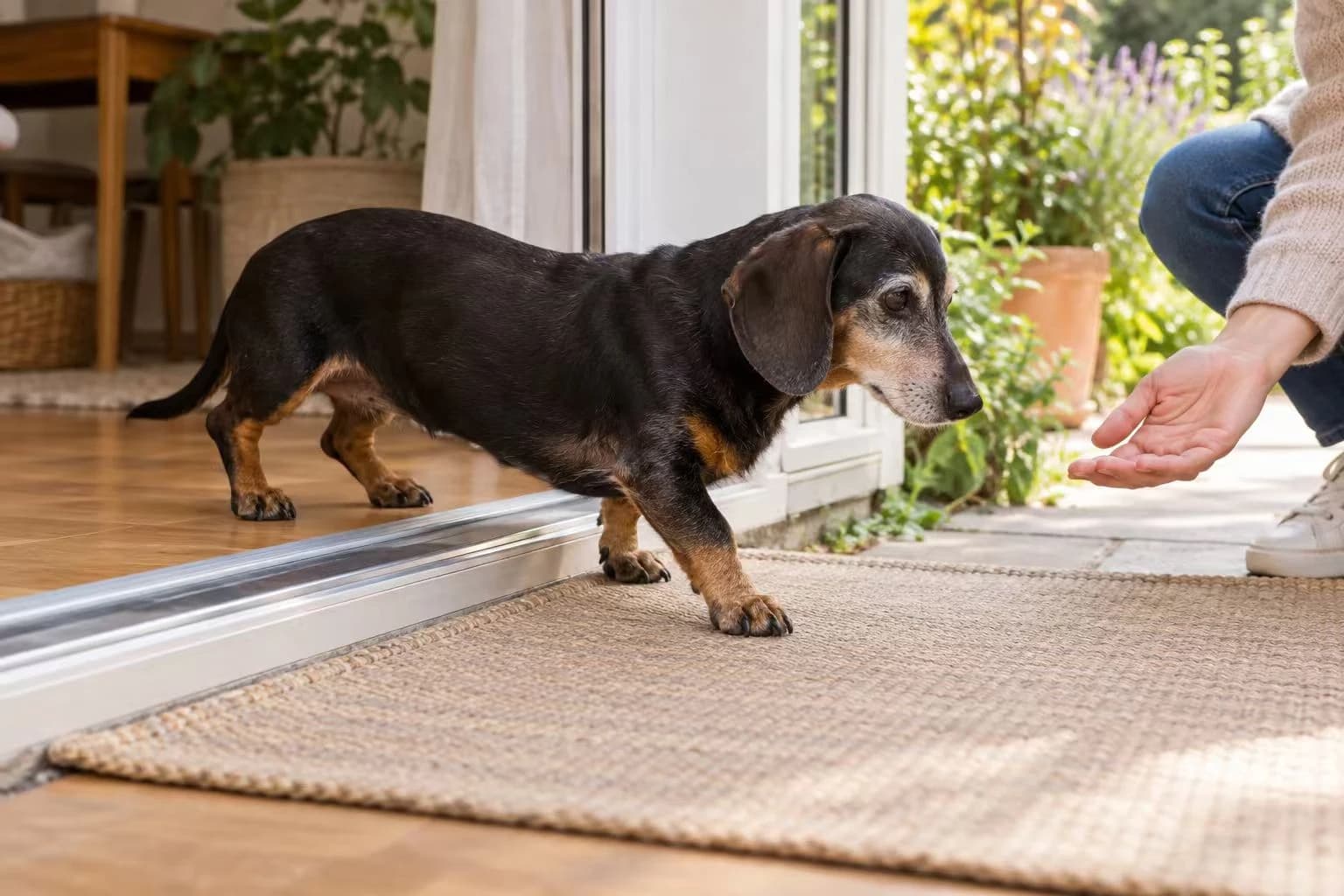
- Transitions: Does your dog hesitate at a threshold, curb, stair, or vehicle entrance?
- After rest and activity: Does the pattern differ after lying down or after a usual walk?
- Comfort and routine: Has your dog stopped choosing a familiar walk or resting place, or changed how they sit or lie down?
Record what you saw, where it happened, and whether it was new, occasional, or becoming more noticeable. A brief video of a naturally occurring movement may also help explain what you mean during an appointment. Do not provoke a stumble or push your dog to keep going just to capture one.
Make the route easier before changing the routine
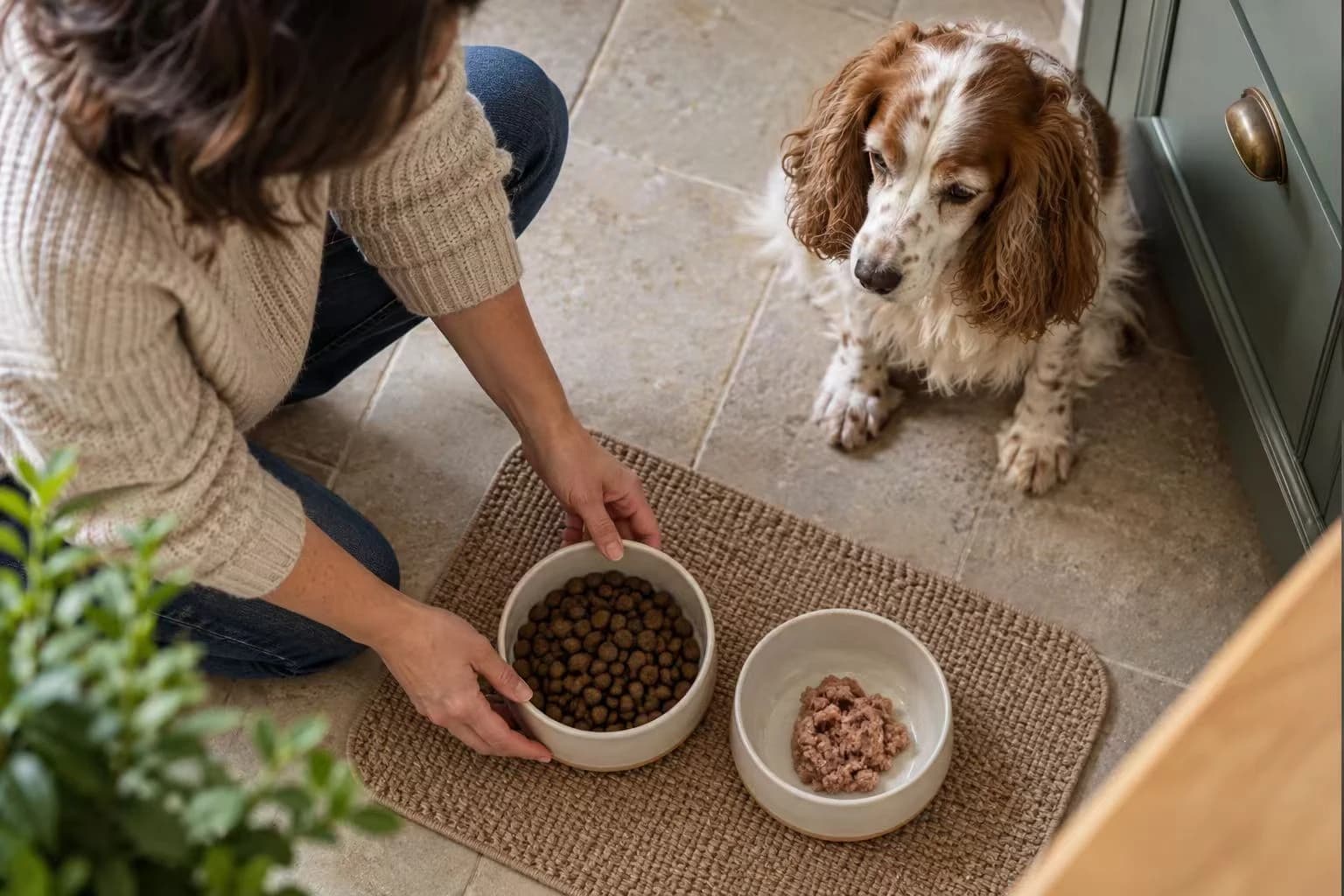
Start with the places your dog uses most. Secure loose rugs, clear clutter, and add traction where smooth flooring makes standing or turning difficult. Keep food, water, and a comfortable resting spot easy to reach. Use a leash on slippery or uneven routes if it helps you guide your dog calmly.
Avoid making stairs, jumps, or long walks a test of ability. If your dog has trouble getting into a car or reaching a favorite place, consider whether a ramp or other access aid fits that specific route. Introduce any new surface or equipment gradually, and stop if your dog resists or seems less steady. For a wider room-by-room approach, see how to make a home senior-dog friendly.
Match support to the task
A support product is useful only if it fits the movement that is hard. A harness may help a person steady a dog during a transition, while a ramp may reduce the need to climb into a vehicle. Neither should be used to force a dog through a movement they cannot manage. Check that the item fits, stays in place, and lets the dog move comfortably; if using it makes movement harder, stop and reassess.
If you are considering a supplement as part of a broader muscle-support plan, it should not take the place of identifying why your dog’s movement has changed. Dogevera’s Muscle Strength & Recovery Soft Chews for Dogs are one product to consider for muscle support, not a diagnosis or treatment for back-leg weakness. Compare the active ingredients and amounts per serving in plain text, rather than relying on a blend name alone.
Prepare for an assessment
Bring your movement notes and any videos, and describe the change in everyday terms. Useful questions include:
- What might explain this change in my dog’s movement?
- Which activities should I adapt while we assess it?
- Is any support equipment appropriate for the difficult task?
- What changes should prompt a follow-up or faster care?
The goal is to share a clear picture of what has changed, not to arrive with a home diagnosis. Supplements do not replace diagnosis or treatment; new or sudden symptoms need prompt veterinary care.
FAQ
Should I stop walking my dog?
Do not turn a walk into a test or push through difficulty. Keep movement within what your dog can manage comfortably, and note when the change occurs so you can describe it during an assessment.
Is back leg weakness just part of getting older?
Age alone does not explain a particular change. Record what your dog can and cannot do, and arrange an assessment to discuss the pattern and possible causes.
What should I do if the weakness appeared suddenly?
Seek prompt professional care rather than waiting to see whether it passes.
For individual health questions, your veterinarian remains the best partner.