When Your Senior Dog Looks Too Thin
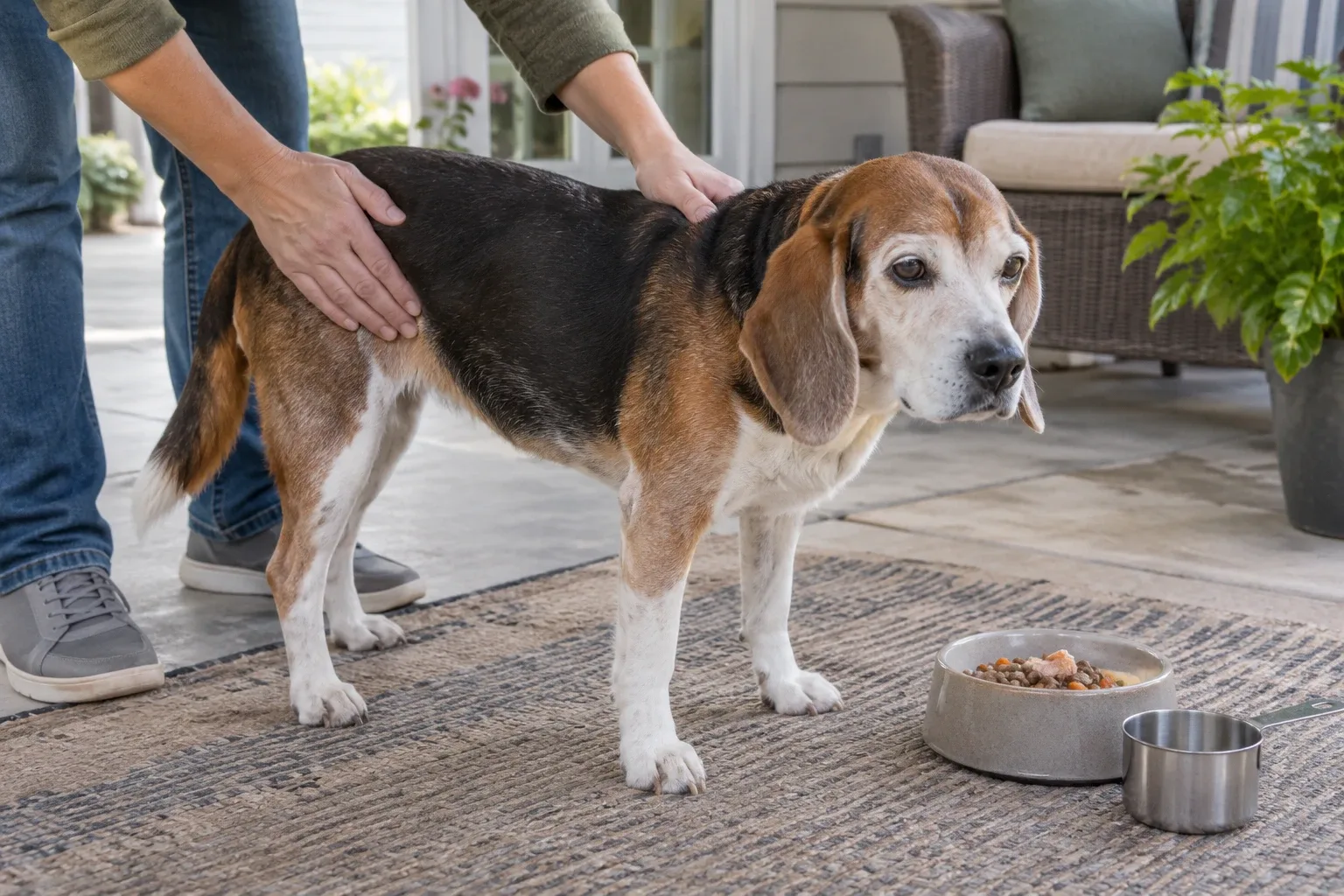
You run a hand along your dog's back and feel the ribs more easily than you used to. Or maybe the hip bones have become more visible, or a harness that fit snugly last year now sits loose. Before you add anything to the food bowl, it helps to figure out what you're actually dealing with: not enough food, a diet that isn't calorie-dense enough, or muscle loss that calories alone won't fix.
This matters because the supplement aisle lumps very different problems under the same "weight gain" label. A product that adds calories is not the same as a product that claims to build muscle, and neither replaces a conversation about why the weight loss started in the first place.
Three Different Problems, Three Different Fixes
It's worth separating these before you shop, because the right product depends on which one applies.
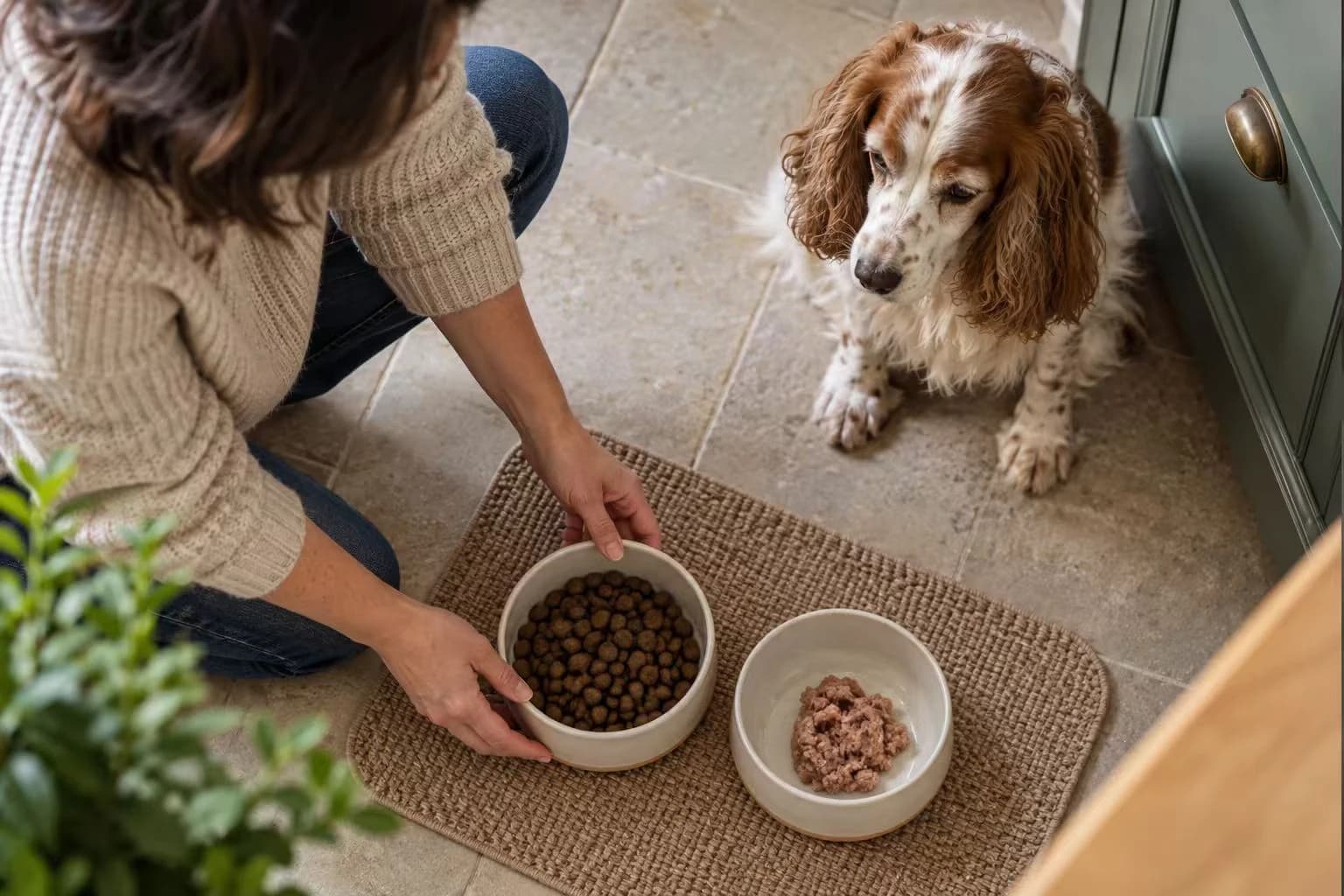
- Not eating enough food overall. The dog is offered a normal portion but leaves food in the bowl, eats slowly, or seems less interested in meals than before. The fix here usually starts with the feeding routine itself, not a supplement.
- Eating normal portions but still losing weight or staying thin. This can point to a diet that isn't calorie-dense enough for the dog's current needs, especially if activity, metabolism, or appetite have shifted with age.
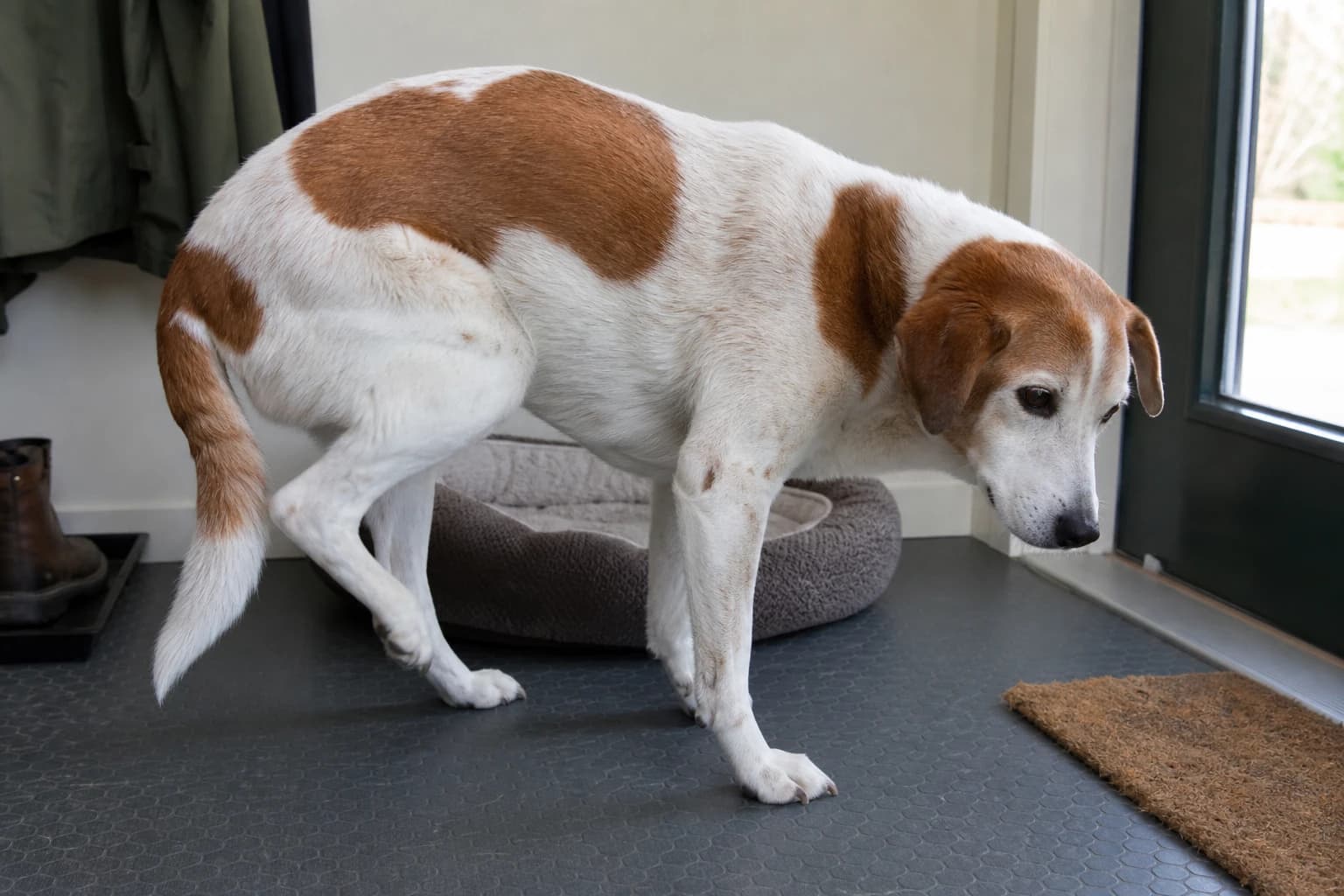
- Visible muscle loss along the spine, hips, or back legs, even with adequate body fat. This is a different pattern from general thinness, and it's one where calorie supplements won't do much. If you're noticing this specifically, Senior Dog Back Legs Look Thinner: What to Do walks through why thinner-looking back legs need their own assessment rather than a general weight-gain approach.
Unexplained weight loss, especially if it's happened over a few weeks rather than gradually, is worth mentioning to your vet regardless of which category it falls into. Supplements and diet changes are not a substitute for finding out why the weight loss started.
Reading a Weight-Gain Supplement Label
Once you know which problem you're addressing, the label itself tells you a lot:
- Calories per serving. A true calorie supplement (sometimes sold as a calorie booster, gel, or paste) should state how many calories it adds per serving. If the label doesn't disclose this, it's hard to know whether it meaningfully changes daily intake.
- Whether it's a complete food or a topper. Some products are formulated as complete and balanced diets meant to replace or make up a meaningful share of daily food. Others are toppers or boosters meant to be added on top of a complete diet. Mixing these up can throw off the overall nutritional balance.
- What the claim actually says. "Supports healthy weight" and "supports muscle mass" are different claims with different kinds of backing. A calorie-dense topper can plausibly add calories. A claim about building or restoring muscle is a separate category, and it deserves its own scrutiny rather than being read as part of the same weight-gain promise.
- Protein content, if muscle is the actual concern. If what you're really trying to address is muscle rather than general thinness, Senior Dog Food High Protein: How to Compare Labels explains how to compare protein disclosures across labels on a consistent basis, which matters more than any single "high protein" claim on its own.
Where Muscle-Gain Claims Fit (and Where They Don't)
It's common to see supplements marketed for "weight gain" sit on the same shelf, or even in the same product line, as supplements marketed for muscle support. These are not interchangeable goals. A dog can gain body weight through fat without gaining muscle, and a thin-looking dog with visible muscle wasting needs a different kind of support than a dog who simply needs more calories.
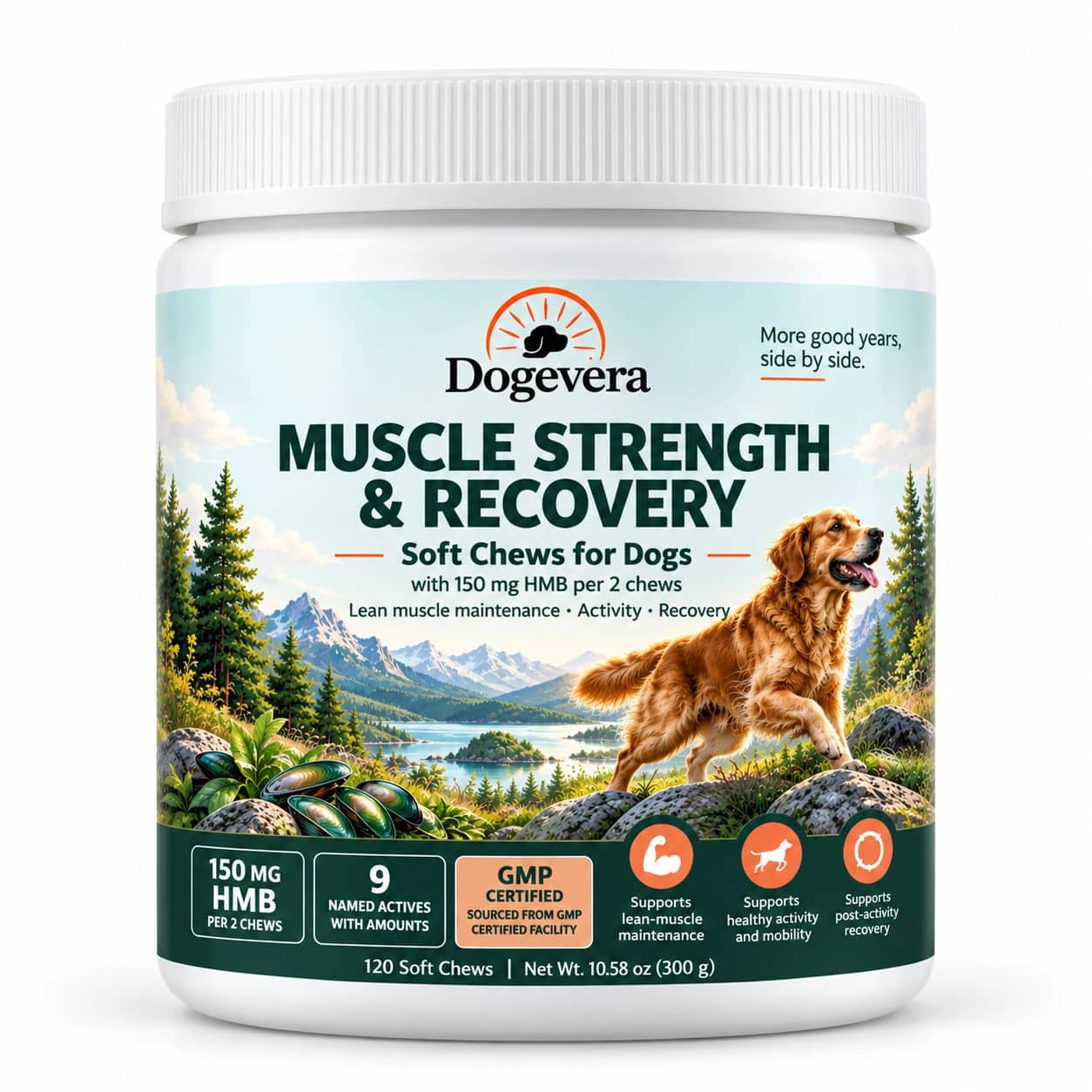
Some ingredients, like HMB, have been studied specifically for their relationship to muscle in dogs, separate from general calorie intake. HMB for Dogs: Promising Muscle Research, Unanswered Questions reviews what that research does and doesn't establish, which is a useful read before assuming any muscle-support product will also solve a weight problem. If your dog's muscle is genuinely a separate concern from general thinness, Best Dog Supplements to Build Muscle: How to Choose compares daily diet, movement, and HMB-style supplements as three distinct approaches, and for dogs whose daily routine already includes a muscle-support chew, Muscle Strength Recovery Soft Chews for Dogs is one option formulated specifically around that goal rather than general weight gain.
A Shopper's Checklist Before You Buy
Before adding a weight-gain product to your cart, it helps to walk through this list:
- Have you identified whether the issue is reduced food intake, an under-calorie-dense diet, or visible muscle loss?
- Does the label state calories per serving, and does that number make sense alongside what your dog already eats?
- Is the product meant to replace part of a meal, or sit on top of a complete diet?
- Does the product make a muscle-specific claim, and if so, is that claim backed by anything beyond marketing language?
- Has the weight loss or thinness been there for a while and stable, or is it new and progressing? New or fast weight loss deserves a vet visit before you try to manage it with food or supplements at home.
- Do you have a way to track whether the change is working, such as a monthly weight check or photos from the same angle?
A Reasonable Next Step
If your dog is simply eating less than before, start by looking at the feeding routine itself: portion size, number of meals, food temperature, and whether a dental or appetite issue might be behind it, rather than reaching for a supplement first. If your dog eats normally but stays thin, a calorie-dense complete diet or a labeled calorie topper is a more direct fix than a general supplement. If what you're actually seeing is muscle loss rather than overall thinness, that's a more specific pattern worth asking your vet about directly, since it can have several different causes.
Whatever you choose, keep an eye on it with something concrete, like a monthly weigh-in or consistent photos, so you're tracking an actual trend rather than a guess.
Supplements and food changes are not a substitute for diagnosis or treatment, and ongoing or unexplained weight loss is worth discussing with your veterinarian.
FAQ
Will a calorie supplement help my senior dog gain muscle? Not on its own. Calorie supplements are generally designed to add energy intake, which can support weight gain, but muscle is a separate physiological target. If muscle loss is the specific concern, look at products and approaches studied for that purpose rather than assuming any weight-gain product covers both.
My dog eats normally but still looks thin. What should I check first? Start with whether the current diet is calorie-dense enough for your dog's needs at this stage of life, and whether the weight loss has been gradual or sudden. A sudden or progressing change is worth a vet visit before changing food or adding supplements.
Are weight-gain and muscle-building supplements the same thing? No. They target different outcomes and are often backed by different kinds of ingredient research. Reading the specific claim on the label, rather than the general category the product is marketed under, is the more reliable way to tell them apart.
For individual health questions, your veterinarian remains the best partner.