Every day, some version of this moment: your older dog leaves part of the kibble, or you notice his back end looks a little less solid than it used to, and you start wondering whether a higher-protein food would help. Before comparing bags, it helps to know what the protein numbers on senior dog food labels actually measure, and how to compare them fairly between products.
If you are also weighing a muscle-support product on top of a new food, the order matters: a complete food that suits your dog comes first, and anything added to it comes second. A brief note: for individual dietary decisions, especially with any diagnosed condition, your veterinarian is the right person to confirm the plan.
What the Protein Line on the Bag Can and Cannot Tell You
The "crude protein" percentage on a US pet food label is a chemically measured quantity, not a measure of how digestible that protein is or how well it fits your dog. Two foods with the same percentage can behave very differently in a real dog, because digestibility varies with ingredients and processing.
Two things researchers have observed that are useful at the bowl:
- Stool quality tracks digestibility. In published canine feeding studies, stool scores improved when protein digestibility was high and fiber digestibility was low, and the nondigestible protein and fiber content of a diet predicted stool quality (source). In plain terms, a highly digestible food tends to produce smaller, firmer stools.
- The individual dog matters. Studies of canine gut microbiota found that each dog's baseline microbiome had the most impact on how their digestion responded to a diet change (source). The same food can suit two senior dogs in the same house differently.
So the percentage is a starting point for comparison, not a verdict on quality.
Compare Protein Disclosures on the Same Basis
The most common comparison mistake is mixing bases. Pet food labels report crude protein "as fed" (with moisture included), while some manufacturer websites and independent analyses report "dry matter" (moisture removed). A wet food at 9% protein as fed and a dry food at 26% as fed can be much closer than they look once both are converted to a dry-matter basis.
A consistent comparison routine:
- Convert to dry matter first. For each food, find (or ask for) the dry-matter protein figure, then compare foods to foods and wet to wet on that same basis.
- Note the calorie density alongside it. Protein expressed as a percentage of calories, rather than of weight, gives a fairer picture of how much of the diet's energy comes from protein.
- Check the named protein sources. A named animal protein listed early in the ingredient list tells you more than a protein percentage alone.
- Confirm it is complete and balanced for the life stage. The AAFCO nutritional adequacy statement tells you whether the food is formulated for adult maintenance or all life stages.
If you want the fuller walkthrough of labels and daily feeding amounts, our guide to choosing senior dog food covers reading a complete label from nutrition to feeding: How to Choose Senior Dog Food.
Check Calories Before Adding Anything
Protein percentage only matters if your dog is eating the right total amount of food. A senior dog eating fewer calories than he needs, whether from a reduced appetite, dental discomfort, or simply being fed less, will not benefit from a protein number on a bag he is not finishing.
A simple one-week check:
- Measure portions with a scale or proper cup, not by eye, for seven days.
- Record what is actually eaten, including leftovers, and any treats or table food.
- Weigh your dog at the start and end of the week on the same scale.
- Watch body condition, not just the scale. If ribs are becoming easier to feel or the back end looks thinner, note that too.
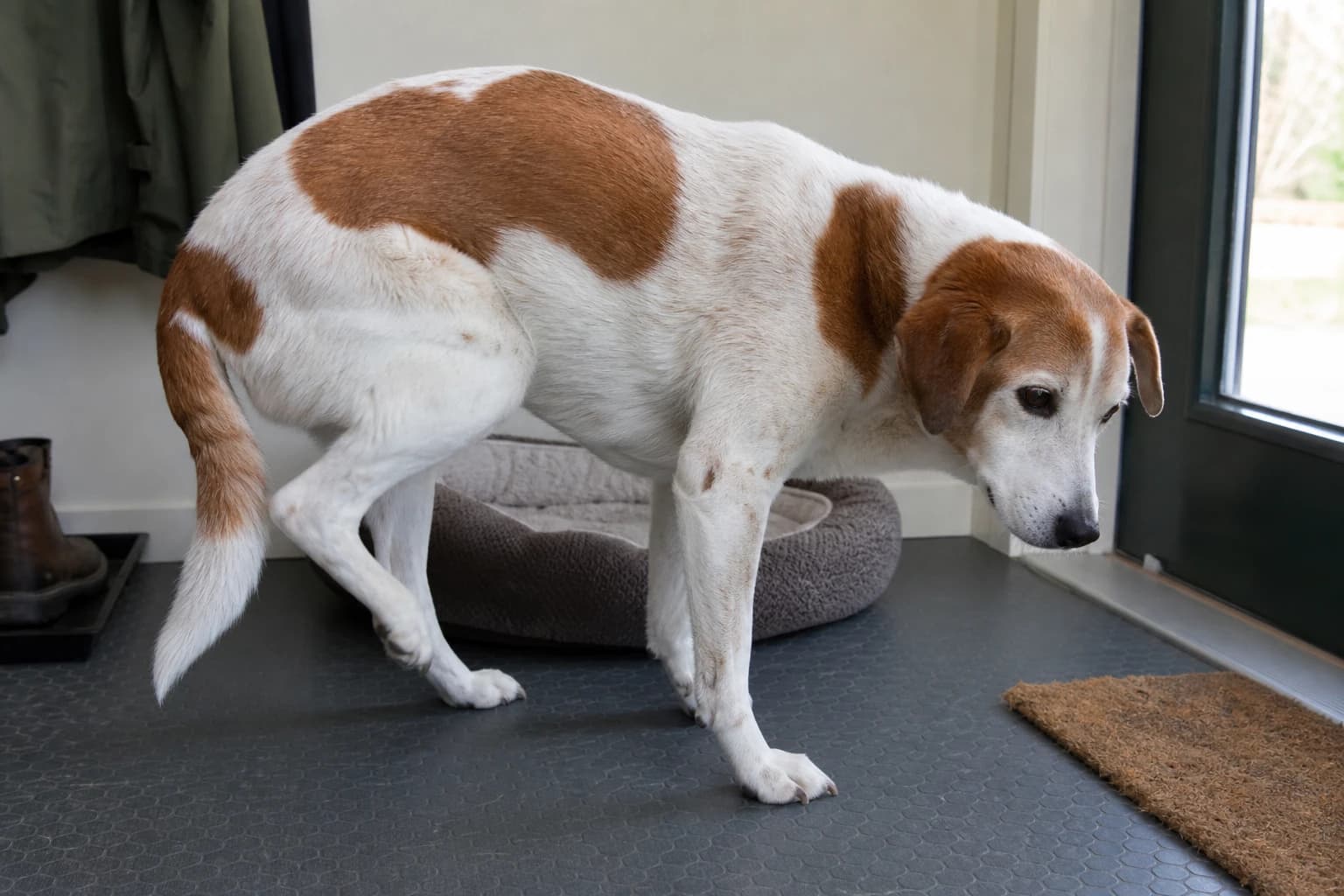
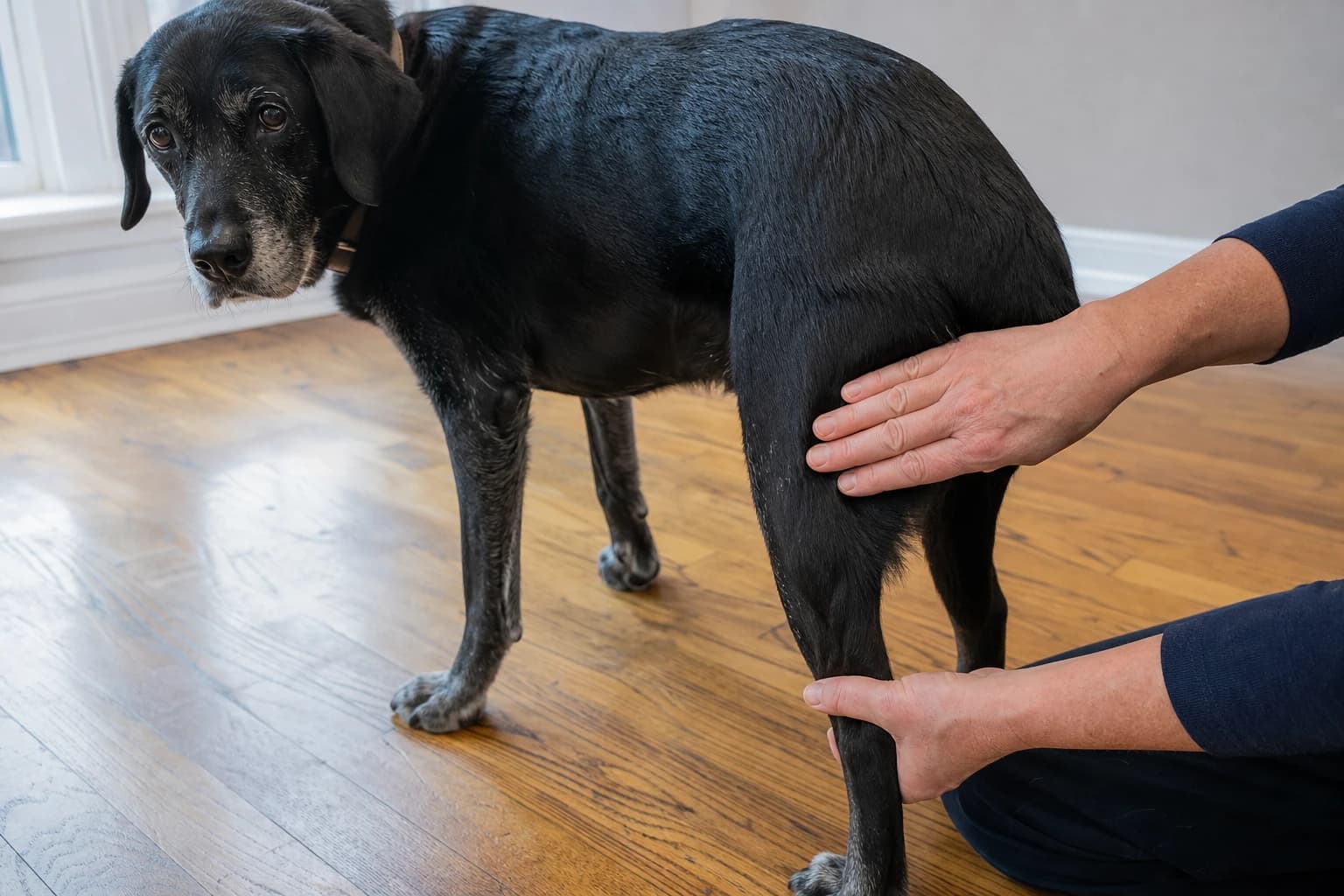
If thinning hind legs are what prompted this whole search, that observation deserves its own assessment rather than a food change alone. We explain what to record and why here: Senior Dog Back Legs Look Thinner.
What High-Protein Diets Have Shown in Studies, and Their Limits
Published research can give you a feel for how dogs respond to protein-rich complete diets, within the limits of each study.
- Energy use after meals. In a study of nine healthy large-breed dogs fed three diets for 42 days, the diet highest in protein (48% of metabolizable energy from protein, versus 28% and 30% in the other two) was associated with higher post-meal energy expenditure and lower respiratory quotient values, consistent with greater fat oxidation after eating (source).
- But too much of a shift can overwhelm digestion. In a separate small crossover study of five Beagles, a very high-protein diet (609 g/kg crude protein, versus 194 g/kg and 264 g/kg in the comparison diets) was associated with all dogs developing diarrhea during that feeding period, alongside higher fecal calprotectin and altered fatty acid profiles (source).
The honest takeaway: studies support that protein level changes digestion and energy metabolism, but they do not establish one universal protein target for senior dogs, and the extreme end of the range carried visible drawbacks. Your dog's response, tracked in stool quality, weight, and energy over a few weeks, is the evidence that applies to your household.
A Before-You-Buy Checklist for High-Protein Senior Foods
- Dry-matter protein figure obtained, so foods are compared on the same basis
- AAFCO nutritional adequacy statement present and appropriate for an adult or senior dog
- Named protein sources in the top ingredients
- Calorie content (kcal per cup or per kg) noted, with your dog's current daily portion measured
- Feeding trial or formulation statement understood, so you know what "complete and balanced" rests on
- A plan to transition gradually over a week and watch stool, appetite, and weight
- Any diagnosed condition (kidney, liver, or others) discussed with your veterinarian before the switch, since therapeutic diets have requirements of their own
Then, and Only Then, Consider a Muscle Product
Once a complete food is settled and intake is steady, some owners consider adding a muscle-support supplement, particularly if age-related muscle loss is the concern. That topic has its own evidence base and its own open questions; our review of HMB research in dogs explains what the studies do and do not establish: HMB for dogs: promising muscle research, unanswered questions.
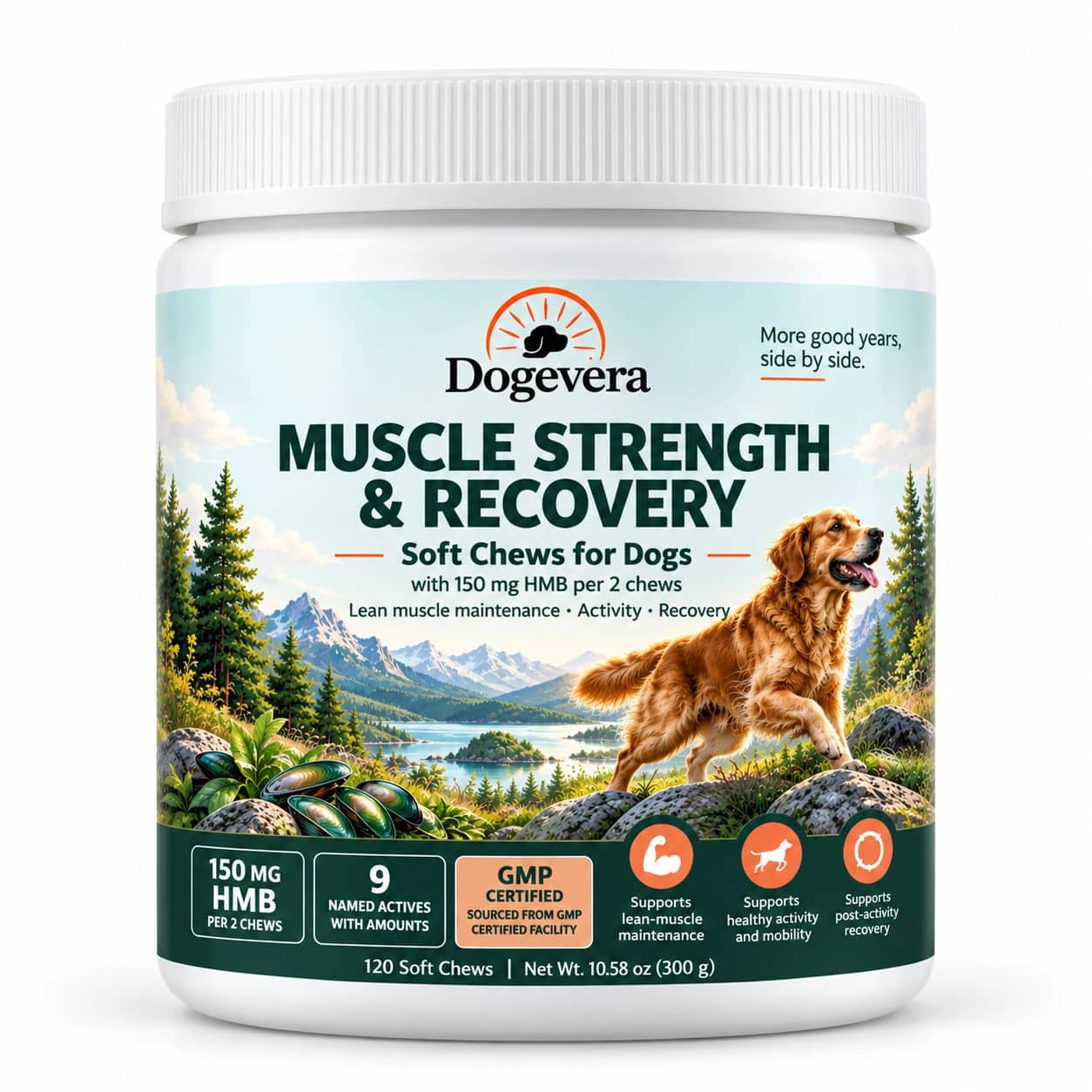
If you do add a product, treat it as a labeled supplement to the food routine rather than a replacement for adequate complete nutrition. For example, Muscle Strength & Recovery Soft Chews for Dogs are a soft-chew format designed for daily use alongside a complete diet; read that product's label for its own serving directions rather than adjusting your dog's food portion to make room for it.
FAQ
Do senior dogs automatically need more protein?
There is no single number that applies to all senior dogs. Healthy older dogs are often fed diets comparable to adult maintenance diets, and the right level depends on the individual dog's health status, body condition, and any diagnosed conditions. That assessment belongs with your veterinarian, especially where kidney or liver disease is involved.
Is high protein hard on older dogs' kidneys?
This is a question with real nuance, and the answer differs for healthy dogs versus dogs with diagnosed kidney disease. We do not give renal-disease dietary advice here; if your dog has a kidney diagnosis, follow the dietary plan from the treating clinic rather than label percentages.
How long should I try a new food before judging it?
Plan a gradual transition over about a week, then give the new food a fair run of two to three weeks while tracking stool quality, appetite, and weight before drawing conclusions.Individual dogs respond differently, so your own three-week log is more informative than any single number on a bag.
The Next Step
Pick one week this month to measure portions and weigh your dog. That single data set, combined with a dry-matter protein comparison of the two or three foods you are considering, turns a vague worry into a concrete choice, and gives your veterinarian something useful to look at if anything about your dog's weight or movement needs a closer look.
For individual health questions, your veterinarian remains the best partner.