TL;DR
How much exercise a dog needs depends on its breed, age, weight and health: from about half an hour a day for many toy breeds to two hours or more for working and sporting breeds, split into at least one or two walks a day plus play and sniffing time. Many dogs get less than their breed needs: in a UK survey of 12,314 pedigree dogs, walking varied widely by breed, and the authors concluded that many dogs do not get the recommended amount, while smaller dogs were more likely to meet guidelines. Too little exercise shows up on the scales: in a survey of 11,154 adult dogs, dogs walked less often and for shorter times were more likely to be overweight, and overweight dogs were more often older, neutered, and Beagles, Cavaliers, Golden Retrievers, Labradors or Pugs. For seniors the goal changes, not the need: shorter, more frequent, steady walks keep muscles, joints and the brain working.
How much exercise by breed type
The UK Kennel Club groups breeds roughly by daily exercise need. Use these as a starting point and adjust for your own dog:
| Breed type | Rough daily need | Examples |
|---|---|---|
| Toy and small companion | Up to about 30 minutes to 1 hour | Chihuahua, Pug, Shih Tzu, Maltese |
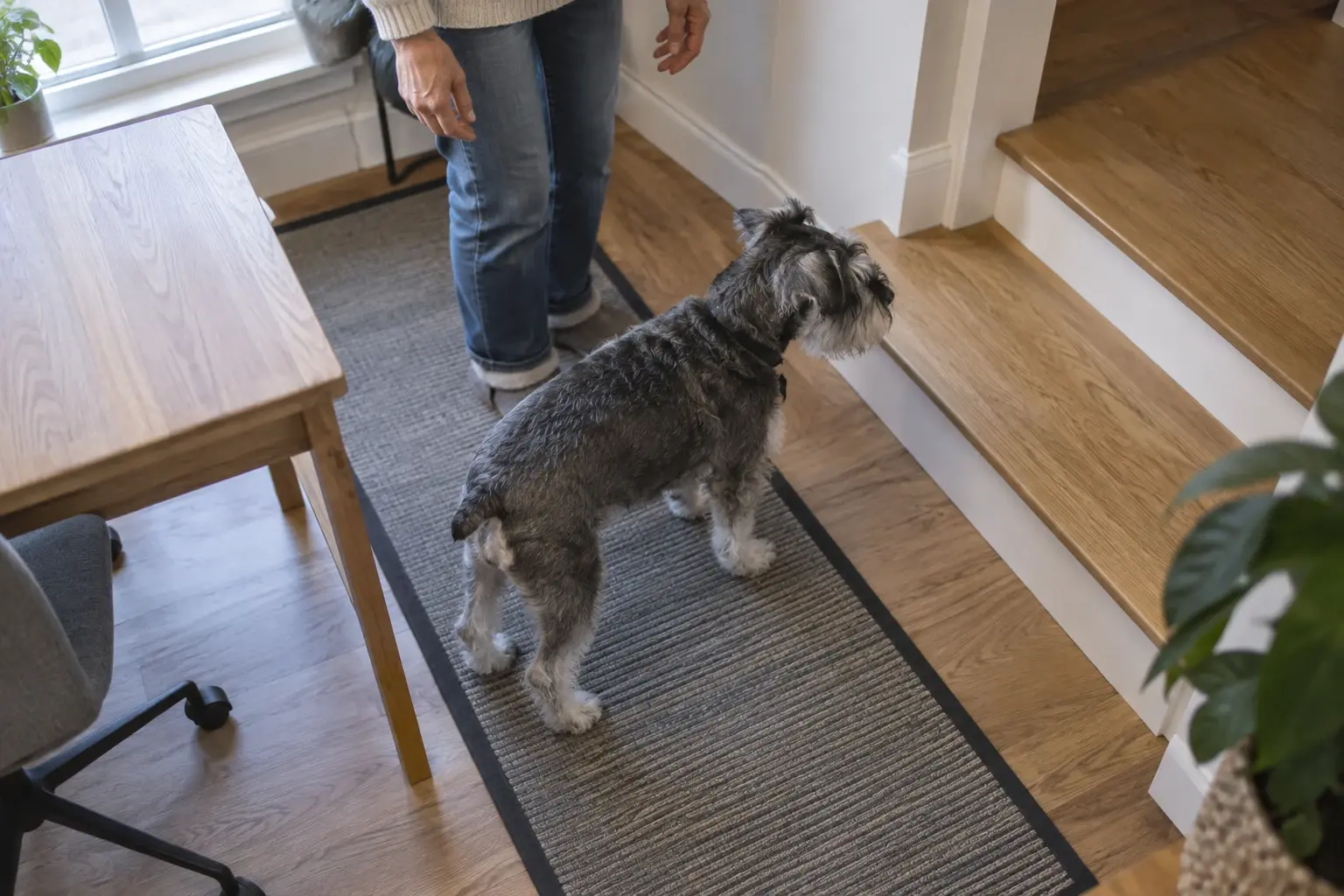
| Small terriers and active small dogs | About 1 hour | Jack Russell, Border Terrier, Miniature Schnauzer |
| Medium and large companion | About 1 to 2 hours | Cavalier King Charles Spaniel, Beagle |
| Herding, gundog and working | 2 hours or more | Border Collie, Labrador, Springer Spaniel, Husky, German Shepherd |
In the 12,314-dog survey, gundogs were the most likely to be walked at least once a day, and the most exercised breeds included the English Setter, Foxhound, Irish Setter and Old English Sheepdog.
Not just walking
- Sniffing: a slow "sniff walk" tires dogs mentally as well as physically.
- Play: fetch, tug and chase games for younger dogs.
- Training and puzzle feeders: mental work counts.
- Swimming: good for joints in dogs that enjoy water.
Signs your dog needs more exercise
- Weight gain. See obesity in dogs.
- Restlessness, pacing, barking at night.
- Destructive behavior: chewing furniture, shoes, digging.
- Pulling hard on the lead and over-excitement on walks.
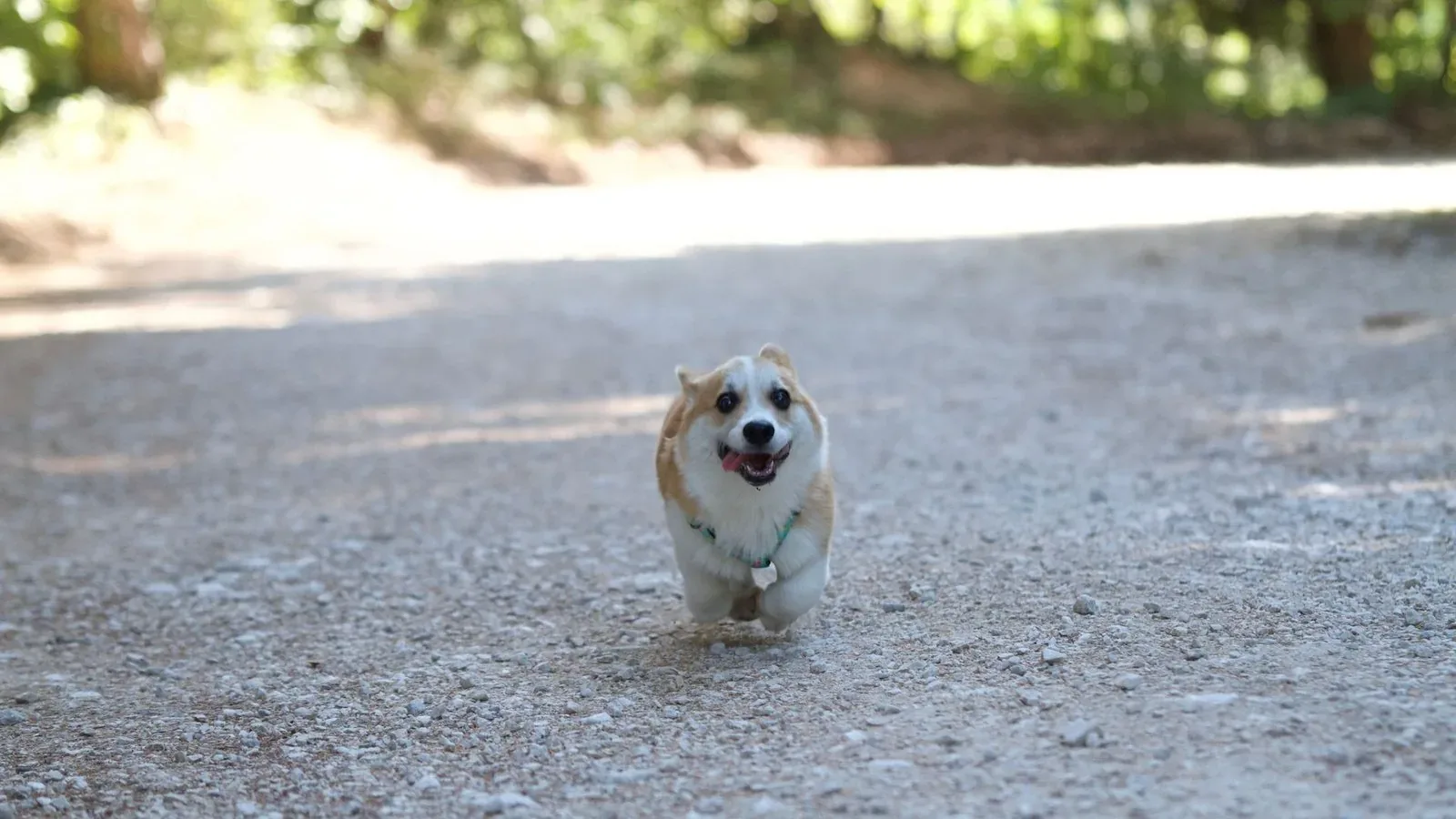
Our founder Morty sees this with a 6-year-old corgi: when it does not get enough exercise, it has wrecked a mattress, a sofa and shoes. Corgis were bred to herd cattle, and they need real activity, not just a stroll round the block. See Corgi lifespan.
Exercise and weight
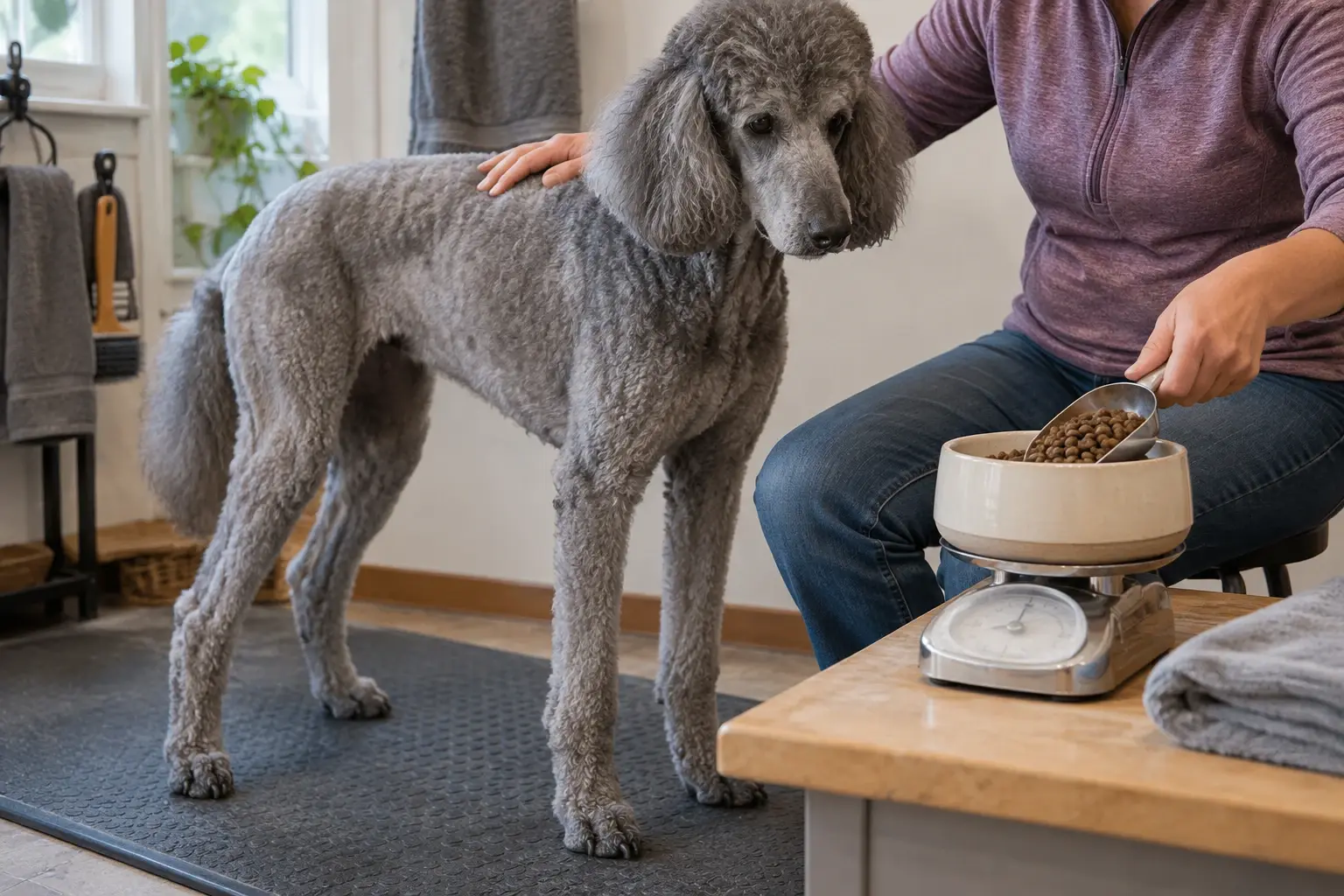
In the survey of 11,154 adult dogs, 16.1% were reported overweight by their owners, and both walking frequency and walking duration were independently linked to lower odds of being overweight. That does not prove walking alone fixes weight, but walking plus portion control is the combination that works. In a lifelong study of Labradors, dogs fed 25% less lived longer and developed chronic disease later.
Breeds that need careful exercise
Flat-faced breeds
Pugs, French Bulldogs and Bulldogs overheat easily. Our founder learned this when one of Morty's pugs came close to heatstroke on a daytime walk; since then, summer walks for flat-faced dogs have been short and never at a run. In UK dogs, 74% of heatstroke events were triggered by exercise. See older dog panting.
Long-backed breeds
Dachshunds and corgis should avoid jumping off furniture and repeated stairs, but still need steady walks to keep the muscles that support the spine strong. See Dachshund lifespan.
Giant breeds and puppies
Large-breed puppies need gentle, varied exercise on soft ground while their joints grow, rather than long runs.
Exercise for senior dogs
Older dogs still need daily exercise, but it should be:
- Shorter and more frequent: two or three gentle walks instead of one long one.
- Steady, not explosive: avoid sudden sprints, ball-chasing and jumping.
- On softer, even ground where possible.
- Warmed up: a few minutes of slow walking first.
- Strengthening: sit-to-stands, slow walking over poles, gentle hills.
- Adjusted for pain: stop before your dog lags or limps, and see a vet if it does.
See senior dog exercise and signs of arthritis in dogs. For joint support alongside exercise, green-lipped mussel raised the share of arthritic dogs improving from 41% on placebo to 91% after 56 days in a controlled trial; our New Zealand Green-Lipped Mussel Powder is 100% Perna canaliculus, stirred into food. See green-lipped mussel for dogs: the evidence.
FAQ
How much exercise does a dog need per day?
From about 30 minutes to an hour for many toy breeds to 2 hours or more for herding, gundog and working breeds. Age, weight and health change this.
Is one walk a day enough for a dog?
For some small or senior dogs it can be, if it is long enough and combined with play. Most dogs do better with at least two walks a day.
How much exercise does a senior dog need?
Usually a similar total but in shorter, gentler, more frequent walks, adjusted to your dog's joints and energy.
Can a dog get too much exercise?
Yes, especially puppies, flat-faced breeds in warm weather, and older dogs with joint pain. Watch for limping, lagging, heavy panting and stiffness the next day.
Which dog breeds need the most exercise?
Herding, gundog and working breeds such as Border Collies, setters, Labradors, Springer Spaniels and Huskies.
References
- Pickup E, et al. Variation in activity levels amongst dogs of different breeds: results of a large online survey of dog owners from the UK. Journal of Nutritional Science. 2017. PMID: 28620485
- German AJ, et al. Overweight dogs exercise less frequently and for shorter periods: results of a large online survey of dog owners from the UK. Journal of Nutritional Science. 2017. PMID: 28620486
- Hall EJ, Carter AJ, O'Neill DG. Dogs don't die just in hot cars: exertional heat-related illness (heatstroke) is a greater threat to UK dogs. Animals. 2020. PMID: 32751913
- Kealy RD, et al. Effects of diet restriction on life span and age-related changes in dogs. Journal of the American Veterinary Medical Association. 2002. PMID: 11991408
- Pollard B, et al. Clinical efficacy and tolerance of an extract of green-lipped mussel (Perna canaliculus) in dogs presumptively diagnosed with degenerative joint disease. New Zealand Veterinary Journal. 2006. PMID: 16751841
For individual health questions, your veterinarian remains the best partner.