TL;DR
The early signs of arthritis in dogs are subtle: stiffness after rest, slowness getting up, hesitating at stairs or the car, lagging on walks, sitting or lying down more, and grumpiness when touched. Limping often comes later. Arthritis (osteoarthritis) is the most common joint disease in dogs: about 2.5% of UK dogs were diagnosed in a single year, around 200,000 dogs, and it lasted on average 11.4% of an affected dog's life. Labradors, Golden Retrievers, heavier dogs and dogs over 8 were most at risk. Owners tend to spot it late: in interviews with owners of arthritic dogs, most had noticed subtle, on-and-off behavior changes months before diagnosis but few linked them to arthritis. Catching it early matters because early support works: in a controlled trial, 83% of arthritic dogs given green-lipped mussel powder on their food improved their total arthritis score by 30% or more in 6 weeks, against 7% on the same food without it, and in another, the share of dogs improving rose from 41% on placebo to 91% after 56 days on green-lipped mussel.
Signs of arthritis in dogs
| Area | What you might notice |
|---|---|
| Getting up | Slow, stiff or several tries to rise after lying down, worse in the morning or after a nap |
| Walking | Shorter walks, lagging behind, stopping or sitting during the walk |
| Stairs, car, sofa | Hesitating, asking for help, no longer jumping up |
| Posture | Sitting or lying down more often, sitting with a leg out to the side |
| Limping | Favoring one leg, especially after exercise or rest |
| Muscle | Thinner thighs or hips, more bony back end |
| Behavior | Grumpy when touched, less playful, restless at night, licking a joint |
| Play | Stopping play early, not chasing the ball anymore |
| Toileting | Accidents because squatting or getting outside hurts |
Many owners put these changes down to "just getting old". In the interview study of 40 owners with 35 arthritic dogs, owners described a wide range of subtle and intermittent changes in behavior and mood before the diagnosis, few thought of arthritis, and some waited many months before seeing a vet.
What it looked like in Morty's pugs
Our founder Morty raised seven pugs, and every one of them developed joint problems. When their back legs were stiff, the pugs would hardly want to move, not even to go out, and would sit down over and over on walks. Because pugs are not very active anyway, the change was easy to miss without touching them. Pressing a little firmly on the back legs or hips would make them cry out in pain. That combination, less willingness to move plus pain on handling, is worth a vet visit in any older dog.
Which dogs get arthritis?
In the UK study of 455,557 dogs:
- 2.5% had arthritis diagnosed in a year.
- Labradors and Golden Retrievers were among the higher-risk breeds.
- Heavier dogs and dogs older than 8 were at higher risk.
- Neutered dogs had higher odds.
Joint problems that start young, such as hip and elbow dysplasia, cruciate ligament injury and kneecap problems, lead to arthritis later. Long-backed breeds such as corgis and Dachshunds are prone to back and hip problems, and small dogs are not exempt: every one of Morty's pugs developed joint trouble. See hip dysplasia in dogs treatment, Labrador lifespan, Golden Retriever lifespan and Pug lifespan.
Arthritis or something else?
See a vet promptly if a limp is sudden, your dog will not put the leg down, a joint is hot or very swollen, or there is a firm bone swelling. These can be injuries, infections or bone tumors rather than arthritis. See senior dog sudden stiffness and is my dog in pain.
What helps a dog with arthritis
Keep weight down
Extra weight is a major driver of joint load. In a lifelong study of Labradors, dogs fed 25% less than their pair-mates lived longer and needed arthritis treatment later. See obesity in dogs.
Daily, gentle exercise
Several short walks are better than one long one. Swimming and walking on soft ground are kind to joints.
Pain relief from your vet
Anti-inflammatory medicines and monthly arthritis injections give fast relief in many dogs. See arthritis shots for dogs.
Green-lipped mussel
Green-lipped mussel (Perna canaliculus) is one of the most studied joint supplements for dogs, and every trial below enrolled dogs that already had arthritis or joint disease:
- 2002, powder on food (32 dogs, 6 weeks): 83% of the mussel dogs improved their total arthritis score by 30% or more, against 7% in the control group.
- 2006, 81 dogs, double-blind: at day 56, 67% of mussel dogs had improved against 41% on placebo; when the placebo dogs switched to mussel, 91% of them had improved 56 days later.
- 2009, 45 dogs, double-blind: significantly more dogs improved on mussel powder than on placebo by the vet's mobility score and the owners' pain scores.
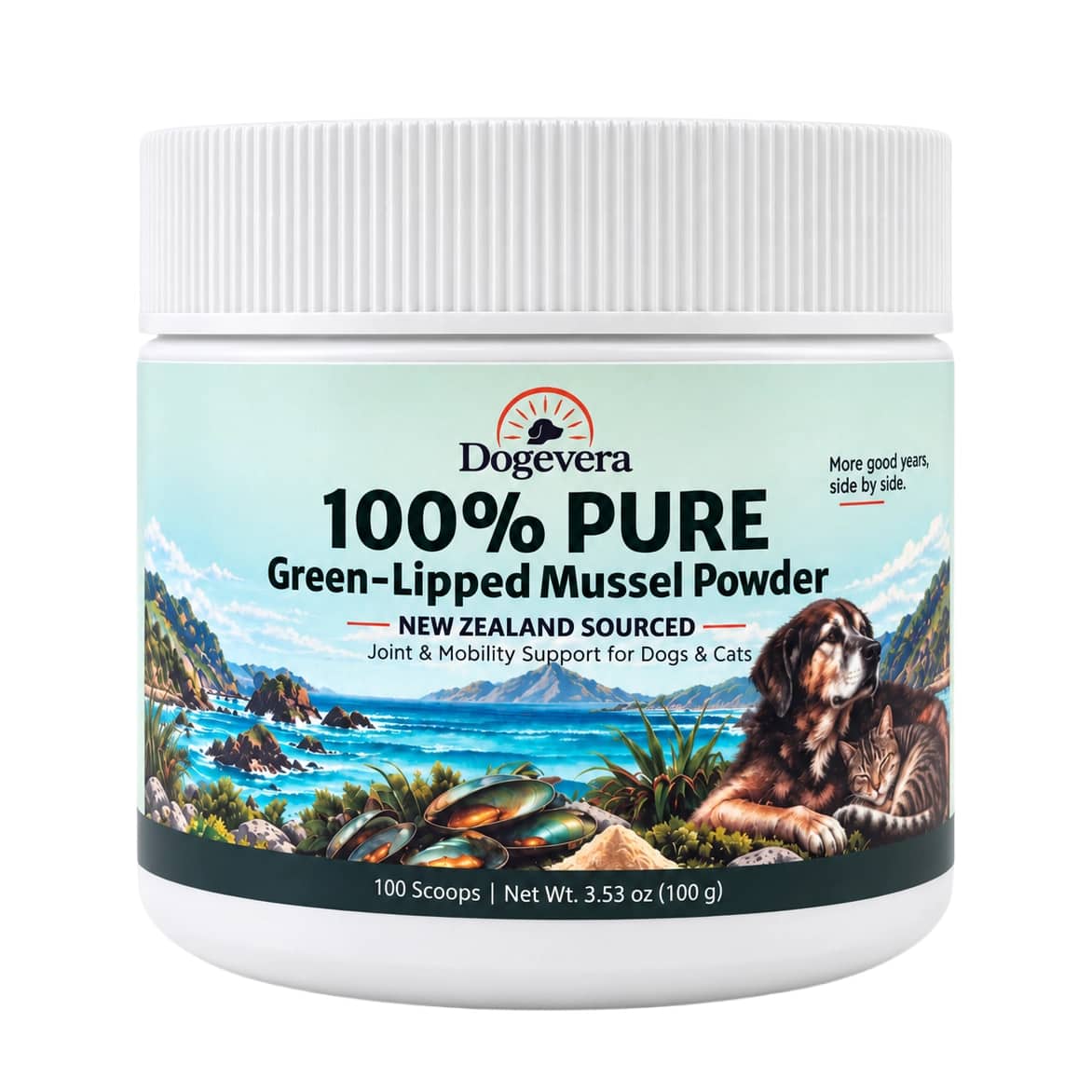
Our New Zealand Green-Lipped Mussel Powder is one ingredient, whole Perna canaliculus powder, with no fillers, in a 1 g scoop you stir into food. Morty's current dog, a 6-year-old corgi from a breed prone to back and hip problems, takes it as part of a prevention routine and has had no joint problems so far. Allow about 8 weeks to judge the result, and skip it if your dog is allergic to shellfish. See green-lipped mussel for dogs: the evidence and green-lipped mussel vs glucosamine.
Make the home easier
Non-slip rugs, ramps for the car and sofa, a supportive bed and a harness for help on stairs. See support harness for senior dogs.
FAQ
What are the first signs of arthritis in dogs?
Stiffness after rest, slowness getting up, hesitating at stairs or the car, shorter walks and sitting down more. Limping often comes later.
At what age do dogs get arthritis?
It is most often diagnosed in dogs over 8, but dogs with hip or elbow dysplasia or past joint injuries can develop it much younger.
Which dogs are most likely to get arthritis?
Large and heavy dogs, especially Labradors and Golden Retrievers, overweight dogs and dogs older than 8 had the highest risk in a UK study.
Can arthritis in dogs be reversed?
No, but it can be managed well. Weight control, exercise, pain relief and joint supplements such as green-lipped mussel can improve mobility and comfort.
How long does green-lipped mussel take to work for arthritis?
Plan on about 8 weeks. In a 2006 trial the difference from placebo appeared at day 56.
References
- Anderson KL, et al. Prevalence, duration and risk factors for appendicular osteoarthritis in a UK dog population under primary veterinary care. Scientific Reports. 2018. PMID: 29618832
- Belshaw Z, Dean R, Asher L. Could it be osteoarthritis? How dog owners and veterinary surgeons describe identifying canine osteoarthritis in a general practice setting. Preventive Veterinary Medicine. 2020. PMID: 33227581
- Bierer TL, Bui LM. Improvement of arthritic signs in dogs fed green-lipped mussel (Perna canaliculus). Journal of Nutrition. 2002.
- Pollard B, et al. Clinical efficacy and tolerance of an extract of green-lipped mussel (Perna canaliculus) in dogs presumptively diagnosed with degenerative joint disease. New Zealand Veterinary Journal. 2006. PMID: 16751841
- Hielm-Björkman A, et al. Evaluating complementary therapies for canine osteoarthritis Part I: Green-lipped mussel (Perna canaliculus). Evidence-Based Complementary and Alternative Medicine. 2009.
- Larson BT, et al. Improved glucose tolerance with lifetime diet restriction favorably affects disease and survival in dogs. Journal of Nutrition. 2003. PMID: 12949383
For individual health questions, your veterinarian remains the best partner.