TL;DR
Arthritis shots for dogs fall into three groups. Librela (bedinvetmab) is a monthly injection under the skin that blocks a key pain signal; in two randomized trials of 287 and 272 dogs it helped more dogs than placebo. Adequan (polysulfated glycosaminoglycan) is an FDA-approved course of injections into the muscle, usually twice a week for up to 4 weeks, that its maker says protects cartilage. Joint injections put a drug straight into the painful joint: steroids, hyaluronic acid, a hydrogel (Arthramid Vet), a radioactive colloid (Synovetin OA) or stem cells, often lasting months from one treatment. None of them is a cure, and most vets combine shots with weight control, exercise and daily joint support such as omega-3s and green-lipped mussel.
The main arthritis shots compared
| Shot | How it is given | How often | What it does |
|---|---|---|---|
| Librela (bedinvetmab) | Under the skin | Monthly | Blocks nerve growth factor, a driver of arthritis pain |
| Adequan Canine (PSGAG) | Into the muscle | Twice a week for up to 4 weeks, then as your vet advises | Approved for degenerative and traumatic arthritis; maker says it protects cartilage |
| Pentosan polysulfate (Cartrophen and others) | Under the skin | Usually a weekly course | Thought to protect cartilage; licensed for dogs in some countries, not FDA-approved for dogs in the US |
| Steroid or hyaluronic acid joint injection | Into the joint, under sedation | Every few months as needed | Reduces inflammation and improves lubrication in one joint |
| Polyacrylamide hydrogel (Arthramid Vet) | Into the joint, under sedation | One treatment, sometimes repeated | Gel that cushions the joint lining |
| Tin-117m colloid (Synovetin OA) | Into the joint, at specialist clinics | One treatment, can be repeated | Low-level radiation that calms the inflamed joint lining |
| Stem cells or platelet products | Into the joint, under sedation | One or two treatments | Made from your dog's own fat or blood, or from donor cells |
Librela (bedinvetmab): the monthly pain shot
Librela is a canine antibody that mops up nerve growth factor, a protein that keeps arthritis pain switched on. Your vet gives it under the skin once a month. It was approved by the FDA in 2023.
What the trials found:
- In a European trial of 287 dogs with arthritis, 43.5% of dogs on Librela had a meaningful drop in owner-scored pain at day 28, against 16.9% on placebo. Success held at around half of treated dogs at days 56 and 84.
- In a US trial of 272 dogs, success at day 28 was 47.4% versus 36.6%, and the benefit grew with continued monthly doses through day 84.
Side effects: in both trials, side effects were similar to placebo. After approval, in December 2024, the FDA wrote to US vets about reported adverse events, mainly neurologic signs such as loss of coordination, seizures, weakness and inability to stand, and the label was updated. The FDA noted these reports show timing, not proven cause, and that many dogs treated are elderly. Ask your vet whether Librela suits your dog, and report any new signs after an injection.
Who it suits: dogs with arthritis pain, especially those that cannot take daily anti-inflammatories (NSAIDs) because of kidney, liver or stomach problems, or owners who struggle to give daily pills.
Adequan Canine: the cartilage shot
Adequan is polysulfated glycosaminoglycan (PSGAG), a molecule similar to the building blocks of cartilage. It is FDA-approved for the control of signs of non-infectious degenerative or traumatic arthritis in dogs, given into the muscle. Its maker says it helps restore joint lubrication, relieve inflammation and renew cartilage, while noting that its exact mechanism in dogs is not known.
The usual pattern is a loading course of injections over about 4 weeks, after which many vets continue with maintenance doses. In a controlled study of 84 dogs with hip dysplasia given 8 injections over several weeks, dogs on 4.4 mg/kg showed the greatest improvement in orthopedic scores, although the differences between groups were not statistically significant, and no drug-related side effects were seen.
Cautions (from the label): not for dogs with a known or suspected bleeding disorder, and used with caution in dogs with kidney or liver disease. Reported side effects in studies were mild and short-lived: pain at the injection site, diarrhea and abnormal bleeding.
Who it suits: dogs early in arthritis, when protecting the remaining cartilage matters most, and as part of a combined plan.
Pentosan polysulfate
Pentosan polysulfate (sold as Cartrophen Vet and other brands outside the US) is given as a short course of injections under the skin. In a 2026 randomized study of 20 dogs, a six-week course improved pain and gait for up to 26 weeks compared with placebo, and MRI showed more cartilage volume in the treated dogs. The study was small and funded by the drug's developer. It is not FDA-approved for dogs in the US.
Joint injections
Instead of treating the whole body, these put the medicine directly into the painful joint, usually under sedation. They suit dogs with one or two badly affected joints, such as a hip or an elbow. For hips, see also hip dysplasia treatment with and without surgery.
- Steroid plus hyaluronic acid. In a 2021 study of 20 dogs with arthritis in both hips, one hip was injected with steroid plus hyaluronic acid and the other with a protein solution made from the dog's own blood. Owners reported improved pain and mobility at every check over 6 months, and the number of dogs needing pain pills fell from 14 to 5. Neither injection beat the other.
- Polyacrylamide hydrogel (Arthramid Vet). In a 2026 study of 18 dogs with elbow arthritis, pain scores, joint movement and swelling improved from 3 to 12 months after one injection, with minimal side effects. The study had no control group.
- Tin-117m colloid (Synovetin OA). In a study of 14 dogs with advanced elbow arthritis, owners reported treatment success in more than 70% of dogs at every check over a year after a single injection. The study was funded by the maker.
- Stem cells. In a randomized, blinded trial in dogs with hip arthritis, dogs given stem cells from their own fat had significantly better lameness and pain scores than controls. Later small studies have had mixed results.
Joint injections can cause a short "flare" of soreness for a day or two afterward. They are usually done by vets with orthopedic or rehabilitation experience.
Which arthritis shot is best?
There is no single best shot. Vets choose based on:
- How many joints hurt. Many joints point to a whole-body option like Librela or Adequan; one bad joint may suit a joint injection.
- Your dog's other health problems. Kidney or liver disease, bleeding disorders and neurologic problems all affect the choice.
- How advanced the arthritis is. Cartilage-protecting shots make more sense early; pain control and joint injections matter more later.
- Practical needs. Monthly vet visits, sedation and cost all play a part.
Most dogs do best on a combination. Adequan's own guidance describes it being used alongside NSAIDs, joint supplements, exercise and weight control.
What to do between shots
Shots work on pain and inflammation, but daily care at home decides how well your dog moves:
- Keep your dog lean. In a lifelong study of Labradors, dogs fed 25% less developed hip arthritis at a median of 12 years, versus 6 years for their littermates. See senior dog food for weight loss.
- Short, regular walks and swimming if you can.
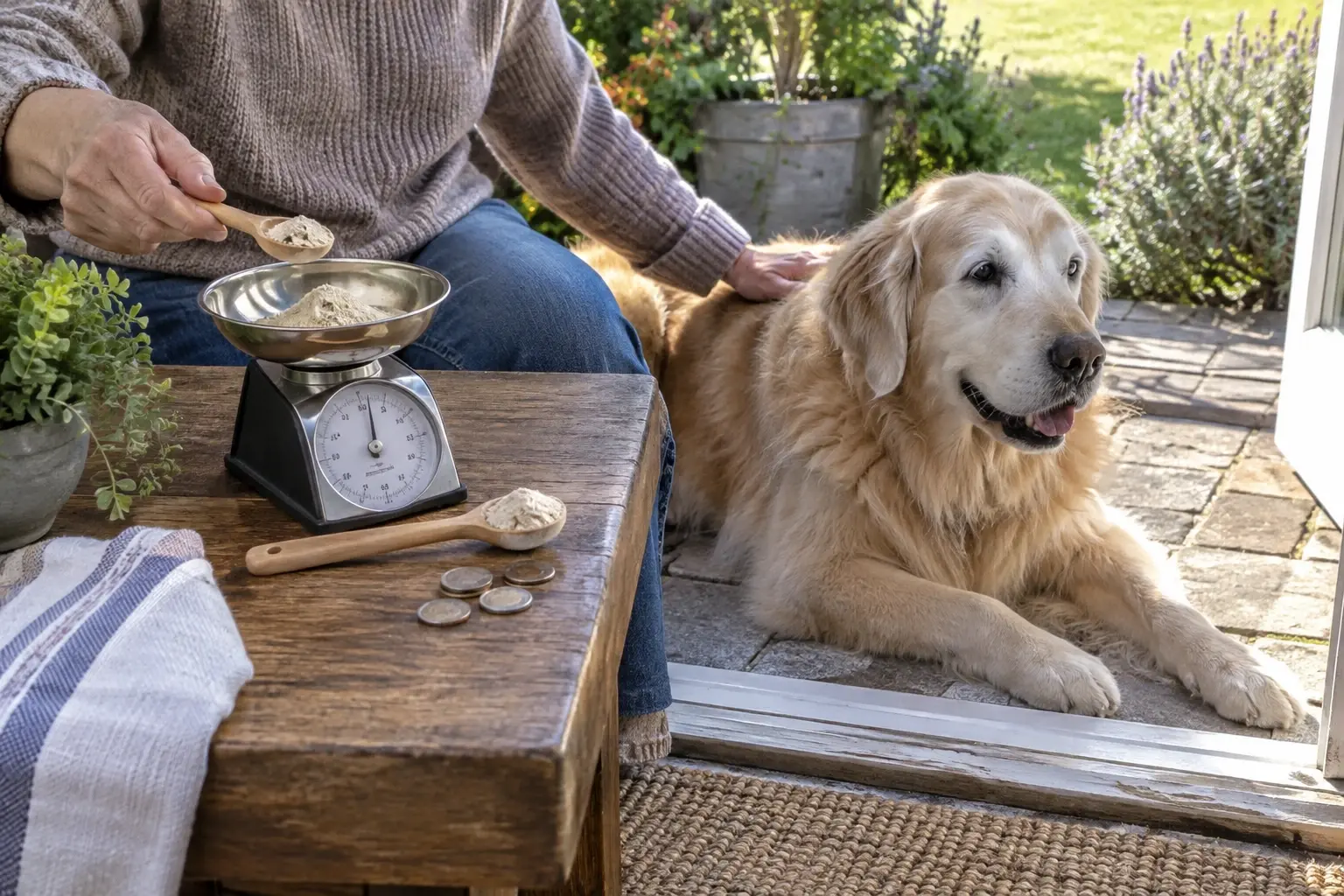
- Daily joint support in food. In a randomized trial, 82% of dogs with arthritis on a fish-oil food improved their weight bearing over 90 days, against 38% on a standard food. In a 2006 trial, 67% of dogs improved on green-lipped mussel extract by day 56, against 41% on placebo. Our green-lipped mussel powder is a single-ingredient New Zealand green-lipped mussel topper. See best joint supplements for senior dogs and how long joint supplements take to work.
- Non-slip floors, ramps and a supportive bed. See arthritis in dogs: treatment and home care.
Questions to ask your vet
- Which joints are affected, and how badly?
- Is my dog a good candidate for Librela, Adequan or a joint injection, given its kidneys, liver and other medicines?
- How soon should I expect to see a difference, and how will we measure it?
- What side effects should I watch for after each injection?
- What does a full course cost, including any sedation and follow-up visits?
- Should we keep NSAIDs, supplements or physiotherapy alongside the shots?
FAQ
What is the most effective arthritis shot for dogs?
There is no single best one. Librela has the largest placebo-controlled trials for arthritis pain, Adequan is the FDA-approved option aimed at protecting cartilage, and joint injections can help a single bad joint for months. Your vet will choose based on your dog's joints and health.
What shots do vets give dogs for arthritis?
The most common are Librela (a monthly pain injection under the skin), Adequan (a course of injections into the muscle) and joint injections such as steroids, hyaluronic acid or hydrogel. Some clinics also offer stem cell or platelet treatments.
How often does a dog need Librela?
Once a month, given under the skin by your vet. In trials, benefit was seen from the first week and held with monthly doses.
How long do arthritis injections last in dogs?
Librela lasts about a month. Adequan is given as a course and then as maintenance doses your vet sets. Joint injections can last several months, and in studies some lasted up to a year.
Are arthritis shots safe for dogs?
In trials, side effects were generally mild. Librela has post-approval reports of neurologic signs that the FDA has asked vets to monitor, Adequan should not be used in dogs with bleeding disorders, and joint injections can cause brief soreness. Your vet will weigh these against your dog's pain.
Can I give my dog joint supplements with arthritis shots?
Yes. Omega-3s and green-lipped mussel are commonly used alongside shots, and Adequan's guidance describes combining it with joint supplements, exercise and weight control.
References
- Corral MJ, et al. A prospective, randomized, blinded, placebo-controlled multisite clinical study of bedinvetmab in dogs with osteoarthritis. Veterinary Anaesthesia and Analgesia. 2021. PMID: 34565678
- Michels GM, et al. A prospective, randomized, double-blind, placebo-controlled multisite, parallel-group field study in dogs with osteoarthritis conducted in the United States of America evaluating bedinvetmab. Veterinary Anaesthesia and Analgesia. 2023. PMID: 37541934
- American Veterinary Medical Association. FDA: Adverse events in dogs reported with monoclonal antibody drug. 2025.
- American Regent Animal Health. Adequan Canine (polysulfated glycosaminoglycan). Indications and important safety information.
- de Haan JJ, Goring RL, Beale BS. Evaluation of polysulfated glycosaminoglycan for the treatment of hip dysplasia in dogs. Veterinary Surgery. 1994. PMID: 8066981
- Stapledon CJM, et al. Effects of pentosan polysulfate sodium on joint structure and function out to six months in naturally-occurring canine osteoarthritis. PLOS ONE. 2026. PMID: 41666203
- Franklin SP, Franklin AL. Randomized controlled trial comparing autologous protein solution to hyaluronic acid plus triamcinolone for treating hip osteoarthritis in dogs. Frontiers in Veterinary Science. 2021. PMID: 34395580
- Corral JA, et al. Intra-articular 2.5% polyacrylamide hydrogel provides sustained clinical improvement over 1 year in canine elbow osteoarthritis. Journal of the American Veterinary Medical Association. 2026. PMID: 42906618
- Donecker J, et al. Treatment response in dogs with naturally occurring grade 3 elbow osteoarthritis following intra-articular injection of 117mSn (tin) colloid. PLOS ONE. 2021. PMID: 34280212
- Black LL, et al. Effect of adipose-derived mesenchymal stem and regenerative cells on lameness in dogs with chronic osteoarthritis of the coxofemoral joints: a randomized, double-blinded, multicenter, controlled trial. Veterinary Therapeutics. 2007. PMID: 18183546
- Smith GK, et al. Lifelong diet restriction and radiographic evidence of osteoarthritis of the hip joint in dogs. Journal of the American Veterinary Medical Association. 2006. PMID: 16948575
- Roush JK, et al. Evaluation of the effects of dietary supplementation with fish oil omega-3 fatty acids on weight bearing in dogs with osteoarthritis. Journal of the American Veterinary Medical Association. 2010. PMID: 20043801
- Pollard B, et al. Clinical efficacy and tolerance of an extract of green-lipped mussel in dogs presumptively diagnosed with degenerative joint disease. New Zealand Veterinary Journal. 2006. PMID: 16751841
For individual health questions, your veterinarian remains the best partner.