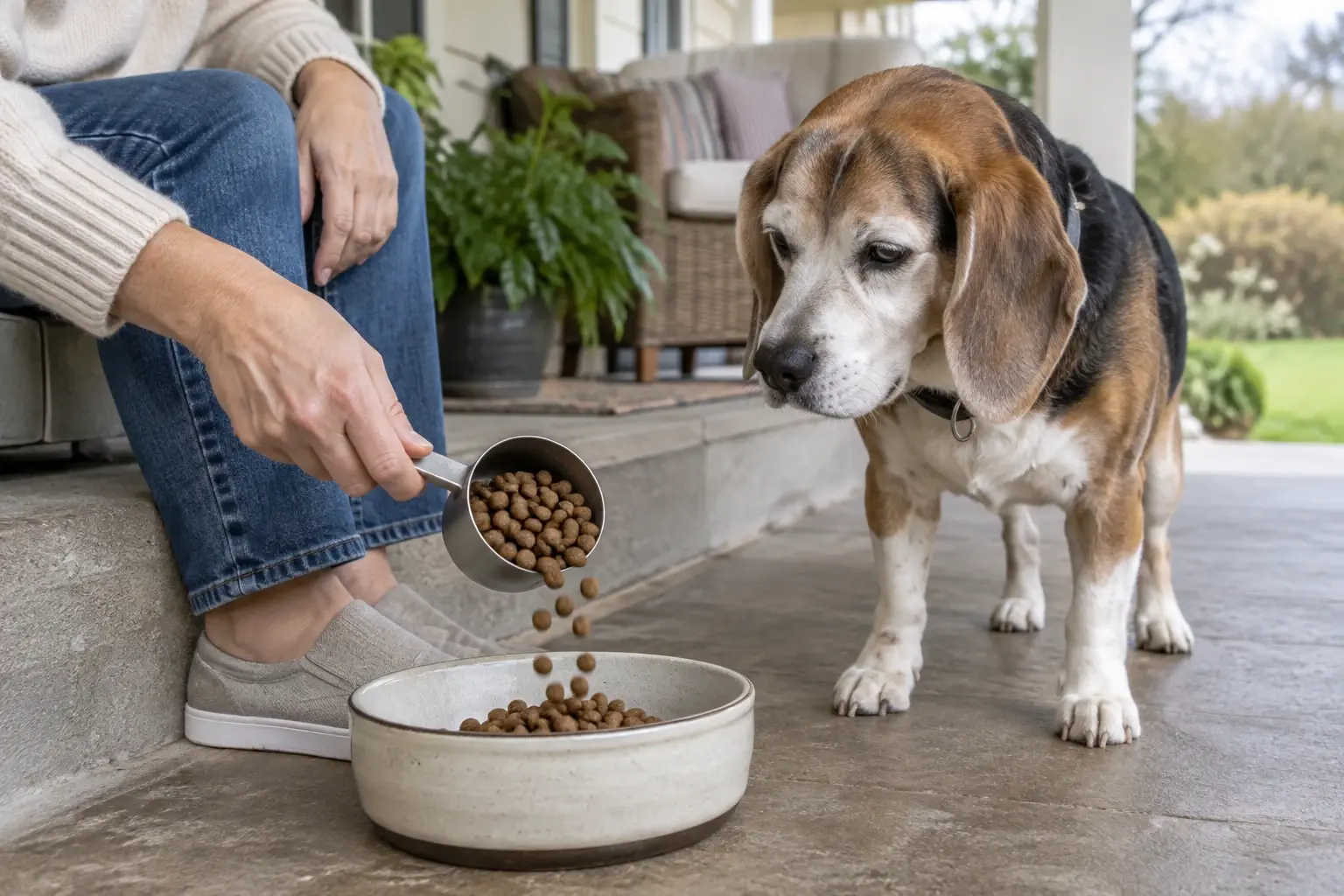
TL;DR
Choosing the best dog for older people comes down to a simple everyday test: you want a companion that is small to medium, calm, easy to groom, and steady on a leash. Standout choices include the Shih Tzu, Bichon Frise, Cavalier King Charles Spaniel, Poodle, Maltese, Havanese, Lhasa Apso, and pug, along with a retired greyhound for owners comfortable handling a larger dog, or a calm adult mixed breed from a rescue. The medical case for bringing a dog home is remarkable: across a meta-analysis of 3.8 million people, dog owners had a 24% lower risk of death over about 10 years. Because falling is the primary physical hazard, the smartest choice is a dog you can easily lift, control, and walk without being pulled. Our founder Morty, who has raised seven pugs, recommends the pug as a devoted companion for older owners, as long as you can live with snoring, drool, and regular skin-fold care.
Why a dog is worth it after 65
When epidemiologists look at what happens to older adults who share their homes with a dog, the survival numbers are striking:
- Longer life. A 2019 meta-analysis pooling 10 studies and 3,837,005 people found that dog ownership was linked to a 24% lower risk of death from any cause and a 31% lower risk of cardiovascular death. Among people who had already survived a heart attack or another coronary event, the risk of death was 65% lower in homes with a dog.
- Living alone. A Swedish study of 3.4 million adults found that people living alone with a dog had a 33% lower risk of death during follow-up than people living alone without one.
- Less loneliness. A 2026 French study of adults aged 75 and over living at home found that dog ownership was linked to lower emotional loneliness, even after accounting for living alone, frailty, and depression. Fully 81% of the owners said they had their dog for companionship.
- A reason to go out. Dog owners walk more, and a walk twice a day builds structure into the day.
Because these are observational studies, they demonstrate a link rather than proof that the dog itself causes the benefit. Still, across millions of lives in large populations, the pattern holds steady.
The real risk: falls
For all the warmth a dog brings into a home, there is one physical hazard every older owner needs to plan for before choosing a breed: falling. A sudden lunge toward the curb or a small body resting silently behind your heels at the kitchen counter can turn an ordinary morning into an emergency room visit.
US emergency department data show how often this happens:
- An estimated 86,629 fall injuries a year in the US were linked to dogs and cats, with 7.5 times as many involving dogs. Injury rates were highest in people aged 75 and over.
- 31.3% of dog-related falls came from tripping over the dog, and another 21.2% came from being pushed or pulled by it.
- Fractures in adults aged 65 and over while walking a leashed dog rose from 1,671 in 2004 to 4,396 in 2017. Nearly 4 in 5 were in women, the hip was the most common fracture (17.3%), and 28.7% of patients were admitted to hospital.
None of this is a reason not to get a dog. It is a reason to choose the right dog: one light enough that it cannot pull you over, calm enough not to jump up, and trained to walk on a loose leash.
What to look for
Before falling in love with a face at a shelter or breeder, measure the dog against the practical realities of your daily routine: lifting a carrier into the car, climbing porch steps, and walking on damp pavement.
| Factor | What suits most older owners | Why it matters |
|---|---|---|
| Size | Small to medium, one you can lift | Vet trips, baths, car rides and stairs |
| Strength on the leash | Calm walker, or a dog small enough that pulling cannot unbalance you | Being pulled is a leading cause of dog-related falls |
| Energy | Low to moderate exercise needs | Two short walks a day should be enough |
| Grooming | A coat you or a groomer can keep up with | Long coats need brushing several times a week and a trim every few weeks |
| Temperament | Gentle, not prone to jumping or nipping | Jumping up causes falls and skin tears |
| Age of the dog | An adult or senior dog over a puppy | Puppies are underfoot, untrained and live the longest |
| Health | A breed without severe built-in problems | Vet bills and nursing care add up |
Best dog breeds for older people
To see how popular companion breeds actually hold up over time, it helps to look at real veterinary longevity records rather than breed folklore. The lifespans below are medians from a 2024 UK study of 584,734 dogs. Half the dogs of each breed lived longer than the figure shown.
| Breed | Size | Median lifespan | Why older owners like it | Watch for |
|---|---|---|---|---|
| Shih Tzu | Small (UK average about 7.9 kg) | 12.8 years | Calm lap dog, low exercise needs | Teeth: gum disease was the most common problem in UK Shih Tzus; long coat needs regular grooming |
| Bichon Frise | Small | 12.5 years | Cheerful, sociable, low-shedding coat | Needs regular professional grooming |
| Cavalier King Charles Spaniel | Small | 11.8 years | Gentle, affectionate, happy with short walks | Heart valve disease: about 47 times the odds of crossbreeds in UK vet records |
| Poodle | Toy to standard | 14.0 years | Smart, easy to train, low-shedding; toy and miniature sizes are easiest to handle | Clipping every few weeks; higher odds of heart valve disease than crossbreeds |
| Maltese | Toy | 13.1 years | Light and easy to carry, a devoted lap dog | So small it can be underfoot; dental care |
| Havanese | Small | 14.5 years | Friendly, adaptable, small | Coat care; the lifespan figure is based on a small number of dogs |
| Lhasa Apso | Small | 14.0 years | One of the longest-lived breeds, calm indoors | Long coat; can be wary of strangers |
| Pug | Small | 11.6 years | Friendly, quiet, low exercise, low odds of aggression | Breathing, heat, joints and skin folds |
| Greyhound (retired racer) | Large (UK average about 29.7 kg) | 11.5 years | Calm indoors, content with short walks | Strong and fast if it spots a cat; dental disease was found in 39% of UK greyhounds in a year |
| Mixed breed (adult rescue) | Any | 12.0 years | You can see the adult temperament and size before you commit | Choose one that is already calm on a leash |
Check how old any dog is in human terms, and when it becomes a senior, with our dog age calculator.
Breeds to think twice about
Some of the most recognizable dogs are poorly matched to an owner whose balance, lifting strength, or veterinary budget has limits. Weigh these realities from UK veterinary records before deciding:
- Flat-faced breeds with severe breathing problems. French Bulldogs and Bulldogs had a median lifespan of just 9.8 years in the 2024 UK study, and French Bulldogs had about 31 times the odds of brachycephalic obstructive airway syndrome compared with other dogs. Expect higher vet bills.
- Big, strong dogs if your balance is not good. A Labrador has a wonderful temperament, but an adult that pulls can pull you over. Labradors also had 2.83 times the odds of osteoarthritis in UK vet records, and a large dog with sore legs is hard to lift.
- High-energy working and terrier breeds. Border Collies, Huskies, and many terriers need far more exercise and mental work than two short walks.
- Very tiny dogs, for some owners. A Chihuahua is easy to carry, but in UK records traumatic injury was among the most common causes of death, and aggression was recorded in 4.2% of Chihuahuas in a year. If your eyesight or footing is poor, a tiny dog underfoot is a tripping risk.
Morty's view: are pugs good for older people?
Our founder Morty has raised seven pugs since childhood, and his answer is yes, pugs make very good companions for older owners. Looking back across his own dogs, several everyday traits stand out:
What makes pugs a good fit
- Gentle nature. They are very friendly and good-natured, and his pugs did not bite. UK vet records back this up: pugs had 0.31 times the odds of aggression compared with other dogs.
- Quiet indoors. They do not bark much and are fairly quiet indoors.
- Close companionship. They are very loyal and like to stay close to their person.
- Modest walking needs. They do not need much exercise.
What to accept before you get one
- Snoring. Pugs snore loudly. If that would keep you awake, choose another breed.
- Drool and smell. Pugs drool, and the drool needs wiping before it starts to smell. In Morty's experience, most "pug smell" comes from dirt in the skin folds, so the folds need cleaning and drying.
- Health care. Every one of Morty's pugs developed joint problems as it aged, and most died between about 7 and 10 years old. Pugs also struggle in heat and, in his experience, catch colds easily in winter. See pug lifespan for the full health picture.
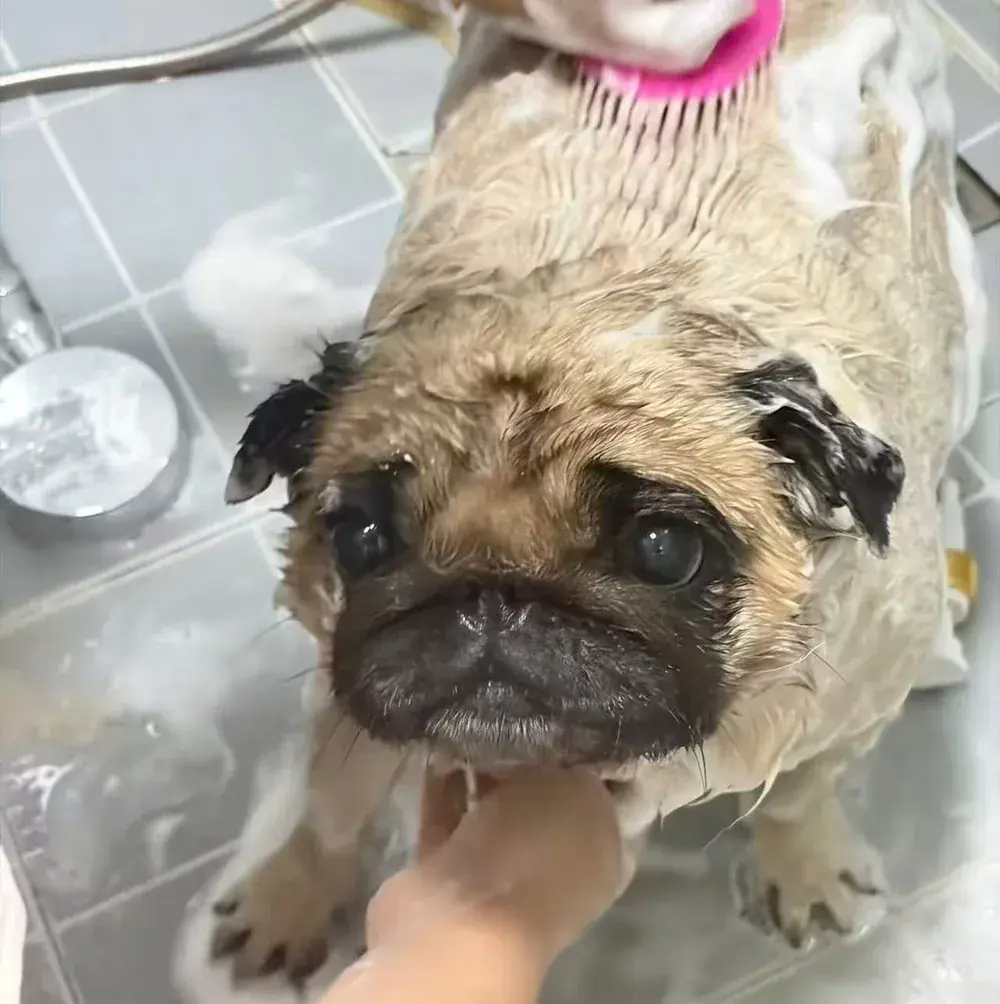
If you are steady on your feet and happy with a dog that snores, a pug's size and gentle nature suit a quiet home very well.
Puppy or older dog?
Walk past a litter of eight-week-old puppies and it is easy to forget how much physical labor the first year demands. For most people over 65, an adult dog of 2 years or more, or a senior dog, is the better choice. With a grown dog, there is no guessing game: you can see its adult size, energy, and temperament right away, it is usually house-trained, and it is less likely to be underfoot all day.
It also helps to think about the years ahead. For a breed with a 13-year median lifespan:
| Your age when the dog arrives | Dog's age at adoption | Your age when the dog turns 13 |
|---|---|---|
| 65 | 8 weeks | 78 |
| 70 | 8 weeks | 83 |
| 70 | 6 years | 77 |
| 75 | 8 years | 80 |
Adopting an adult does not mean fewer good years together; many small breeds live well into their teens. See adopting a senior dog and helping an older rescue dog settle in.
Whatever the dog's age, make a clear backup plan on paper: name a family member or friend who will take the dog if you are ill or move, write down its food, medicines, and vet, and ask your lawyer about a pet trust or a clause in your will.
How to avoid falls with a dog
Keeping your footing around a dog is less about luck and more about setting up your walking gear and household routines from day one:
- Train a loose-leash walk before anything else, or work with a trainer for a few sessions.
- Use a harness and a fixed leash of about 1.2 to 1.8 m (4 to 6 ft), not a retractable one that can jerk your arm.
- Wear shoes with grip and avoid icy or wet ground on walks.
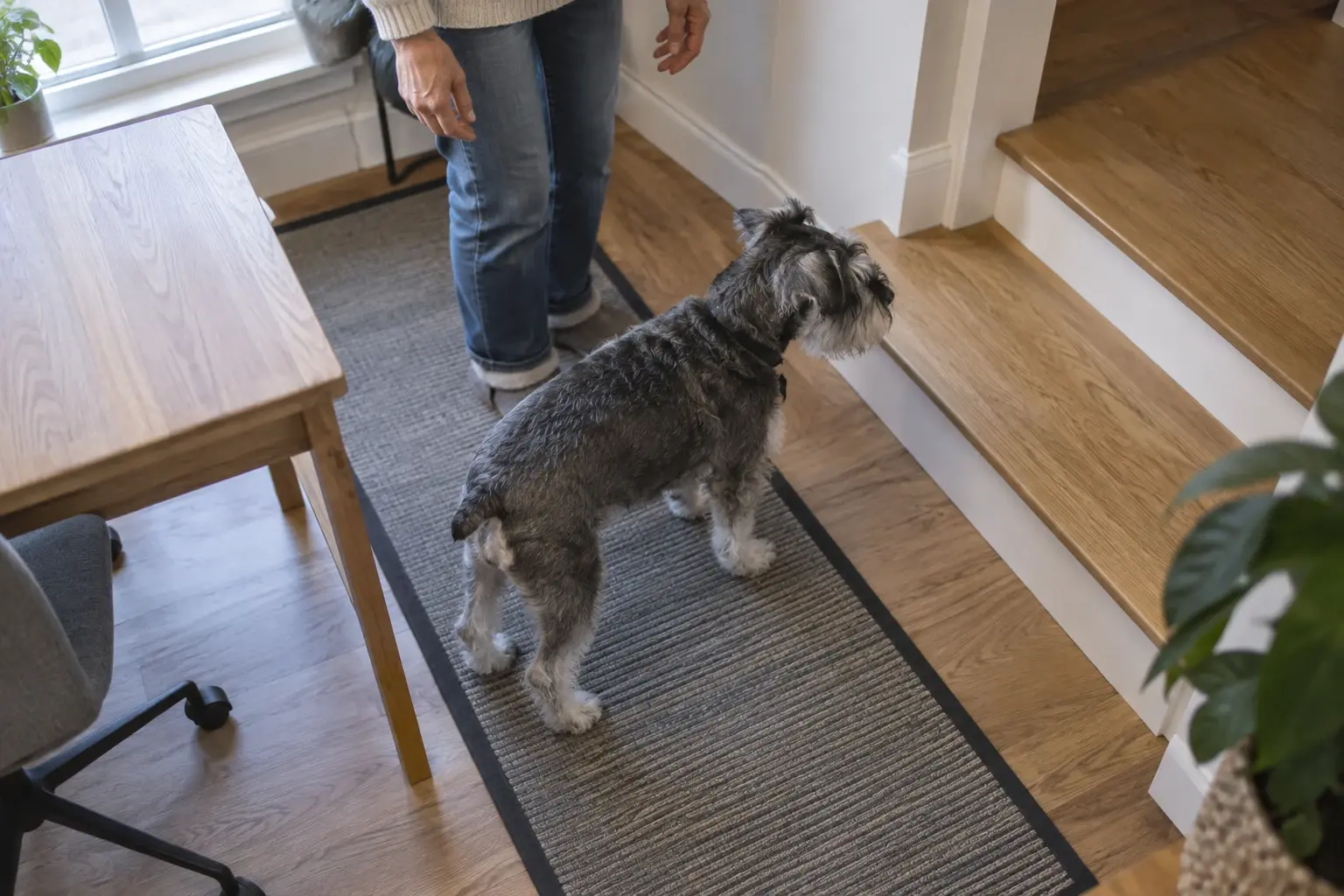
- Teach "wait" at doors and stairs so the dog does not rush past your legs.
- Put a night light between the bed and the bathroom, and give the dog its own bed out of the walkway.
- Use a collar tag that jingles, or a light-up collar at night, so you know where the dog is.
- Do not let the dog jump up. Reward four paws on the floor.
Caring for an older dog as an older owner
Many older owners adopt older dogs, and many dogs get old alongside their owners. When stiff joints become part of daily life, a few simple tools make the routine easier for both of you:
- A ramp or steps onto the sofa or bed, so you do not have to lift the dog. See dog ramps vs stairs.
- A support harness with a handle if the back legs weaken. See support harnesses for senior dogs.
- Keep the dog lean. A lighter dog is easier on its joints and easier for you to lift.
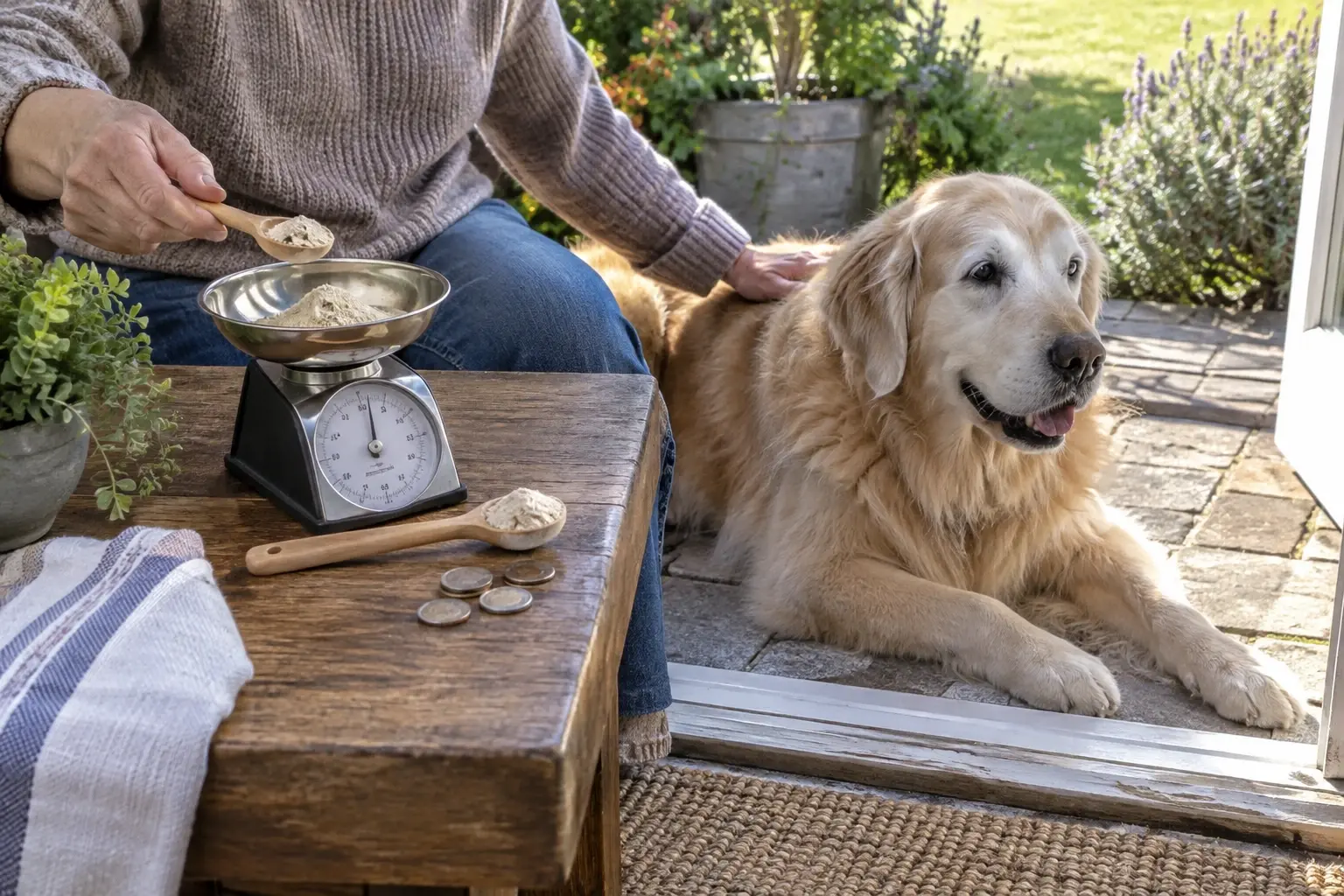
- Start joint care early. In a 2006 trial, 67% of dogs with joint disease improved on a green-lipped mussel extract by day 56, against 41% on placebo. Our green-lipped mussel powder is a single-ingredient topper you simply stir into food. See best joint supplements for senior dogs.
FAQ
What is the easiest dog for seniors?
A calm adult small breed such as a Shih Tzu, Bichon Frise, Cavalier King Charles Spaniel, Maltese, or pug, or a calm adult mixed breed from a rescue, is the easiest choice for most seniors. Choosing an adult rather than a puppy makes the biggest difference in daily effort.
Should a 70-year-old get a dog?
If you are healthy enough to walk it and have a backup plan for its care, yes. Dog ownership is linked to a 24% lower risk of death in large studies. Consider an adult dog, and choose one small and calm enough that it cannot pull you over.
What dog breed is best for a 70-year-old person?
Small, calm, low-exercise breeds suit most people at 70: Shih Tzu, Bichon Frise, Cavalier King Charles Spaniel, toy or miniature Poodle, Maltese, Havanese, Lhasa Apso, or pug. A retired greyhound suits active owners who can handle a larger dog.
What is the most low-maintenance dog?
For exercise, a pug, Shih Tzu, or retired greyhound needs little. For grooming, short-coated breeds like the pug and greyhound are easiest, though pugs need their skin folds cleaned. Long-coated breeds like the Shih Tzu, Bichon, and Poodle need regular grooming.
Are pugs good dogs for older people?
In our founder's experience with seven pugs, yes: they are friendly, quiet, loyal, and need little exercise, and UK data show low odds of aggression. Be ready for loud snoring, drool, skin fold care, heat sensitivity, and joint problems with age.
References
- Kramer CK, Mehmood S, Suen RS. Dog ownership and survival: a systematic review and meta-analysis. Circulation: Cardiovascular Quality and Outcomes. 2019. PMID: 31592726
- Mubanga M, et al. Dog ownership and the risk of cardiovascular disease and death: a nationwide cohort study. Scientific Reports. 2017. PMID: 29150678
- Segaux L, et al. Dog companionship and loneliness in community-dwelling older adults: a multicentre, cross-sectional study. International Journal of Geriatric Psychiatry. 2026. PMID: 42068571
- Stevens JA, Teh SL, Haileyesus T. Dogs and cats as environmental fall hazards. Journal of Safety Research. 2010. PMID: 20226954
- Pirruccio K, Yoon YM, Ahn J. Fractures in elderly Americans associated with walking leashed dogs. JAMA Surgery. 2019. PMID: 30840050
- McMillan KM, et al. Longevity of companion dog breeds: those at risk from early death. Scientific Reports. 2024. PMID: 38302530
- Dale F, et al. Demography, common disorders and mortality of Shih Tzu dogs under primary veterinary care in the UK. Canine Medicine and Genetics. 2024. PMID: 38263229
- Mattin MJ, et al. Prevalence of and risk factors for degenerative mitral valve disease in dogs attending primary-care veterinary practices in England. Journal of Veterinary Internal Medicine. 2015. PMID: 25857638
- O'Neill DG, et al. Greyhounds under general veterinary care in the UK during 2016: demography and common disorders. Canine Genetics and Epidemiology. 2019. PMID: 31179010
- O'Neill DG, et al. French Bulldogs differ to other dogs in the UK in propensity for many common disorders: a VetCompass study. Canine Medicine and Genetics. 2021. PMID: 34911586
- Pegram C, et al. Disorder predispositions and protections of Labrador Retrievers in the UK. Scientific Reports. 2021. PMID: 34262062
- O'Neill DG, et al. Demography and commonly recorded clinical conditions of Chihuahuas under primary veterinary care in the UK in 2016. BMC Veterinary Research. 2020. PMID: 32046714
- O'Neill DG, et al. Health of Pug dogs in the UK: disorder predispositions and protections. Canine Medicine and Genetics. 2022. PMID: 35581668
- Pollard B, et al. Clinical efficacy and tolerance of an extract of green-lipped mussel in dogs presumptively diagnosed with degenerative joint disease. New Zealand Veterinary Journal. 2006. PMID: 16751841
For individual health questions, your veterinarian remains the best partner.