TL;DR
When adopting an older dog, prepare for comfort before expecting confidence. Set up a quiet retreat, improve footing, keep meals and outings predictable, and introduce the household one small experience at a time. For the first week, track eating, resting, movement, and moments of ease so you can adjust the routine based on what your dog actually shows you.
What should you prepare before adopting an older dog?
Start with the rooms your new dog will use most, not the whole house. Walk through the route from the sleeping area to the water bowl, door, and favorite family spaces. Remove clutter, secure loose cords, and place anything tempting or fragile out of reach.
Use this short setup checklist:
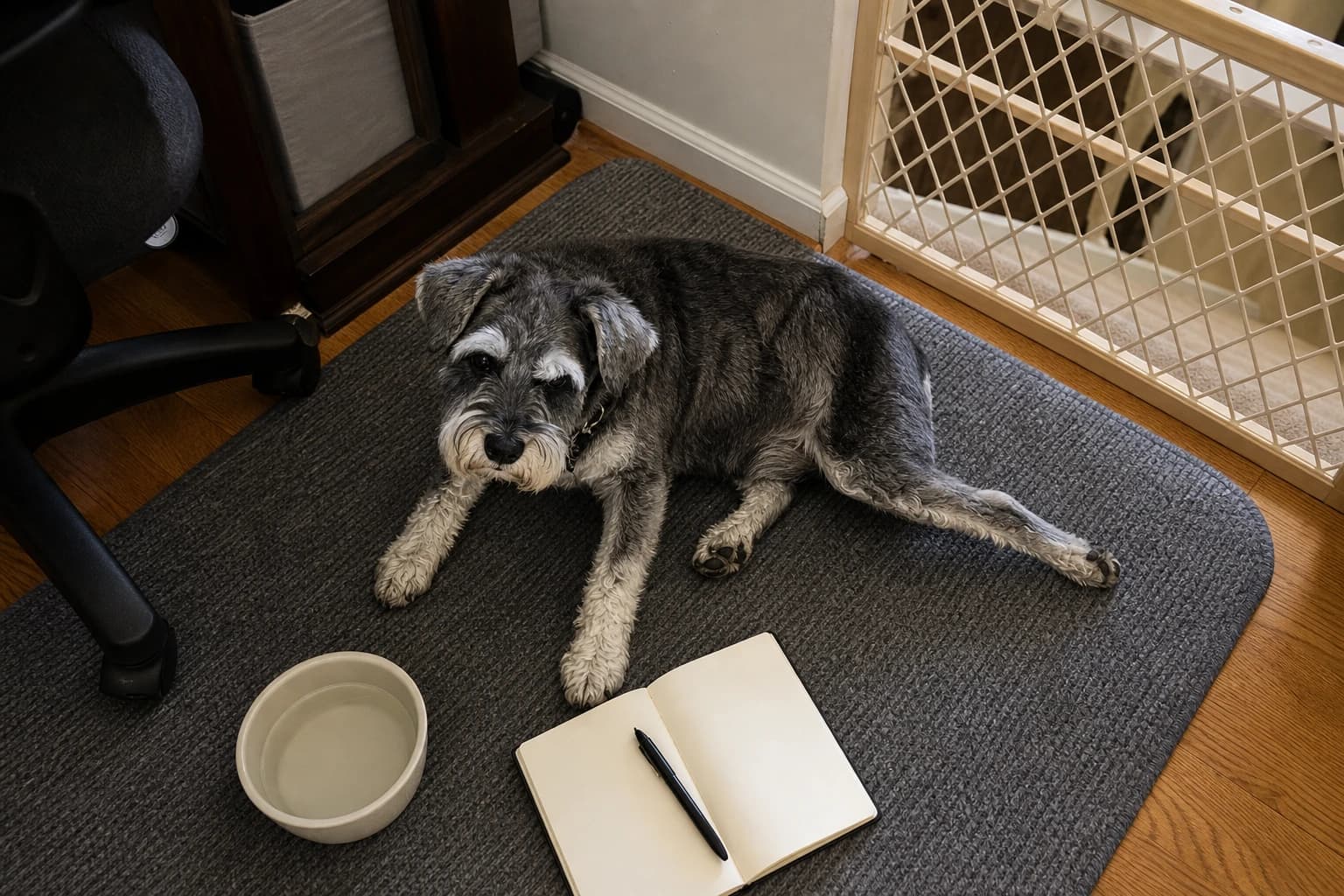
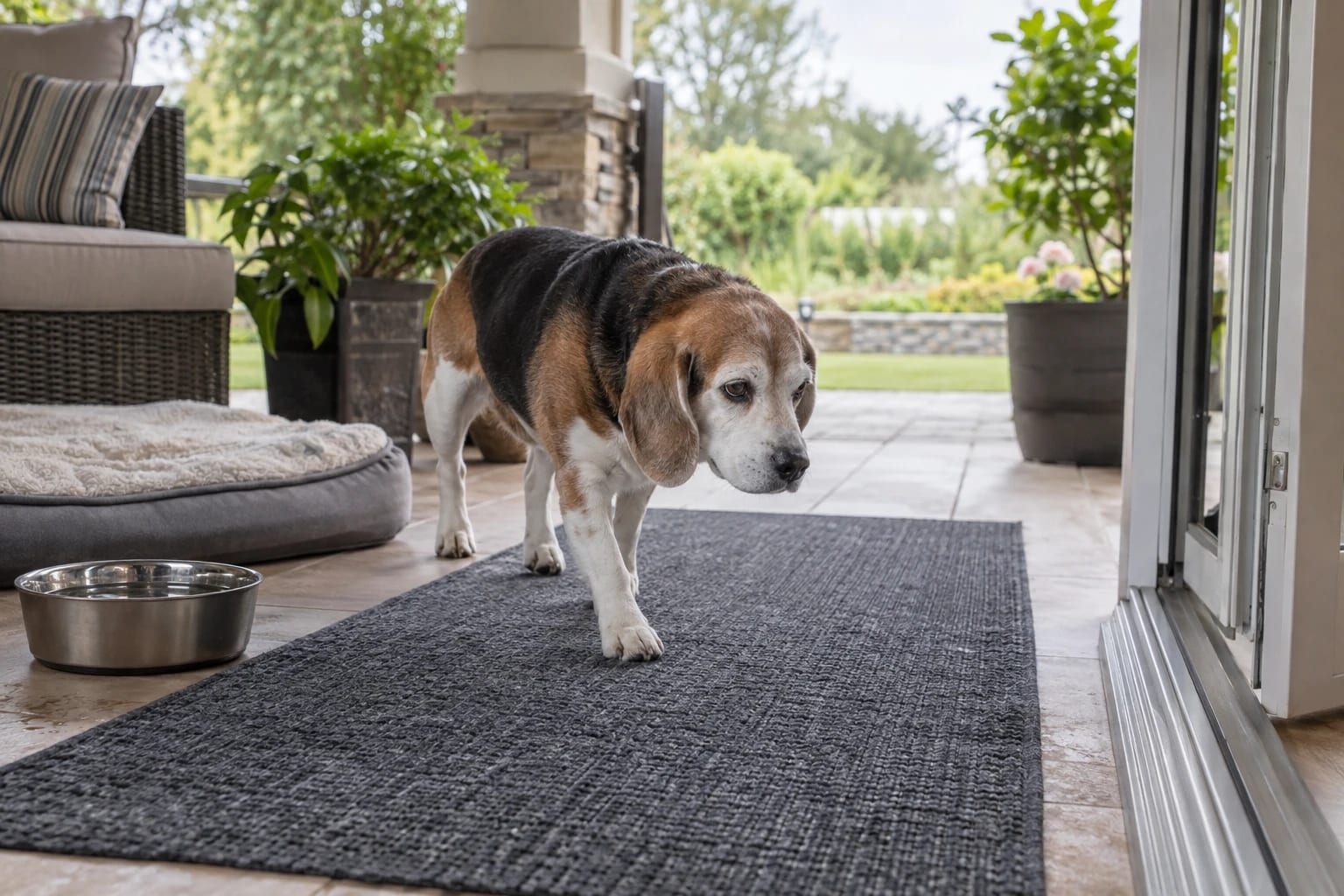
- A quiet retreat: Choose a bed, mat, or open crate in a low-traffic area. Your dog should be able to rest there without being followed or disturbed.
- Reliable footing: Add runners or nonslip mats where smooth floors make turning, standing, or walking uncertain.
- Easy access: Keep water, food, and bedding on the same floor at first if possible. Avoid making your dog navigate stairs simply to meet basic needs.
- A clear route outside: Keep the path to the exit free of shoes, bags, toys, and other obstacles.
- Soft lighting: A small lamp can make the route easier to see during evening bathroom trips without turning the space into a busy area.
- A simple supply station: Keep food, leash, cleanup supplies, and any records in one place so different household members follow the same routine.
For a room-by-room review of flooring, ramps, lighting, and walking paths, see Creating a Senior Dog-Friendly Home. Use the suggestions as options, then watch which areas your dog actually avoids or approaches cautiously.
A veterinarian can help you make sense of changes that are difficult to interpret at home, especially when you do not yet know your dog’s usual pattern.
Make the first week predictable, not busy
An older rescue dog may need time to understand where they sleep, eat, rest, and go outside. A full schedule of visitors, errands, grooming, and outings can make that harder to read. Keep the first days deliberately ordinary.
Try to keep these events in a similar order each day:
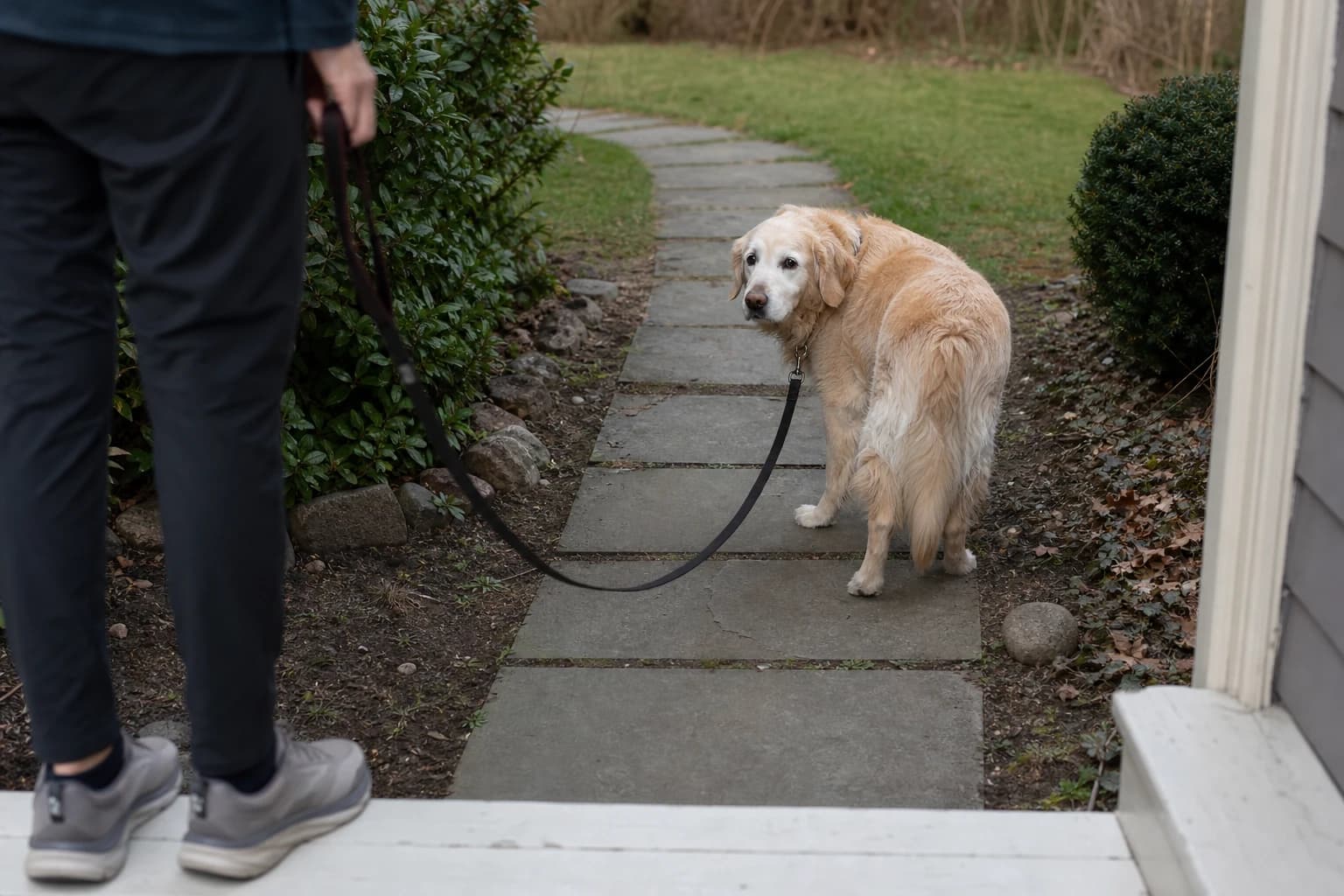
1. Wake up and offer a bathroom break. 2. Serve food and water in the same location. 3. Allow quiet rest without repeated invitations to interact. 4. Offer a short, familiar-feeling activity such as sniffing in the yard or a calm walk. 5. Return to the same resting area.
The exact clock time matters less than the recognizable sequence. Tell family members which cues you are using, such as putting on the leash, opening the door, or setting down the food bowl. Consistent cues reduce the number of new decisions your dog has to make.
Keep greetings low-key. Sit sideways rather than leaning over your dog, let them choose whether to approach, and avoid passing them from person to person. If they retreat, allow the retreat to work. A safe pause is part of the adjustment, not a failed interaction.
For more ideas about giving an older rescue dog space while building trust, read Everyday Ways to Help an Older Rescue Dog Thrive.
How can you make movement easier without overdoing it?
Begin by observing how your dog moves through the home before adding equipment or changing their whole routine. Watch them rise from bed, turn on different surfaces, step over a doorway, approach stairs, and settle again after activity.
Use a simple traffic-light decision aid:
- Green: Your dog moves through the area willingly, keeps a steady pace, and settles afterward. Keep the route as it is and avoid adding unnecessary challenges.
- Yellow: Your dog pauses, spreads their feet, takes a different route, or seems less willing to cross one spot. Improve footing, remove the obstacle, or shorten the route.
- Red: Your dog suddenly cannot move normally, appears distressed, or has a marked change from the pattern you have been seeing. Keep them in a safe area and contact your veterinarian for guidance.
Do not test mobility by repeatedly asking your dog to climb stairs, jump onto furniture, or walk farther than they choose. Put a favorite resting place at floor level, use a stable step only if your dog can approach it comfortably, and lift household expectations before asking for extra effort.
A short observation log can be more useful than a general impression. For three days, note the surface, activity, pause or hesitation, and how your dog rests afterward. If walks are part of the routine, compare the same familiar route rather than changing distance and location at the same time. Dog Falling Behind on Walks: Use One Route as a Baseline offers a focused way to record pace and pauses.
Build connection through choice and low-pressure activities
Older dogs do not need constant entertainment to feel included. They may prefer watching household activity from a comfortable bed, sniffing at their own pace, or receiving brief attention followed by rest.
Offer two simple choices when practical: a quiet bed or a nearby mat, a short sniff outside or a calm indoor search, gentle petting or no touch. Notice which option your dog selects. Choice can also help you learn whether a behavior reflects interest, uncertainty, tiredness, or a need for space.
Keep enrichment easy to stop. Scatter a few pieces of their regular food where they can find them safely, invite them to sniff a towel or familiar object, or spend a few quiet minutes sitting together. Avoid activities that require repeated jumping, fast turns, forceful tugging, or frustration around food.
Use the same ending cue each time, such as “all done,” followed by access to the resting area. This gives your dog a clear transition from activity to recovery.
What should you record during the first two weeks?
Record observations that help you make daily choices, not every detail of your dog’s life. A compact note can include:
- appetite and whether meals are finished
- water-bowl use and preferred location
- where your dog chooses to rest
- ease of getting up and settling down
- willingness to walk through each main room
- response to household sounds, visitors, and touch
- bathroom timing and any change from the established pattern
- activities that lead to calm rest afterward
Add the setting and time when something changes. “Hesitated at the hallway mat after dinner” gives you more to work with than “seemed nervous.” Look for repeated patterns before rearranging everything, but act promptly to remove an obvious slipping hazard or blocked route.
Bring the notes, adoption records, food information, and a list of questions to the first veterinary appointment. If you notice sudden stiffness, a sudden refusal to eat, or another abrupt change, do not assume it is part of settling in. Senior Dog Sudden Stiffness: When to Call the Vet explains why a sudden movement change deserves a different response from gradual adjustment.
FAQ: Adopting an older dog
How long should I give an older rescue dog to settle in?
Use the first days to establish safety and predictability rather than setting a deadline for affection. Let your dog’s appetite, rest, movement, and willingness to approach guide how quickly you add visitors, outings, or new activities.
Should I let my new dog explore the whole house right away?
A smaller, prepared area is often easier to manage at first. Expand access when your dog can move through the initial space comfortably and can return to their resting place without being followed or crowded.
Should I change my older dog’s food immediately?
Keep food changes and other major routine changes separate when possible. Write down what your dog was eating before adoption, follow the transition guidance you receive, and discuss a different plan with your veterinarian if needed.
What is the most important item to buy first?
Prioritize a comfortable resting spot and safer footing over novelty items. The best first purchase is the one that helps your dog rest, eat, drink, and move through the home with less uncertainty.
For individual health questions, your veterinarian remains the best partner.