TL;DR
Your older dog pauses at a familiar cue, and you wonder whether to repeat it: training an older dog with positive routines starts with making the task comfortable, clear, and worth doing. Use brief practice during everyday activities, keep household cues consistent, adapt to hearing or vision changes, and account for food rewards within daily intake.
Make the task comfortable before practicing
Older dogs can keep learning, but the way you practice may need to change. A dog who hesitates to sit may find the movement uncomfortable; a dog who misses a spoken cue may not have heard it clearly. Repeating the command more firmly does not resolve either problem.
Start with the setting. Choose secure footing, enough room to turn, and a quiet spot where your dog can notice you. Practice when your dog is awake and comfortable, rather than waking them from a nap or adding work after a tiring outing.
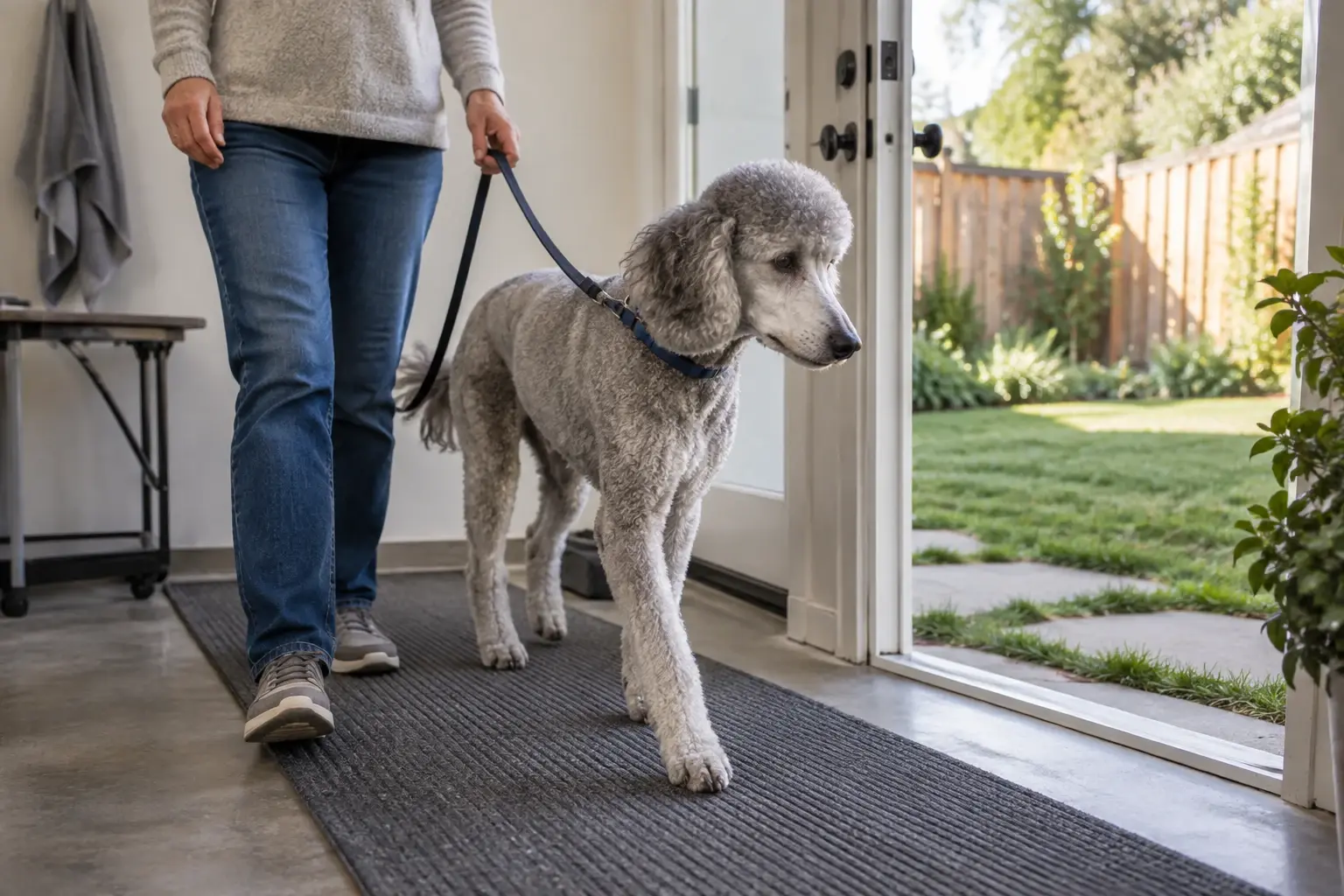
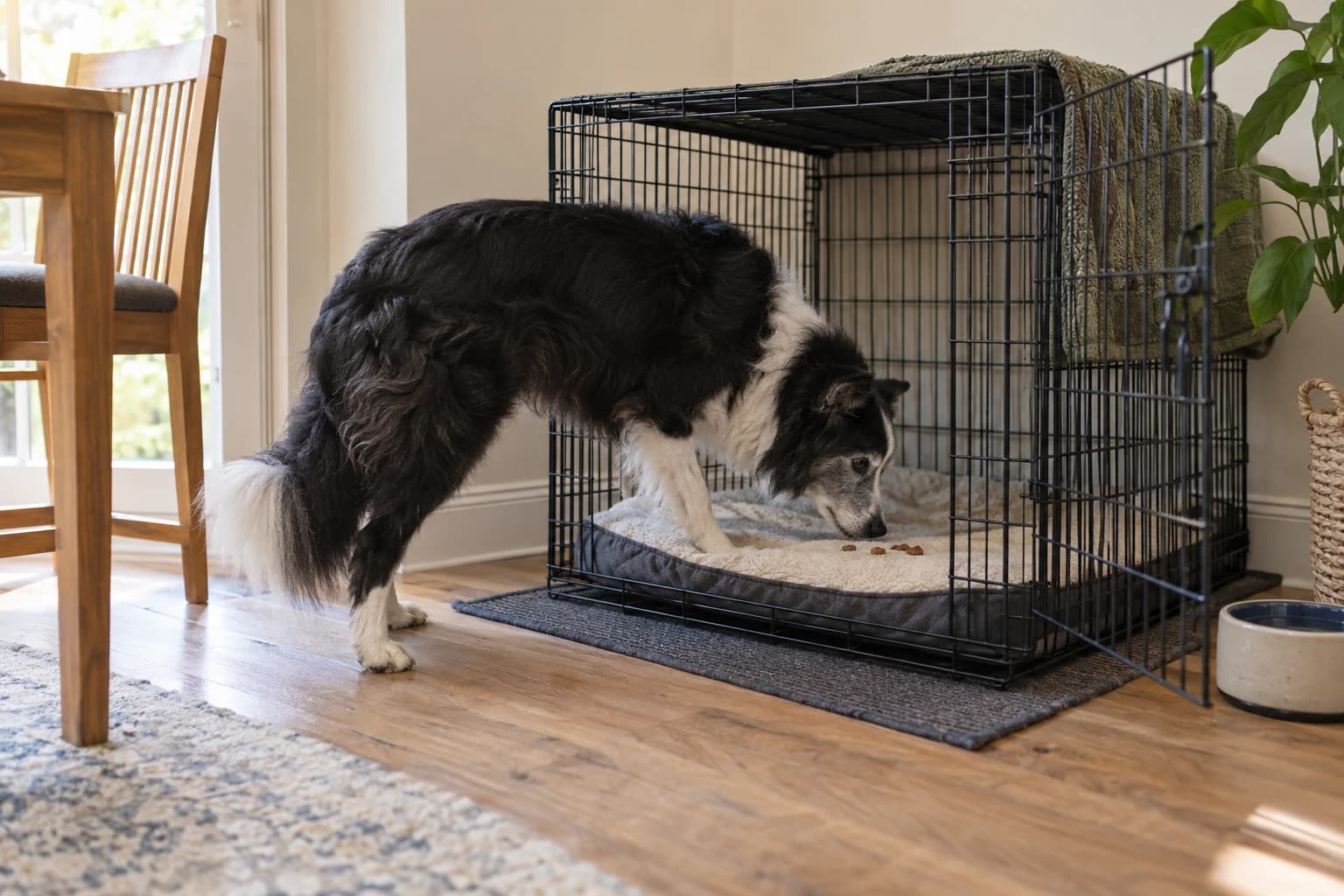
Choose a useful behavior that fits your dog's movement today. Standing calmly while you attach a leash may be more practical than asking for repeated sits. Walking toward a nearby mat may be easier than climbing onto a raised bed. The same attention to footing and recovery belongs in a comfortable senior dog exercise routine.
Begin these adjustments while familiar activities still go smoothly. Maintaining comfortable skills supports your dog's everyday independence and is a sensible use of your budget: simple changes to routines and the home can be inexpensive, while waiting for difficulties to build may mean more involved care and expense.
New or sudden changes in movement, awareness, or behavior need prompt veterinary care, and supplements do not replace diagnosis or treatment.
Keep each session short and easy to finish
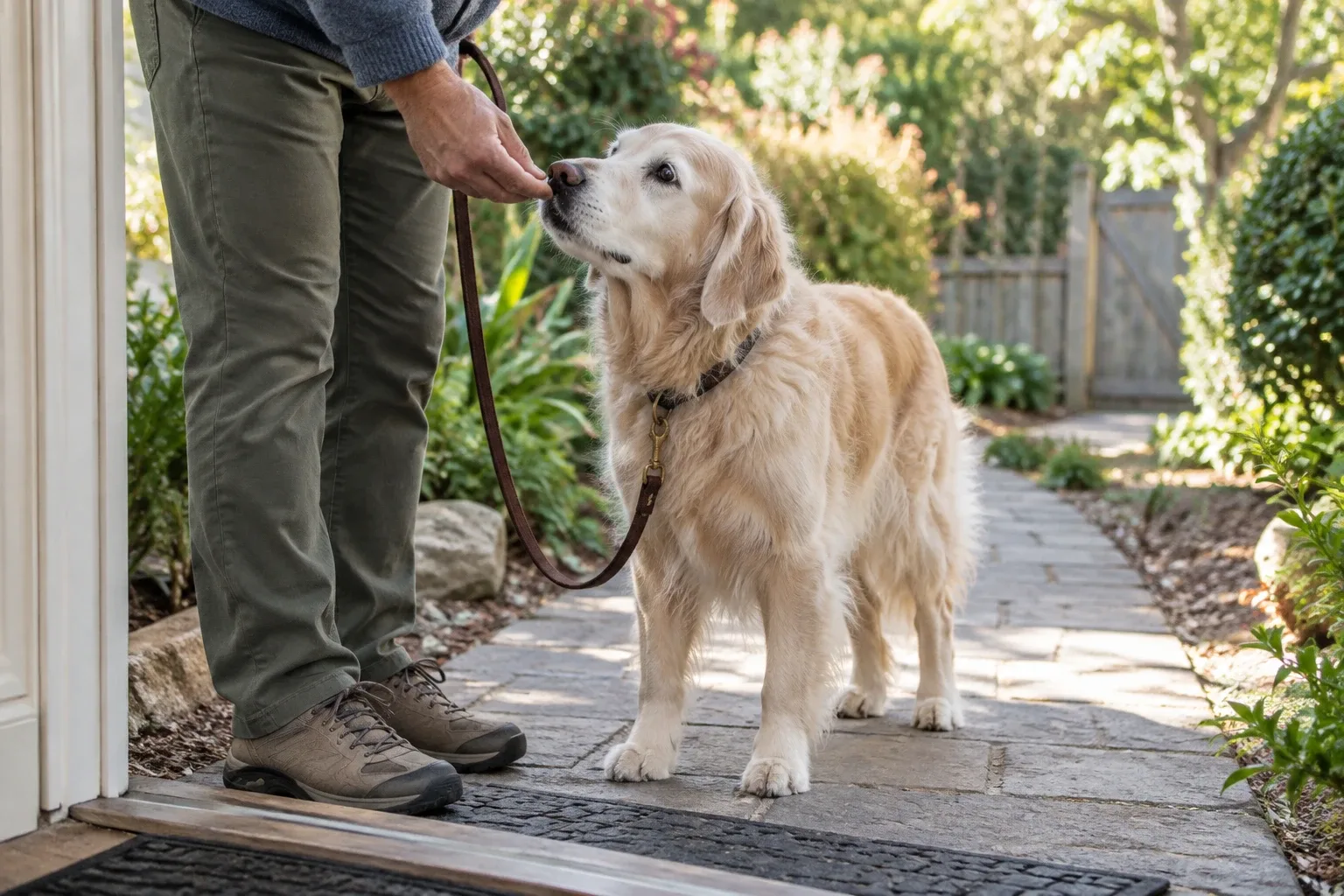
A session can be a small part of something you already do. Before opening the door for a walk, practice a calm pause. Before putting down a meal, reward standing in a comfortable place. When settling in the living room, invite your dog toward their mat.
Use this repeatable process:
1. Prepare the space and reward. Have everything ready so your dog is not waiting through a confusing setup. 2. Give the familiar cue once. Allow time for your dog to respond without filling the pause with more words. 3. Reward the action you wanted. Deliver the reward promptly enough that it connects with the behavior. 4. Offer another easy opportunity only if your dog remains interested. Finish while the task still feels manageable.
Pause if your dog turns away, stops taking a normally welcome reward, repeatedly shifts position, or seems uncomfortable. Those observations are reasons to reconsider the task, setting, or timing, rather than push through.
If a task keeps going wrong, make it smaller. Reward approaching the mat before expecting a settled position on it. Shorten the distance before practicing from across the room. Change one part at a time so you can see what helps.
Give everyone the same cue plan
Household inconsistency can make an ordinary task unnecessarily difficult. If one person says “down” for lying down and another uses it to mean getting off the couch, your dog receives conflicting information.
Write a simple shared cue plan. For each skill, agree on:
- The action: What should the dog actually do?
- The cue: Which word or visible gesture will everyone use?
- The reward: What will follow the action?
- The comfortable version: Can the dog stand instead of sit, or settle beside the bed instead of climbing onto it?
For example, “mat” could mean moving onto a floor-level mat, with no requirement to lie down. Everyone can reward the same action and use the same release word when the practice is finished.
Keep the order of familiar activities predictable, too. For bathroom routines, consistent access and rewarding the right moment matter more than adding obedience exercises; a calm house-training plan for an older dog addresses that separate task.
Adapt cues to what your dog can notice
When hearing changes, a spoken cue from behind your dog may no longer be useful. Approach within view without startling them, get their attention calmly, and pair a clear hand signal with a familiar action. Reward the response rather than testing whether your dog will react to a louder voice.
When vision changes, use a familiar spoken cue from nearby and keep the practice area predictable. Avoid rearranging the route between your dog and the target. A hand signal is only helpful when your dog can see it.
Use this decision aid before repeating a missed cue:
- Did my dog notice me? Adjust your position or reduce background distractions.
- Was the cue familiar and consistent? Return to the household's agreed wording or gesture.
- Was the action comfortable? Offer an easier position or shorter route.
- Was the task too complicated? Reward one small step before adding another.
This keeps the focus on communication. A slower response alone does not tell you whether the difficulty involves hearing, vision, comfort, attention, or understanding.
Fit rewards into the ordinary day
Choose something your dog welcomes. Food, access to a sniffing spot, a favorite toy, or gentle attention can all fit different situations. Watch your dog's response rather than assuming every pat or treat is rewarding.
For food practice, set aside part of the measured daily food when that food is suitable and appealing to your dog. Count additional treats as part of daily intake, and keep a shared container so household members can see what has already been offered. Do not withhold meals to create enthusiasm for training.
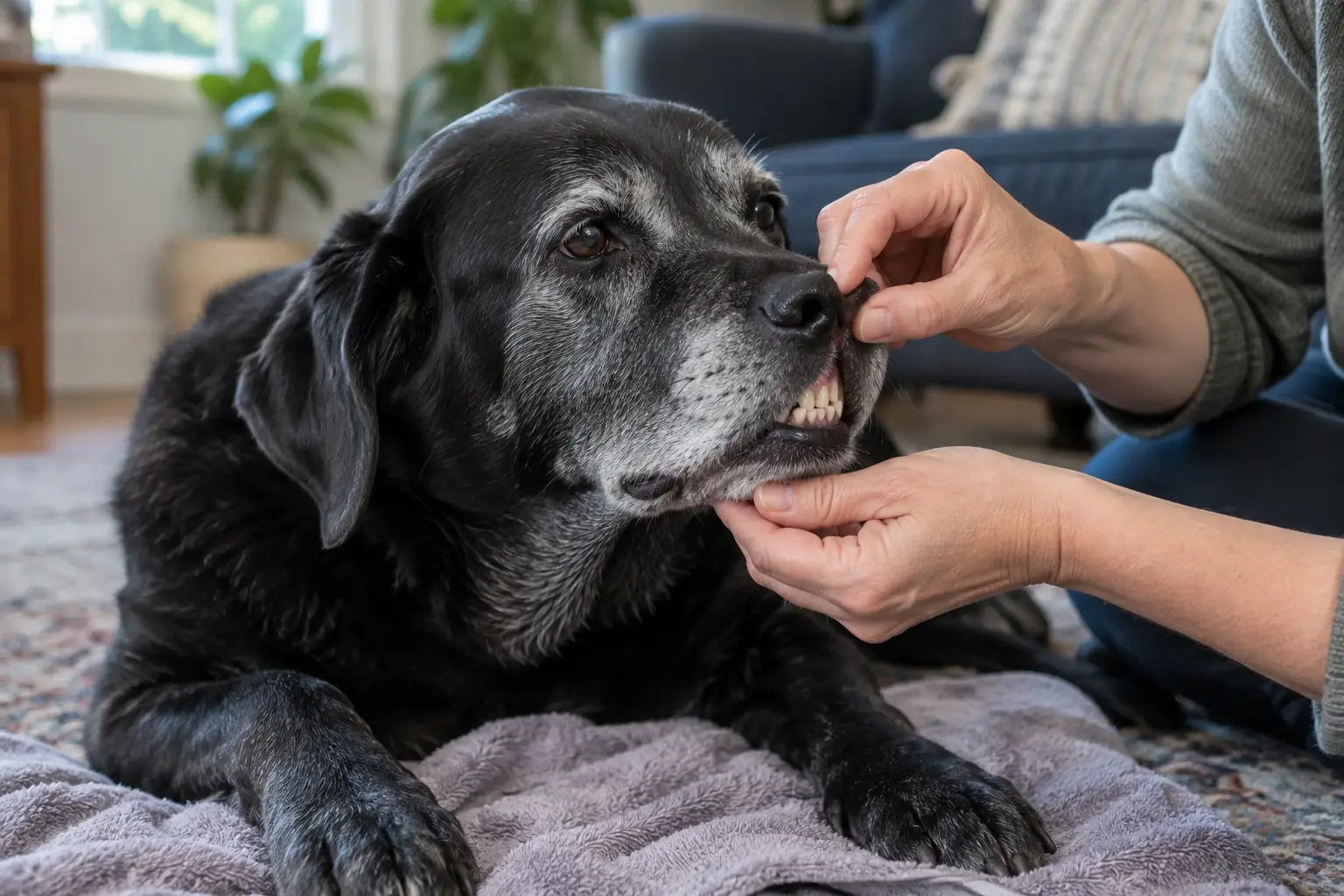
Chewing comfort matters, too. If your dog starts dropping rewards, chewing slowly, or avoiding a familiar texture, record the change instead of simply trying more tempting food. These observations also belong in your senior dog dental care routine.
Keep a brief practice note: the task, cue, setting, reward, and what seemed easy or difficult. Review it before making the task harder. Look for a comfortable, willing response rather than speed or a perfect performance.
FAQ
Is my dog too old to learn a new cue?
Age alone does not make learning impossible. Choose a useful task, teach it in small steps, and adjust the setup to your dog's comfort and senses. Progress can vary without making the practice a failure.
What if my dog succeeds one day and struggles the next?
Check the circumstances before changing your cue. A noisy room, slippery floor, tiring outing, or less appealing reward can change the task. Return to an easier version and note any new pattern.
Should I correct my dog for getting it wrong?
Keep your response calm and reset the task. Scolding, leash corrections, or forcing a position adds pressure without clarifying what you want. Make the next attempt easier and reward the action you are teaching.
How do I know when to make training harder?
Look for willing participation in the current setting. Then change one feature, such as a little more distance or a mild distraction. If your dog struggles, return to the version they could comfortably complete.
For individual health questions, your veterinarian remains the best partner.