TL;DR
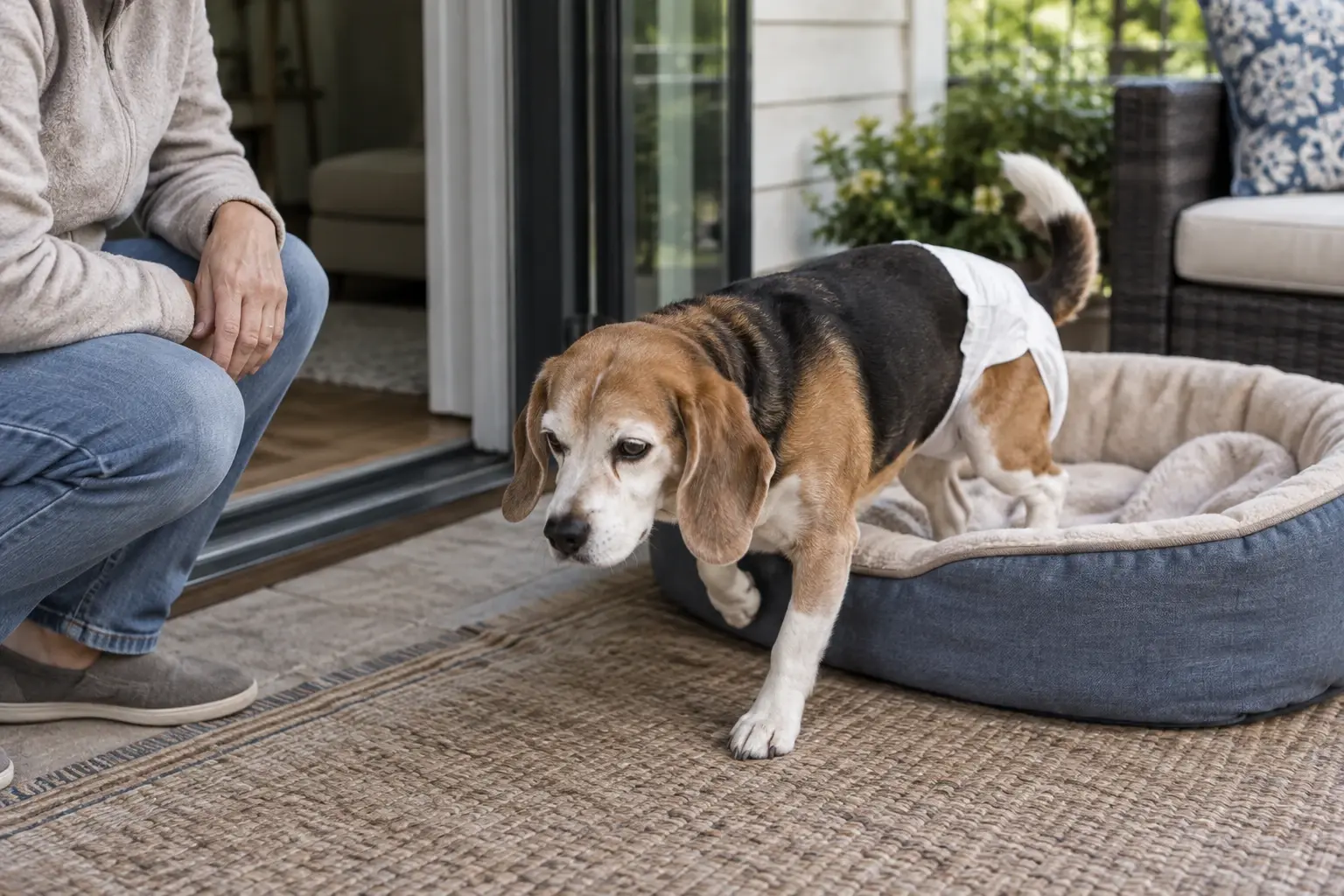
A puddle beside the back door can leave you wondering whether to start house training an older dog all over again. Begin with predictable bathroom trips, easy access, and rewards for going in the right place, while treating new accidents in a previously reliable dog as a change to investigate. Loss of bladder control is involuntary, not disobedience. (sfspca.org)
First, separate retraining from a new change
An older dog arriving in a new home needs a clear introduction to the bathroom routine. A dog who has been reliable for years and suddenly starts having accidents needs attention to what has changed. Training support and investigation can happen together; a puddle alone cannot tell you the cause. (sfspca.org)
Use these observations to decide where to put your attention:
- An unfamiliar routine: Your dog has recently moved in, the usual exit has changed, or household members offer bathroom breaks at different times. Start teaching a consistent route and schedule.
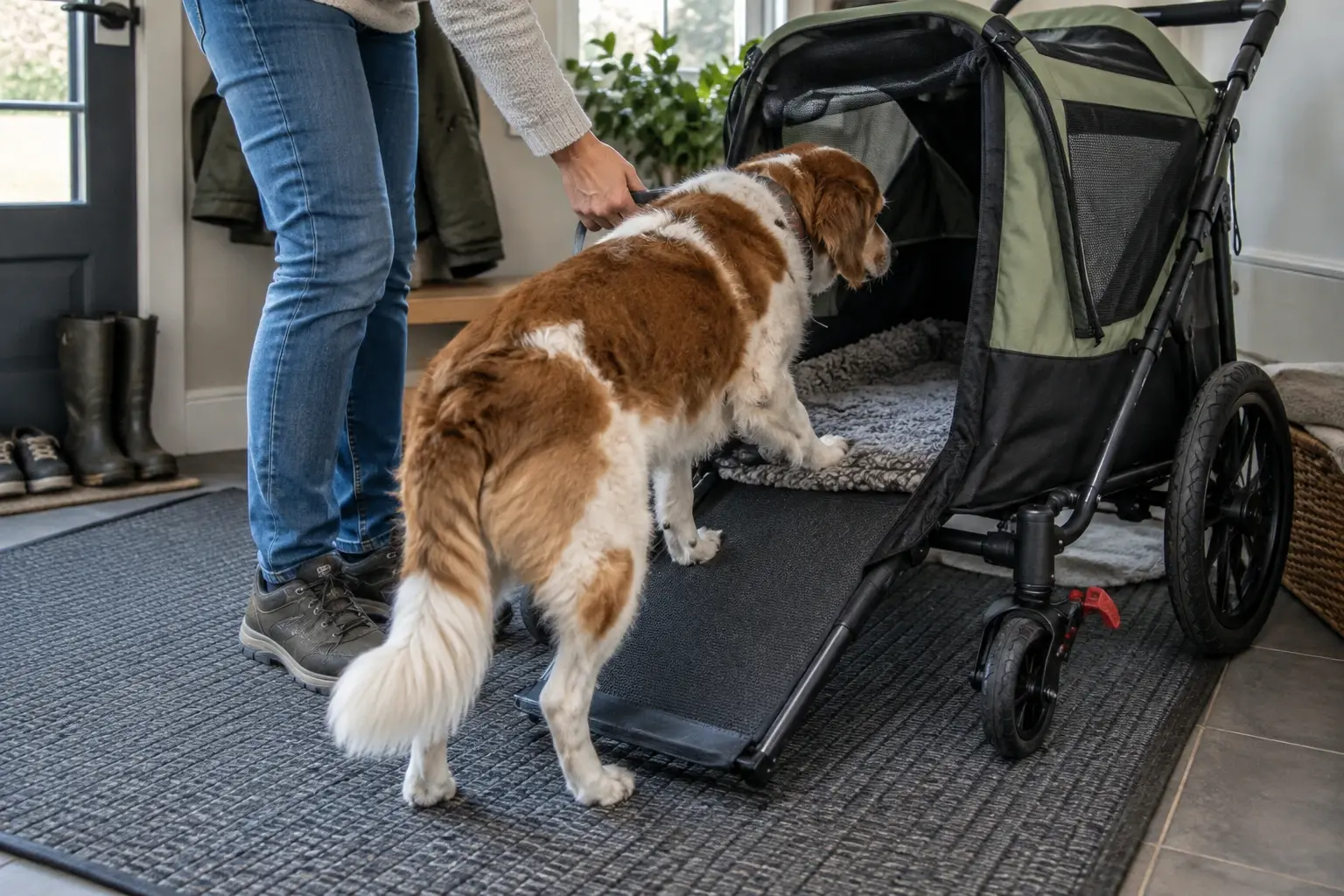
- A difficult route: Watch for hesitation at a slick floor, steps, a heavy door, or the distance to the outdoor spot. Make that route easier rather than urging your dog to hurry.
- A new accident pattern: Record wet bedding, drips while resting, accidents soon after an outing, or changes in your dog's usual bathroom behavior. These details belong in the conversation with the clinic. (pmc.ncbi.nlm.nih.gov)
Contact your veterinarian promptly about new or sudden symptoms; straining with little or no urine needs emergency care, and supplements do not replace diagnosis or treatment. (smallanimal.vethospital.ufl.edu)
Make the bathroom route easier
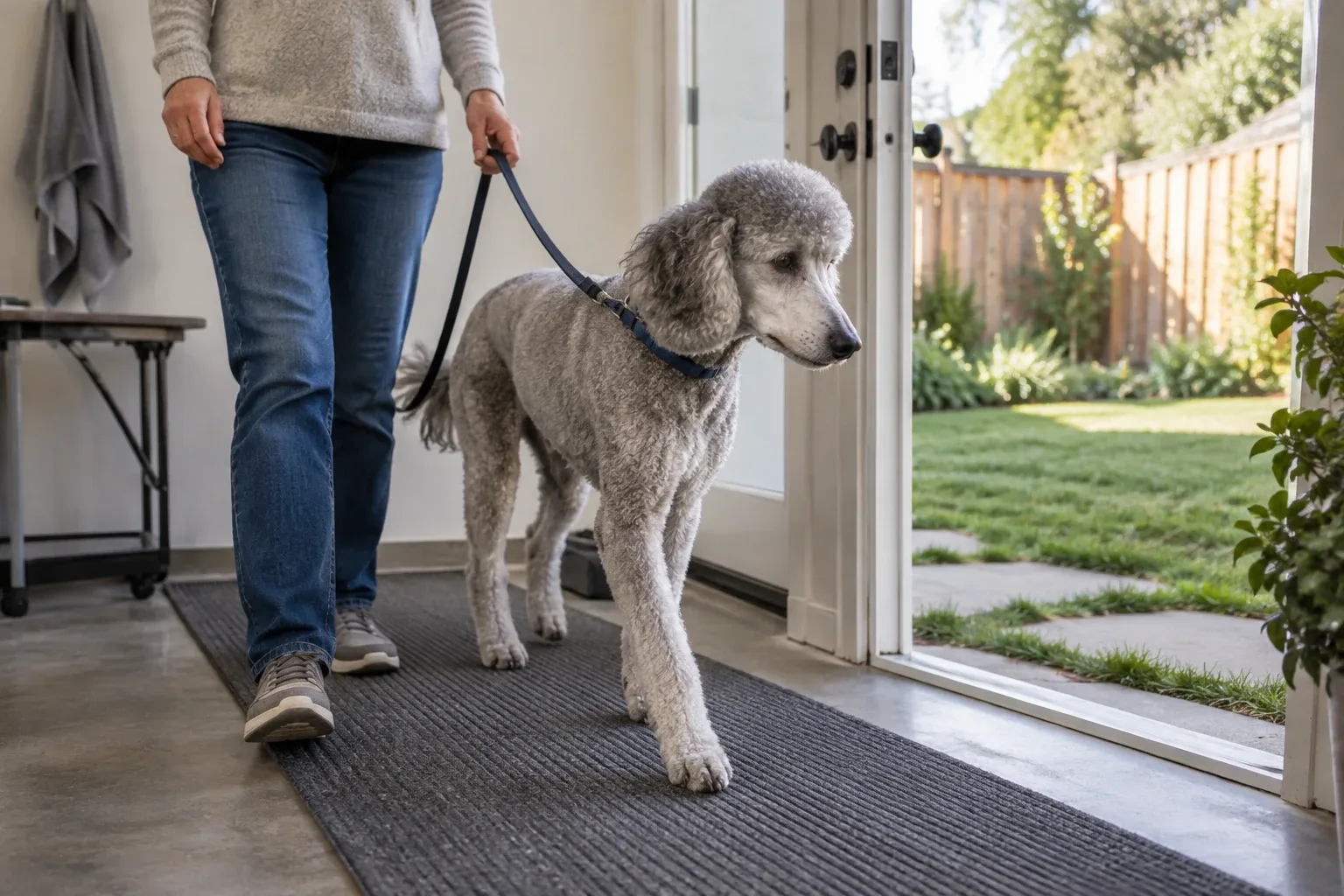
Walk the route from your dog's bed to the bathroom spot. Look at each part: getting upright, crossing the floor, reaching the door, and stepping outside. Start with the first obstacle you notice.
Secure a slipping runner, clear objects from the hallway, and choose the nearest suitable exit. Keep the leash and cleanup supplies where the caregiver can reach them quickly. In an apartment, include the elevator wait and trip through the lobby when planning the outing.
Choose a quiet, familiar bathroom spot and give your dog time there without turning the trip into an exercise requirement. Our comfortable senior dog exercise plan expands on choosing secure footing and letting your dog's comfort guide movement. (dogevera.com)
If outdoor access is temporarily impractical, designate an accessible indoor toilet area with a clear boundary and a washable or replaceable surface. Use the same location consistently rather than scattering pads throughout the home.
Make these adjustments when you first notice difficulty. Supporting everyday function early is kinder to the dog and a sensible use of the household budget: fix the access problem before buying equipment or products that do not address it.
House training an older dog with a repeatable routine
Offer bathroom trips after waking, after meals, before bed, and around the times your notes show your dog needs them. Accompany your dog so you can see whether they actually go. Reward immediately after they finish in the designated place, while you are still there. (sfspca.org)
Keep the routine easy for everyone to repeat:
- Use the same exit and bathroom spot when practical.
- Say a short, consistent cue without repeating it continuously.
- Wait quietly rather than pulling your dog around the area.
- Give calm praise and a suitable reward after they finish.
- Record the result so the next caregiver knows what happened.
Between outings, keep your dog nearby where you can observe them comfortably. If you cannot supervise, choose an accessible, easy-to-clean area with a resting place, rather than using confinement to stretch the time between breaks.
If you find an accident afterward, clean it without scolding. Punishment can make a dog afraid to eliminate in front of you, which makes outdoor practice harder. If you notice an accident happening, calmly offer the route to the designated spot without startling or rushing your dog. (sfspca.org)
Clean the spot thoroughly
Use an enzymatic cleaner intended for pet urine or feces and suitable for the affected material. Follow its directions for application and contact time; a quick wipe may leave odor behind. Thorough cleaning belongs alongside supervision and a bathroom log, rather than replacing them. (myhswm.org)
For each accident:
- Pick up solids or blot up liquid before applying cleaner.
- Check the cleaner's surface instructions and test an inconspicuous area when directed.
- Treat the affected area according to the package directions.
- Keep your dog away while the area is being cleaned and until the directions allow access.
- Check washable bedding and removable covers as well as the floor.
Do not punish your dog by bringing them back to the spot. Put your effort into cleaning it and adjusting the next bathroom opportunity.
Keep a record that helps you act
Use a phone note or a sheet beside the leash. Record successful bathroom trips as well as accidents, so you can compare opportunities with outcomes. The timing, location, and activity surrounding urinary leakage are useful details when assessing the pattern. (pmc.ncbi.nlm.nih.gov)
Use the same prompts each time:
- When and where: Note the time and exact location.
- What happened: Record urine, stool, drips, or wet bedding without guessing the cause.
- What came before: Note sleep, a meal, an outing, waiting at the door, or being alone.
- What you observed: Describe hesitation, straining, apparent discomfort, or an unfamiliar routine.
- What changed recently: List household schedule changes, foods, medicines, and supplements.
For example: “After waking, walked toward the back door, paused at the tile, then urinated beside the mat.” That is more useful than “forgot training again.”
If a new omega-3 product is part of the timeline, our guide to recording possible omega-3 side effects explains what product and symptom details to keep without assuming the product caused the change. (dogevera.com)
Before buying something advertised for an aging dog, name the actual concern. The older-dog supplement buying guide helps separate different support goals and product expectations. Keep this bathroom plan focused on access, observation, and rewarding the desired behavior. (dogevera.com)
FAQ
Should I reward an older dog who already knows the routine?
Yes. Reward immediately after they finish in the designated spot. Keep rewards consistent during retraining instead of waiting until you return indoors. (sfspca.org)
What if my dog goes outside but has an accident afterward?
Record whether you saw them urinate or pass stool outside, when the accident happened, and what they were doing. Avoid assuming that being outdoors means they emptied their bladder; share a new pattern with the clinic. (pmc.ncbi.nlm.nih.gov)
Is wet bedding a training problem?
Wet bedding during sleep or rest is a reason to investigate possible involuntary leakage. Record what you find, provide clean, dry bedding, and avoid treating it as a failure to follow the rules. (pmc.ncbi.nlm.nih.gov)
For individual health questions, your veterinarian remains the best partner.