Start with the question, not the bottle
Your dog is slowing down on walks, or the morning stand-up takes longer, or the breath has changed, and the supplement aisle answers all of it with the same soft chews. The useful move is to decide what you are actually trying to support before comparing brands. "Best dog supplements for older dogs" is not one answer; it is five different answers depending on whether the concern is diet adequacy, mobility, dental care, cognition, or muscle.
This guide helps you pick the category first, then gives you a repeatable checklist for judging products within it.
One calm note: for sudden changes, pain, or anything that worries you, a veterinary conversation comes before any supplement purchase.
Category comparison: which concern are you shopping for?
- Diet adequacy, a complete senior food. If the real issue is that your older dog needs different nutrition than an adult maintenance food, a supplement is not the first tool. Start with the food itself; our guide to senior dog food with higher protein covers how to compare labels on a consistent basis and check whether a muscle product belongs in the routine at all.
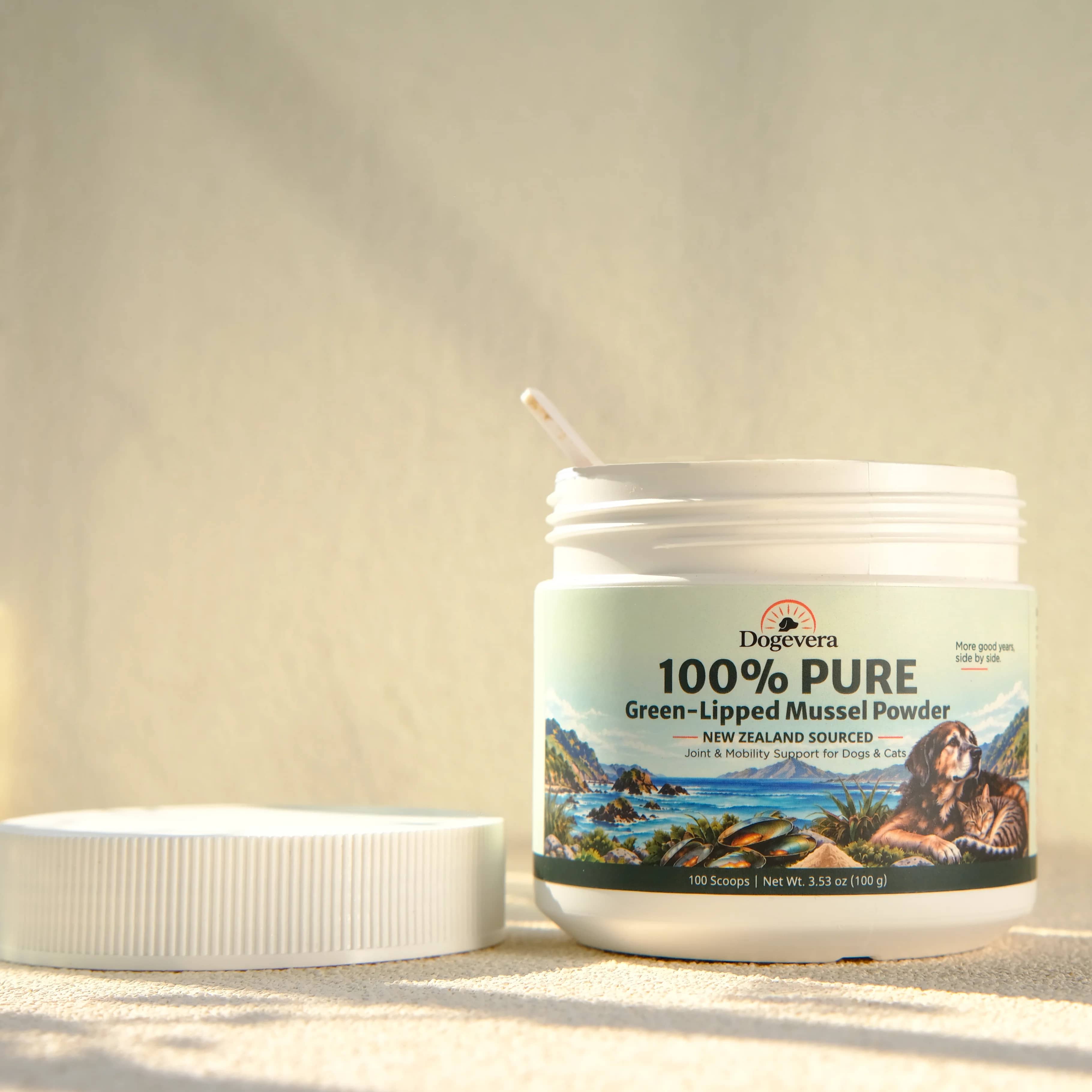
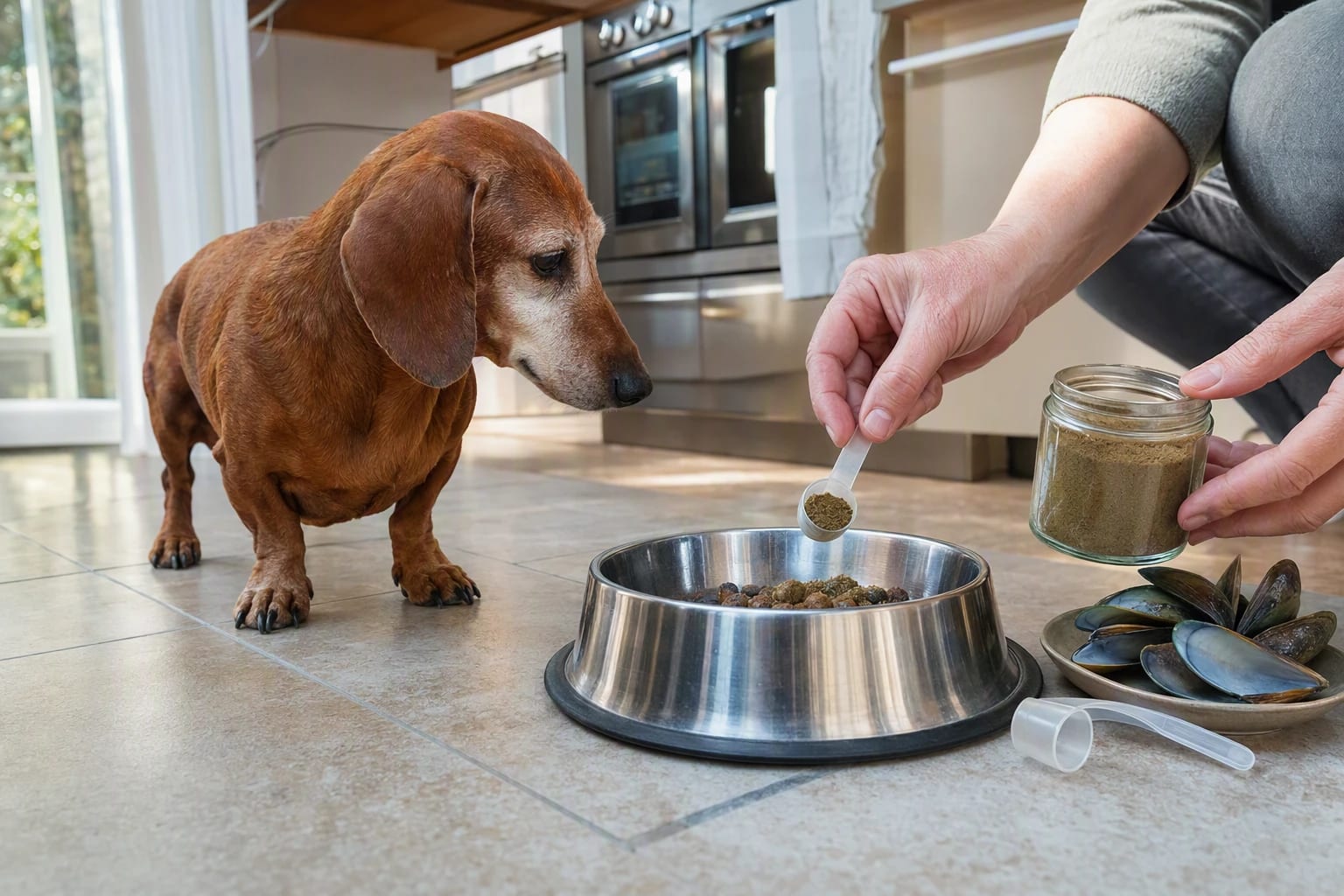
- Mobility and joints, marine and joint ingredients. If stiffness on stairs or a slower pace on a familiar route is the concern, this is the category most people reach for first. Collagen hydrolysates and sulfated glucosamine from crabs and mussels have been studied in a clinical study of 52 dogs with early osteoarthritis symptoms, and the underlying research discusses how these ingredients, along with EPA-type fatty acids, may interact with processes involved in cartilage maintenance (Europe PMC). That is a reason for interest, not proof that any specific jar works. If you choose a green-lipped mussel product, review green-lipped mussel side effects and shellfish concerns first so you know what to record if your dog reacts.
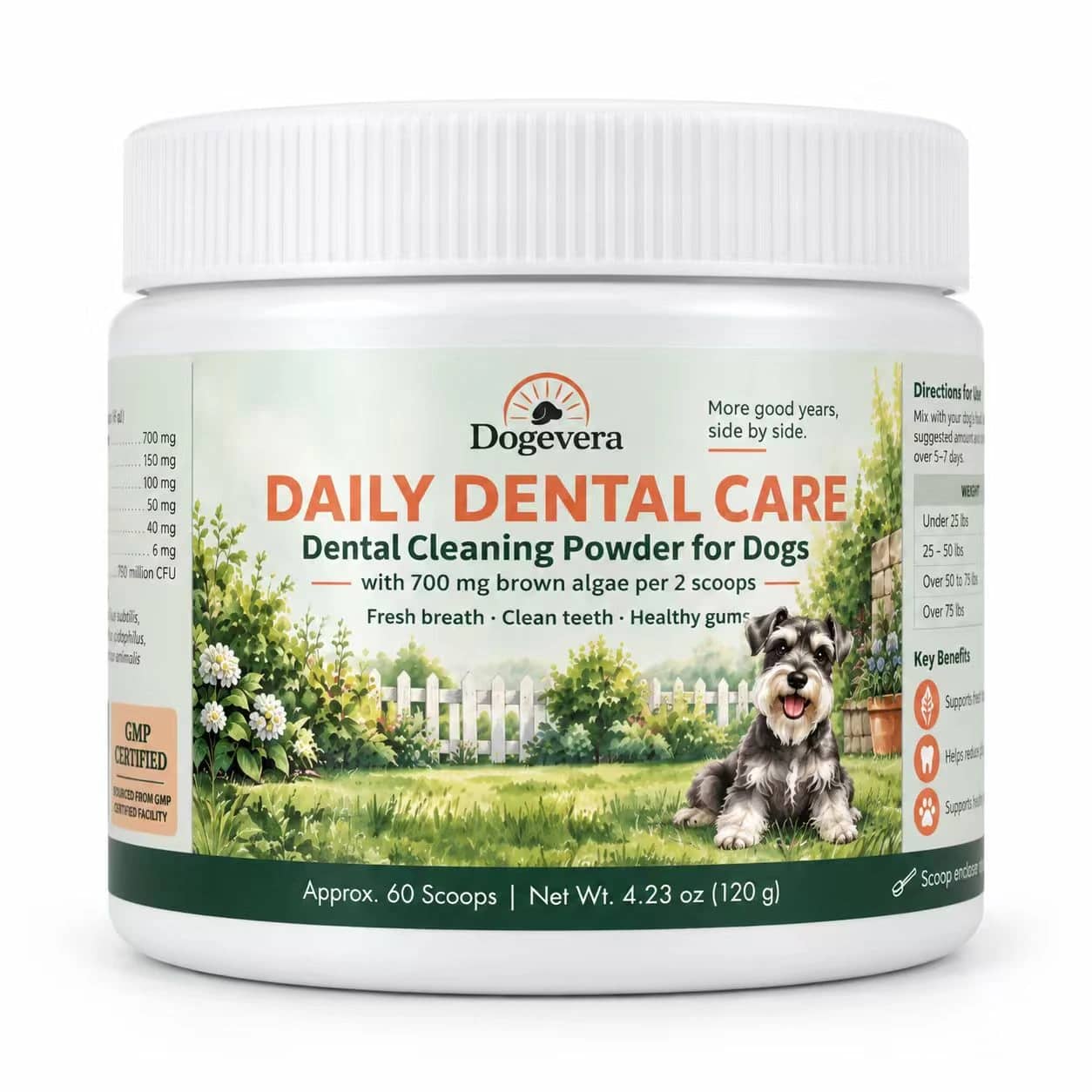
- Dental routine, powders, chews, and brushing. If the trigger was bad breath, the category is dental, not joint. Dental powders and chews are daily-care tools, not treatments for established tartar. Compare by how the product is used, what the label claims, and whether it fits a routine you can actually keep up; our guide to choosing a chew when bad breath is a concern walks through that decision.
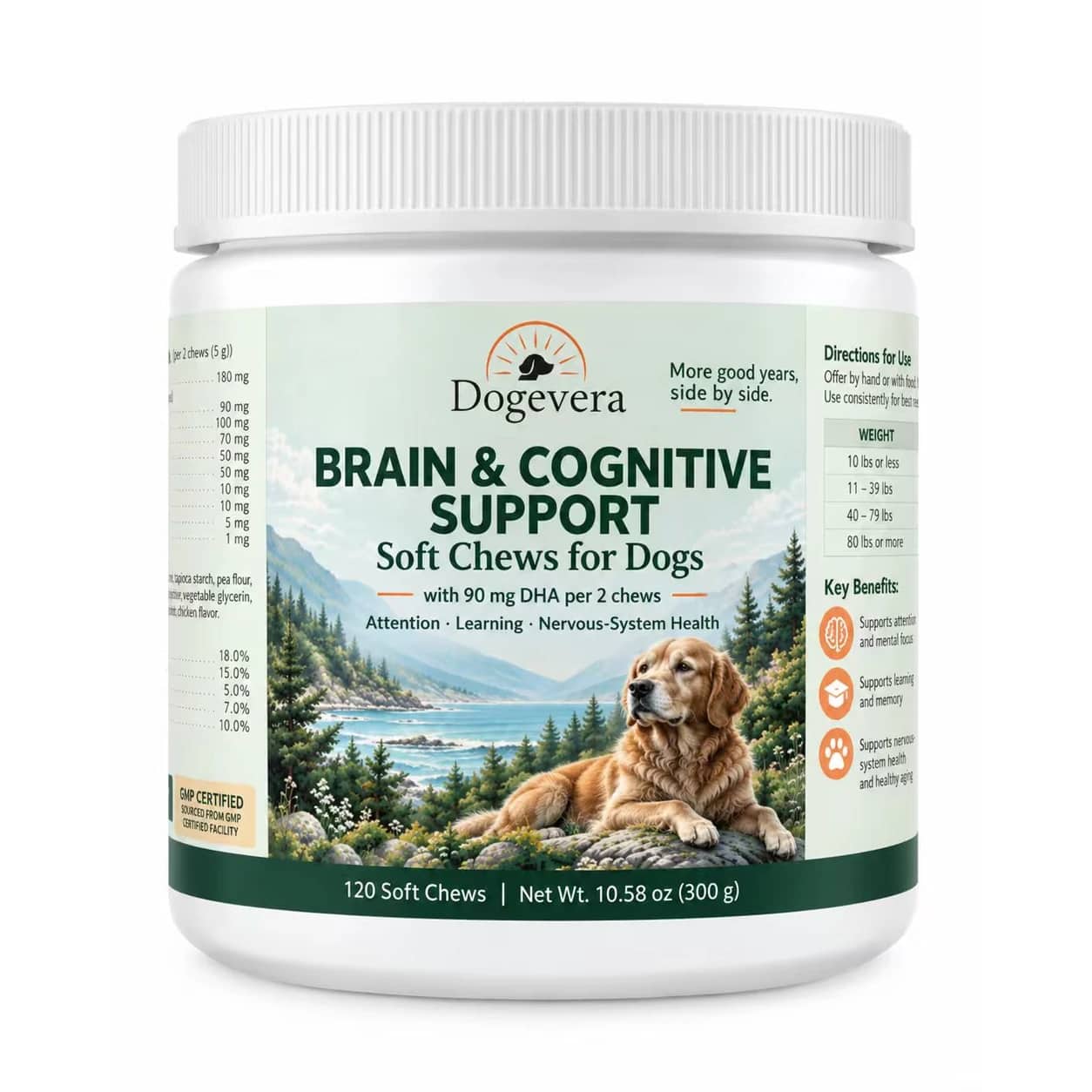
- Cognitive support, behavior changes. If the concern is new confusion, disrupted nights, or staring spells, write down what you see before buying anything. Cognitive supplements exist as a category, but they should never be treated as a diagnosis or a cure. Our senior dog cognitive supplements buying checklist explains how to compare labels and preorder terms without over-reading the promise.
- Muscle nutrition, visible loss of condition. If your dog's back legs look thinner or strength has visibly declined, diet, movement, and a supplement each play a different role. Our guide to supplements for building muscle compares those three levers, including HMB-style products, with a label and evidence checklist.
Why category-first beats brand-first
Most disappointment with senior-dog supplements traces back to a mismatch: a joint product bought for a dental problem, or a cognitive product bought when the real issue was hearing. Choosing the category first does two things. It gives you a fair way to judge any product against its own purpose, and it stops the pile-up of half-used jars on the shelf.
A five-step buying checklist
Use the same process for every category:
1. Name the concern. Write one sentence: what you noticed, when it started, and how often it happens. Record observations for three days before you shop if the change is recent. 2. Confirm diet is adequate first. A supplement on top of an incomplete food is an expensive habit. 3. Read the label for identity and quantity. Ingredient names, declared amounts, serving directions for your dog's weight band, and allergens in the fine print. 4. Check what the evidence is for the ingredient, not the marketing. Understand the limits: ingredient studies are not finished-product proof. 5. Decide what you will track. Choose one observable thing, stairs pace, willingness to finish meals, nighttime restlessness, and note it in the same way each week so you can judge fairly whether anything changed.
How to tell if a supplement is doing anything
Supplements do not announce their effects. Pick one or two concrete observations, the same walk, the same stairs, the same bedtime routine, and log them before starting and weekly afterward. Note whether the full serving was eaten. If you see vomiting, diarrhea, or skin changes after starting a new product, pause it and record the details; our guide to reactions after a new supplement covers what information to keep for your vet.
Regulation: what you are actually buying
Dog supplements in the US are sold under animal-food rules, not as reviewed medicines, which means labels are your main protection. Before buying, check who makes the product, whether the facility and claims are described honestly, and whether batch reports are available. Our shopper's guide to supplement regulation explains what to look for and which claims should make you pause.
If you decide a daily dental powder fits your dog's routine, our daily dental cleaning powder is one option designed to be added to meals as part of a broader dental routine, brushing and professional check-ups still do the heavy lifting.
Frequently asked questions
Can I give my senior dog several supplements at once?
Yes, but check for overlapping ingredients and duplicated servings across products, and introduce them one at a time so you know what any reaction belongs to.
Are supplements a replacement for vet visits?
No. A supplement supports a daily routine; it does not diagnose or treat. New stiffness, appetite changes, or confusion all deserve professional input.
How long before I judge whether a supplement helps?
Set a review point when you start, and use your observation log rather than memory. If nothing in your notes has changed, that is useful information, the honest answer may be that the product does not fit your dog.
Your next step
Write your one-sentence concern, pick its category from the comparison above, and run one product through the five-step checklist this week. One well-chosen addition you can track beats a shelf of guesses.
Reference: Collagen hydrolysates, sulfated glucosamine and fatty acids in dogs with early osteoarthritis, Europe PMC.
For individual health questions, your veterinarian remains the best partner.