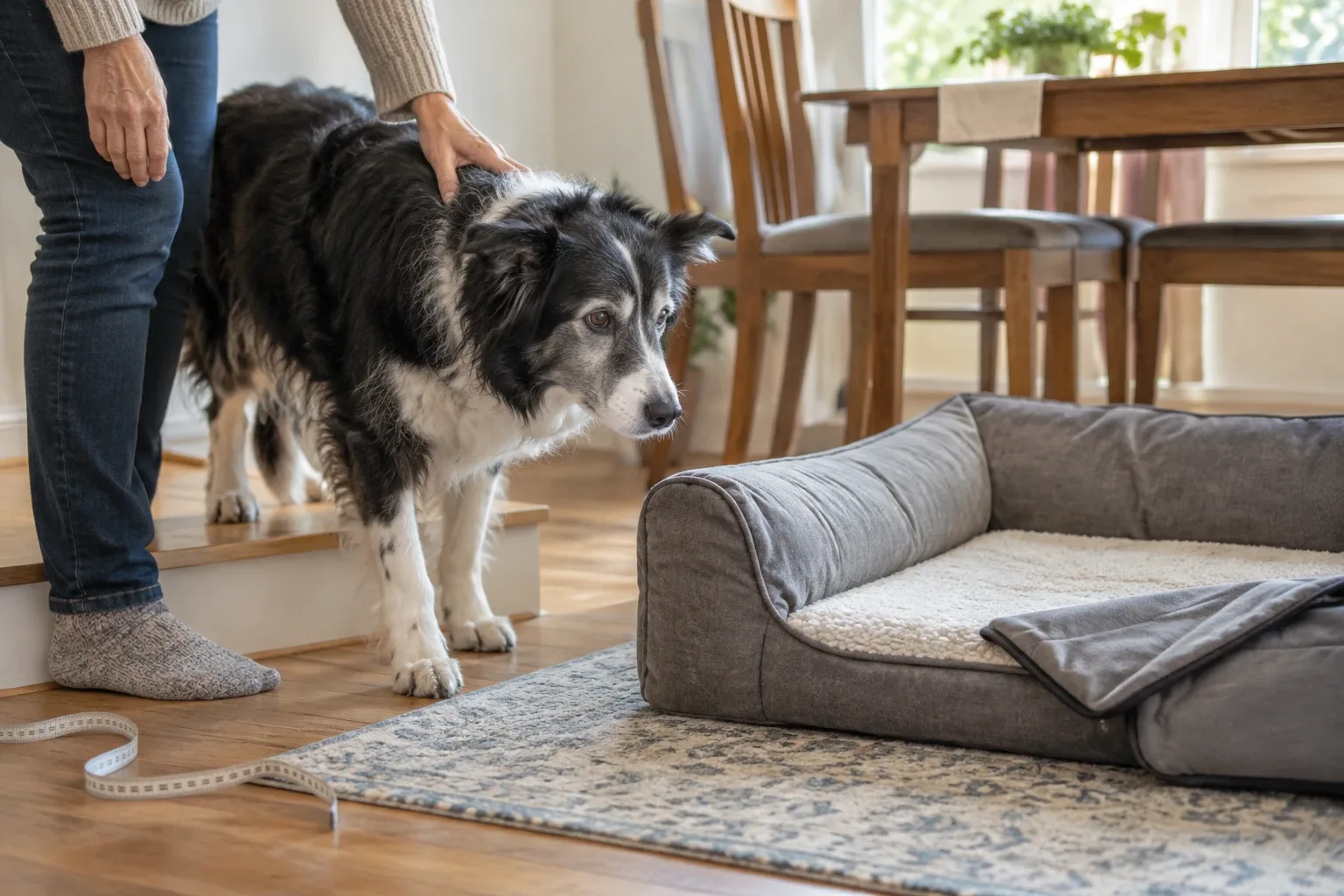
When your older dog circles the same spot before lying down, or pauses at the edge of a new bed, the best choice is usually the one they can enter, leave, and use comfortably every day. A dog bed for senior dogs does not need an “orthopedic” label to be worth considering. Look instead at its support, height, dimensions, cover care, traction, and fit in the room where your dog already rests.
Start With How Your Dog Rests Now
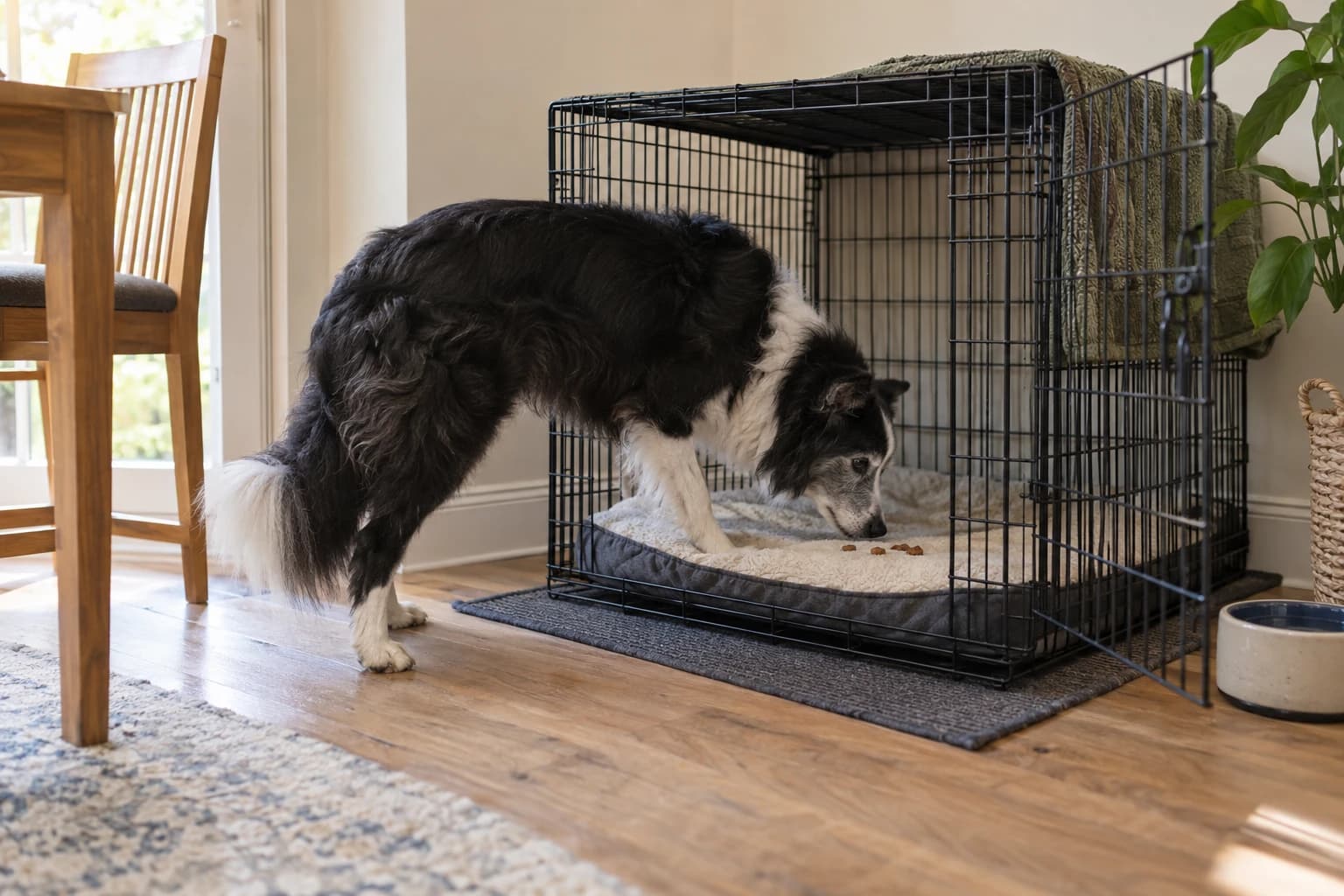
Before comparing listings, watch your dog’s usual resting routine for a few days. You are looking for practical details that affect bed fit, not trying to identify a cause of discomfort.
Notice:
- Whether your dog stretches out, curls tightly, or changes positions often
- Which side of the bed they approach first
- Whether they step directly onto a bed or hesitate at a raised edge
- Whether they prefer a quiet corner, a spot near family, or a cooler floor
- Whether they slide when standing up after a nap
- Whether they leave the bed to lie on the floor instead
These observations help narrow the options. A dog who sprawls needs usable surface area, while a dog who likes to lean against an edge may prefer a bolstered design. A dog who avoids stepping up may do better with a lower entry point.
Compare Support Without Relying on the Label
“Orthopedic” is a marketing term, not proof that a bed will treat pain or solve a mobility problem. Treat it as a description to investigate, not a reason to buy on its own.
Look for usable support details
A product listing is more useful when it clearly explains:
- Fill material: Whether the bed uses foam, fiberfill, a layered design, or another material
- Bed thickness: The overall height of the sleeping surface, including whether the edge is lower than the center
- Base construction: Whether the bottom is firm, flexible, or designed to stay in place
- Cover design: Whether the cover is removable and whether the zipper or seams are protected from chewing or scratching
- Weight and size guidance: Whether the listed dimensions describe the full bed or the actual sleeping area
A thick-looking bed can still have a shallow usable sleeping area if tall bolsters take up much of the surface. Likewise, a soft bed may feel inviting but may not suit every dog’s preferred sleeping position.
Check Entry Height and Bed Dimensions
For many older dogs, the easiest bed is one that does not require a big step up or a deep drop down. Check the height at the point where your dog will most often get on and off, not just the tallest point in the product photos.
A quick fit checklist
Before ordering, compare the listing to your dog’s everyday posture:
- Measure your dog while they are resting naturally, from nose to base of tail.
- Add room for the position they use most, especially if they sleep stretched out.
- Check the dimensions of the sleeping surface, not only the outside dimensions.
- Look at the lowest edge for entry height.
- Consider whether raised sides could make turning around harder in a tight space.
- Leave enough clear floor around the bed for your dog to approach and rise without squeezing past furniture.
For a dog who likes support around the head or back, a bed with a low front and raised sides may be a practical middle ground. For a dog who changes positions frequently, a flat, open bed may allow more freedom to reposition.
Prioritize a Cover You Can Actually Keep Clean
Washability matters because a bed is likely to collect loose hair, dirt, moisture, and everyday odors. The most useful option is not necessarily the one with the most elaborate care claims. It is the one whose cleaning instructions fit your routine.
Compare these details before buying:
- Removable cover: Confirm that the cover, rather than only the full bed, can be removed.
- Machine-wash instructions: Read whether the cover can be machine washed and whether special handling is required.
- Drying instructions: Check whether air drying is required or whether the cover can go in a dryer.
- Water-resistant layer: Find out whether this refers to the cover, an inner liner, or only part of the bed.
- Replacement availability: If a listing offers replacement covers, confirm they are made for the exact bed size and style.
If accidents or spills are part of daily life, a removable cover and an accessible inner layer can make routine cleanup less disruptive. Keep a familiar blanket on top during the first few nights if your dog is cautious about a new texture.
Check Traction Under and Around the Bed
A supportive sleeping surface is only part of the setup. A bed that slides across smooth flooring can be frustrating to enter or leave, especially when your dog is waking up.
Look for:
- A non-slip bottom that covers enough of the base to contact the floor
- A bed shape that stays flat instead of bunching at the corners
- A location away from loose rugs that shift underfoot
- Clear walking space between the bed, water bowl, doorway, and favorite resting areas
After placing the bed, watch what happens when your dog gets up from it. If it scoots, folds, or ends up against furniture, adjust the location or add a stable, non-slip layer beneath it. For broader everyday setup ideas, the Dogevera senior-dog care blog includes guidance on making home routines easier to manage.
Choose the Room Placement Before You Buy
The right bed can be less useful if it is placed in a room your dog rarely chooses. Start with a spot your dog already uses, then consider how the room changes through the day.
A good location often has:
- A predictable level of household activity
- A clear path to water and the door
- Protection from drafts, direct heat, or busy traffic lanes
- Enough space for your dog to turn and settle
- A view of the household if your dog likes to stay near people
Some homes benefit from more than one resting place: one where the household gathers and one in a quieter sleeping area. You do not need to replace every resting spot at once. Start with the place your dog uses most, then notice whether the new setup becomes part of their routine.
Read Return Terms and Product Claims Carefully
A bed can look suitable online and still be a poor match once it is in your home. Review the return policy before removing tags, washing the cover, or allowing extended use.
Questions to answer before checkout
- Is there a return window?
- Must the bed be unused or in its original packaging?
- Are return shipping costs deducted from a refund?
- Are opened, washed, or used bedding items excluded?
- What happens if the bed arrives damaged or incomplete?
- Does the brand describe warranty coverage separately from returns?
Also separate descriptive claims from meaningful details. “Cooling,” “pressure-relieving,” “memory foam,” and “joint support” may sound specific, but the listing should still explain the materials, dimensions, care instructions, and any limits on use. If those basics are missing, it is harder to compare one bed with another.
A new or sudden major change in your dog’s ability to get up, walk, or settle warrants prompt guidance from a veterinary professional.
FAQ
What type of dog bed is best for senior dogs?
The best fit depends on how your dog rests and moves around the bed. Compare a low-entry design, usable sleeping area, supportive construction, washable cover, stable base, and room placement rather than choosing from the label alone.
Is a raised dog bed good for an older dog?
It can be, but check the entry height and how steady the frame feels. A raised bed may not suit a dog who hesitates to step up or has trouble balancing while getting down.
Should a senior dog bed have bolsters?
Bolsters can suit dogs who like to rest their head against an edge or curl into a contained space. An open, flat surface may be a better match for a dog who stretches out or changes position often.
How do I know whether a bed is too small?
A bed may be too small if your dog’s body extends beyond the usable sleeping surface, they cannot turn comfortably, or they consistently choose the floor beside it. Compare the sleeping area with your dog’s natural resting posture before buying.
Related reading
For individual health questions, your veterinarian remains the best partner.