Your dog hesitates at the stairs you've walked together for years, and the joint supplement shelf suddenly feels urgent. Every tub promises hips, joints, and mobility, but the labels rarely tell you what actually matters: which ingredients are declared and in what amounts, whether any evidence applies to the finished product, what else is in the chew, and what it will really cost per day. This guide walks you through that comparison so you can pick from the shelf on your own terms.
If you're still deciding whether a joint supplement belongs in your dog's routine at all, start with our explainer on whether dog joint supplements actually work, then come back here to compare products.
Start With the Ingredient Declaration, Not the Marketing
A good label names its active ingredients and states how much of each is in a daily serving. That's the first filter, and it eliminates more products than any star rating.
Compare candidates on these questions:
- Is every active ingredient named? Look for specific names like green-lipped mussel, glucosamine, chondroitin, or omega-3 sources, not vague blends labeled as a "joint support complex."
- Is a quantity declared per serving? An ingredient listed without an amount gives you nothing to compare between products.
- Are the units consistent? Milligrams per scoop, per chew, or per kilogram of body weight are the numbers that let you line products up side by side.
- Is the serving size matched to your dog's weight? A product with a wide weight band may deliver a much smaller amount per pound for a large senior than the label headline suggests.
If two products cost the same but one declares its quantities and one doesn't, the declared one is the safer comparison, even before you consider anything else.
Ingredient Evidence vs Finished-Product Evidence
Here's a distinction that separates careful buyers from frustrated ones: research on an ingredient is not the same as research on the jar in your hand.
A study of green-lipped mussel, for example, tested a particular preparation at particular amounts. A product containing some green-lipped mussel, possibly an extract, possibly blended with other ingredients, is not automatically covered by that study. The same applies to glucosamine, chondroitin, and omega-3s. When you evaluate a product, ask what evidence exists for that formulation, not just for its headline ingredient.
This matters especially when comparing formats. Our guide to green-lipped mussel versus fish oil for dogs shows how two marine ingredients differ in what their labels let you compare, and why the form of the ingredient changes what the research can tell you.
Check the Carrier and Inactive Ingredients for Allergens
The active ingredient gets the attention, but most of a chew or powder is everything else. For senior dogs with food sensitivities, the fine print matters.
- Flavorings and carriers may include chicken, beef, or other proteins your dog has reacted to before.
- Shellfish-derived ingredients are relevant for households managing shellfish allergies, human or canine. Our article on dog supplement allergens covers how chicken and shellfish hide in the fine print.
- Binders, sweeteners, and preservatives vary widely between soft chews and powders and affect both tolerance and shelf life.
Read the full ingredient list, including the inactive portion, the same way you'd read a new food label.
Format: Powder, Capsule, or Chew?
Format affects acceptance, serving accuracy, and cost. There is no universally better choice, only a better fit for your dog:
- Powders mix into food and make daily servings easy to adjust by weight band, but some dogs object to the smell or texture on their food.
- Soft chews are easy to give and often well accepted, but they may contain more carriers and flavorings, and serving counts matter more because each chew carries the full dose. Our senior-dog guide to hip and joint dog chews walks through comparing chew labels specifically.
- Capsules and tablets offer precise amounts and fewer additives, but giving them depends on your dog's cooperation.
If your dog already refuses food with powder mixed in, or spits out pills, factor that in now. The best comparison on paper loses to the routine you can actually maintain.
Calculate the Real Daily Cost
Sticker price tells you almost nothing. Joint supplements are a long-term purchase, so the number that matters is cost per day for your dog's serving.
Work it out in four steps:
1. Find your dog's weight band on the label and the daily serving it requires. 2. Divide servings per container by that daily amount to estimate how long the container lasts. 3. Divide the price by the days to get a per-day figure. 4. Repeat for each candidate. Comparing per-day costs, not package prices, is the only fair comparison.
For large-breed seniors in particular, per-day costs can differ several-fold between products that look similarly priced. Our cost guide for large breed senior dogs shows how much the label directions can move the math.
A Shortlist Checklist Before You Buy
Run each finalist through these questions. A product that answers most of them clearly is a stronger candidate than one that answers none:
- [ ] Active ingredients named with quantities per serving
- [ ] Serving directions match your dog's weight
- [ ] Evidence applies to the finished product, not just an ingredient
- [ ] Full ingredient list checked for known allergens
- [ ] Format your dog will reliably accept
- [ ] Per-day cost calculated from actual serving directions
- [ ] Storage and batch information on the label
If a product hides behind proprietary blends or unanswered allergen questions, that itself is information.
One Product That Meets the Label Test
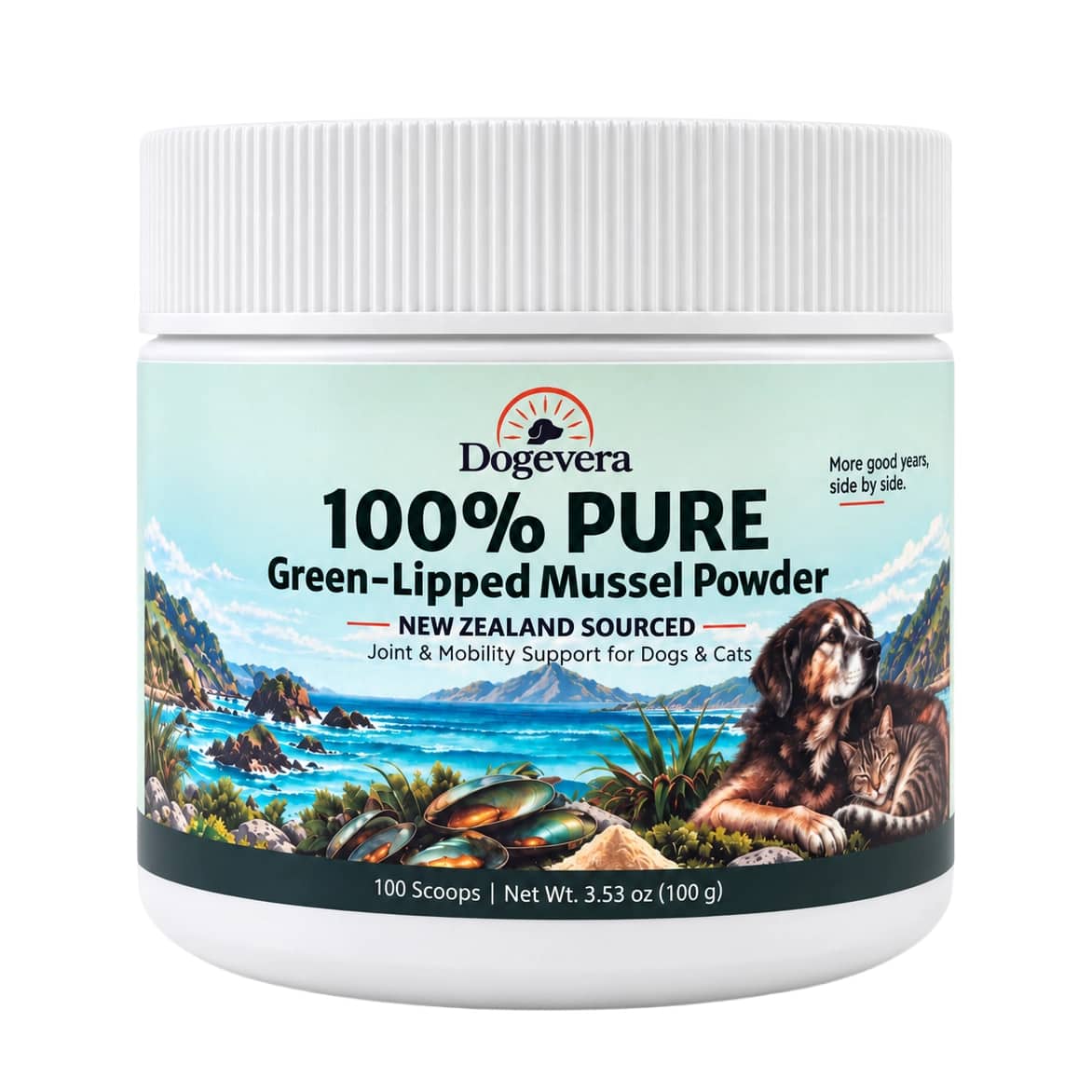
When we built a product for this shelf, we started with the checklist above: a single named ingredient with a declared amount, a clear serving guide by weight, and no hidden carriers. Our New Zealand green-lipped mussel powder for dogs follows that label-first approach, and our serving guide article shows exactly how to read the label and estimate jar life before you buy.
FAQ
How long before I can judge whether a joint supplement is helping? That depends on the product and the ingredient, so the honest method is a home log of specific observations, like stair hesitation and getting up from rest. Our practical guide on how long joint supplements take to work explains what to track and when to check in.
Can I combine a joint supplement with my dog's current food or other supplements? Check for ingredient overlap first. If a complete joint-support food and a joint supplement both contain the same active ingredients, you may be paying twice for one thing. Our article on dog food for joint health compares when food and when a supplement makes sense.
What if my dog won't eat it? Switch format or mixing method rather than forcing it. Acceptance is part of the product fit, not a failure on your dog's part.
This article is general information for everyday senior-dog care, not veterinary advice; for new stiffness, pain, or mobility changes, talk with your veterinarian.
Related reading
For individual health questions, your veterinarian remains the best partner.