TL;DR
Panting is normal after exercise, in the heat or when a dog is excited, but an older dog that pants heavily at rest, at night or in a cool room is usually telling you something: pain, heat stress, Cushing's disease, heart or lung disease, a weak larynx, anemia, extra weight, anxiety or a side effect of medicine. Count breathing while your dog is sound asleep: a sleeping rate that stays above 30 breaths a minute is a warning sign for heart failure. Two senior-dog causes are easy to miss. Laryngeal paralysis is most often seen in old, large-breed dogs, causing noisy, raspy panting and tiring easily. Heatstroke hit 0.04% of UK dogs in a year, but 14% of those cases were fatal, and risk was higher in dogs over 2, heavier dogs and flat-faced breeds. Blue or grey gums, collapse, or panting with a hard, swollen belly need an emergency vet now.
Normal panting or a problem?
| Usually normal | Worth a vet visit |
|---|---|
| After a walk or play, settling within minutes | Panting at rest in a cool room |
| On a hot day, easing in the shade | Panting that wakes your dog or keeps it from settling at night |
| Brief excitement or a car ride | New panting that comes with coughing, weakness or weight loss |
| Noisy, raspy or high-pitched breathing | |
| Sleeping breathing rate over 30 a minute |
Emergency signs
Go to a vet now for:
- Blue, grey or very pale gums. See pale gums in dogs.
- Collapse, or panting with stumbling or confusion.
- Panting in heat that does not ease with shade and water, or a very hot body.
- Retching with nothing coming up and a swollen belly.
- Struggling to breathe in, with the neck stretched out and elbows held wide.
Causes of heavy panting in older dogs
Heat stress
Older and heavier dogs cope less well with heat. In the UK study of over 900,000 dogs, Chow Chows, Bulldogs and French Bulldogs were among the breeds at higher risk of heatstroke, along with dogs over 2 years old, dogs heavier than average for their breed, flat-faced dogs and dogs over 50 kg.
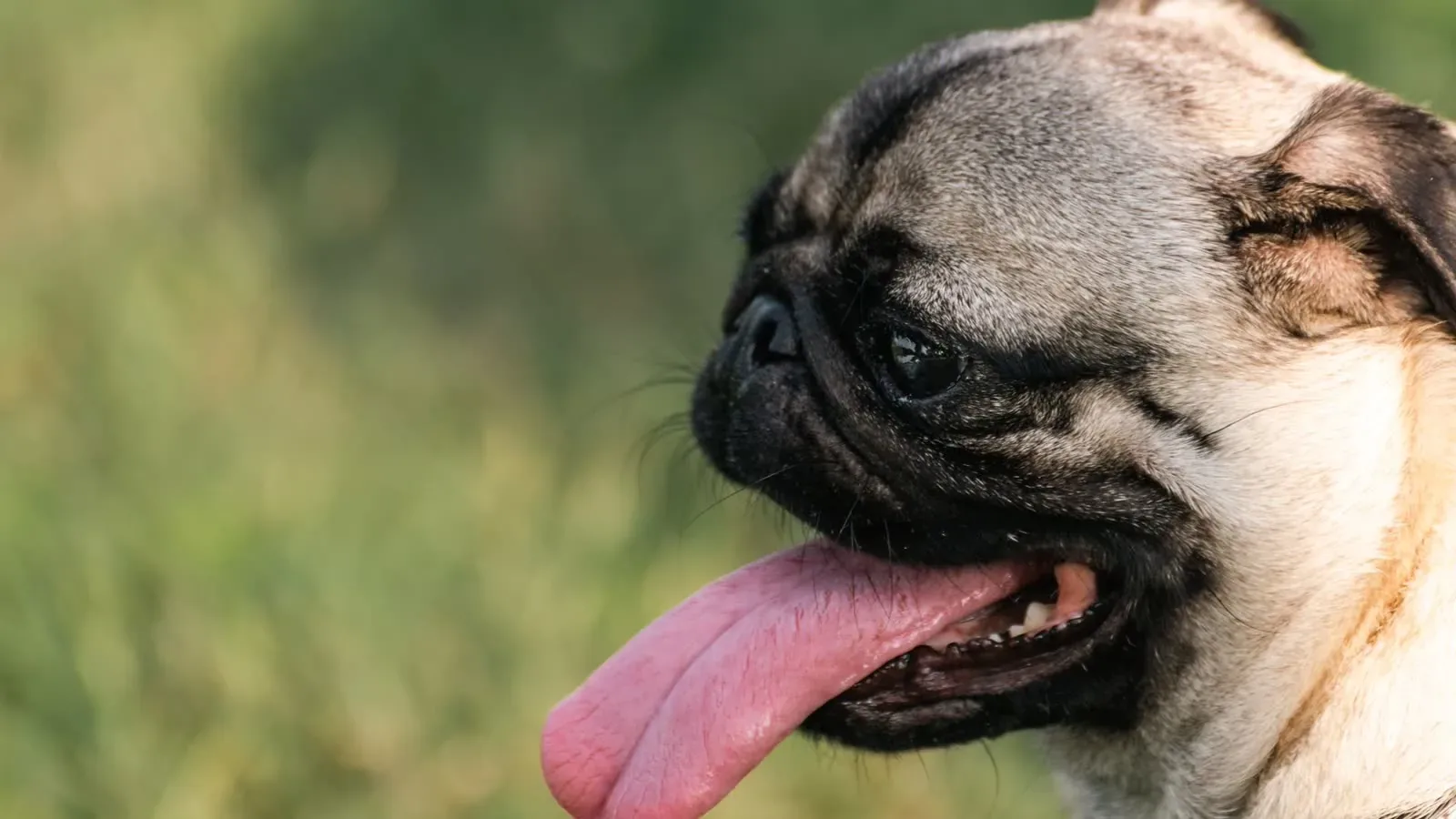
Our founder Morty learned this with pugs. On one daytime walk, one of Morty's pugs started panting very hard and came close to heatstroke; it recovered after resting in the shade and drinking water. Since then, Morty's summer walks with flat-faced dogs have been short, and never at a run. See French Bulldog lifespan and English Bulldog lifespan.
Pain
Panting, restlessness and not settling at night are common signs of pain, especially arthritis, in dogs that otherwise hide it. Morty's pugs with stiff back legs would sit down often and not want to move; panting at rest plus reluctance to get up is worth a pain check. See sudden stiffness in senior dogs and arthritis shots for dogs.
Cushing's disease
Excess cortisol causes heavy panting even at rest, along with drinking more, a big appetite and a pot belly. In a study of dogs with Cushing's, beyond panting, 57% also had a cough, 62% snored, 95% were overweight and nearly half had changes on chest X-rays. See Cushing's disease in dogs.
Heart disease
Fluid building up in the lungs makes breathing fast at rest and during sleep. Counting the sleeping breathing rate is the easiest early check. See congestive heart failure in dogs and dog breathing rate.
Laryngeal paralysis
The vocal folds stop opening properly when the dog breathes in. A review describes the common acquired form as typically seen in old, large-breed dogs and as part of a slowly progressive nerve condition. Signs are:
- Loud, raspy panting, especially in warm weather or with excitement.
- A changed or hoarse bark.
- Tiring quickly and overheating easily.
- Coughing or gagging when eating or drinking.
Surgery ("tie-back") helps severely affected dogs, and dogs with the slowly progressive form reached median survival of 3 to 5 years after surgery. Keep these dogs cool, lean and on a harness rather than a collar.
Other causes
- Lung disease and airway collapse. See senior dog coughing.
- Anemia, where the body pants to compensate for low oxygen delivery.
- Obesity, which makes breathing and cooling harder. See obesity in dogs.
- Steroid medicines such as prednisolone.
- Anxiety and cognitive decline, especially at night. See cognitive changes in senior dogs.
- Nausea or an upset stomach.
Why is my old dog panting at night?
Night panting usually comes down to:
- Pain that is worse after lying still or in a hard bed.
- Cushing's disease or heart disease.
- A warm room or too many blankets.
- Cognitive decline, with pacing and restlessness.
- Needing to pee, from increased thirst or incontinence. See urinary incontinence in older dogs.
Write down when it happens, how long it lasts and your dog's sleeping breathing rate, and take a video for your vet.
What your vet will check
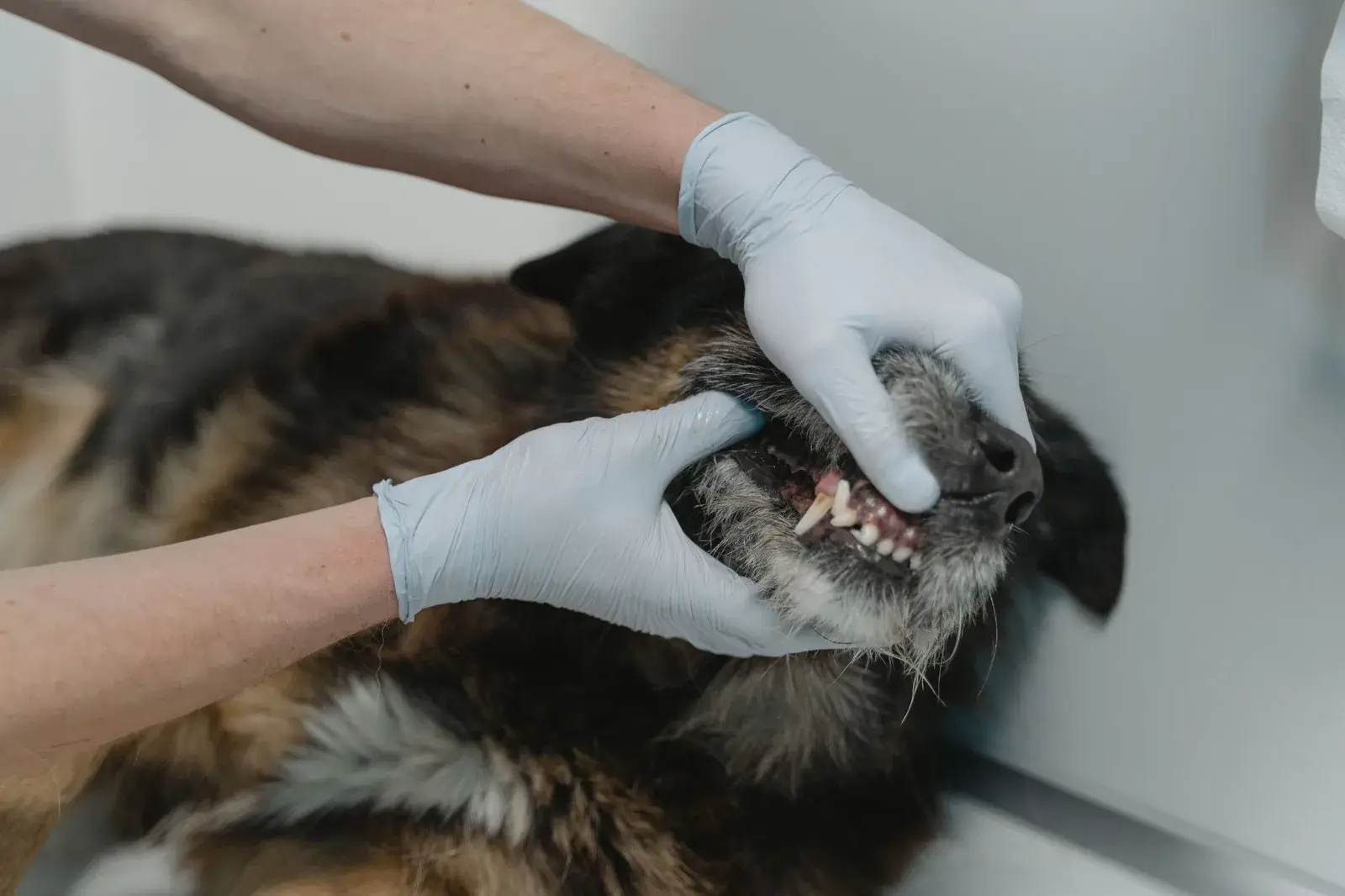
- Gum color, heart and lung sounds, temperature and pain on handling.
- Blood tests for anemia, Cushing's and organ function.
- Chest X-rays for heart and lung disease.
- Larynx exam under light sedation if laryngeal paralysis is suspected.
- Blood pressure.
What you can do at home
- Keep your dog cool: shade, fans, cool floors and walks at dawn or dusk in warm weather.
- Count the sleeping breathing rate a few times a week.
- Keep your dog lean. Heavier-than-average dogs were at higher risk of heatstroke.
- Use a harness, not a collar, for dogs with noisy breathing.
- Make the bed comfortable and supportive for dogs with sore joints.
- Never leave a dog in a parked car, and do not over-exercise in heat. In UK dogs, 74% of heatstroke events were triggered by exercise and only 5% by being shut in a hot car. Older dogs and dogs with breathing problems had the highest odds of heatstroke from hot weather alone.
FAQ
Why is my old dog panting so much?
Common causes in older dogs are pain, heat, Cushing's disease, heart or lung disease, laryngeal paralysis, anemia, extra weight, anxiety and steroid medicines.
Why does my senior dog pant at night?
Most often pain, Cushing's or heart disease, a warm room, cognitive decline or needing to pee. Count the sleeping breathing rate and see your vet if night panting is new.
When is panting an emergency?
When gums are blue, grey or pale, your dog collapses, panting in heat does not ease, the belly is swollen, or your dog struggles to breathe in.
Is heavy panting a sign of pain in dogs?
Often, yes. Panting at rest, restlessness and reluctance to move or lie down are common signs of pain, especially arthritis.
Which dogs are at risk of heatstroke?
Flat-faced breeds such as Bulldogs and French Bulldogs, Chow Chows, very large dogs, overweight dogs and dogs over 2 years old had higher risk in a UK study.
References
- Hall EJ, Carter AJ, O'Neill DG. Incidence and risk factors for heat-related illness (heatstroke) in UK dogs under primary veterinary care in 2016. Scientific Reports. 2020. PMID: 32555323
- Hall EJ, Carter AJ, O'Neill DG. Dogs don't die just in hot cars: exertional heat-related illness (heatstroke) is a greater threat to UK dogs. Animals. 2020. PMID: 32751913
- Kitshoff AM, et al. Laryngeal paralysis in dogs: an update on recent knowledge. Journal of the South African Veterinary Association. 2013. PMID: 23718178
- Mendonça DA, et al. Clinical respiratory and radiographic abnormalities in dogs with spontaneous hypercortisolism. Canadian Journal of Veterinary Research. 2024. PMID: 39355685
- Porciello F, et al. Sleeping and resting respiratory rates in dogs and cats with medically-controlled left-sided congestive heart failure. The Veterinary Journal. 2016. PMID: 26639825
For individual health questions, your veterinarian remains the best partner.