TL;DR
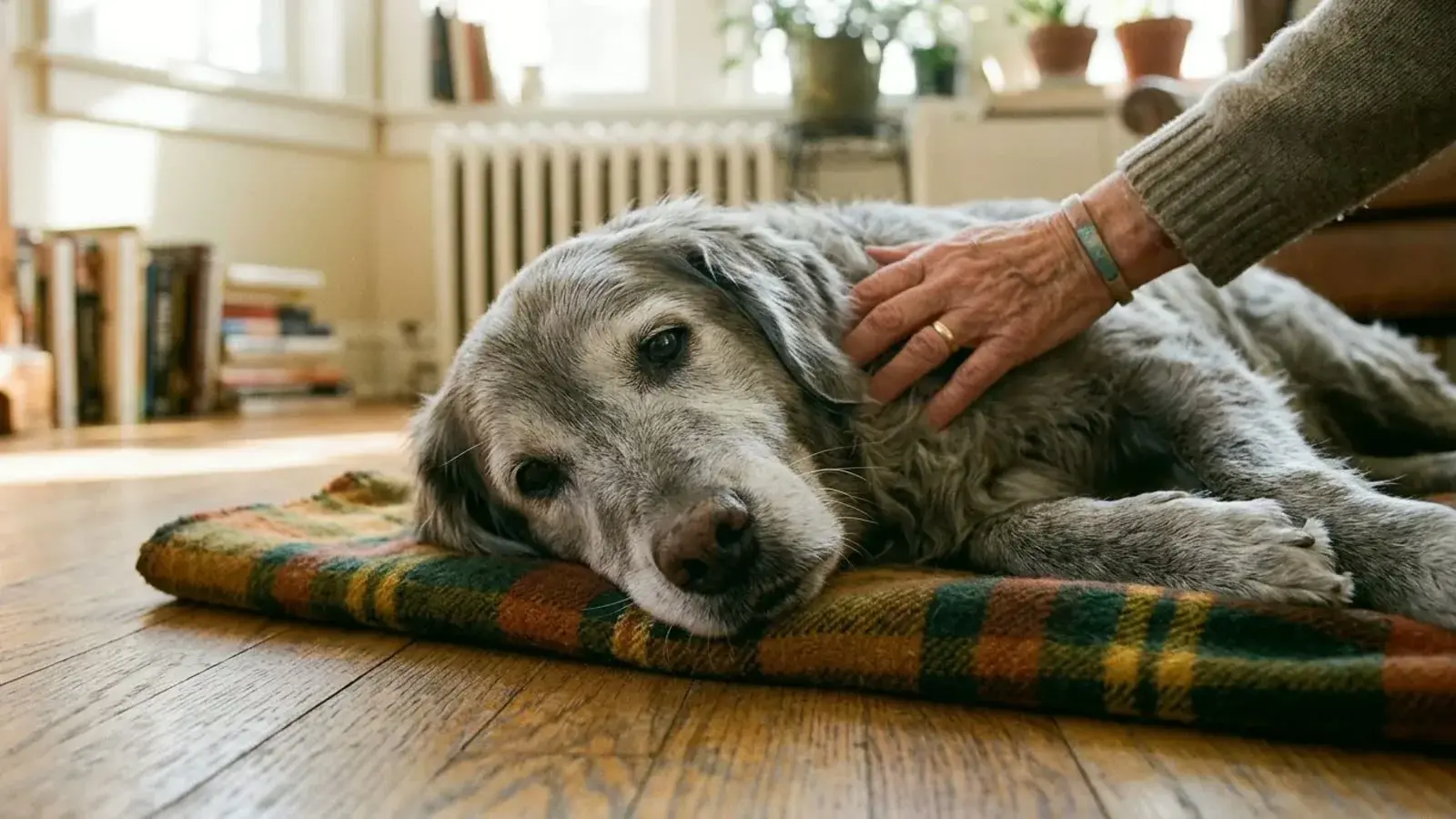
Urinary incontinence in an older dog means urine leaks without the dog meaning to pee, usually as wet patches where it has been lying or dribbling while it sleeps. It is common and very treatable. In a UK study of 100,397 female dogs, 3.1% were diagnosed with incontinence, rising to more than 15% in high-risk breeds such as the Irish Setter, Dobermann, Bearded Collie, Rough Collie and Dalmatian. Females aged 9 to 12 had nearly 4 times the odds of younger adults, and spayed and heavier females were at higher risk. Male dogs are affected too: about 1% overall, with 10 times the odds at 9 to 12 years. The most common cause in spayed females is a weak urethral sphincter, and a daily tablet (phenylpropanolamine) restored long-term continence in 8 of 9 dogs in one study. Leaking is not the same as a dog that squats often and strains, which suggests infection or stones, and not the same as a dog that forgets its house training, which can be cognitive decline.
Is it incontinence or something else?
| What you see | Most likely | Next step |
|---|---|---|
| Wet patch where your dog slept, dog unaware | True incontinence (weak sphincter) | Vet check; usually a daily tablet |
| Dribbling while walking, otherwise normal | Incontinence or overflow from a blocked or weak bladder | Vet check soon |
| Peeing often, straining, small amounts, blood | Infection or bladder stones | Urine test |
| Large puddles, drinking much more | Diabetes, kidney disease, Cushing's | Blood and urine tests |
| Peeing indoors normally, as if it forgot | House-training loss, often from cognitive decline or pain | See below |
| Straining with nothing coming out | Blockage | Emergency |
Large-volume accidents in a dog that is drinking more are one of the clearest signs of an underlying disease. See signs of diabetes in dogs, kidney disease in dogs and Cushing's disease in dogs.
Causes of urinary incontinence in older dogs
Weak urethral sphincter (USMI)
This is the most common cause in spayed females. The muscle that keeps the bladder closed loses tone, and urine leaks when the dog relaxes or sleeps. In a study of 163 spayed females with the condition:
- Affected dogs weighed more than continent spayed dogs.
- Incontinence started a median of 3.7 years after spaying.
- For dogs expected to weigh over 25 kg, each month that spaying was delayed in the first year lowered the risk; for dogs under 15 kg it made no difference.
Age and breed
In the UK study of female dogs:
| Risk factor | Odds of incontinence |
|---|---|
| Age 9 to 12 years | 3.86 times |
| Spayed | 2.23 times |
| At or above average adult weight for the breed | 1.31 times |
| Irish Setter | 8.09 times |
| Dobermann | 7.98 times |
In male dogs, age had an even bigger effect (10.46 times the odds at 9 to 12), and Bullmastiffs, Irish Setters, Fox Terriers, Bulldogs and Boxers had higher odds. Neutering and body weight were not linked to incontinence in males. See Doberman lifespan, Boxer lifespan and English Bulldog lifespan.
Other causes
- Urinary infection and bladder stones irritate the bladder. See dog UTI symptoms.
- Spinal problems in long-backed or arthritic dogs can affect the nerves to the bladder.
- Prostate disease in intact males.
- Bladder tumors, which often cause straining and blood in older dogs.
- Too much urine: diabetes, kidney disease and Cushing's fill the bladder faster than it can hold.
How vets find the cause
- History: when it leaks, how much, and whether your dog knows.
- Urine test and culture for infection, sugar and concentration.
- Blood tests for kidney disease, diabetes and Cushing's.
- Ultrasound or X-rays for stones, tumors and bladder shape.
- Neurological exam if the back legs are weak too.
Treatment
Medicine for a weak sphincter
Phenylpropanolamine (PPA) tightens the urethral sphincter. In a study of 9 spayed females given it once a day, 8 achieved long-term continence, and pressure tests showed the sphincter closing more strongly. In the 163-dog study, 75.5% were prescribed PPA. Estrogen tablets are the other main option for females, and some dogs need both. Side effects to watch for include restlessness and increased blood pressure, so older dogs need checkups on PPA.
Treating the cause
Antibiotics for infection, removal or dissolution of stones, and treatment of diabetes, kidney disease or Cushing's often stop the leaking.
When tablets do not work
Specialists can offer procedures such as urethral bulking injections or surgery to support the bladder neck.
Managing leaks at home
- Washable, waterproof bedding with an absorbent top layer. Wash bedding often to protect the skin.
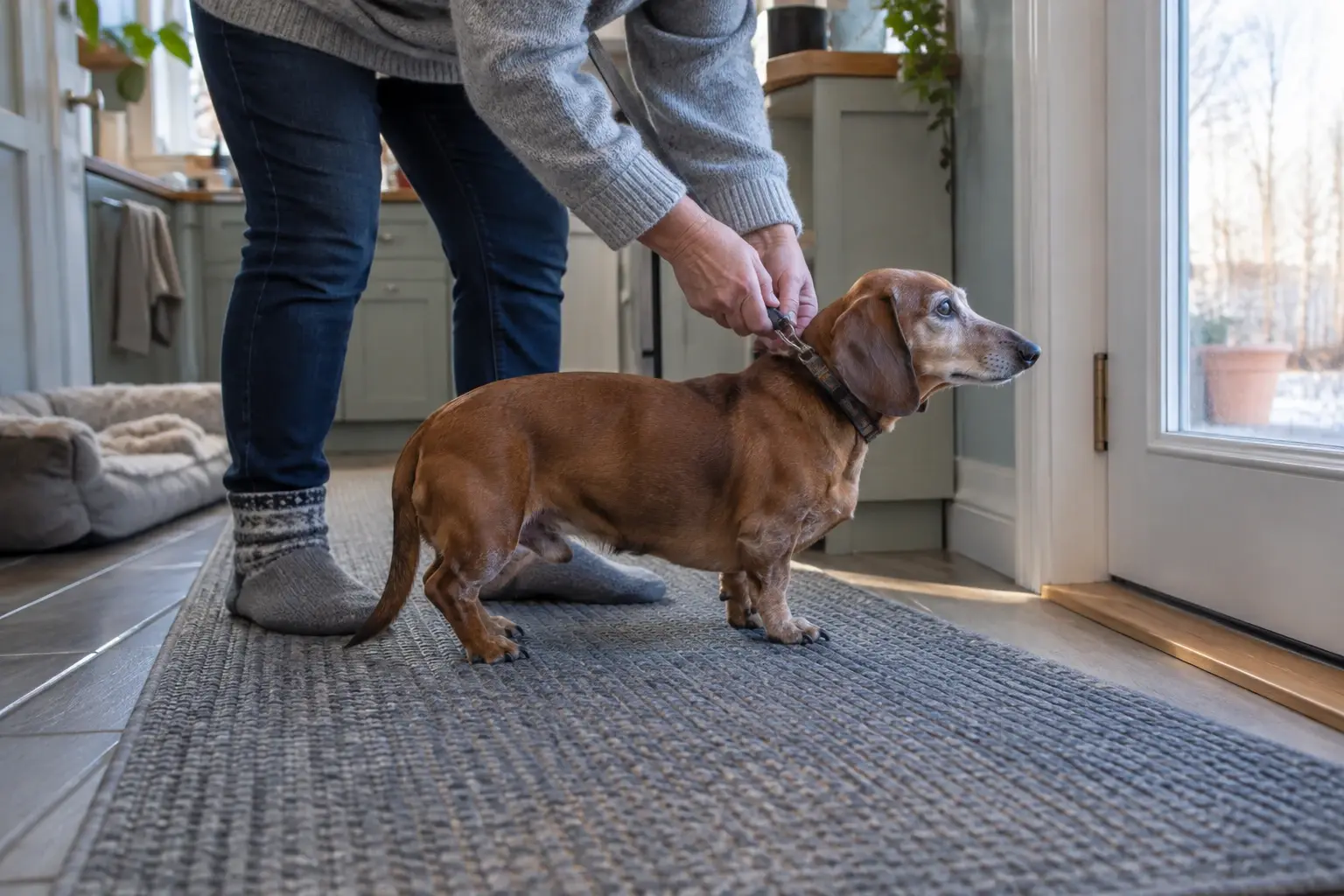
- Belly bands for males and diapers for females while you sort out treatment. See dog diapers for senior dogs.
- More toilet breaks, including last thing at night and first thing in the morning.
- Keep the skin clean and dry. Urine scald causes red, sore skin around the genitals and back legs.
- Keep your dog lean. Heavier females had higher risk. See obesity in dogs.
A tip from our founder Morty: when one of Morty's pugs needed pee pads, the pads went into a rigid tray (a storage-box lid), which stopped the dog peeing off the edge. Pet pads soaked through, so Morty switched to disposable adult incontinence pads, which held up better and cost less per pad.
When it is not incontinence: house-training loss
Older dogs who start peeing indoors in full view, as if they forgot, may have cognitive decline, arthritis that makes going outside painful, or reduced vision or hearing. That needs a different approach. See house training an older dog and cognitive changes in senior dogs.
FAQ
Why is my old dog suddenly leaking urine?
Most often a weakened urethral sphincter, especially in spayed females, but infection, stones, diabetes, kidney disease and Cushing's can all cause leaking. A urine test is the first step.
Can incontinence in older dogs be treated?
Usually, yes. A daily tablet such as phenylpropanolamine restored long-term continence in 8 of 9 spayed females in one study, and treating an underlying cause often stops the leaking.
Which dogs get urinary incontinence?
Older dogs, spayed and heavier females, and breeds such as Irish Setters, Dobermanns, Bearded Collies, Rough Collies and Dalmatians, where more than 15% of females were affected in a UK study.
Is urinary incontinence in dogs a sign of kidney failure?
Not usually on its own, but large accidents with increased thirst can be a sign of kidney disease, diabetes or Cushing's. Blood and urine tests check for these.
Do male dogs get incontinence?
Yes, about 1% in a UK study, with older age the biggest risk. Unlike in females, neutering and weight were not linked.
References
- O'Neill DG, et al. Urinary incontinence in bitches under primary veterinary care in England: prevalence and risk factors. Journal of Small Animal Practice. 2017. PMID: 28881018
- Hall JL, et al. Urinary incontinence in male dogs under primary veterinary care in England: prevalence and risk factors. Journal of Small Animal Practice. 2019. PMID: 30387152
- Byron JK, et al. Urethral sphincter mechanism incompetence in 163 neutered female dogs: diagnosis, treatment, and relationship of weight and age at neuter to development of disease. Journal of Veterinary Internal Medicine. 2017. PMID: 28256023
- Claeys S, et al. Clinical evaluation of a single daily dose of phenylpropanolamine in the treatment of urethral sphincter mechanism incompetence in the bitch. Canadian Veterinary Journal. 2011. PMID: 22043069
For individual health questions, your veterinarian remains the best partner.