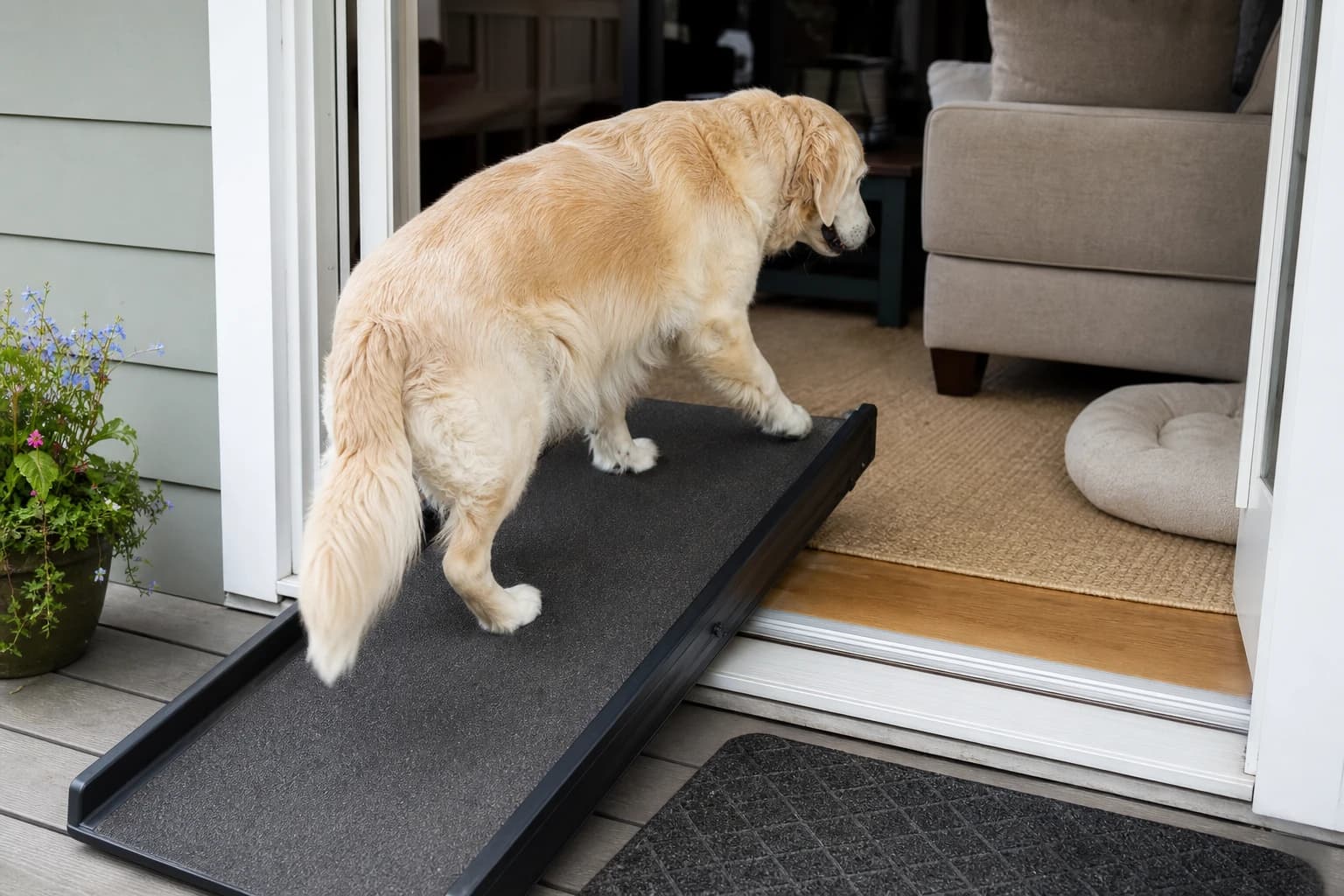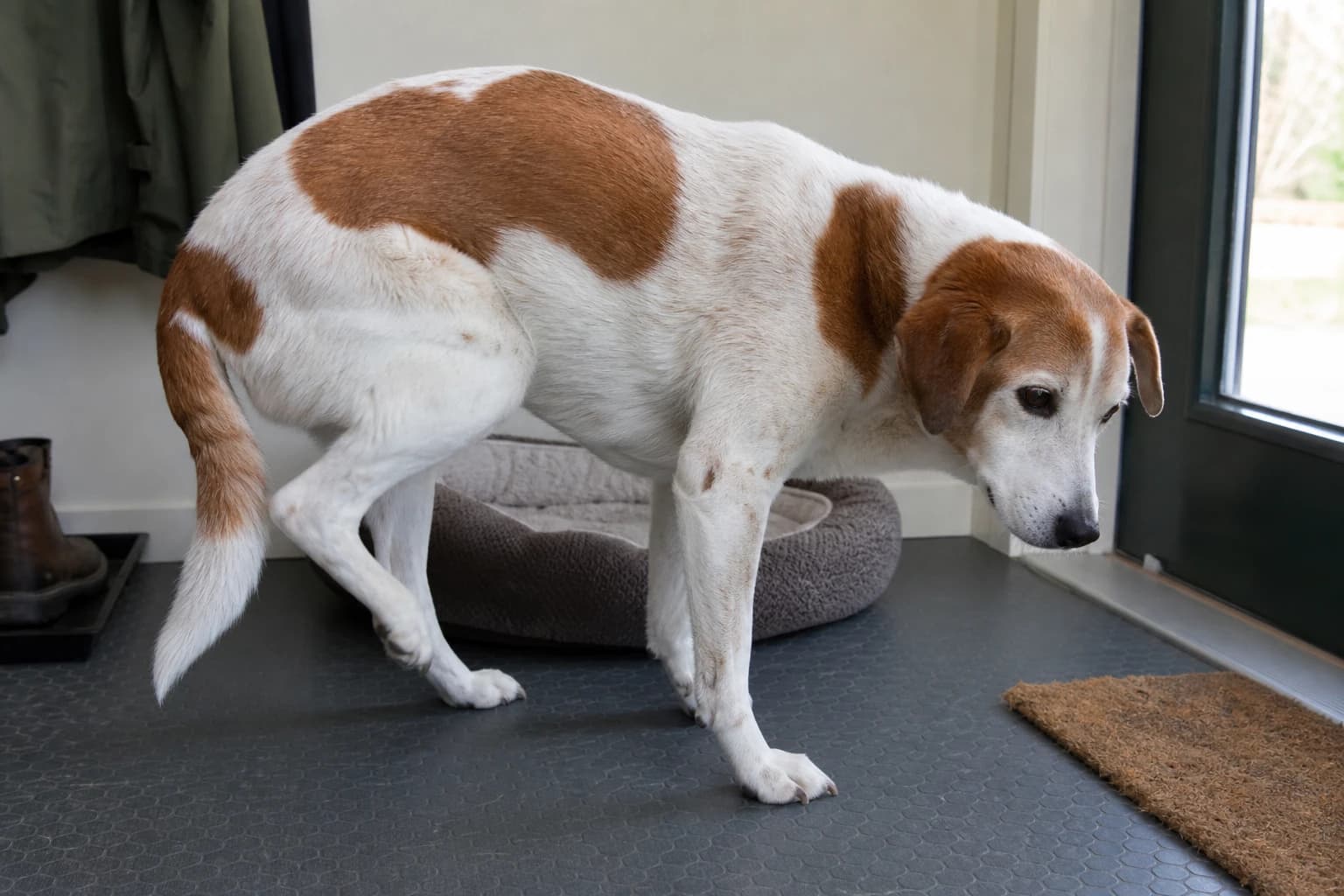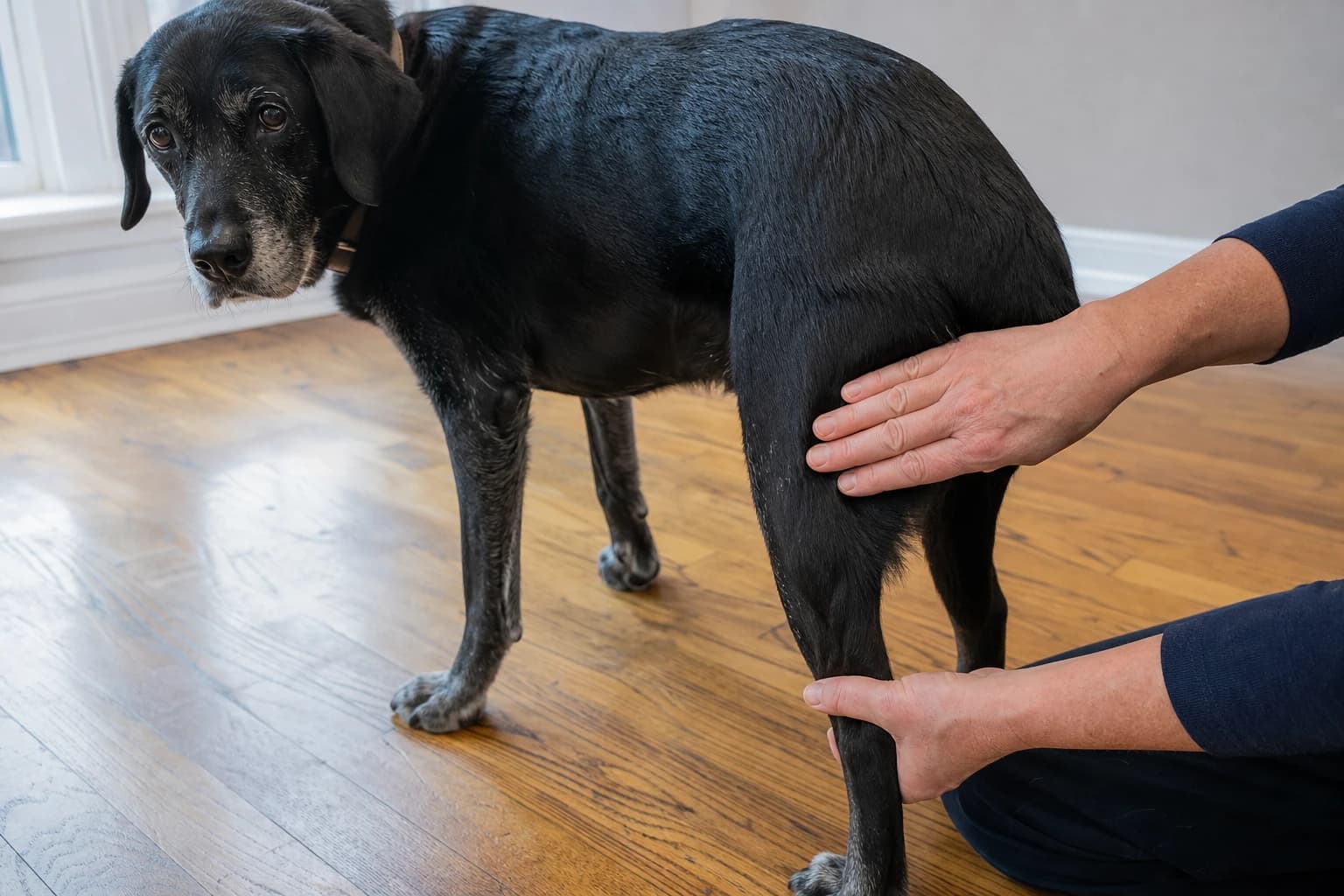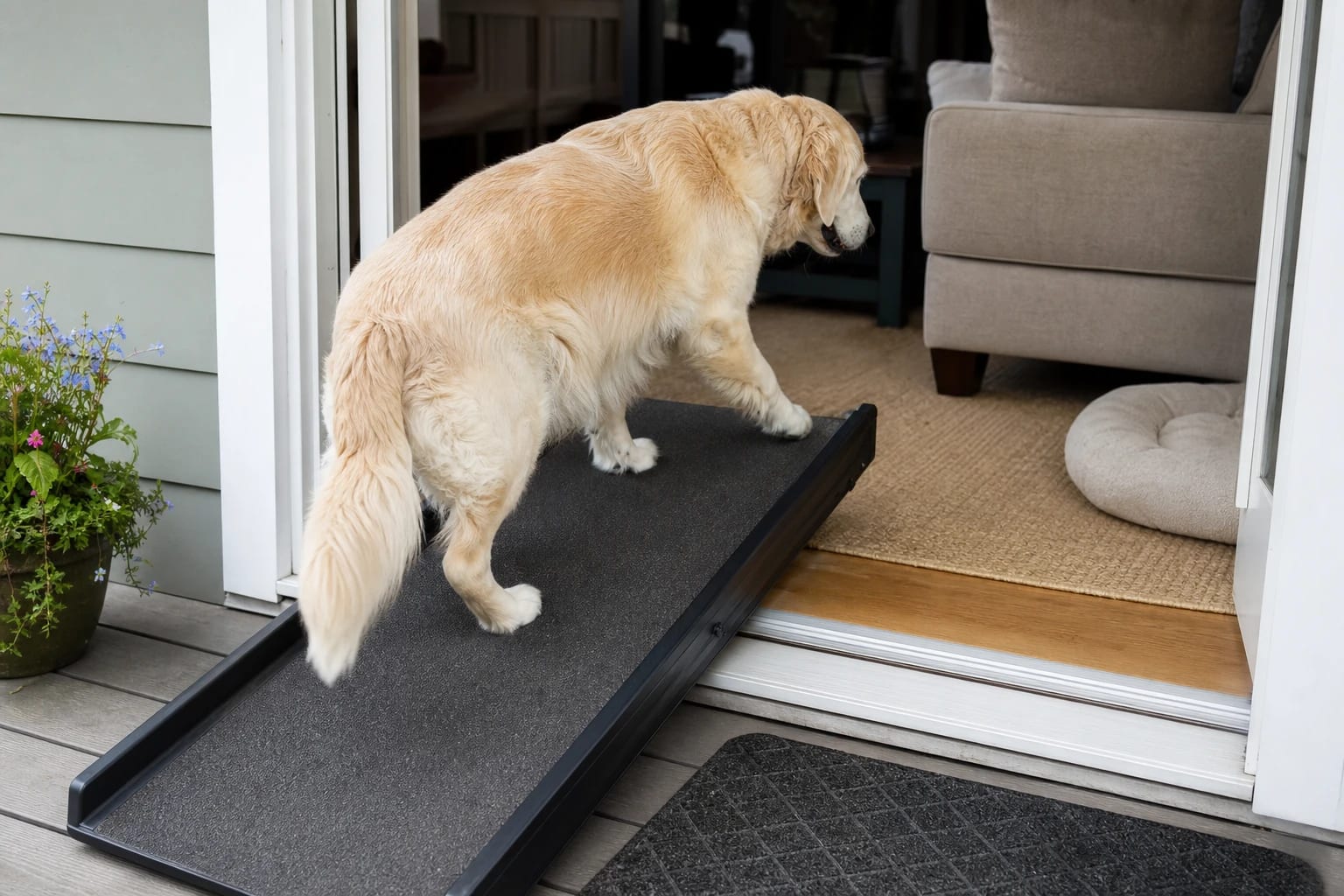
Your dog hesitates at the back steps, or you've noticed their hind legs looking leaner than they used to, and suddenly every supplement label seems worth a second look. The honest answer to "what's the best dog supplement to build muscle" is that a supplement is only one of three levers, and usually not the first one to pull. A calm veterinary check is worthwhile when a senior dog visibly loses muscle, because thinning hind legs can have several causes.
The Three Approaches, Compared
- Nutritional adequacy first. If your dog's current food or overall intake falls short, no supplement fixes that. Muscle support starts with a complete diet and enough daily protein within what your vet considers appropriate for your dog.
- Movement and rehabilitation. Muscle responds to use. A plan built around comfortable, regular activity, sometimes with a rehabilitation professional, does what no chew or powder can do on its own.
- HMB-style supplements. These are the third lever. The research overview on HMB for dogs covers what canine studies show and, just as importantly, what they don't establish yet. Reading that page before buying anything is a reasonable first step.
A useful way to think about it: diet and movement are the foundation, and a supplement is something you add on top of a foundation, not instead of one.
Start With Questions About the Diet Your Dog Already Eats
Before you shop, answer these:
- Is your dog on a complete, balanced diet labeled for their life stage?
- Has anything changed recently: appetite, chewing comfort, a switch to softer food, fewer walks?
- Are you sure your dog is finishing their meals, or could a sore mouth or a fussy appetite be reducing intake?
- Could treats and chews be crowding out balanced food?
If the answer to the first question is uncertain, fixing the base diet likely matters more than any bottle. Our guide to choosing senior dog food walks through reading labels and assessing daily feeding needs. And if chewing comfort is limiting what your dog will eat, that's worth resolving before adding supplements on top.
How to Read a Muscle Supplement Label
Use this checklist on any product you're considering:
- Named active ingredients with amounts. Vague "muscle support blend" listings with no quantities tell you little. You should be able to see what's actually in a serving.
- A stated purpose that matches your goal. A joint chew is not a muscle product, even if the marketing sits near each other on the shelf.
- Serving directions by weight band. If you can't tell how much to give your dog, you can't judge the cost per day or track it consistently.
- Ingredient identity and sourcing information. Our guide to dog supplement ingredient sourcing explains what labels and maker pages reveal about where ingredients come from and what testing covers.
- Honest framing. Be wary of any product that promises visible muscle gain, because canine supplement research generally doesn't support that level of certainty.
Evidence: What to Ask of Any Product
The most cited muscle-related work in older dogs isn't about HMB at all. In a study of older beagles with age-related muscle atrophy, dogs received either a placebo or a ursolic acid dietary supplement once a day, and researchers assessed the primary outcome by biopsying the quadriceps muscle and quantifying atrophy-associated mRNA expression (source). In that study's canine skeletal muscle samples, ursolic acid inhibited numerous mRNA expression changes known to promote muscle atrophy and weakness, and dogs receiving it showed significantly improved exercise participation and T-maze performance.
Two cautions when you carry that to a shopping decision:
- Molecular and performance measures in a beagle study don't tell you what a specific retail product will do for your dog.
- Evidence attached to one ingredient doesn't transfer to a different product formula. Judge the finished product and its own label.
If you're weighing a supplement at all, read the HMB research overview alongside the product page so you understand both the promise and the open questions.
Building the Routine Around the Supplement
A supplement only works if your dog reliably eats the full labeled serving, so fit matters:
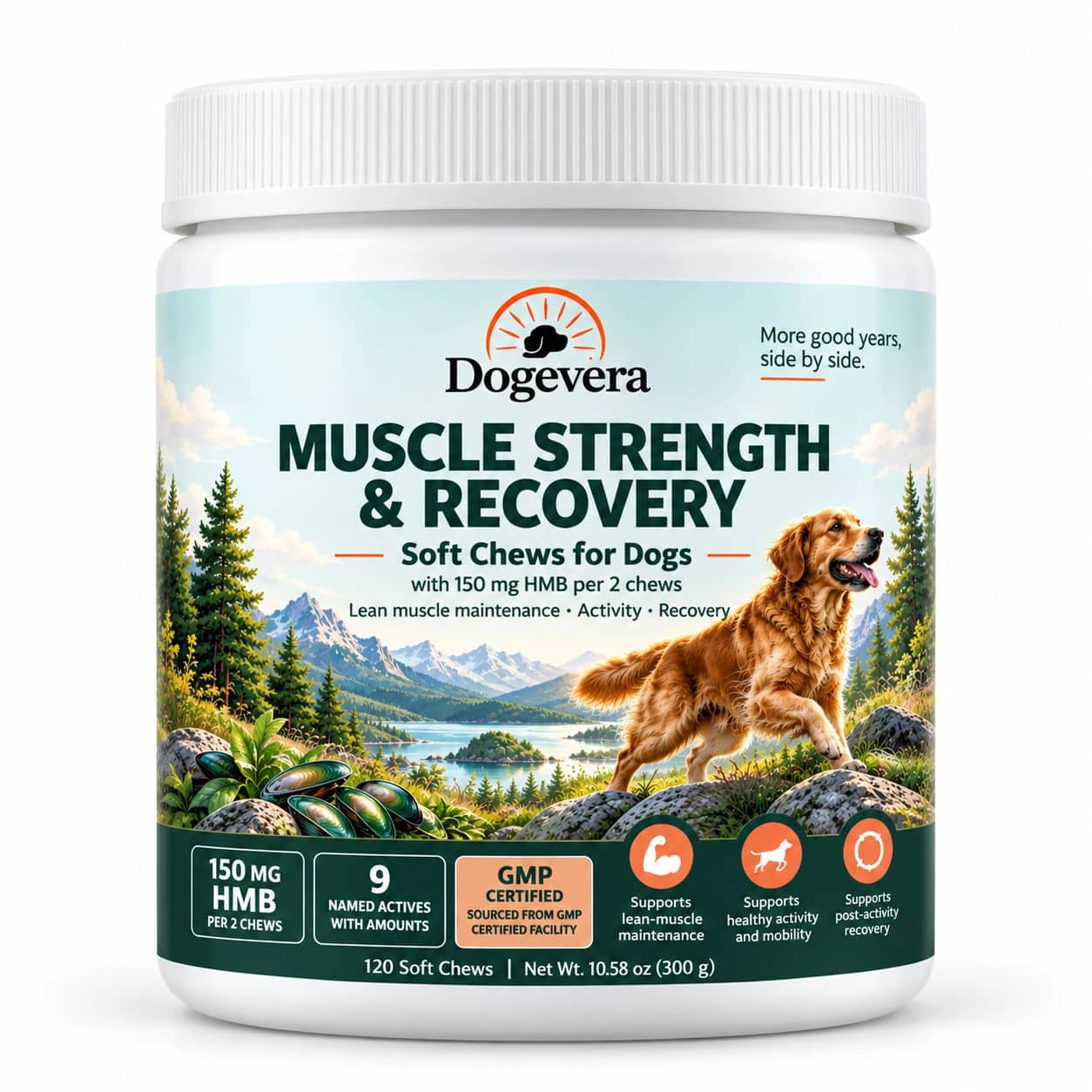
- Format. Our comparison of supplement powder versus soft chews covers acceptance, label clarity and daily cost. If your dog refuses anything dusted on food, a soft-chew muscle support product given like a treat may be more realistic than a powder.
- Consistency you can track. A simple log of what was given, when, and any changes you notice over the following weeks beats memory.
- A movement plan alongside it. Pair the routine with comfortable daily activity your dog already enjoys, and note whether stair hesitations, walk pace or getting up from rest change over time.
Signs That Deserve Attention Before Any Purchase
Supplements are for supporting a healthy, assessed dog, not for explaining away symptoms. If you're noticing any of these, arrange a veterinary conversation first, and bring notes:
- Hind legs that look visibly thinner. Our article on senior dog back legs looking thinner explains why an individual assessment matters more than a product choice.
- Shaking in the back legs when standing. The guide to back-leg shaking when standing lists what to observe and when it shouldn't wait.
- Sudden changes in mobility, appetite or energy rather than gradual ones.
A Practical Next Step
This week, do three things: confirm your dog's food is complete and being finished, write down the specific movements that have changed (stairs, couch, walks), and read the HMB research page before comparing any product labels. If you then decide a supplement fits your routine, bring the ingredient list and serving directions to your next vet conversation and ask whether it makes sense for your dog specifically. That order, diet and observations first, evidence second, product last, is the most reliable way to spend money well.
FAQ
Can a supplement alone rebuild my dog's muscle? No product can substitute for adequate nutrition and regular, comfortable use of the muscles. Research into muscle-support ingredients is promising but doesn't establish that any supplement works as a standalone fix.
Should I increase my dog's protein? Protein needs vary by dog, kidney health and overall diet, which is why this is a question for your vet rather than a label. What you can do at home is confirm the food is complete and actually being eaten.
How long before I'd notice anything from a muscle supplement? There's no reliable home timeline. Track your dog's movement in a simple log, and if you see no change over a reasonable period, discuss with your vet whether continuing makes sense.
Are HMB and ursolic acid the same thing? No. They're different compounds studied in different contexts. Our HMB for dogs research overview explains the HMB evidence specifically, and the ursolic acid beagle study summarized above is a separate line of research.
Related reading
For individual health questions, your veterinarian remains the best partner.