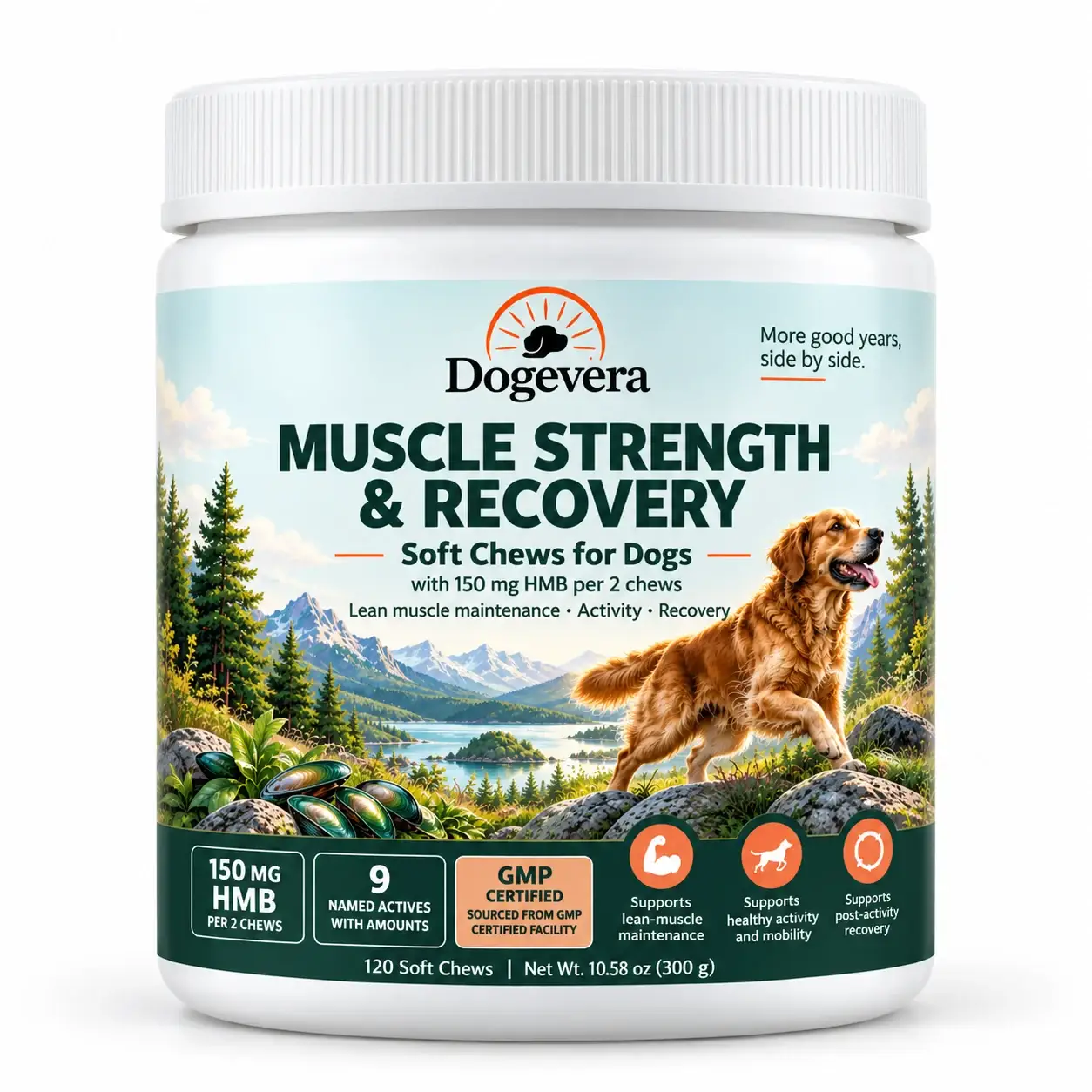
We sell this powder. It was not the product tested in the studies discussed here.
TL;DR
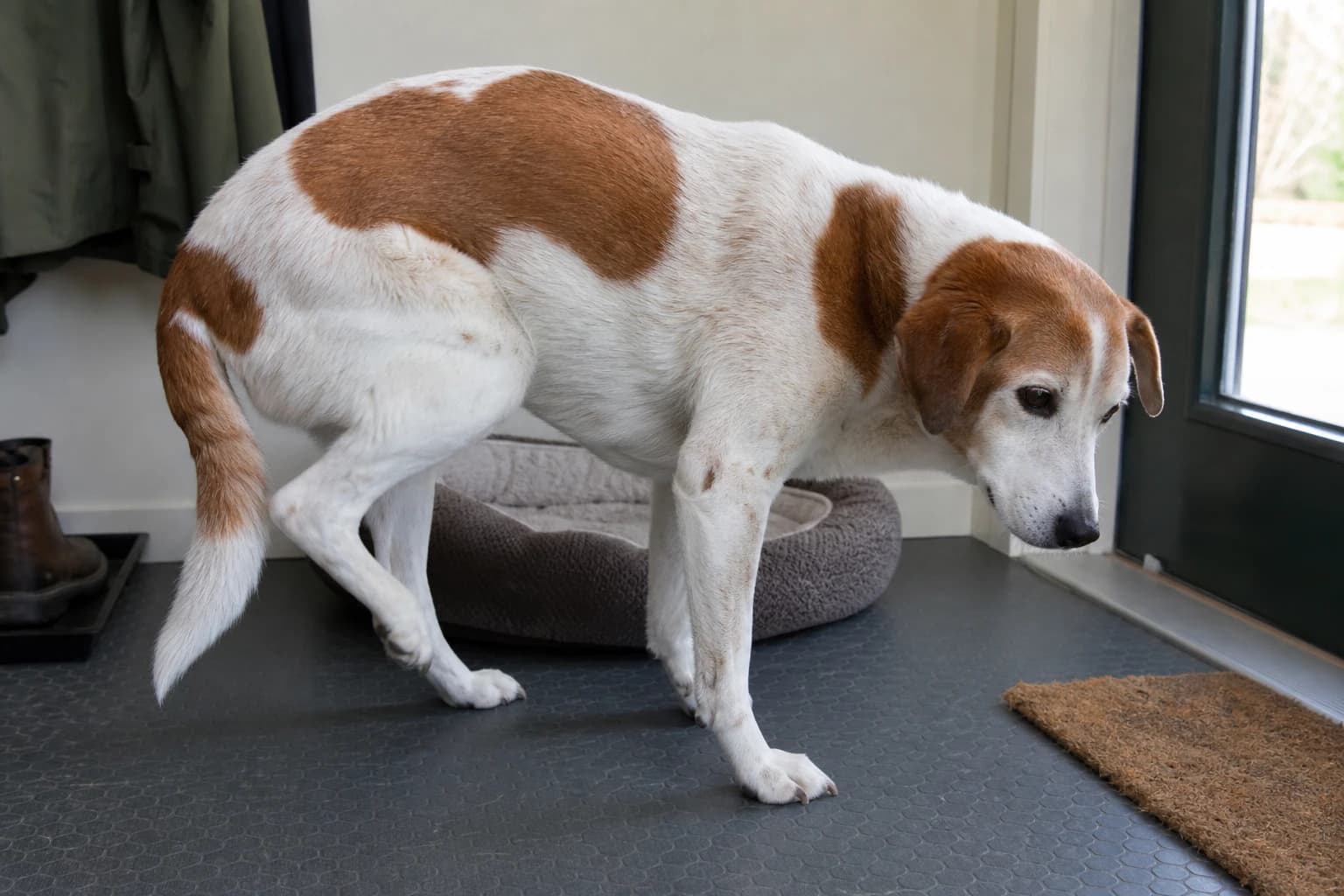
Thinner-looking back legs can reflect changes in muscle, body fat or another problem. Appearance and touch alone cannot identify the cause. Arrange a veterinary assessment and bring notes about when the change began, whether both sides are affected and how your dog moves.
Muscle loss and weight loss are not the same thing
Body weight, body condition and muscle condition describe different things. A dog can lose muscle while total weight stays similar, but a narrower-looking thigh does not establish muscle atrophy. A veterinary assessment can evaluate these measures together.
Possible contributors to a change in body shape include altered intake, activity, pain and illness. Do not assume that age or low protein explains it without an assessment.
Record appearance without trying to diagnose it
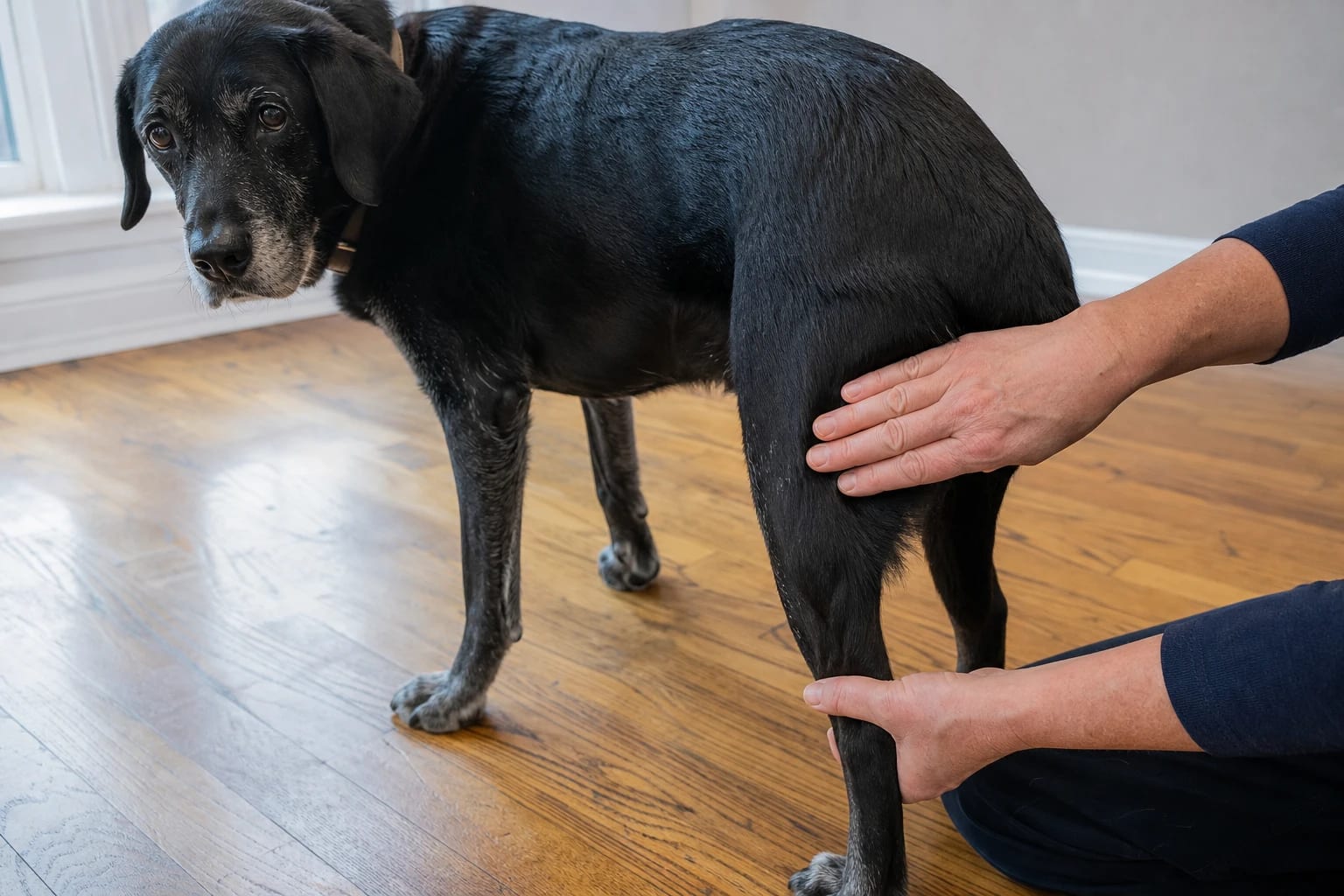
Take a photograph during a normal, comfortable standing moment if this is easy for your dog. Avoid pressing or manipulating a painful leg to test muscle firmness.
Note whether the change appears similar on both sides and whether ordinary movement has changed. An asymmetry is information to report, not proof of a particular cause.
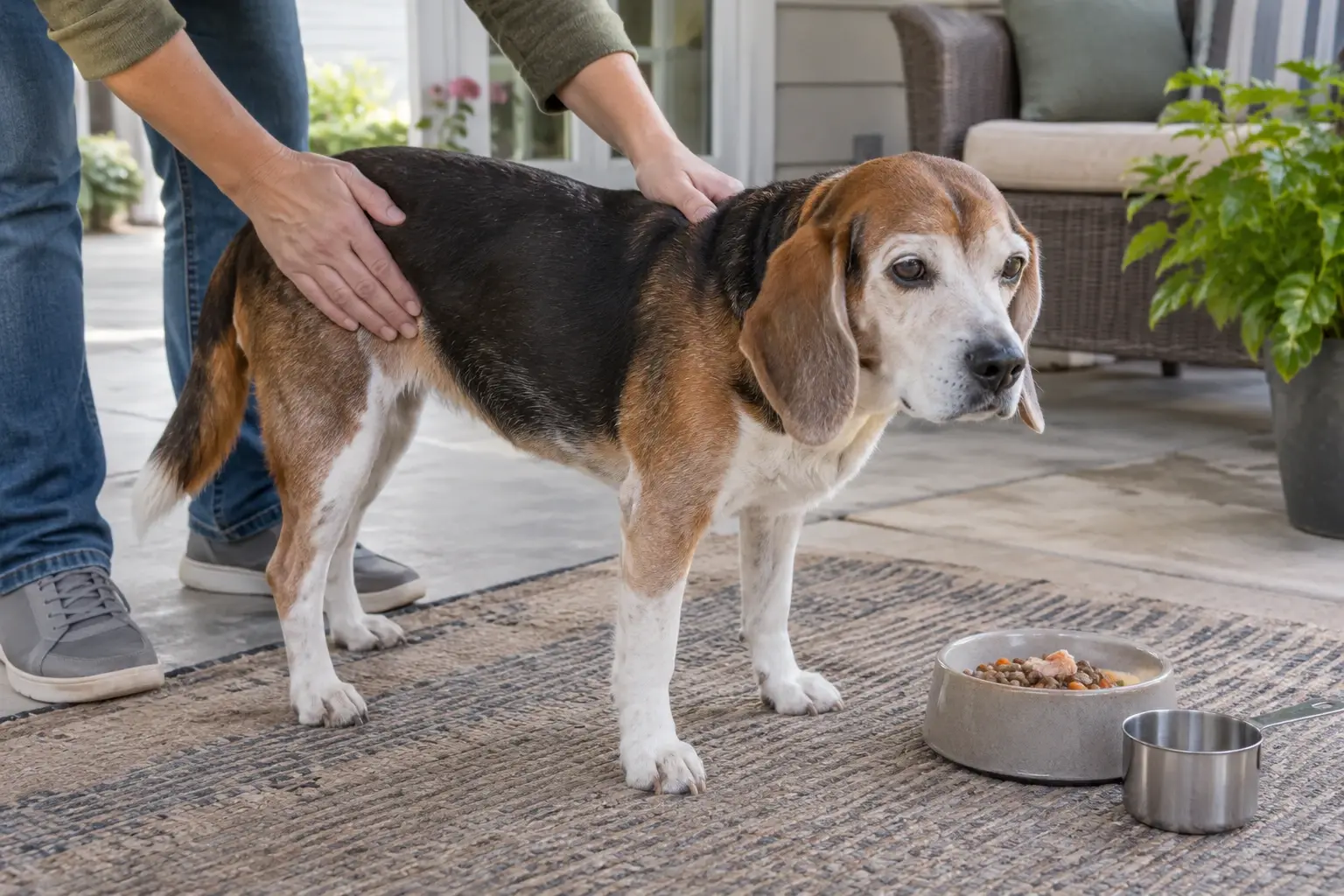
Ask your veterinary team to show you appropriate body-condition and muscle-condition checks. Stop any handling that causes discomfort; an at-home impression cannot replace the examination.
Why a stable weight does not rule out muscle loss
A stable scale reading does not rule out a change in body composition. Interpret it alongside the veterinary assessment rather than assuming stable weight means no problem.
Bring any previous weights, photos and observations of comfortable daily movement. Do not ask your dog to climb stairs or perform difficult movements to make a comparison.
What causes muscle to shrink in the back legs
Reduced use of a limb can be associated with muscle loss, but it is not possible to rank the causes for an individual dog from appearance alone. Pain or a new movement change should be assessed.
Illness and recovery can accelerate muscle loss. A dog recovering from surgery, managing a chronic condition, or dealing with reduced appetite may not be taking in enough protein or may be breaking down muscle faster than usual. Aging itself changes how efficiently a dog's body builds and maintains muscle, even when activity and food intake stay the same.
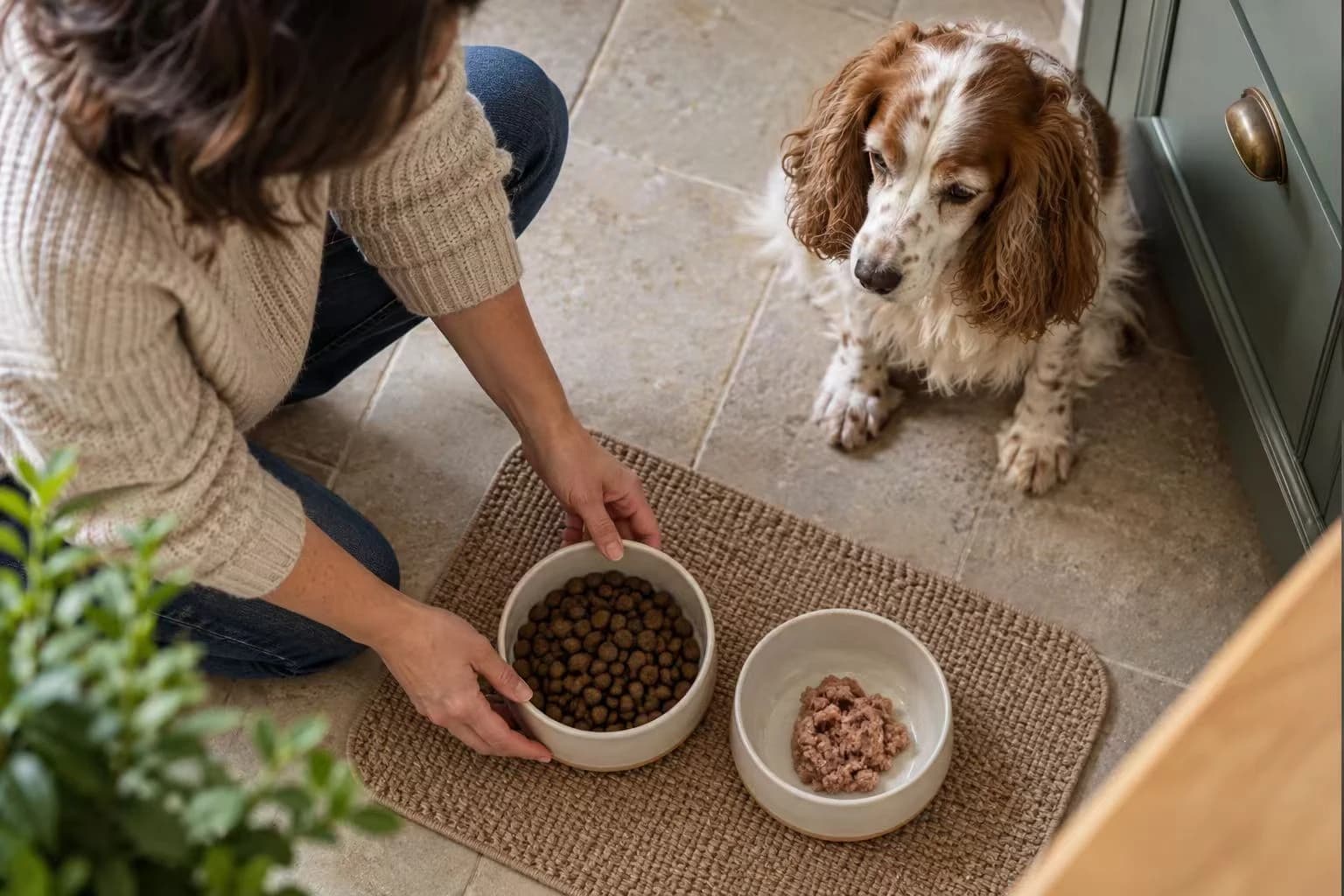
Review the complete diet and actual intake with the clinic before adding protein or changing portions. A nutrient adjustment should take existing conditions and prescribed diets into account.
What to do when you notice thinner back legs
Write down what you observe. Note the date you first noticed the change, which leg looks thinner, whether your dog is moving differently, and whether appetite or energy has changed. Take a photo of your dog standing from behind so you can compare the width of the thighs over time.
Arrange an examination for a new or progressive change. Seek emergency care immediately if your dog suddenly cannot stand, collapses or has difficulty breathing.
Keep movement comfortable and avoid pushing through pain. Ask the veterinary team for an activity plan appropriate to the cause; do not start swimming, resistance work or a rehabilitation program based only on a thinner-looking leg.
Bring the current food label, feeding amount, treats and supplements to the appointment. “Senior” on a package does not show that it is the right diet, and an ingredient study does not establish that a commercial muscle-support chew reverses muscle loss.
FAQ
Can the change improve? That depends on the cause and the individual dog. Discuss treatment, nutrition, comfort and monitoring after the assessment rather than promising that a supplement or exercise will rebuild muscle.
Is muscle loss in senior dogs always a sign of illness? Not always, but it is never normal to ignore. Aging alone can make muscle maintenance harder, but pain, disease, and poor nutrition are common contributors. A veterinary exam can separate ordinary aging changes from treatable problems.
Should I increase my dog's food portion if their back legs are getting skinny? Not without checking with your veterinarian first. Muscle loss is not always about total calories. Your dog may need more protein, a different feeding schedule, or treatment for an underlying condition. Adding food without understanding the cause can lead to weight gain without rebuilding muscle.
How quickly can the legs change? The pace varies with the cause. Record when you first noticed it, but do not use a fixed timeline to decide whether an examination is needed.
Related reading
- Senior Dog Slow to Get Up: What to Record
- Senior Dog Back Legs Shaking When Standing
- Dog Falling Behind on Walks: Use One Route as a Baseline
Related reading
- HMB for dogs: promising muscle research, unanswered questions
- How to Choose Senior Dog Food: A Practical Guide from Nutrition to Feeding
References
- Cachexia and sarcopenia: emerging syndromes of importance in dogs and cats. Journal of Veterinary Internal Medicine. 2012. PMID: 22111652. DOI: 10.1111/j.1939-1676.2011.00838.x.
- AAHA: evaluating the unhealthy senior pet.
- VCA: emergencies in dogs.
For individual health questions, your veterinarian remains the best partner.