TL;DR
Omega-3 may be worth discussing for a senior dog, but it is not automatically right for every dog or every product. A canine trial found improved clinical scores in dogs given flax oil or a commercial EPA and DHA preparation, but the dogs were studied for atopic dermatitis, not ordinary aging, and the trial does not establish a treatment for senior-dog health problems. Use the package directions, avoid copying study amounts, and track one clear everyday observation if you try a product.
A veterinary professional should help you decide whether an omega-3 product fits your dog’s health history, diet, and current medications.
Is omega 3 good for dogs?
When an older dog’s coat looks different, walks become slower, or a supplement aisle offers several kinds of fish oil, it is reasonable to ask what omega-3 can actually do. The short answer is that omega-3 is an ingredient category, not a guaranteed outcome. The most relevant canine evidence supplied here comes from a controlled trial involving dogs with atopic dermatitis. It does not show that every senior dog needs a supplement, that omega-3 treats arthritis or cognitive decline, or that one product works the same way as another.
For a practical decision, ask four questions:
- What is the specific reason for considering omega-3?
- Does the label name the active fatty acids and their amounts?
- Can the serving fit comfortably into your dog’s existing food routine?
- What ordinary change will you track instead of relying on a general impression?
Those questions help separate a considered trial from buying a product because the front label sounds reassuring.
What did the canine omega-3 trial find?
A double-blinded, placebo-controlled, randomized trial included Twenty-nine dogs. The dogs were orally supplemented for 10 weeks. The study compared flax oil, a commercial preparation containing eicosapentaenoic acid and docosahexaenoic acid, and mineral oil as a placebo. Clinical scores were determined using a scoring system developed before the trial.
The dogs given flax oil or the commercial preparation had improved clinical scores, while the placebo group did not. The study also calculated total omega-6 and omega-3 intake and the omega-6:3 ratio before and after the trial. It found no correlation between total fatty-acid intake or the omega-6:3 ratio and clinical scores.
The amounts used in that study were 200 mg/kg/day of flax oil, 50 mg/kg/day of eicosapentaenoic acid, and 35 mg/kg/day of docosahexaenoic acid. These are study details, not dosing instructions for a pet at home. A study amount should not be copied onto a product with a different concentration, ingredient list, or serving format.
The most useful takeaway is limited but clear: a particular omega-3 approach was associated with better clinical scores in those studied dogs. The work does not establish that omega-3 prevents normal aging, fixes mobility changes, improves memory, or replaces veterinary care. It also does not prove that every fish oil, flax product, chew, or diet has the same effect.
Which omega-3 food sources and labels should you compare?
Start with what the label actually names. A product may mention “omega-3” in large type while giving less detail about the specific fatty acids, their amounts, or the source. Look for a full ingredient panel and serving directions rather than relying on a marketing phrase.
The trial included flax oil and a commercial EPA and DHA preparation, so those are useful categories to recognize when comparing labels. A food or supplement label may use a source name, an oil name, or the names of individual fatty acids. Do not treat those descriptions as interchangeable without checking the details.
A simple label checklist:
- Named source: Is the oil or ingredient identified clearly?
- Named fatty acids: Does the label state whether EPA, DHA, or another omega-3 is present?
- Amount per serving: Is the amount easy to find and expressed in a consistent unit?
- Serving basis: Is the direction based on current body weight, food amount, or a fixed serving?
- Complete ingredients: Are flavorings, proteins, and other active ingredients listed?
- Storage details: Does the package explain how to store the product?
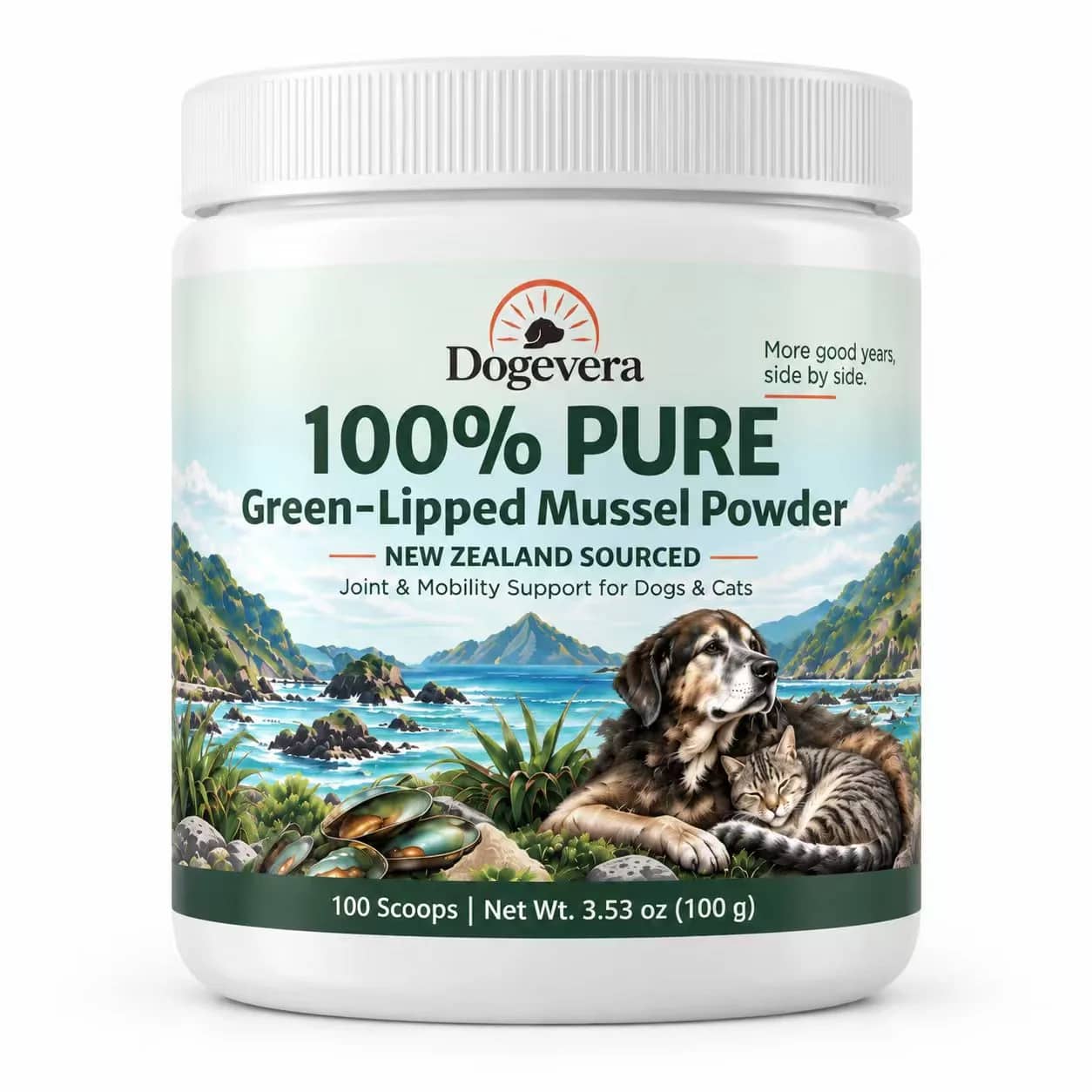
A named ingredient is only the starting point. The dog supplement ingredient sourcing guide expands on the label questions worth asking about source information, amounts, and testing details.
Food may be the easiest place to begin if your dog already eats a complete diet and you are only exploring options. Do not add an oil to the bowl simply because it sounds natural. Extra ingredients can change the food routine, and a dog with a sensitive stomach may not welcome a sudden change. Discuss the food and the proposed addition together, especially if your dog has a restricted diet or takes regular medication.
Powder, oil, or soft chew: which format fits your dog?
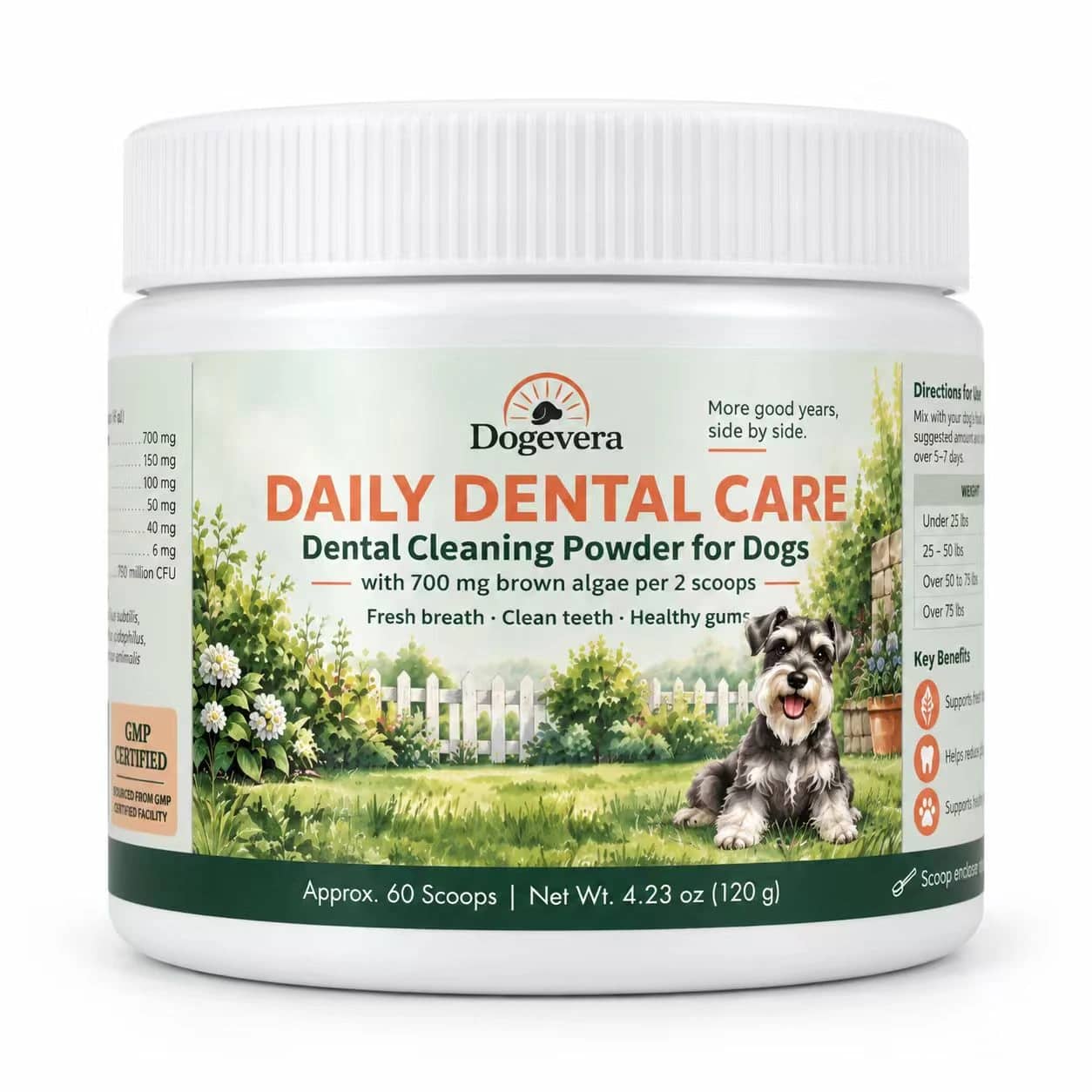
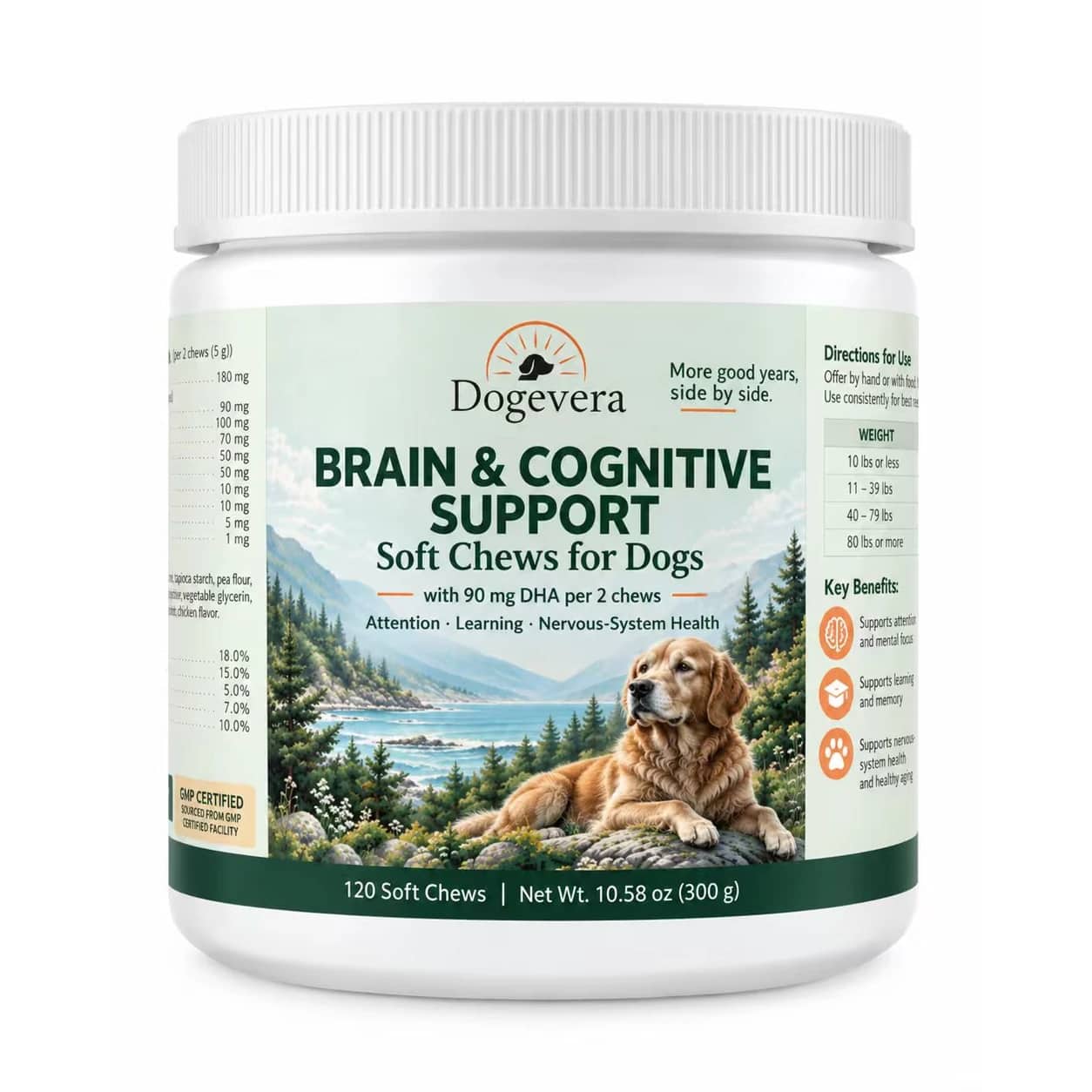
The best format is usually the one that lets you follow the label consistently and confirm that your dog finished the serving. A liquid oil may be easy to measure but can alter the smell of food. A powder can be convenient for a dog who eats wet food, but it may settle or clump. A soft chew may suit a dog who accepts treats but can be harder to use when the ingredient amounts are unclear or when your dog is already receiving several treats.
Use this comparison before choosing:
| Format | Check first | Useful home observation | |---|---|---| | Oil | Named fatty acids, serving unit, storage directions | Whether the food still smells and tastes acceptable to your dog | | Powder | Even mixing and complete bowl consumption | Whether any powder remains at the bottom | | Soft chew | Full ingredient list and serving directions | Whether your dog accepts it without changing regular meals |
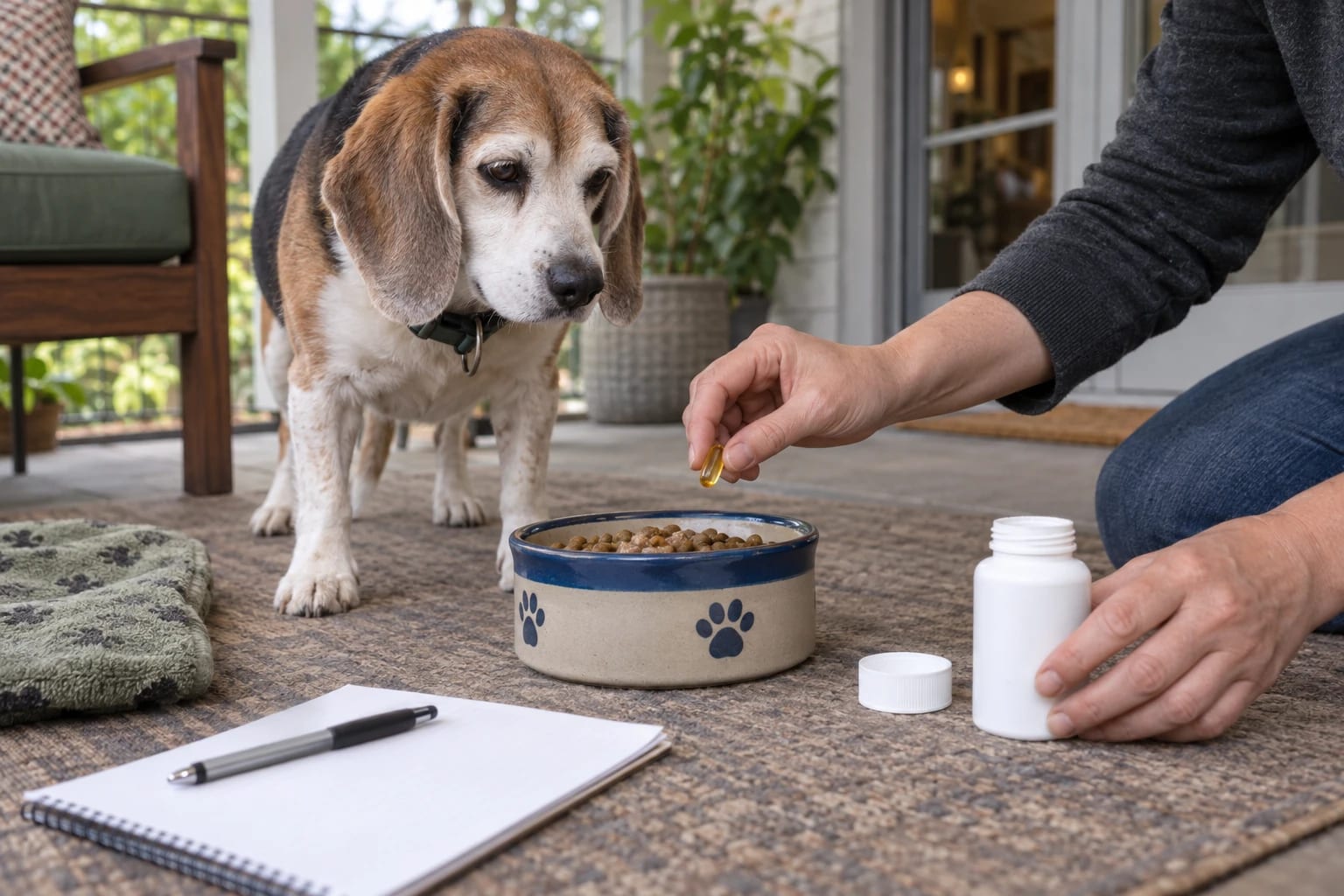
If you use a powder, mix it into a small portion of food first so you can see whether your dog finishes the full serving before offering the rest of the meal. The guide to mixing a dog supplement into wet food explains how to reduce settling and check what your dog actually consumed.
Do not stack several omega-3 products unless a veterinary professional has helped you review the total routine. More products do not automatically mean a better choice, and overlapping ingredients make it harder to know what caused a change.
How can you try omega-3 without guessing?
Treat the change as a small, organized observation rather than a promise of improvement. Before starting, write down the reason you are considering omega-3 and choose one or two ordinary observations that match that reason. For example, you might record how willingly your dog eats the meal, whether the supplement remains in the bowl, or whether a specific daily routine changes.
Use this repeatable process:
1. Record the baseline. Note your dog’s usual appetite, stool pattern, meal acceptance, and the specific behavior you want to watch. 2. Change one thing. Avoid starting several new foods or supplements at the same time. 3. Follow the final package directions. Use the product in your hands, not an old webpage or a study amount. 4. Check the bowl. Confirm that your dog finished the food containing the full serving. 5. Write down changes. Record observations for three days or longer when practical, using the same wording each time. 6. Pause and ask for guidance if the pattern concerns you. A new or worsening health change should not be explained away as a supplement issue.
For a fuller tracking method, see how to tell if a dog supplement is working. Tracking cannot prove that omega-3 caused a change, but it can make your notes more useful and prevent a single good or difficult day from deciding the whole judgment.
FAQ about omega 3 for dogs
Can I give my senior dog the amount used in a study?
No. The study amounts were part of a controlled research protocol and are not home dosing instructions. Products differ in concentration, ingredients, and serving units. Use the final package directions and ask a veterinary professional to review the product for your dog.
Is flax oil the same as EPA and DHA?
Do not assume they are interchangeable. The trial compared flax oil with a commercial preparation containing EPA and DHA, using separate study amounts. Read the label for the named fatty acids and source rather than treating every omega-3 product as identical.
Does omega-3 prove that my dog’s stiffness is arthritis?
No. The cited trial studied clinical scores in dogs with atopic dermatitis. It does not diagnose arthritis, explain a new mobility change, or establish that omega-3 treats a senior dog’s stiffness. A new or sudden change deserves a veterinary conversation.
What if my dog refuses food with the supplement?
Do not keep hiding a full serving in a meal your dog will not finish. Check the smell and texture, try a small-portion test, and confirm the label allows the chosen mixing method. If your dog’s eating pattern changes beyond the supplement meal, contact a veterinary professional.
References
- “Effect of dietary supplementation with eicosapentaenoic acid and docosahexaenoic acid on dogs with atopic dermatitis.” Veterinary Dermatology. https://europepmc.org/article/MED/15206474
For individual health questions, your veterinarian remains the best partner.