TL;DR
Green lipped mussel oil for dogs and whole-mussel powder are not interchangeable just because both labels show milligrams. Oil labels may measure a concentrated lipid extract, while powder labels may measure the weight of the whole ingredient, so compare the ingredient panel and serving directions rather than converting one form into the other.
A practical choice starts with four checks: what the milligrams measure, which fractions are named, what carrier ingredients are included, and whether the finished product gives clear directions for your dog.
What does the milligram amount measure?
The largest number on the front label is not automatically the most useful comparison. Look for the unit beside the ingredient name and ask whether it refers to:
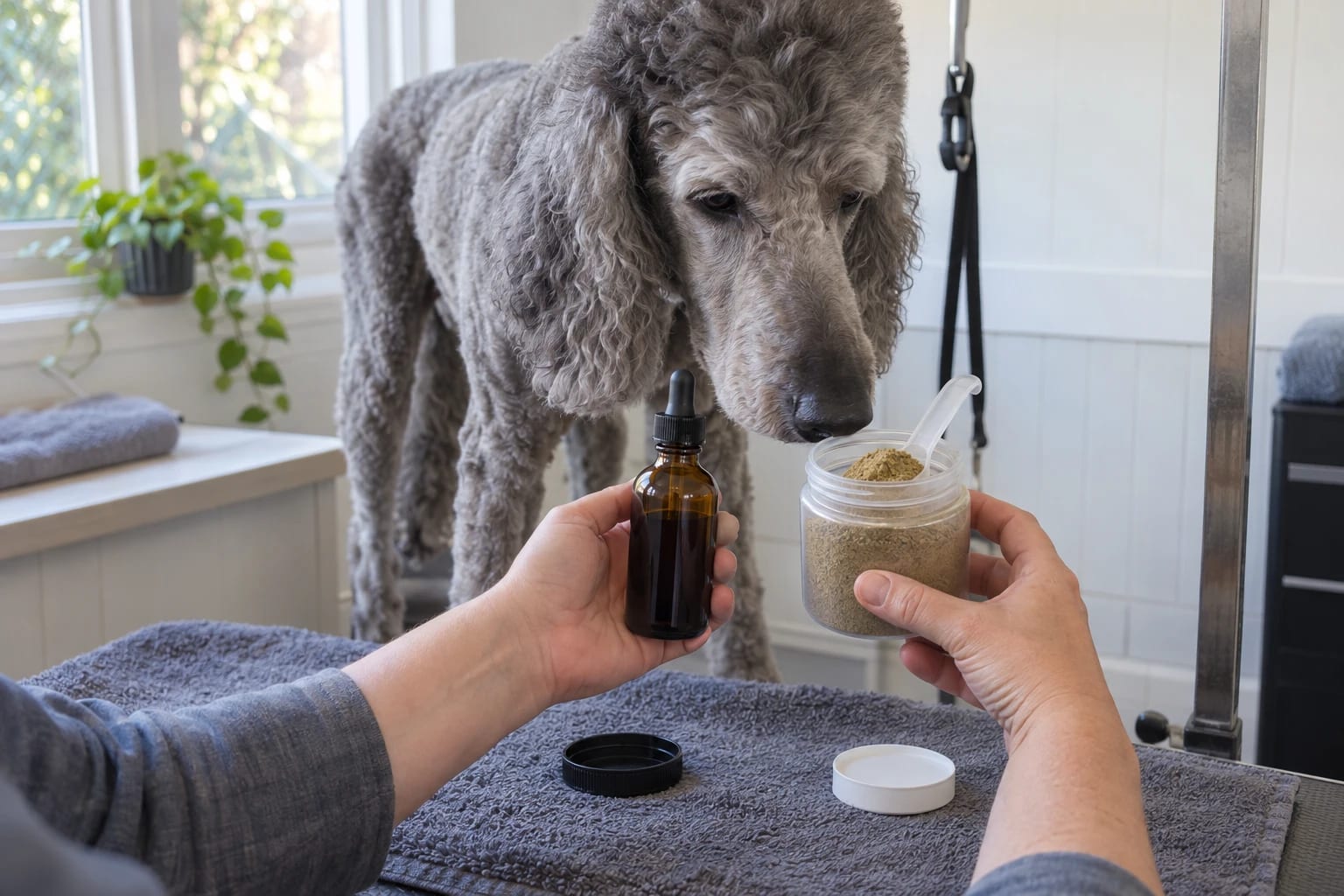
- A marine lipid extract: The milligrams may describe the concentrated oil or lipid portion. Check whether the label identifies the extract itself and names any measured fractions.
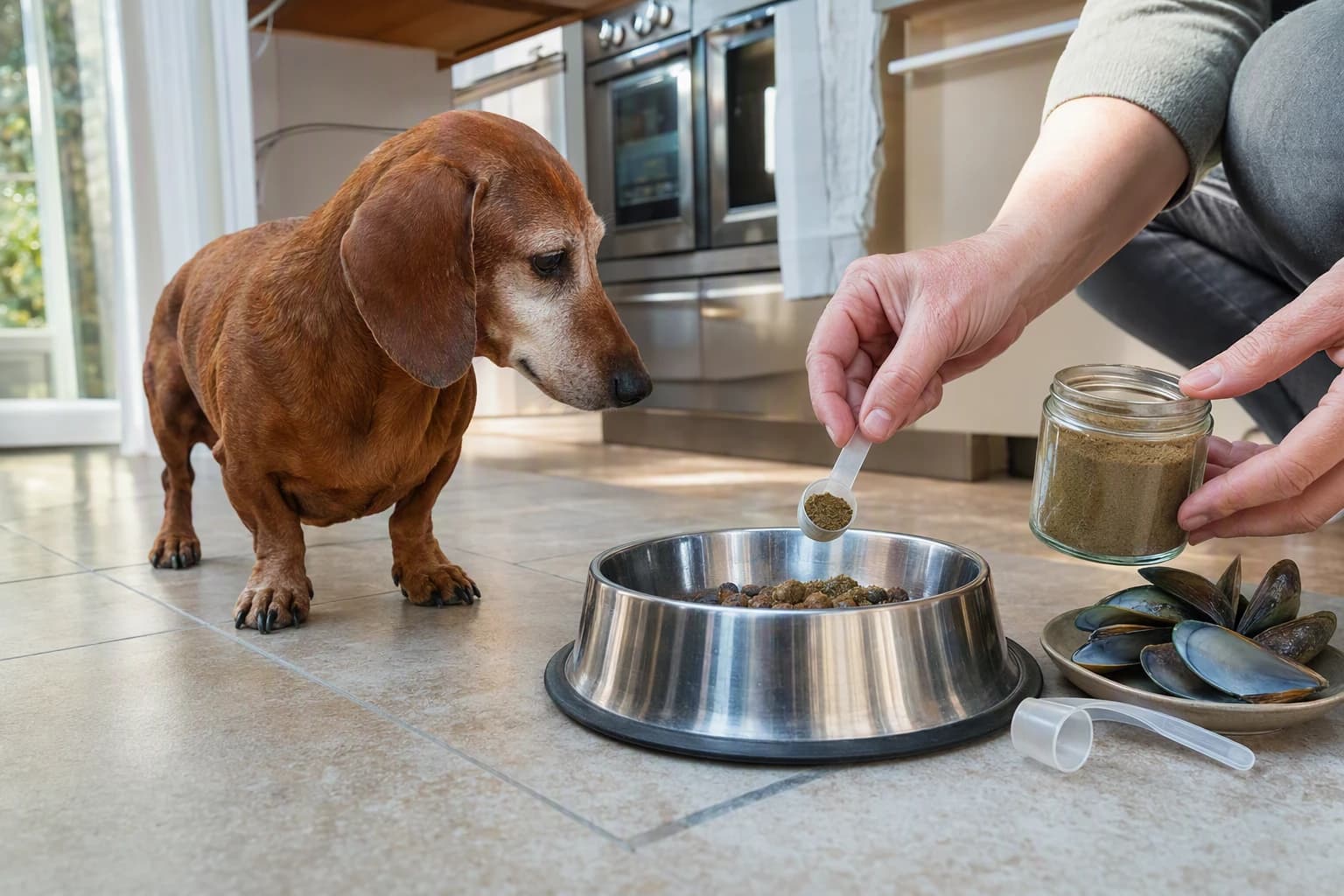
- Whole-mussel powder: The milligrams usually describe the weight of the powdered ingredient as listed, not an equivalent amount of oil or a guaranteed amount of every naturally occurring component.
- A finished serving: Some labels list the amount per capsule, scoop, soft chew, or daily serving. Confirm whether the stated amount is for one unit or the full daily direction.
- A blend: A total blend weight may combine mussel material with oils, starches, flavoring, or other ingredients. Find the individual amount for the mussel ingredient if the label provides it.
Do not turn an oil amount into a powder amount, or the reverse, using a homemade conversion. The products may differ in concentration, processing, moisture, and what the stated weight includes.
For a closer look at serving units and jar calculations, see Green-Lipped Mussel Powder for Dogs: Reading the Serving Guide and Estimating Jar Life.
How are marine lipid extracts and whole-mussel powders different?
Use this labeled comparison while shopping:
- Form: An extract is a concentrated portion of the mussel ingredient. A powder is a dried, ground ingredient. The label should make the form clear.
- Named fractions: An oil label may identify total lipids or specific fatty-acid fractions. A powder label may identify the whole mussel ingredient without promising a fixed amount of one fraction.
- Amount shown: Extract milligrams describe the extract. Powder milligrams describe the powder. Equal numbers do not mean equal quantities of the same material.
- Other ingredients: Oil products can include a carrier oil or capsule materials. Powders can include flow agents, flavoring, starches, or other carriers. Read the complete ingredient list rather than judging by the front panel.
- Serving instructions: Follow the directions for that exact product. A serving written for powder should not be transferred to an oil product.
A canine clinical trial fed its test products or placebo for 8 weeks, but a study of one preparation does not establish that every oil, extract, or powder has the same composition or effect. The finished product and its label still matter.
Which active fractions should you look for?
“Active fraction” should mean a named part of the ingredient, not a broad promise. Depending on the product, the label may identify items such as:
- total marine lipids
- named omega-3 fatty acids
- phospholipids
- other declared lipid fractions
Only treat a fraction as quantified when the label gives its amount or a clear specification. If it says only “green-lipped mussel oil” or “green-lipped mussel powder,” do not assume a particular concentration of a named component.
This distinction also helps you avoid transferring evidence between formats. Green-lipped mussel for dogs: what canine studies can and cannot tell us explains why research on a particular preparation should not be treated as proof for every product on the shelf.
How can you compare two labels without guessing?
Write down the following for each product before choosing:
- Ingredient form: oil, extract, powder, or blend
- Amount basis: per capsule, scoop, chew, or daily serving
- Named fractions: exactly which ones are listed and whether amounts are stated
- Carrier ingredients: oils, capsule materials, flavorings, starches, or flow agents
- Directions: the product-specific serving instructions and any storage information
- Traceability: lot, batch, origin, and testing details when the maker provides them
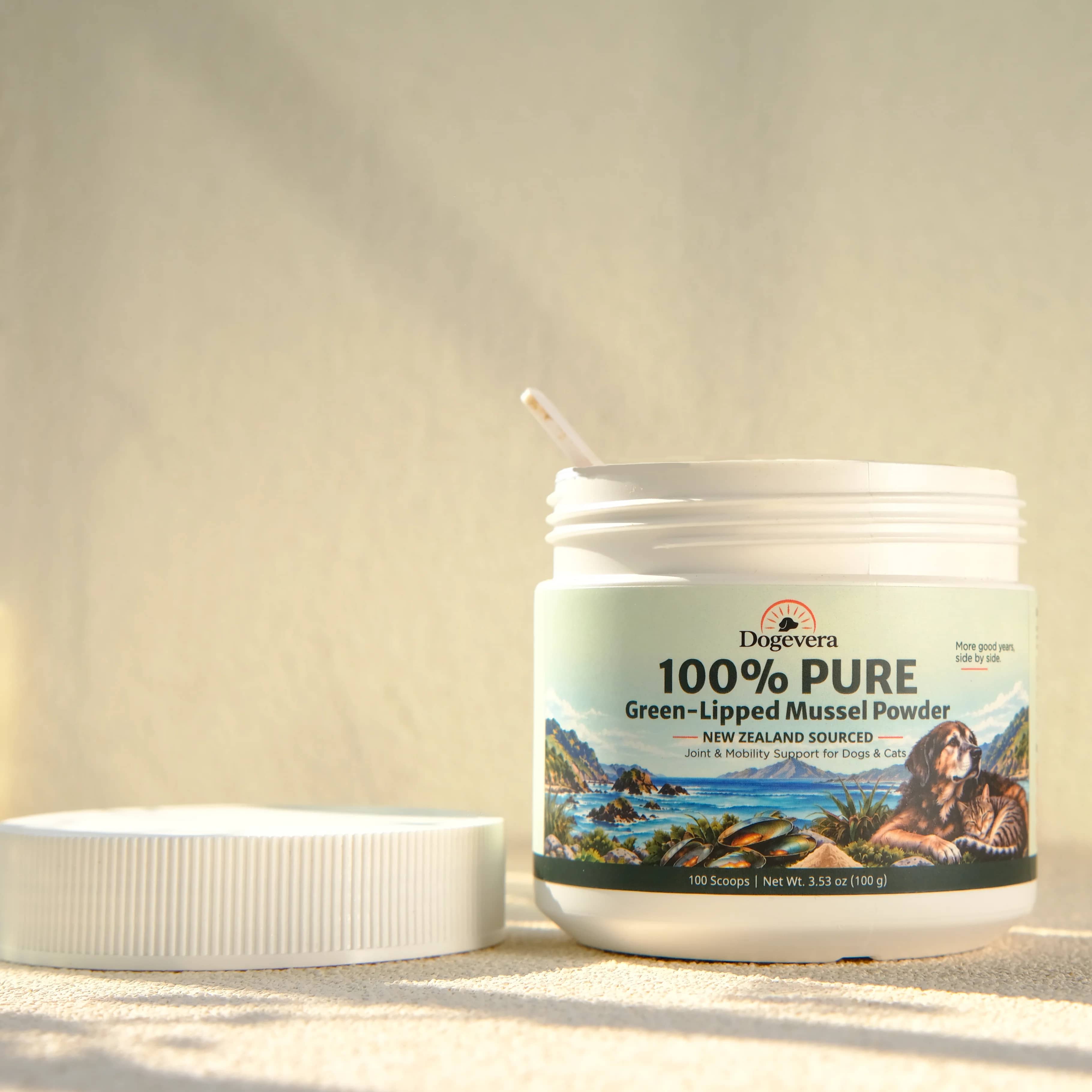
If a label leaves the amount basis unclear, contact the maker before buying. If your dog has a known shellfish concern or reacts after a new supplement, keep the package and ingredient panel available. The green-lipped mussel powder for dogs page is one example of where to review the named form and product directions before deciding whether a powder fits your routine.
For sourcing questions, compare the information the manufacturer actually documents rather than relying on “pure,” “natural,” or “concentrated” alone. Dog Supplement Ingredient Sourcing: Read the Label offers a useful checklist for that review.
Complete the comparison before choosing
- Whole-mussel powder: the Dogevera listing identifies Perna canaliculus powder. Do not interpret its powder weight as a declared EPA/DHA amount.
- Oil or lipid extract: record the named extract and any separately declared fatty-acid quantities. If these are absent, mark them as undisclosed and ask the manufacturer.
- Mixed product: record carriers and other ingredients as well as the mussel fraction. A total blend weight does not reveal each component.
For ongoing cost, first establish the product-specific daily serving, then compare the container's serving count and price. If the information needed for your purpose is missing, leave that comparison unresolved rather than substituting another preparation's dose or trial result.
FAQ
Can I give the same milligrams of oil and powder?
No. The milligram amounts may refer to different materials. Use the serving directions for the specific product instead of creating a conversion.
Is a longer ingredient list better?
Not necessarily. A longer list may simply show carriers and processing ingredients. The useful question is whether you can identify the mussel form, named fractions, amount basis, and serving directions.
What is the best label for my dog?
Choose the format you can identify, measure, store, and provide consistently. If the label does not clearly state what its milligrams represent, select a product with clearer information or ask the maker for clarification.
References
- Hielm-Björkman A, Tulamo RM, Salonen H, Raekallio M. Evaluating Complementary Therapies for Canine Osteoarthritis Part I: Green-lipped Mussel (Perna canaliculus). Evidence-Based Complementary and Alternative Medicine. PubMed record.
For individual health questions, your veterinarian remains the best partner.