Your older dog seems slower on walks, takes longer to get up, and naps more than he used to. You search for a senior dog energy supplement, and the product pages promise pep, vitality, and renewed playfulness. Before you add anything to his bowl, it helps to know what an "energy" claim can and cannot mean on a label, because the word covers several very different products.
A quick note: if your dog's energy has changed noticeably, a veterinary check is the safest first step before starting any supplement.
What "Energy" Actually Means on a Supplement Label
"Energy" is a marketing word, not an ingredient category. Products sold this way usually fall into one of three groups:
- Calorie-dense products. Powders or gels that add calories. Extra fuel can help an underweight dog, but it adds no energy to a dog already eating enough.
- Stimulant-adjacent blends. B-vitamin or herbal mixes marketed as a boost. These promise alertness rather than physical capability, and the label rarely explains the basis for the promise.
- Muscle or cognitive products. Supplements intended to support strength, mobility, or mental function. These aim at the underlying reasons a senior dog slows down, not at "energy" itself.
That last group is often what an owner actually needs, and it is worth separating the two:
- Muscle-support products target physical condition: strength for stairs, walks, and getting up.
- Cognitive-support products target mental sharpness: confusion, night restlessness, or disengagement.
- "Energy" products promise a general lift without naming which of those they address.
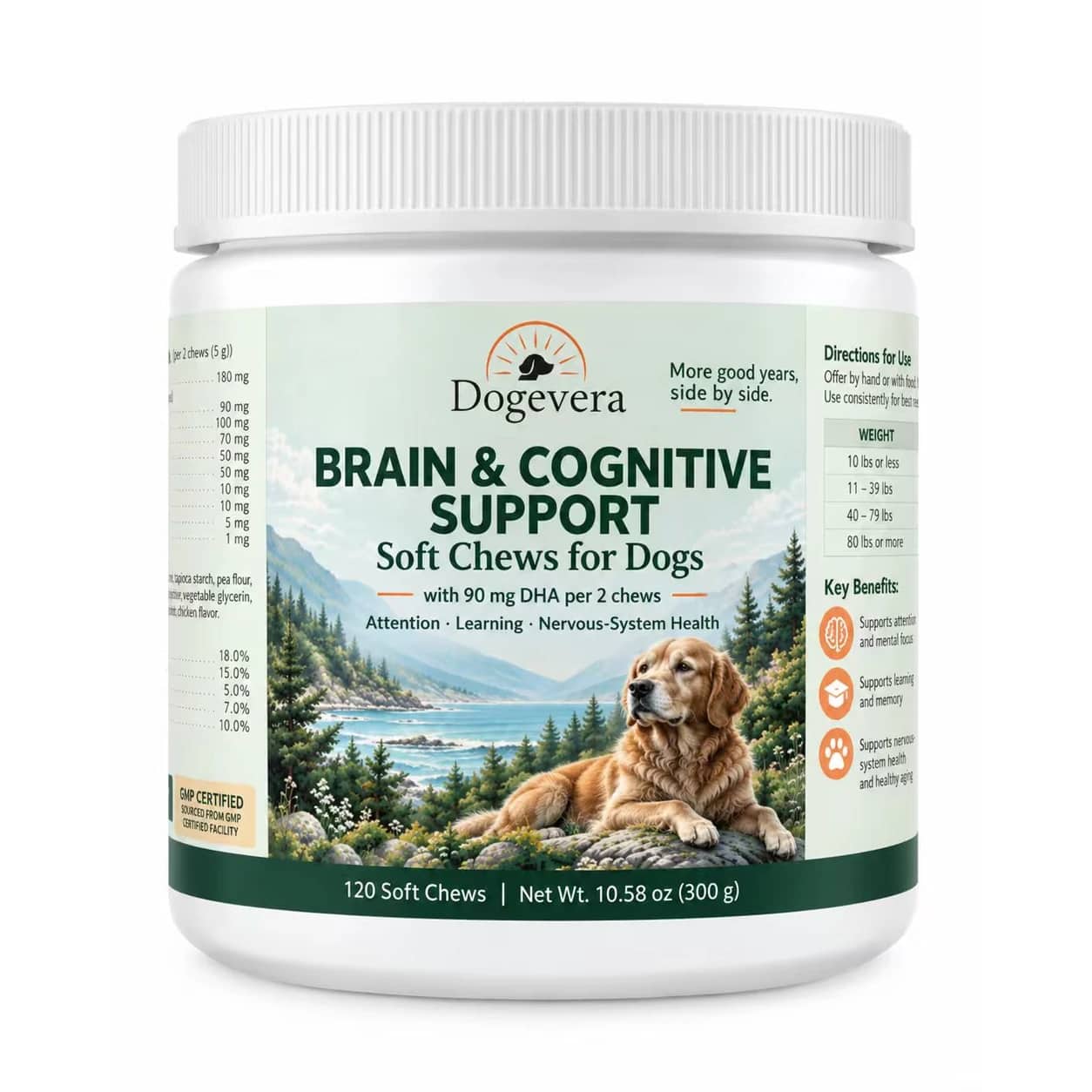
If a product cannot tell you what system it supports, that vagueness is itself information. Our guide to senior dog cognitive supplements shows what a specific, honest claim looks like on a label.
Check the Diet Before the Supplement
A senior dog who seems low on energy is often a dog whose food is no longer doing the job. Underfeeding, a diet that is harder to digest, or a dog leaving food behind can all look like low energy. Before buying anything marketed as an energy booster, review the complete diet: how much your dog actually eats, the calorie content, and the protein disclosure on the label. Our article on senior dog food and high-protein labels walks through comparing labels on a consistent basis.
This is also where regulation matters. Supplements for dogs sit in a gray area in the US, and makers are not required to prove the claims on the front of the jar. Our shopper's guide to how dog supplements are regulated explains what that means for the promises you are reading.
A Claim-Reading Checklist for "Energy" Products
Use this list on any product before buying:
1. Name the mechanism. Does the label say what the product supports: muscle, cognition, appetite, or nothing specific? Vague vitality language is a flag. 2. Identify the active ingredients and their amounts. An ingredient listed without a quantity tells you nothing about the serving. 3. Check for stimulants. Look for caffeine, guarana, yerba mate, or similar. Dogs are far more sensitive to stimulants than people, and these do not belong in a routine supplement. 4. Count the calories. If the product adds calories, decide whether your dog needs them based on his weight and food intake, not the marketing. 5. Look for evidence about the finished product. Ingredient research is not the same as research on this specific formula at this specific serving. 6. Separate the two promises. If you want your dog to move better, a muscle product is the honest category. If you want him more engaged and less confused, look at cognitive products. A general "energy" claim that promises both should be treated skeptically.
When Muscle, Not Energy, Is the Real Need
Most senior dogs described as "slowing down" are losing muscle or guarding sore joints. In that case, the useful routine combines a complete, adequate diet, comfortable daily movement, and sometimes a product designed for muscle support. Our guide to choosing supplements to build muscle compares three approaches, including HMB-style products, with a label and evidence checklist you can apply to any purchase. If that route fits your dog, a muscle strength and recovery soft chew is one example of a product that states its purpose plainly rather than promising a general boost.
A Simple Way to Decide What Your Dog Needs
For three days, keep short notes:
- Meals: how much he eats, and whether he finishes.
- Movement: how far he walks comfortably, whether he hesitates at stairs, how he gets up.
- Engagement: interest in you, toys, food, and the usual routines.
Then match the pattern to the category. Finishing meals but struggling physically points toward diet and muscle support. Eating well and moving okay but seeming distant or confused points toward a conversation about cognition. Low appetite alongside low energy points to a veterinary visit first, not a supplement.
What to Skip
- Products promising renewed puppy-like energy with no named active ingredients.
- Anything containing stimulants.
- Products where "energetic" appears on the front and nothing specific appears on the back.
- Substitutes for a veterinary visit when the change in your dog is new or sudden.
The most reliable "energy plan" for a senior dog is rarely a jar. It is a complete diet, comfortable movement, and a supplement, if one is needed, that says exactly what it supports and shows its work on the label.
For individual health questions, your veterinarian remains the best partner.