TL;DR
Nighttime waking in senior dogs often improves with a predictable evening routine, a last bathroom break close to bedtime, supportive bedding, and a quiet sleeping area. Track waking patterns for a week so you can tell the difference between occasional restlessness and a repeating problem that needs veterinary attention.
Why senior dogs wake at night
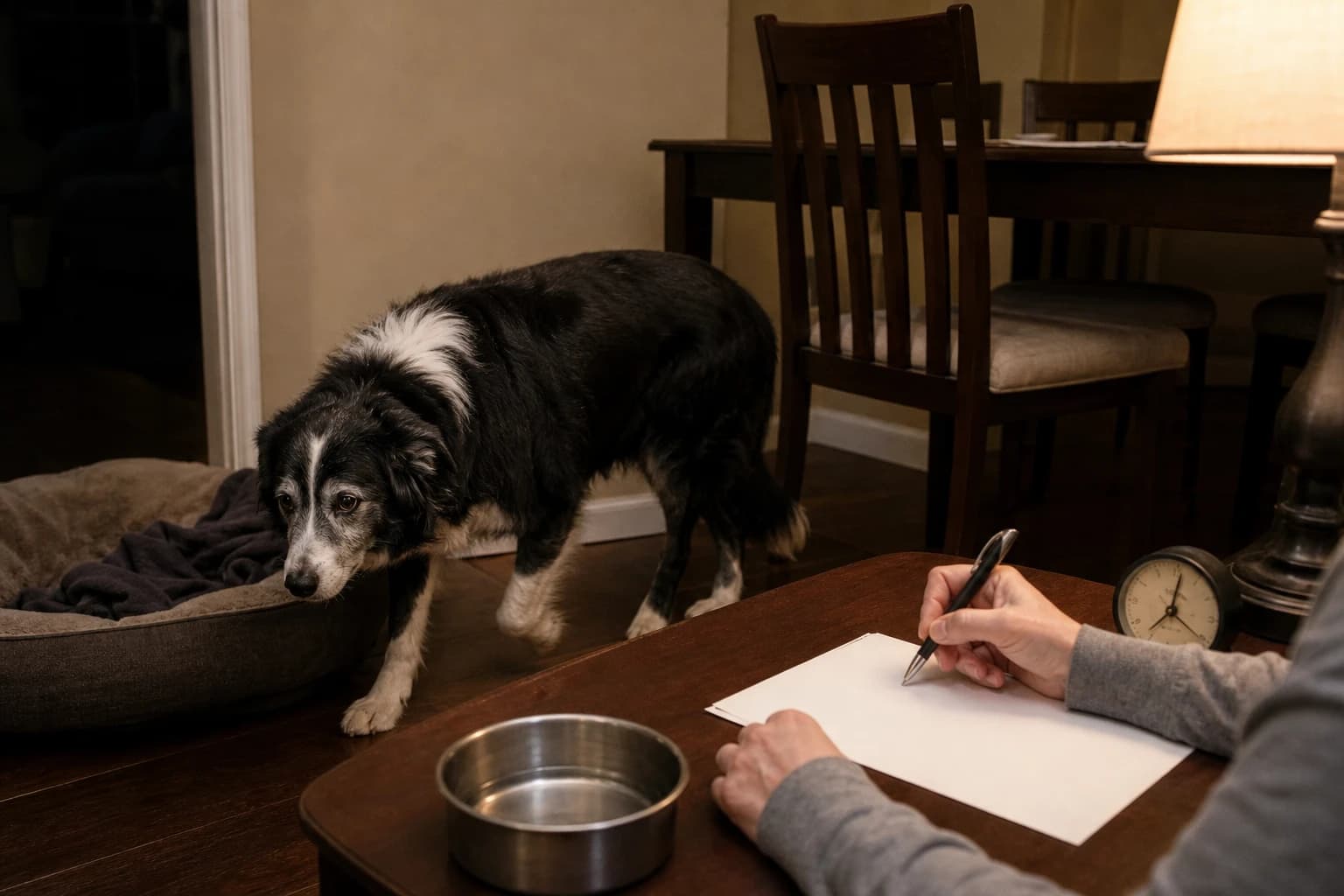
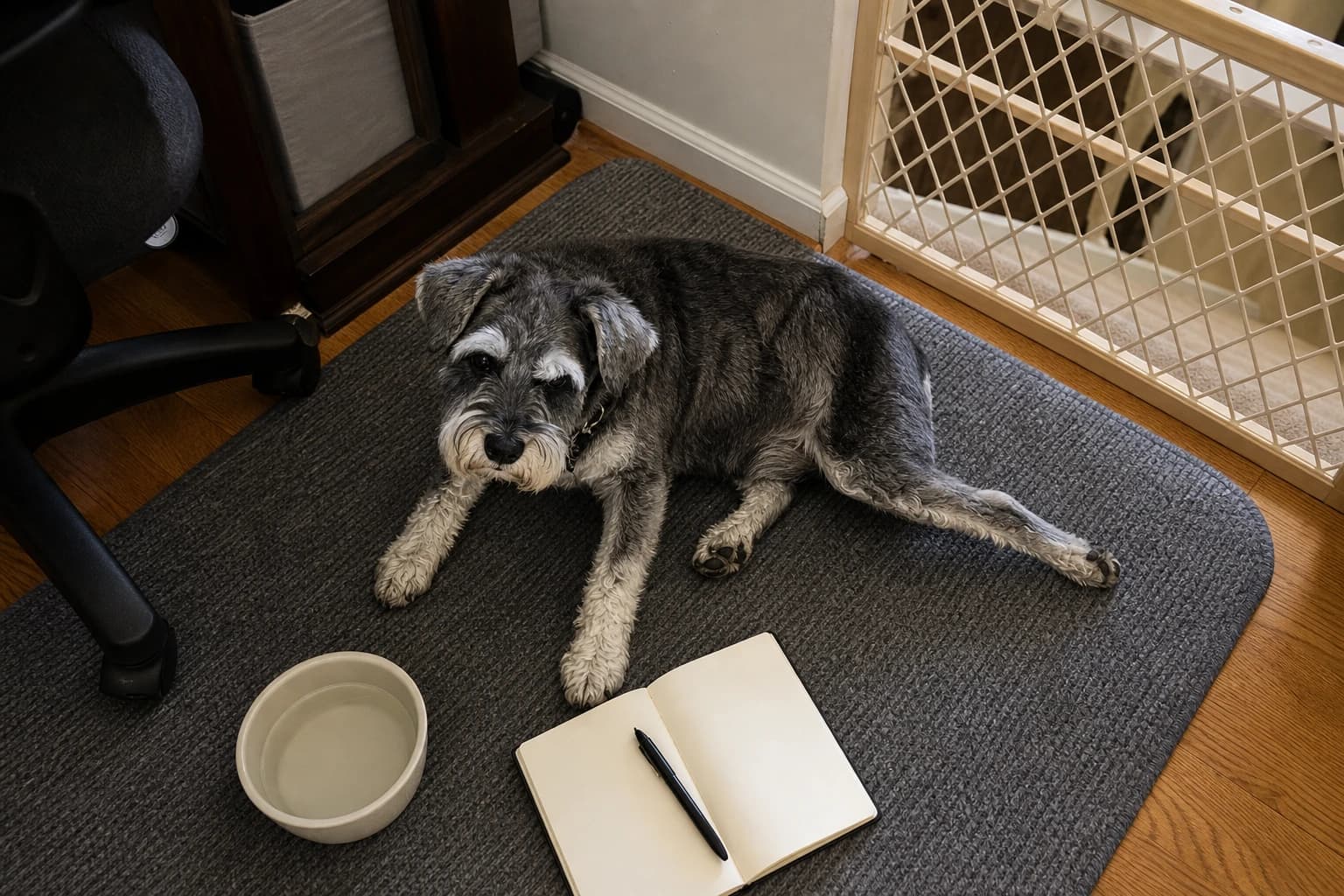
An older dog may wake because they need to urinate, feel uncomfortable lying down, or become disoriented in the dark. Cognitive decline is likely to affect 14% to 35% of dogs over the age of eight years, and nighttime confusion is one early sign. Pain from joint stiffness, hunger from a medication side effect, or anxiety from hearing loss can also interrupt sleep. Start by recording what time your dog wakes, how long the waking lasts, and what they do during that time. A seven-day log makes it easier to spot whether the problem happens every night or only after certain daytime activities.
Set up a consistent daytime routine
A predictable day helps an older dog settle at night. Feed meals at the same time each day, schedule walks or gentle play in the morning and early afternoon, and offer a calm resting period in the evening. Mental activity matters as much as physical exercise: a short scent game or a few minutes of training keeps your dog engaged without overtiring them. For ideas on low-pressure activities that suit an aging dog, see Mental Stimulation for Senior Dogs: Gentle Games You Can Do at Home. Avoid vigorous play or long outings late in the day, since overstimulation close to bedtime can make settling harder.
Time the last bathroom break
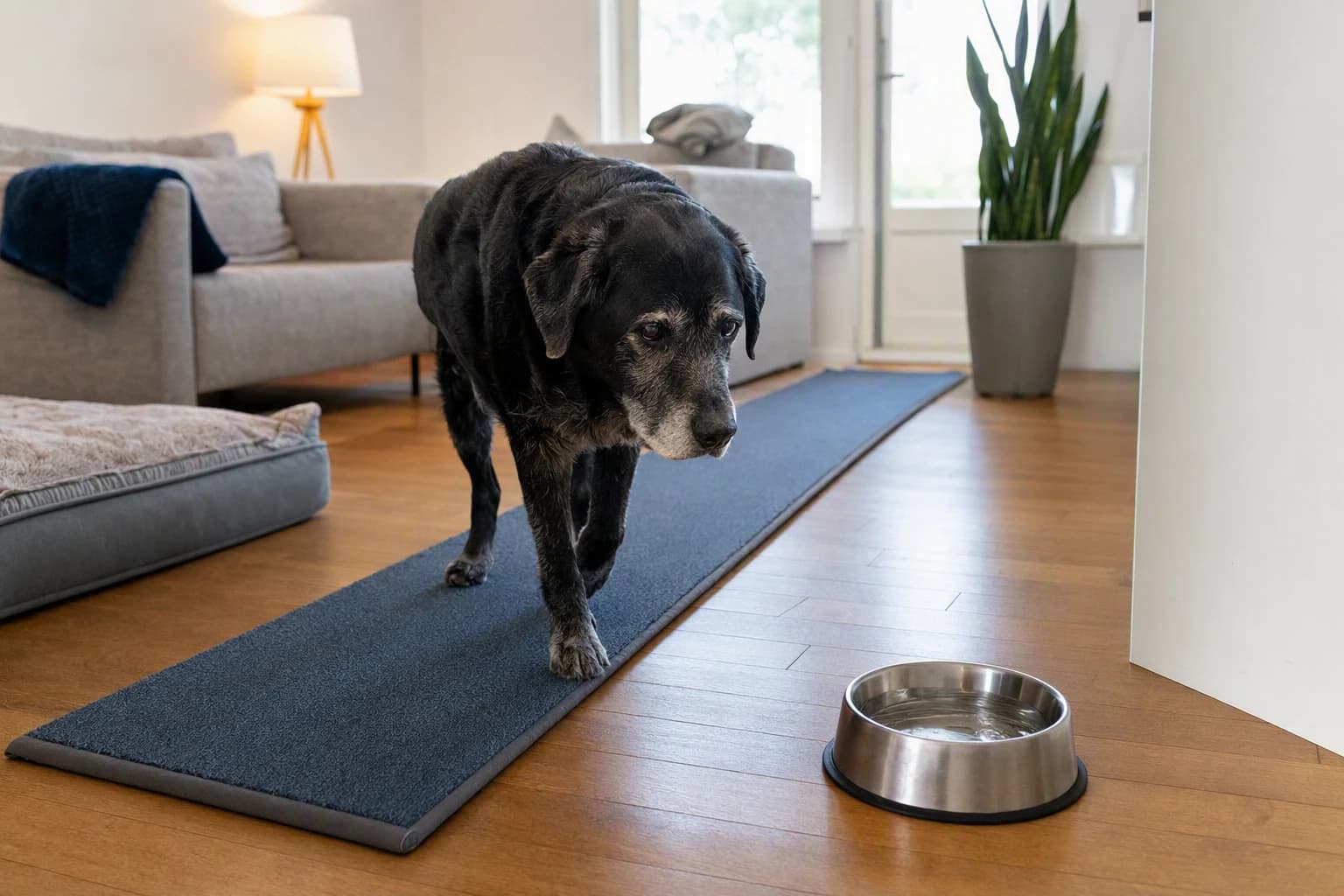
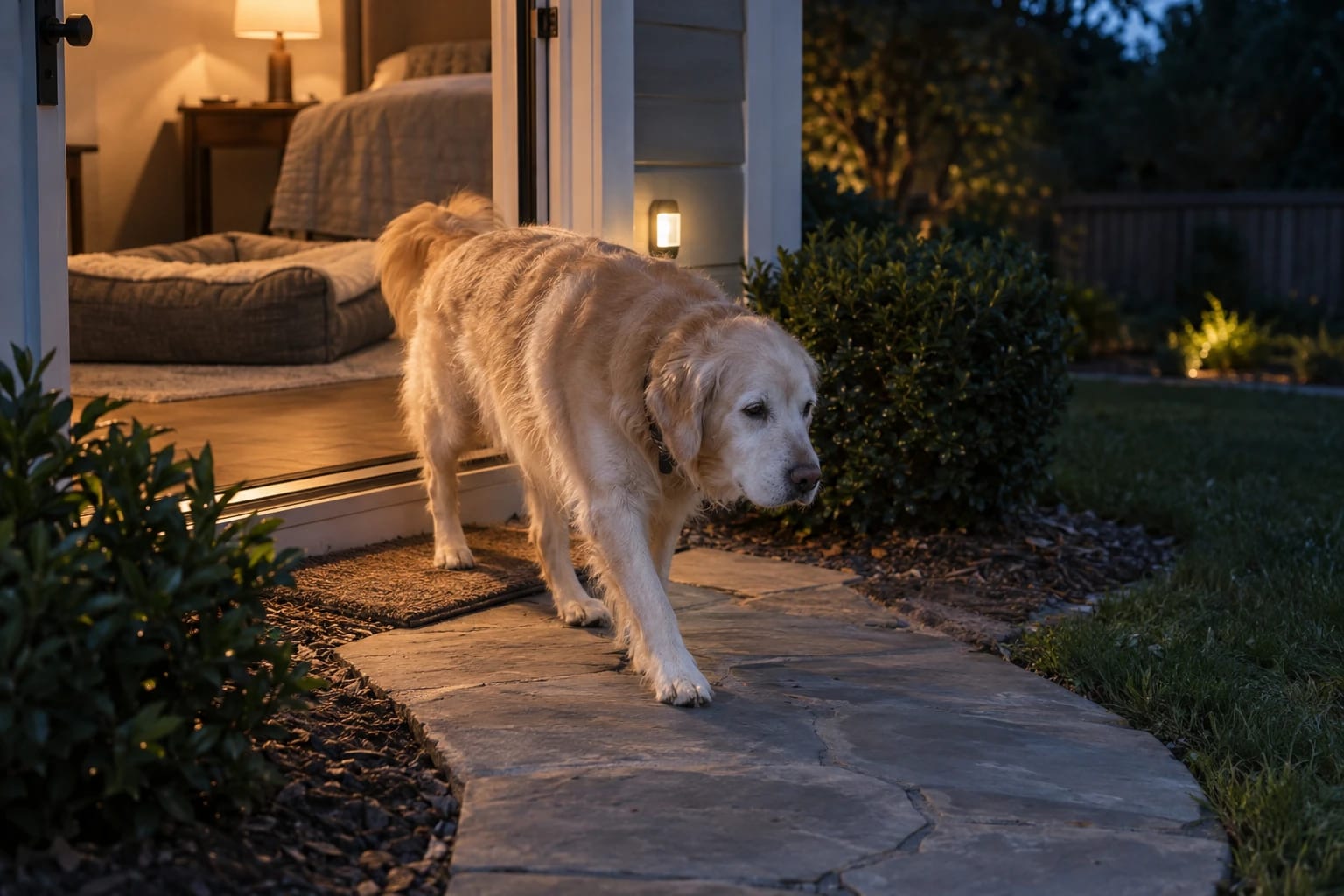
Take your dog outside 30 to 60 minutes before you plan to go to bed, then offer one final chance to urinate right before you turn off the lights. An older dog with weaker bladder control may need that second trip to make it through the night. If your dog wakes to urinate more than once, move dinner earlier or reduce evening water slightly, then discuss the pattern with your veterinarian. Frequent nighttime urination can signal a urinary tract infection, diabetes, kidney disease, or medication effects that need professional assessment.
Choose bedding that supports joints and temperature
A thick orthopedic bed with memory foam or supportive fill reduces pressure on hips, elbows, and shoulders. Place the bed in a spot away from drafts and direct heat sources. Older dogs regulate body temperature less efficiently, so a room that feels comfortable to you may be too cold for them. Add a blanket they can burrow into or move away from as needed. If your dog paces, circles, or struggles to settle even on a supportive bed, that pattern may point to pain or cognitive changes. Read more about what to record in Senior Dog Pacing at Night: What to Record.
Adjust lighting and sound
A dim nightlight in the hallway or bedroom helps a dog with failing vision navigate at night. Sudden darkness can disorient an older dog, especially one experiencing cognitive decline. Keep the path to the door clear of furniture and loose items. If your dog startles easily or seems anxious in the evening, a white-noise machine or soft music can mask unfamiliar sounds. Cognitive decline is managed using environmental changes, and small adjustments to lighting and predictability often make a bigger difference than you expect.
When to call your veterinarian
Schedule an appointment if your dog wakes every night for more than a week, paces for longer than 20 minutes without settling, vocalizes persistently, or shows signs of pain such as limping, reluctance to lie down, or sudden stiffness. Nighttime restlessness that appears alongside confusion, house soiling, or changes in appetite or thirst needs prompt professional evaluation. Cognitive decline is managed using specific medication, and early intervention often slows progression and improves quality of life.
FAQ
Can a supplement help my senior dog sleep better? Some owners find that cognitive-support products reduce nighttime restlessness in dogs with early signs of decline. Brain Cognitive Support Soft Chews for Dogs may fit a veterinary-guided routine, but sleep improvements depend on addressing the underlying cause. Discuss any new product with your veterinarian before starting.
Should I let my senior dog sleep in my bedroom? Yes, if it reassures your dog and does not disrupt your own rest. A familiar sleeping spot close to you can reduce anxiety and make it easier for your dog to settle. If your dog wakes often and needs to go outside, sleeping nearby also helps you respond quickly.
How long should I wait before calling the vet about nighttime waking? If waking happens every night for seven consecutive nights, or if your dog shows pain, confusion, or distress during waking episodes, call sooner. A one-time restless night does not require intervention, but a consistent pattern does.
Will a weighted blanket calm my senior dog at night? Weighted products are marketed for anxiety, but no canine research confirms their safety or effectiveness in older dogs. A regular blanket your dog can move under or away from is a safer, simpler choice.
For individual health questions, your veterinarian remains the best partner.