An older rescue dog may refuse to enter the bedroom after coming home, follow you all day, or turn their head away when you reach out to pet them. Supporting their happiness is less about getting them excited and affectionate as quickly as possible and more about providing a predictable routine, a comfortable place to rest, an easy-to-navigate environment, and interactions they can accept or decline.
These everyday adjustments do not replace a veterinary evaluation. If they suddenly stop eating, clearly resist moving, remain unable to settle, or show rapid behavior changes, contact a veterinarian promptly.
Make Each Day Predictable First
The people, sounds, smells, and routes in a new environment all take time to learn. Rather than planning lots of welcome activities, begin by keeping a few daily touchpoints consistent:
- Offer meals, outings, and the bedtime routine at roughly the same times.
- Use a familiar route for walks, adding variety only after they move through it comfortably.
- Before feeding, putting on the leash, or grooming, use the same brief cue to let them know what is coming.
- When visitors arrive, keep an undisturbed retreat available and do not require them to come out and greet anyone.
- Have family members follow similar rules so the dog is not allowed on the couch one day and suddenly stopped the next.
Predictability does not mean every day has to be identical. What matters is helping the dog understand roughly what comes next and making sure they can retreat safely.
Use an Observation Card to Gauge Their Happiness
Quiet behavior does not necessarily mean relaxation, and excitement does not necessarily mean happiness. Surveys on how owners recognize emotions in dogs and cats show that people draw on clues such as body posture, facial expression, and head position rather than relying on a single action.
Record three ordinary days in a row, observing the following at similar times each day:
| Observation | Fine to continue | Consider reducing | Pause first | |---|---|---|---| | Approaching for interaction | They approach willingly and their body looks natural | They turn away soon after approaching | They hide, freeze, or repeatedly retreat | | Resting | They can settle in a spot and are interrupted infrequently | They change locations often | They cannot settle for a long time | | Exploring | They want to sniff and can stop on their own | They lose interest quickly | They keep looking for an exit or avoid the activity area | | After activity | They can drink water and rest after returning home | They clearly need a longer quiet period | They do not want to continue walking or their movement changes noticeably | | Everyday sounds | After paying attention, they return to their previous activity | They need a long time to calm down | They are startled repeatedly and cannot recover |
Do not draw conclusions from a single observation. Look for recurring preferences: where they rest the longest, whom they choose to approach, when they are more willing to walk, and which kinds of touch make them turn away. You can also find more everyday details worth recording in the Dogevera senior dog care articles.
Create a Resting Area Where They Truly Will Not Be Disturbed
A comfortable bed only helps when the dog chooses to use it. First observe whether they prefer a soft mat, a cooler floor, or a spot with a view of the room entrance, then arrange the space accordingly.
Set up the resting area as follows:
- Keep it away from frequently opening doors, children's play areas, and noisy appliances.
- Leave a clear, clutter-free route in and out.
- Put water somewhere easy to reach without blocking the exit.
- Provide at least one space where no one will chase them in to hug or pet them.
- If other animals live in the home, prepare separate sleeping and eating areas.
Once the dog enters the resting area, family members should treat that as a signal to pause interaction. Do not pull them out of bed to join an activity or let visitors crowd around them.
Adjust the Routes Through Your Home to Reduce Unnecessary Effort
An older rescue dog may not yet be familiar with stairs, slippery floors, or thresholds. Improving the routes they must use every day is more practical than urging them to adapt faster.
Walk from the food and water bowls to the resting area and from the sleeping spot to the door, checking the following:
- Is the floor easy to slip on?
- Are corners cluttered?
- Are steps and thresholds easy to see?
- Do the food and water bowls require crossing obstacles repeatedly?
- Do getting into the car or onto the couch require jumping?
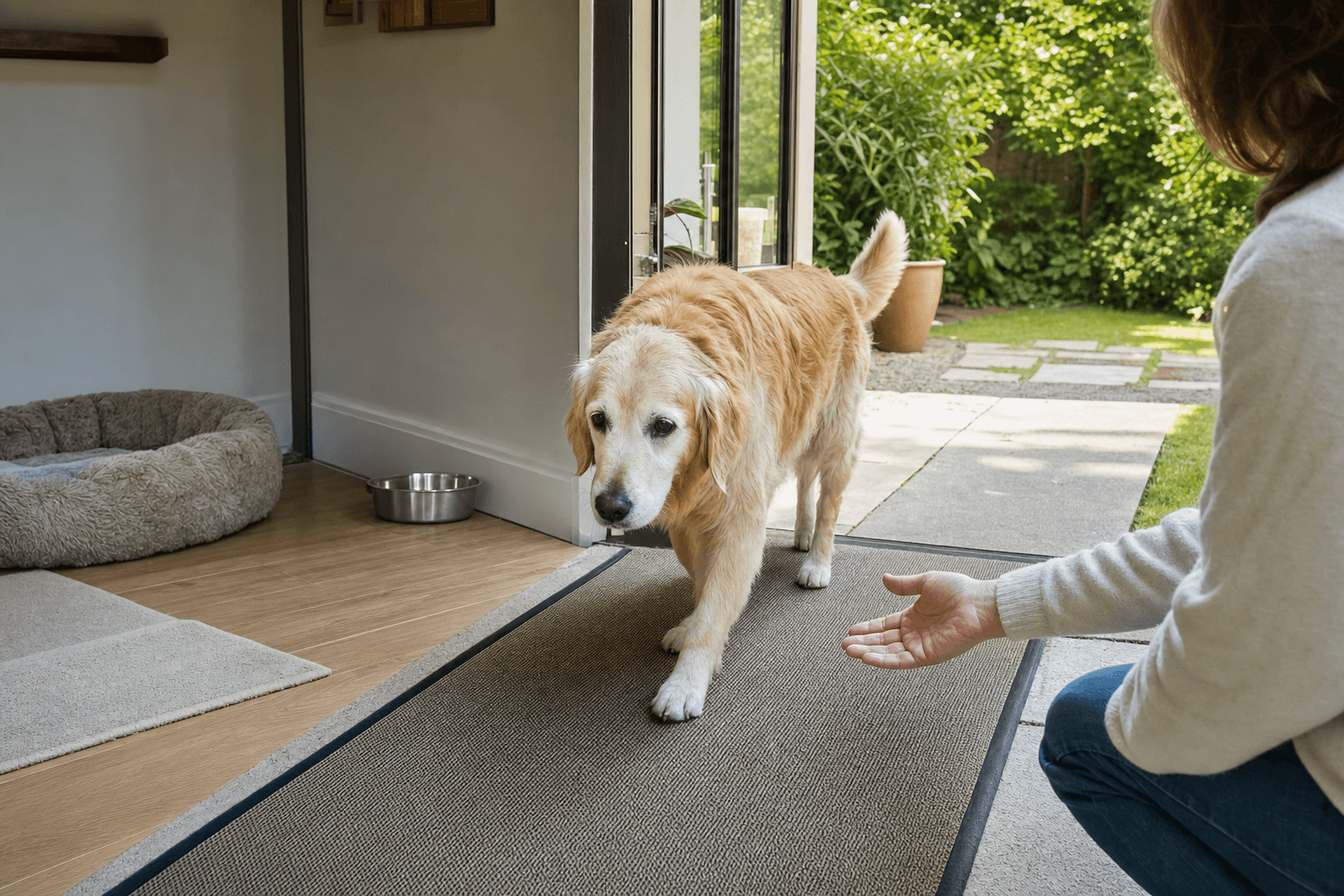
You can place sturdy, nonslip mats with edges that do not curl along commonly used routes, and use furniture to block steep stairs you do not want them to access yet. Do not pull them through a place where they hesitate. Stop first, let them observe, and allow them to choose whether to move forward.
Keep Enrichment and Affection Gentle
Activities for an older rescue dog do not need to be complicated. Sniffing, searching, and making their own choices can add variety to daily life without treating being worn out from play as the definition of happiness.
Low-Pressure Activity Ideas
- Place a few pieces of their regular food in familiar rooms where they can find them easily by scent.
- Leave time for sniffing on walks instead of rushing to cover a set distance.
- Offer toys they can use easily, and put them away once they lose interest.
- Rotate a small number of familiar items instead of presenting many new things at once.
- Let them choose between two safe routes or two resting spots.
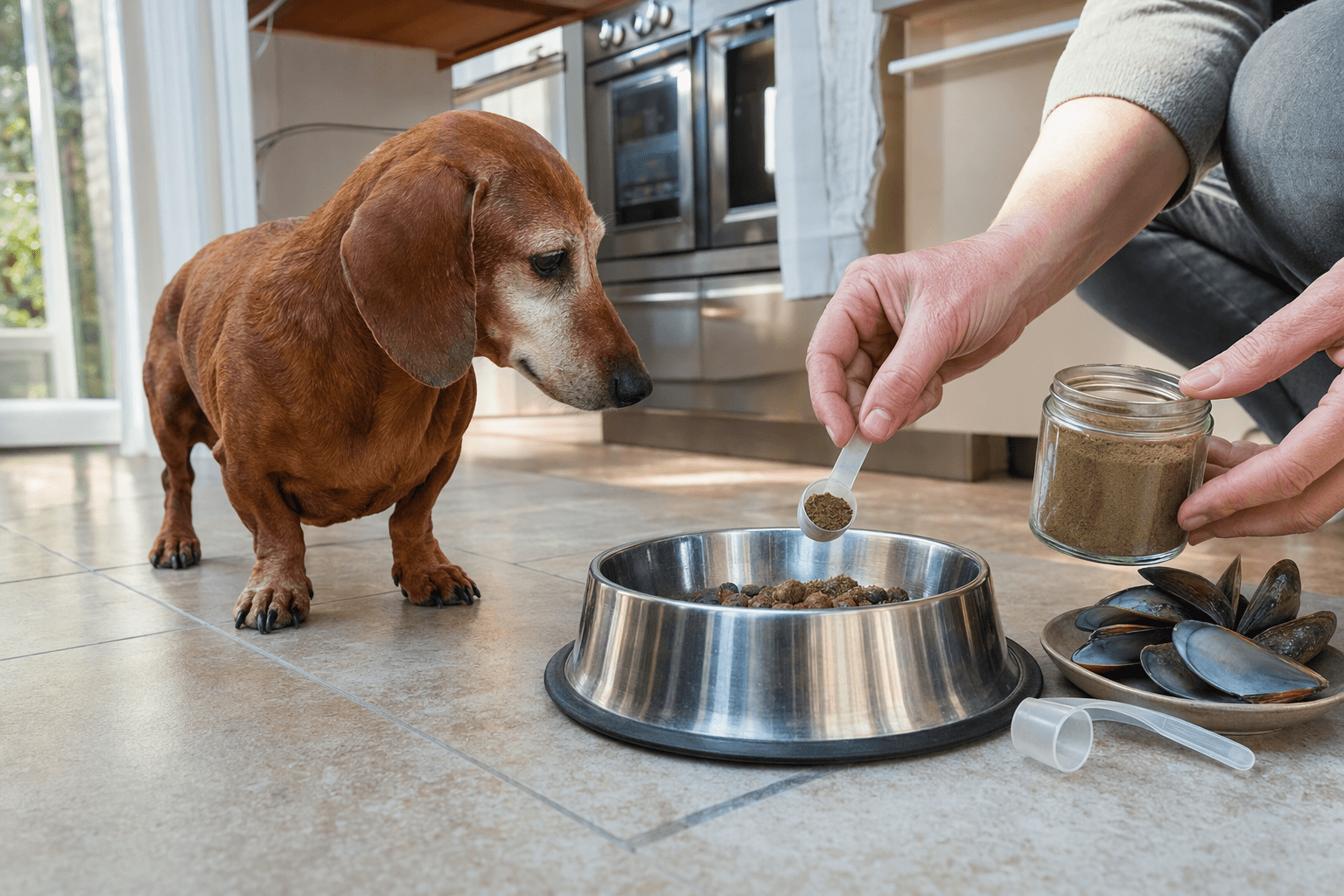
When using food-based activities, plan them from the day's regular food rather than continually adding extra treats for training and play. If you truly need to buy everyday supplies, first list specific needs such as nonslip surfaces, rest, or easy cleaning, then browse everyday care supplies for dogs instead of buying too many items at once because “a rescue dog needs compensation.”
Build Trust with “Invite—Observe—Respond”
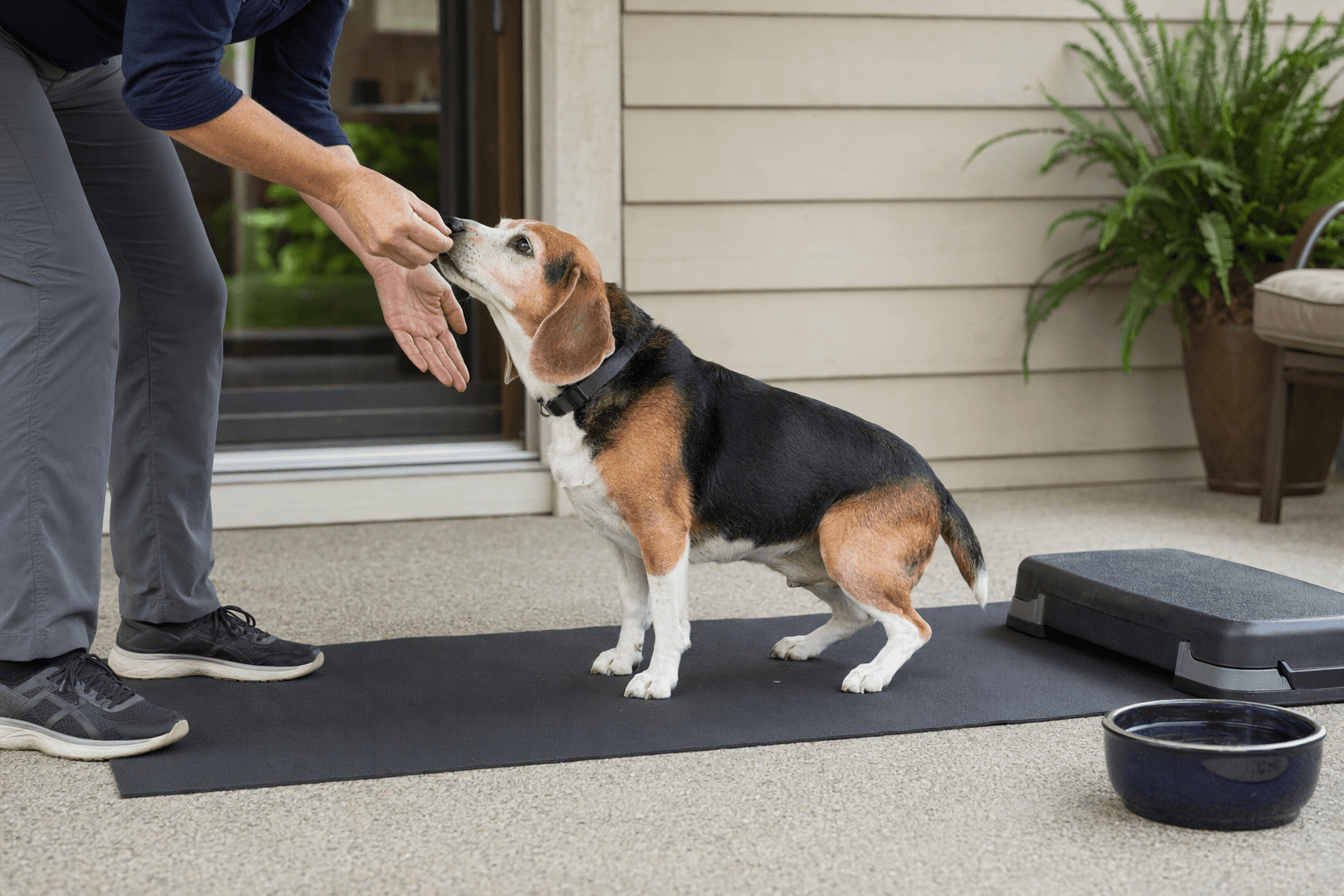
Hold out your hand where they can easily see it, then wait for them to approach voluntarily. Pet them a few times and pause. If they move closer, you can continue. If they turn their head, walk away, or return to their bed, end the interaction.
The same approach works for brushing, putting on a leash, and checking their paws. Brief contact they can leave is usually easier to turn into a stable expectation than trying to complete all their care at once. Affection is not limited to hugs. Choosing to rest in the same room, looking toward you voluntarily, or walking calmly beside you may also indicate that the relationship is becoming more secure.
Frequently Asked Questions
How long does it take an older rescue dog to truly relax?
There is no fixed timeline that applies to every dog. Instead of focusing on the number of days since they came home, compare their own changes: Are they settling more easily? Have they started exploring? Can they recover after being startled? Are they more willing to approach on their own?
They sleep all the time. Does that mean they are unhappy?
Sleep alone cannot tell you how they feel. Track their appetite, movement, willingness to interact, and daily patterns after waking. If their sleep or behavior changes suddenly, or other clear abnormalities appear, contact a veterinarian.
They do not like being petted. Can we still bond?
Yes. Start by spending time together through consistent feeding, sitting quietly nearby, walks, and respecting their choice to retreat. Letting them decide how much distance they want protects their sense of safety better than repeatedly reaching out to test their response.
Should our resident dog start doing activities with them right away?
There is no need. First give both dogs separate places to rest, eat, and retreat, then arrange brief, supervised contact. If either dog keeps moving away, increase the distance and end the interaction.
How can I tell whether an activity is suitable to continue?
Watch their behavior during the activity and afterward. If they participate willingly, can stop on their own, and return to a calm state afterward, you can keep the activity. If they repeatedly avoid it, freeze, or take a long time to settle, make it easier or pause it.
For individual health questions, your veterinarian remains the best partner.