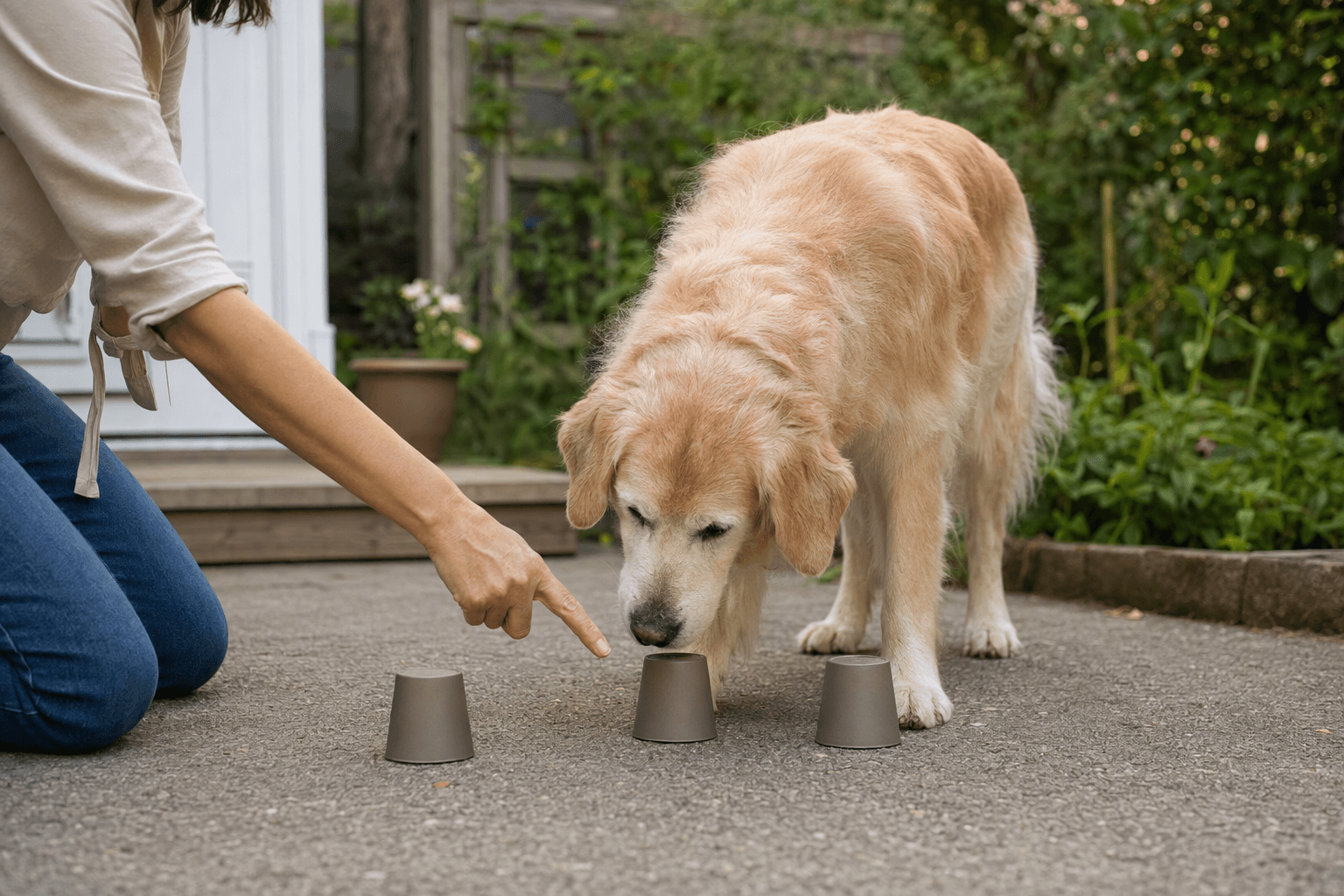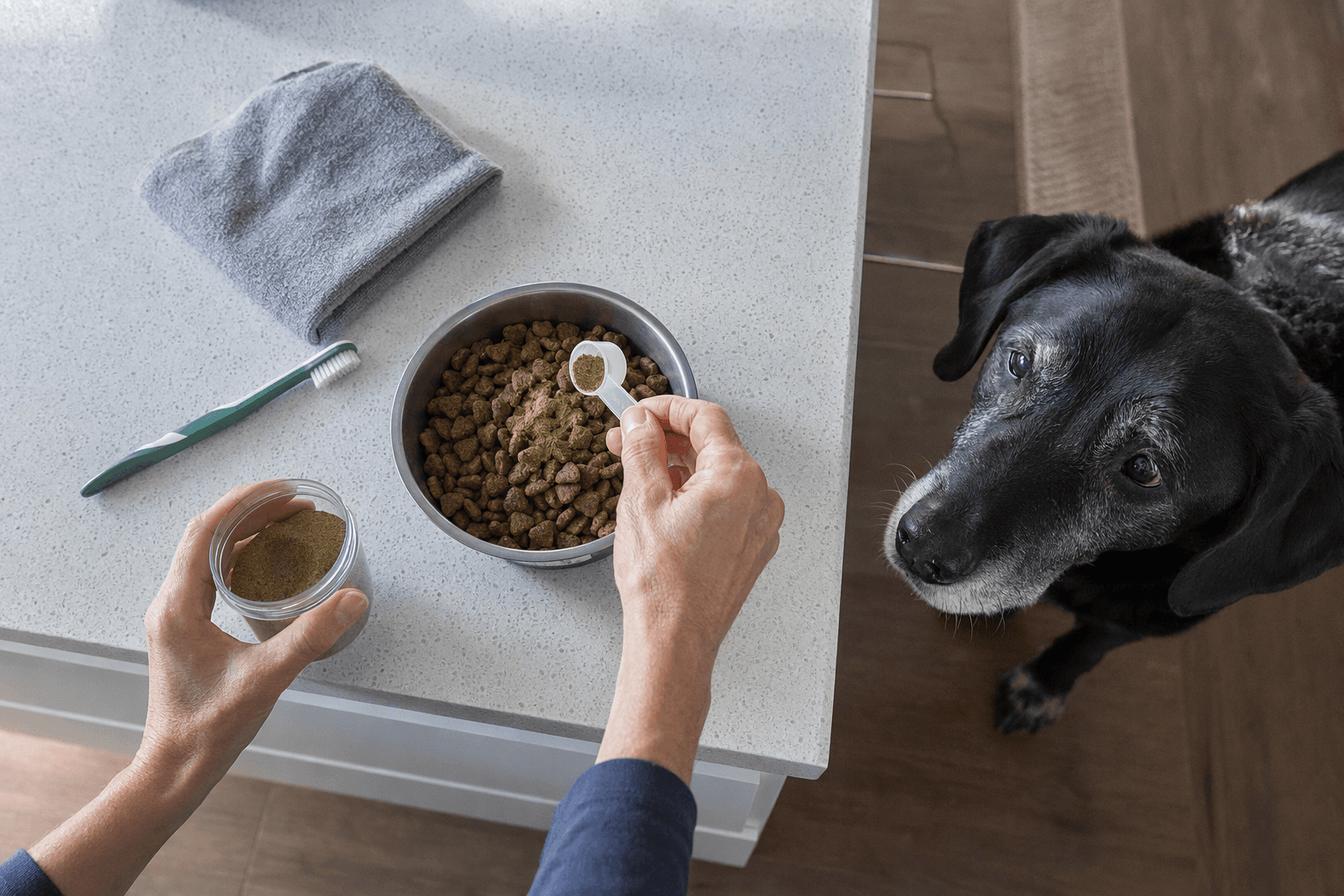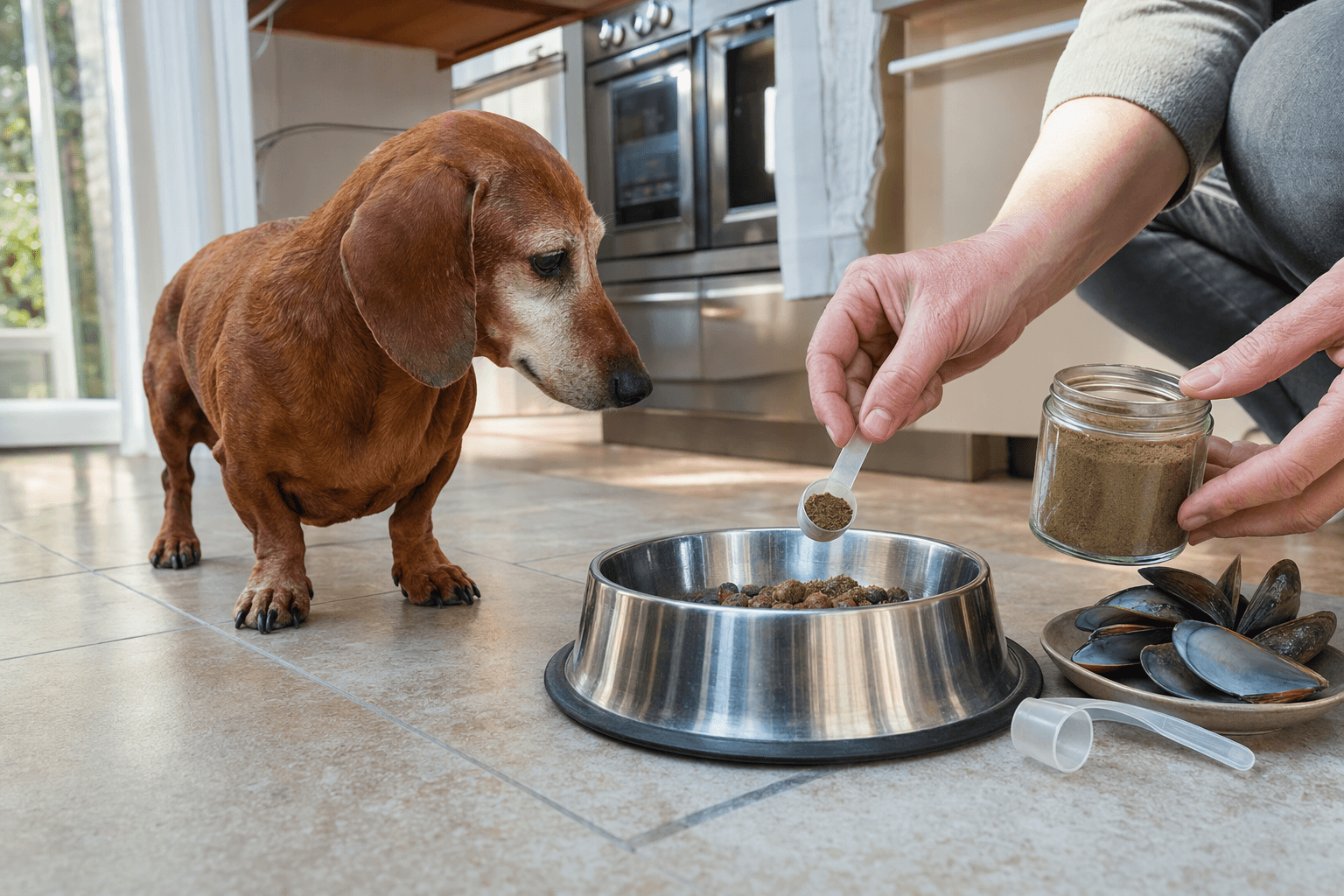
Green-lipped mussel shows up in plenty of dog joint products. The ingredient has also been studied in dogs, which gives it a better evidence base than many fashionable pet supplements. That does not mean every green-lipped mussel product has been clinically proven, or that the research supports claims about rebuilding cartilage or treating arthritis.
The useful answer sits in the middle. Some canine studies reported improvements in selected mobility, pain, or owner-assessed scores. Other trials found smaller, mixed, or no clear effects. The studies also used very different preparations: whole mussel powder mixed into food, stabilized products, lipid extracts, enriched diets, and multi-ingredient formulas.
That formulation problem matters. A result from one extract at one dose cannot automatically validate every powder or finished product on the market.
What is green-lipped mussel?
Green-lipped mussel, *Perna canaliculus*, is native to New Zealand. Depending on how it is processed, a product may contain protein, minerals, glycosaminoglycans, and marine lipids, including several fatty acids.
"Green-lipped mussel" is therefore an ingredient name, not a standardized clinical formulation. Two containers can carry the same ingredient name while differing in the amount of mussel material, lipid composition, processing method, storage stability, and daily serving.
This is one reason research summaries that treat all GLM products as interchangeable are misleading.
What did the dog studies find?
An early double-blind trial enrolled 31 dogs with signs of arthritis and tested a complete dry diet containing 0.3% green-lipped mussel powder. The researchers reported improvement in total arthritis score and some individual measures, including pain and swelling. They did not find significant improvement in every measure, such as range of motion and crepitus.
A later placebo-controlled study evaluated a stabilized green-lipped mussel product in 45 dogs with osteoarthritis. It found improvement on some veterinarian-assessed measures. Carprofen, the active drug comparator, produced a larger and faster effect. That is an important result because it argues against presenting GLM as equivalent to a prescription anti-inflammatory medication.
Other studies have evaluated GLM-enriched diets, proprietary marine lipid extracts such as PCSO-524, or products that combine mussel-derived ingredients with other components. Some reported better owner scores, force-plate measurements, or mobility assessments. Several had no placebo group, small samples, short follow-up, manufacturer funding, or outcomes that did not all move in the same direction.
The 2023 five-arm trial illustrates why a single headline can be deceptive. It compared two marine fatty-acid products, glucosamine and chondroitin, carprofen, and placebo in 75 dogs over four weeks. The results varied by product and outcome. It was not evidence that every GLM preparation works, and it did not show that mussel powder and proprietary lipid extracts are interchangeable.
The fair reading is this: specific GLM preparations have produced positive signals in some canine studies, but the overall record is mixed and formulation-specific.
Powder and lipid extract are not the same thing
Whole mussel powder contains a broad mixture of nutrients. A lipid extract concentrates a much narrower portion of the mussel. A complete therapeutic diet adds another layer because the food itself may differ in calories, fatty acids, antioxidants, or other joint-support ingredients.
These distinctions affect both dose and interpretation. Five milligrams of a proprietary lipid extract cannot be compared gram-for-gram with five milligrams of whole mussel powder. Likewise, a trial of a GLM-enriched diet does not prove that sprinkling an unrelated amount of powder over a different food will reproduce the same result.
Dogevera's current green-lipped mussel product is a 100% New Zealand green-lipped mussel powder with a 0.3 g reference serving. It has not been used as the finished product in the published canine trials discussed here. We do not describe that serving as a clinically established dose.
That disclosure may sound less exciting than "clinically proven." It is also the honest way to connect ingredient research to a product that has not itself been tested.
How long did the studies run?
Most of the clinical studies assessed dogs over roughly four to eight weeks. A small number followed dogs for longer. That does not establish a universal time to benefit, and it does not mean a product that has done nothing after a week simply needs a larger serving.
Mobility can change for many reasons, including pain, body weight, activity, flooring, nail length, neurological disease, and the natural fluctuation of osteoarthritis. If an older dog becomes reluctant to rise, starts slipping, or changes gait, the first step is a veterinary assessment rather than a supplement experiment.
Safety and practical cautions
GLM preparations were generally well tolerated in the available dog trials. "Generally well tolerated" is not the same as "no side effects." Most studies were too small and short to detect uncommon reactions or answer long-term safety questions.
Green-lipped mussel is a mollusk. A dog with a known or suspected reaction to mussels or shellfish should not be deliberately exposed without veterinary advice. The trials also do not establish safety for every puppy, pregnant or lactating dog, or dog with complex medical conditions.
Do not reduce or stop a prescribed pain medication because a supplement has been added. The published studies do not establish an NSAID-sparing protocol, and they do not show that GLM can replace veterinary treatment for osteoarthritis.
What to look for on a label
A useful label should tell you what form of green-lipped mussel is present, how much the dog receives per day, and whether other active ingredients are included. Be cautious when a page cites a study of a proprietary extract but sells plain powder without explaining the difference.
Also watch for claims that go beyond the research. Canine trials have not shown that GLM regenerates cartilage, reverses arthritis, prevents joint disease, or works as well as a prescription drug. A supplement may be one part of a mobility plan, but body weight, appropriate exercise, home traction, veterinary pain control, and rehabilitation often matter more.
A careful conclusion
Green-lipped mussel is a reasonable ingredient to study for canine mobility. Some controlled trials are encouraging. The evidence is not uniform, and it belongs to the exact preparations and doses that were tested.
For a dog already showing stiffness, pain, weakness, or gait change, use the research as a reason to have a better conversation with your veterinarian, not as a reason to diagnose or treat the problem at home.
References
1. Bui LM, Bierer RL. Influence of green-lipped mussels in alleviating signs of arthritis in dogs. *Veterinary Therapeutics*. 2003. 2. Hielm-Björkman A, et al. Evaluating complementary therapies for canine osteoarthritis. Part I: green-lipped mussel. *Evidence-Based Complementary and Alternative Medicine*. 2009. 3. Rialland P, et al. Effect of a diet enriched with green-lipped mussel on pain behavior and functioning in dogs with clinical osteoarthritis. *Canadian Journal of Veterinary Research*. 2013. 4. Vijarnsorn M, et al. PCSO-524 and firocoxib in canine osteoarthritis. *BMC Veterinary Research*. 2019. 5. Kampa N, et al. Five-arm randomized trial of canine hip osteoarthritis interventions. *Frontiers in Veterinary Science*. 2023. 6. Barbeau-Grégoire M, et al. Systematic review and meta-analysis of enriched diets and nutraceuticals in canine and feline osteoarthritis. *International Journal of Molecular Sciences*. 2022.
About the author
Morty Tang is the founder of Dogevera. His interest in senior-pet care is personal: he lost both a pug and a corgi after serious rear-limb mobility problems, while a Chinese village dog in his family has remained active into her fifteenth year. Those experiences led him to ask harder questions about mobility, aging, and what pet products can honestly promise. He is not a veterinarian. Dogevera's evidence articles are educational and do not replace veterinary diagnosis or treatment.
For individual health questions, your veterinarian remains the best partner.