TL;DR
If your old dog is not responding to their name, first compare their response to a sound they cannot see with their response to a visual cue. A dog who consistently notices movement but misses quiet sounds may be showing a hearing change, while a dog who misses both familiar cues and parts of their routine may need broader observation. This home check cannot identify the cause, but it can make your next veterinary conversation more specific.
An older dog who no longer turns when you say their name can leave you wondering whether they are ignoring you, losing hearing, or becoming confused. Start by observing the pattern rather than repeating their name louder. A brief, calm comparison of sound and sight can help you choose safer ways to communicate while you keep notes.
A veterinarian should assess a new or worsening change, especially when it comes with distress, pain, balance problems, or other unusual behavior.
Is it hearing loss or a cognitive change?
The most useful first question is not, “Do they know their name?” It is, “Which kinds of cues do they still notice?”
A hearing-related pattern may look like this:
- They do not turn toward their name when they cannot see you.
- They still notice you entering the room, moving a hand, or approaching within their view.
- They may startle when touched because they did not hear you coming.
- They respond more reliably when you use a hand signal, point, or stand where they can see you.
A broader behavior change may look different:
- They miss familiar cues even when they can see you.
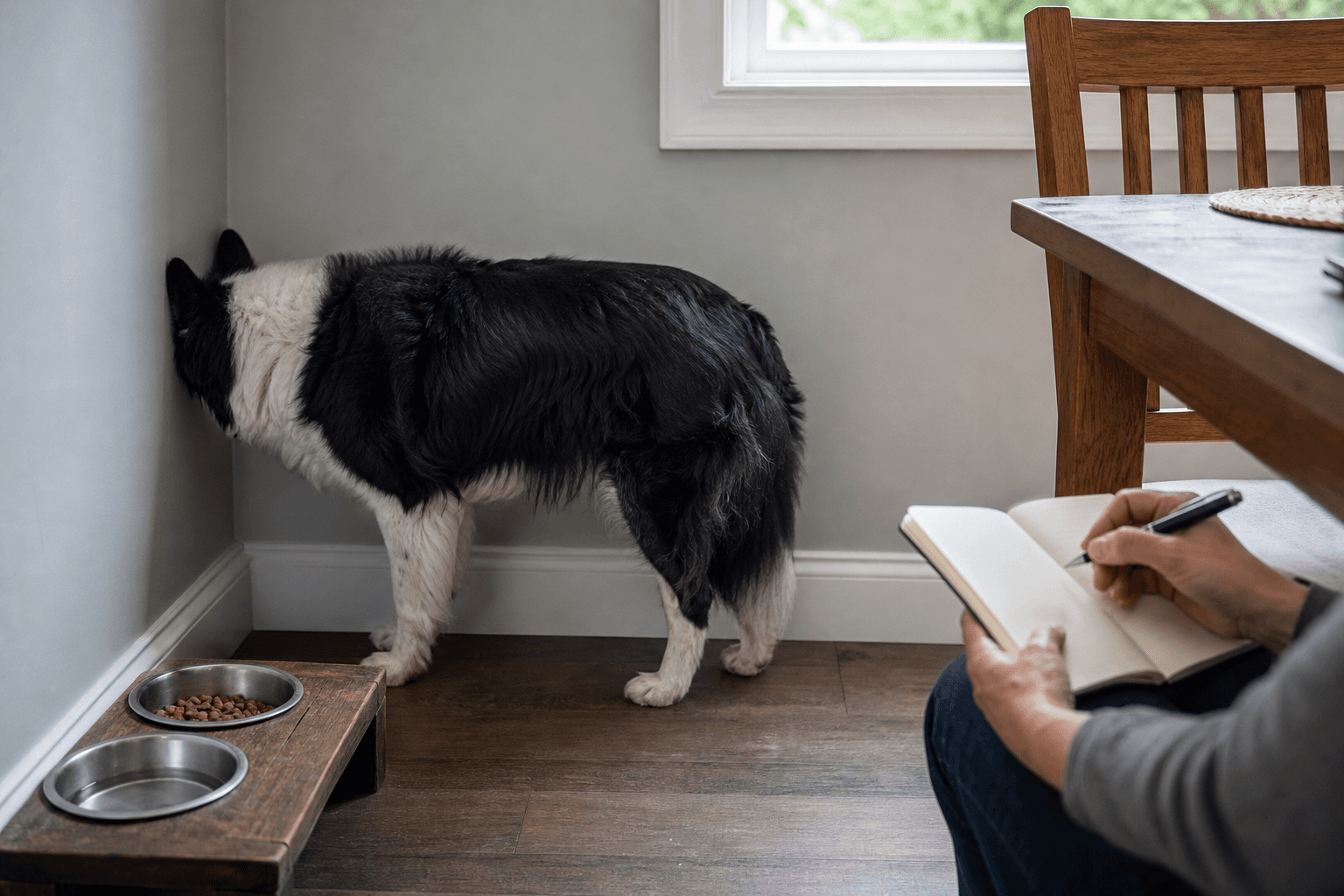
- They seem unsure in a familiar room or pause at ordinary household transitions.
- Their response changes at particular times, such as after waking or during the evening.
- They show several new changes together, such as altered sleep, pacing, house-training changes, or getting stuck in an unusual place.
These patterns can overlap. Hearing loss can make a dog appear less responsive or more unsettled, and discomfort or other health changes can affect behavior too. Treat the comparison as an observation tool, not a diagnosis.
What can you test at home safely?
Choose a quiet, familiar room when your dog is awake and relaxed. Do not test by shouting, clapping close to their ears, or startling them. Keep your body still and out of their direct view for the sound portion.
Try this simple three-part comparison:
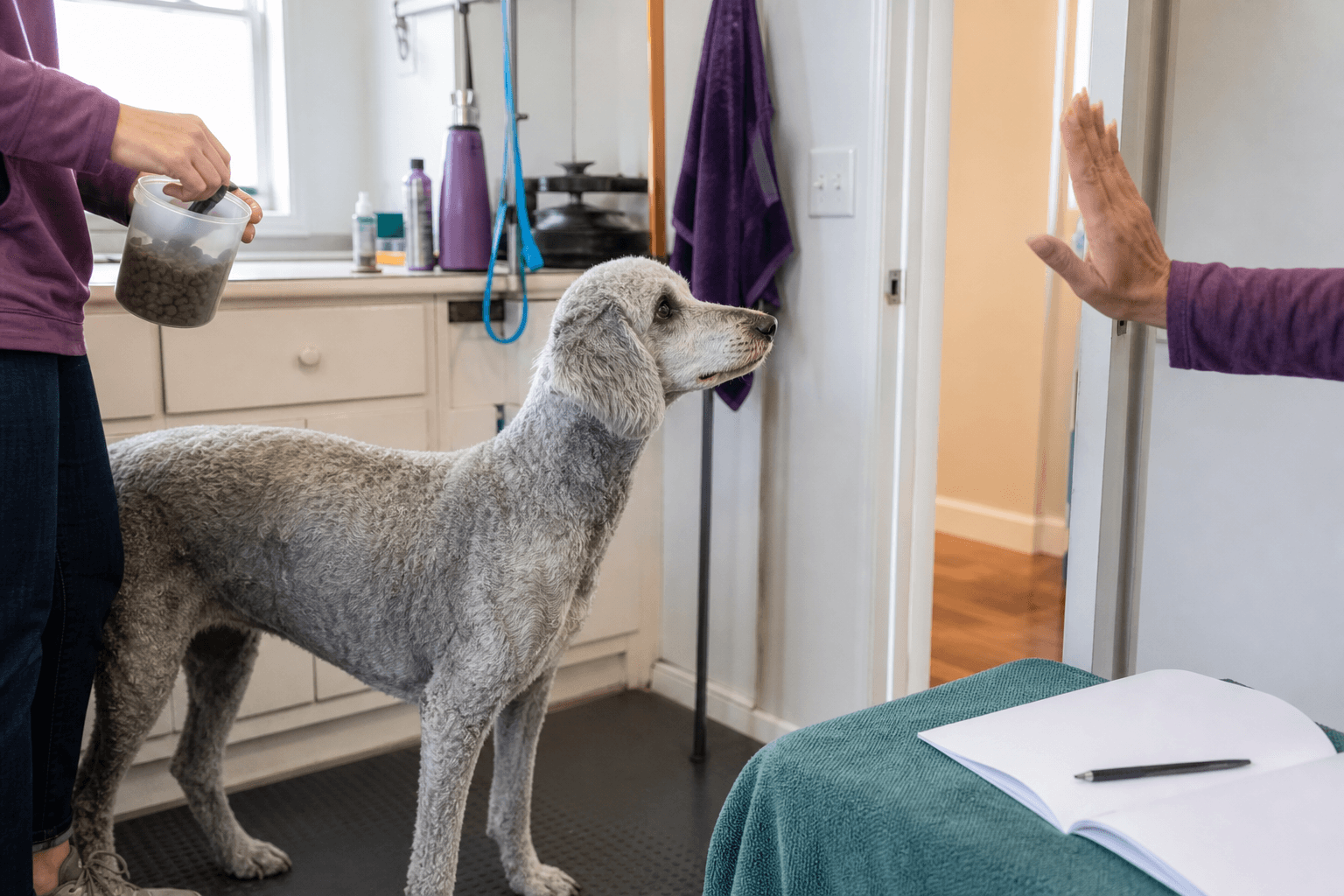
1. Sound without sight: From behind or to the side, say their name in your ordinary voice. If there is no response, make one other familiar, gentle sound, such as a food container opening or a soft jingle from a nearby object. Do not move toward them while making the sound. 2. Sight without sound: Wait until they are looking away, then move into their line of sight without saying their name. Use a familiar hand signal or invite them to come with a visible gesture. 3. Routine cue: At a normal time, begin a familiar activity without calling their name. Watch whether they recognize the visual details of a meal, leash, bed, or walk routine.
Repeat the comparison on separate occasions rather than deciding from one missed response. Write down the setting, what cue you used, whether they could see you, and what they did. A short record can reveal whether the pattern is consistent or depends on fatigue, distance, background noise, or time of day.
Avoid turning the check into a challenge. If your dog looks worried, walks away, or seems unsettled, stop and return to a familiar, comfortable routine.
What observations point more toward hearing changes?
Look for a reliable difference between sound-based and visual communication. For example, your dog may fail to turn when you speak from another room but follow a hand signal once they can see you. They may also respond to a light touch on the floor or a visible gesture while missing a spoken cue.
Daily communication can then become more predictable:
- Approach where your dog can see you before touching them.
- Use the same visible hand signal for important routines.
- Keep pathways clear so they are less likely to be surprised by people or other pets.
- Use a light, gentle touch only after they have seen you approach.
- Tell household members not to rely on calling from another room.
Do not assume that a dog who ignores their name has stopped recognizing you. If they still seek familiar people, follow visual routines, or respond to gestures, those observations are worth recording. The practical goal is to reduce confusion and help your dog understand what you are asking without relying on a sound they may not notice.
What observations suggest a broader behavior change?
Pay attention to cues that do not depend on hearing. If your dog can see you clearly but does not recognize a familiar gesture, routine, or location, record that separately from missed spoken cues.
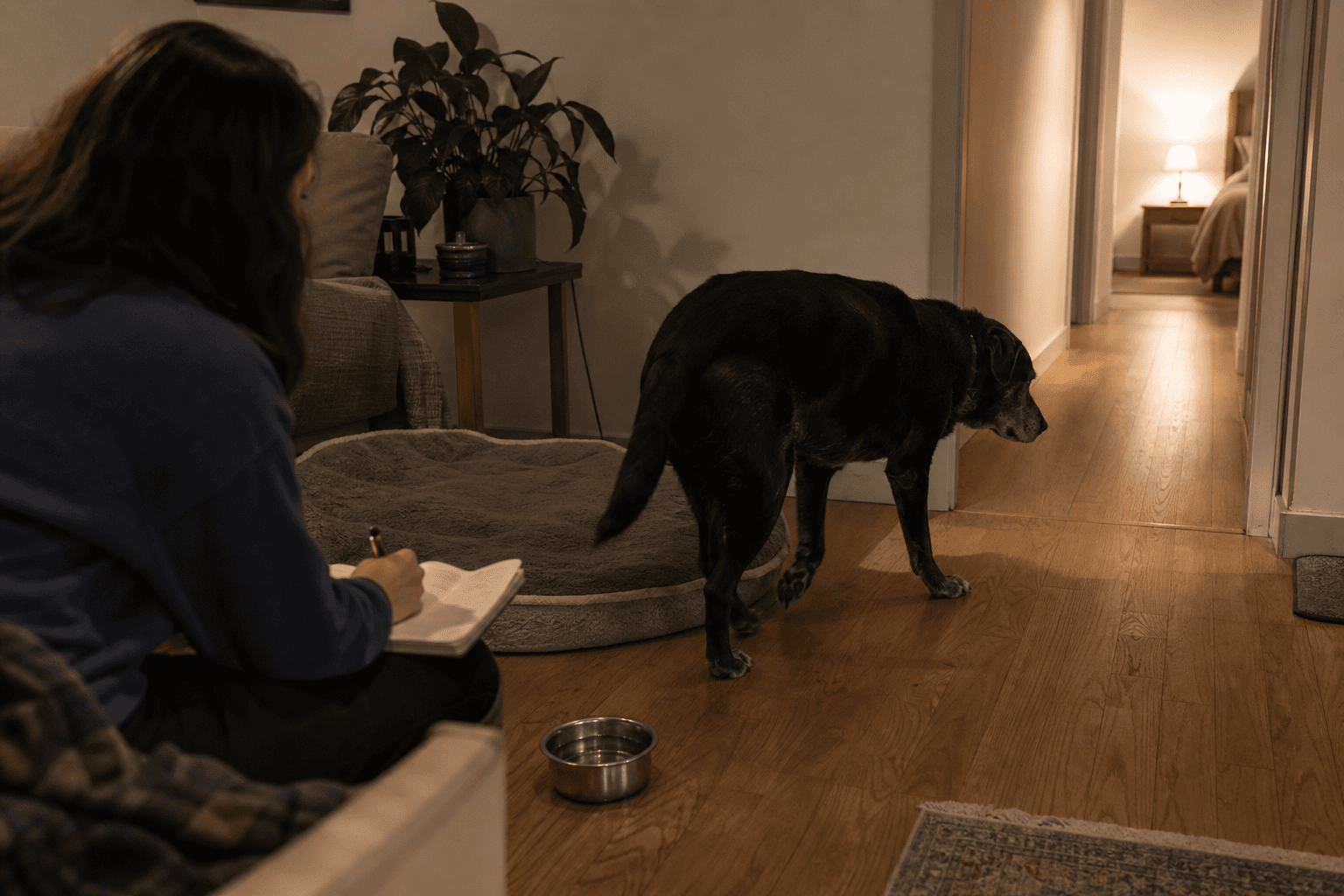
A broader pattern may also involve changes in how they move through the day. They might pause in familiar places, seem unsettled during ordinary transitions, reverse their day and night rest pattern, or need more help finding a door, bed, or water bowl. One event does not establish a cause. Repeated changes, especially when they interfere with eating, resting, toileting, movement, or family interaction, deserve a veterinary conversation.
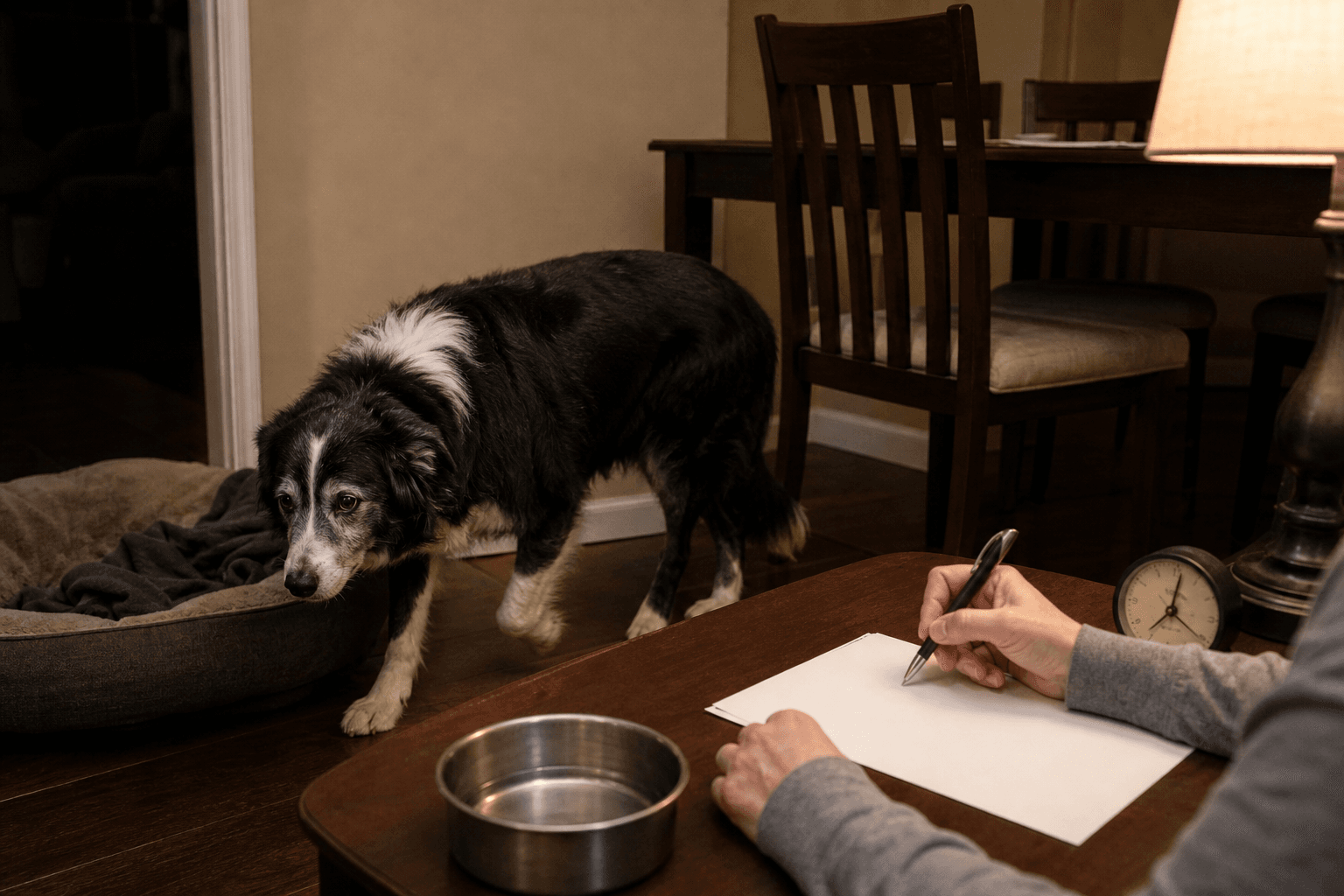
Use a simple observation log for three days. For each event, note:
- The time and location
- Whether your dog could see you
- The cue used, such as name, hand signal, or routine object
- Their response, including turning, approaching, pausing, or appearing confused
- Any other change happening at the same time
You can also record a short video from a normal distance if it shows the pattern clearly. Avoid staging a frightening test or repeatedly provoking the behavior.
For related guidance on recording new patterns before making daily changes, see senior dog behavior changes. A broader senior dog care routine can also help you keep meals, rest, walks, and communication more consistent while you observe.
How should you communicate with an older dog who misses their name?
Until you know more, combine sound with sight. Say your dog’s name once in a calm voice, move into their view, and then use the same hand signal each time. Give them room to turn or approach rather than standing over them.
Make the home easier to navigate by keeping furniture, beds, and water in familiar places. Add gentle lighting in areas where your dog moves after dark, and avoid approaching suddenly from behind. If other people care for your dog, show them the same visual cues and approach routine.
Do not respond by calling louder over and over. Repetition can make it harder to tell whether your dog heard the cue, saw you move, or simply followed the routine. A consistent signal gives you a clearer observation and gives your dog a more dependable way to understand you.
When should you contact your veterinarian?
Arrange a veterinary check for a new, worsening, or persistent change in response to their name. Bring your observation log, a list of other behavior changes, and any video that shows the pattern in an ordinary setting.
Contact the veterinary office promptly if the change appears sudden or occurs with pain, repeated startling, balance trouble, marked distress, unusual weakness, or difficulty carrying out normal daily activities. Until your dog is assessed, use visible cues, supervise unfamiliar spaces, and keep their routine calm and predictable.
FAQ: old dog not responding to name
Should I keep calling my dog’s name?
Say it once, then move into their view and add a consistent hand signal. This avoids relying on a sound they may not notice and gives you a clearer response to observe.
Can a dog with hearing loss still learn cues?
They may respond to visual signals or familiar routines. Use one clear gesture at a time and keep your approach consistent.
Does ignoring their name prove cognitive decline?
No. A missed spoken cue alone cannot distinguish hearing loss from a broader behavior change. Compare sound, sight, and routine responses, then share the pattern with your veterinarian.
What should I bring to the appointment?
Bring notes showing when the change happens, whether your dog could see you, which cues they noticed, and any other new behavior or daily-life changes.
For individual health questions, your veterinarian remains the best partner.