TL;DR
When a senior dog is staring at a wall or standing in a corner, first check whether they can easily disengage and return to a familiar activity. A single quiet pause may be different from a new pattern that repeats, progresses, or interferes with eating, resting, moving, or finding their way around the home. Record what happens, then share the pattern with your veterinarian.
Is your senior dog staring at a wall, or simply taking a pause?
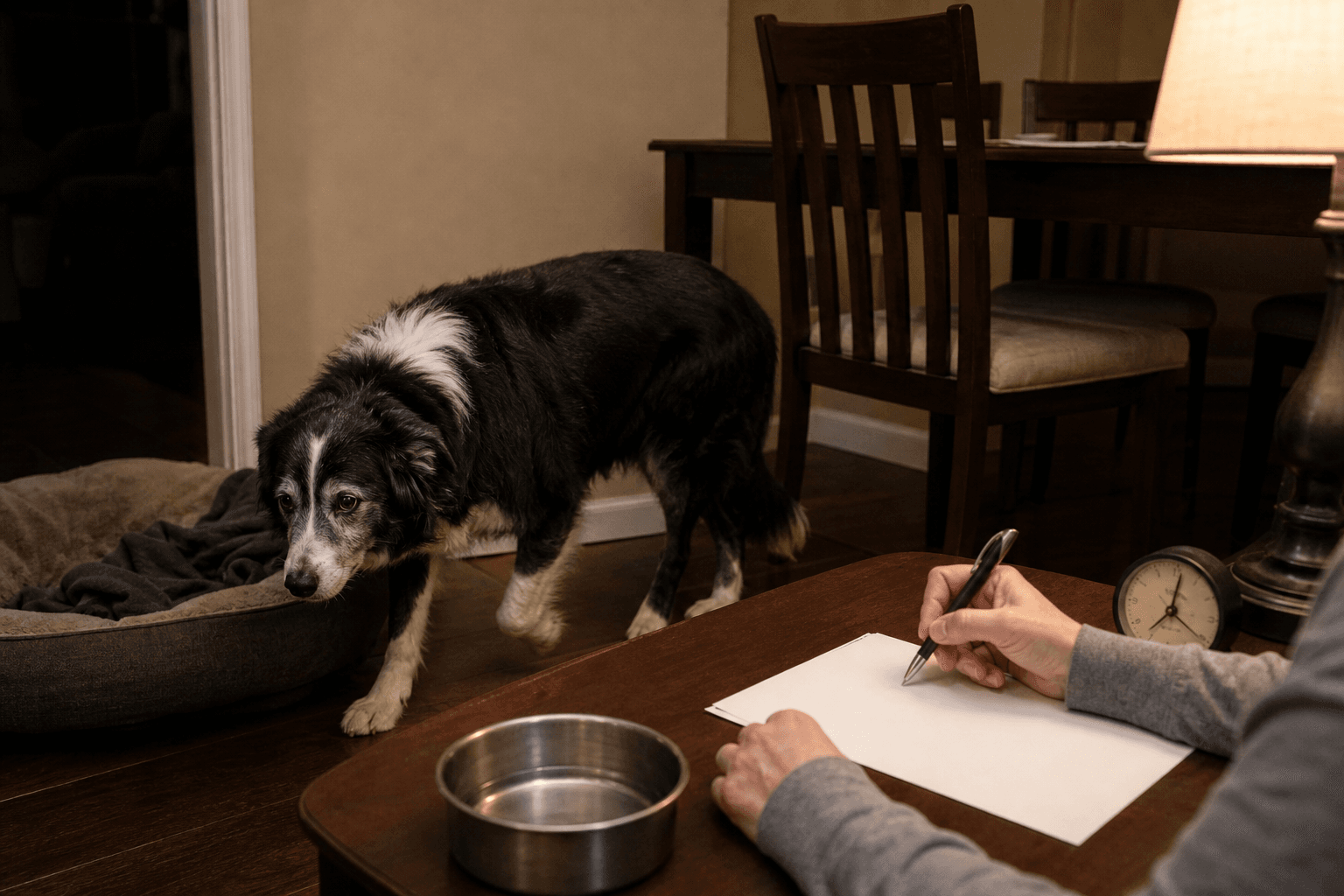
Dogs sometimes stop and look into space, especially when they are tired or resting in a familiar room. The most useful first question is not, “Does this look strange?” It is, “What happens next?”
From a safe distance, notice whether your dog:
- Responds to their name or a familiar sound
- Turns toward you without appearing distressed
- Walks away normally when invited
- Resumes a usual activity, such as resting, following you, or going outside
- Appears to know where they are and what they were doing
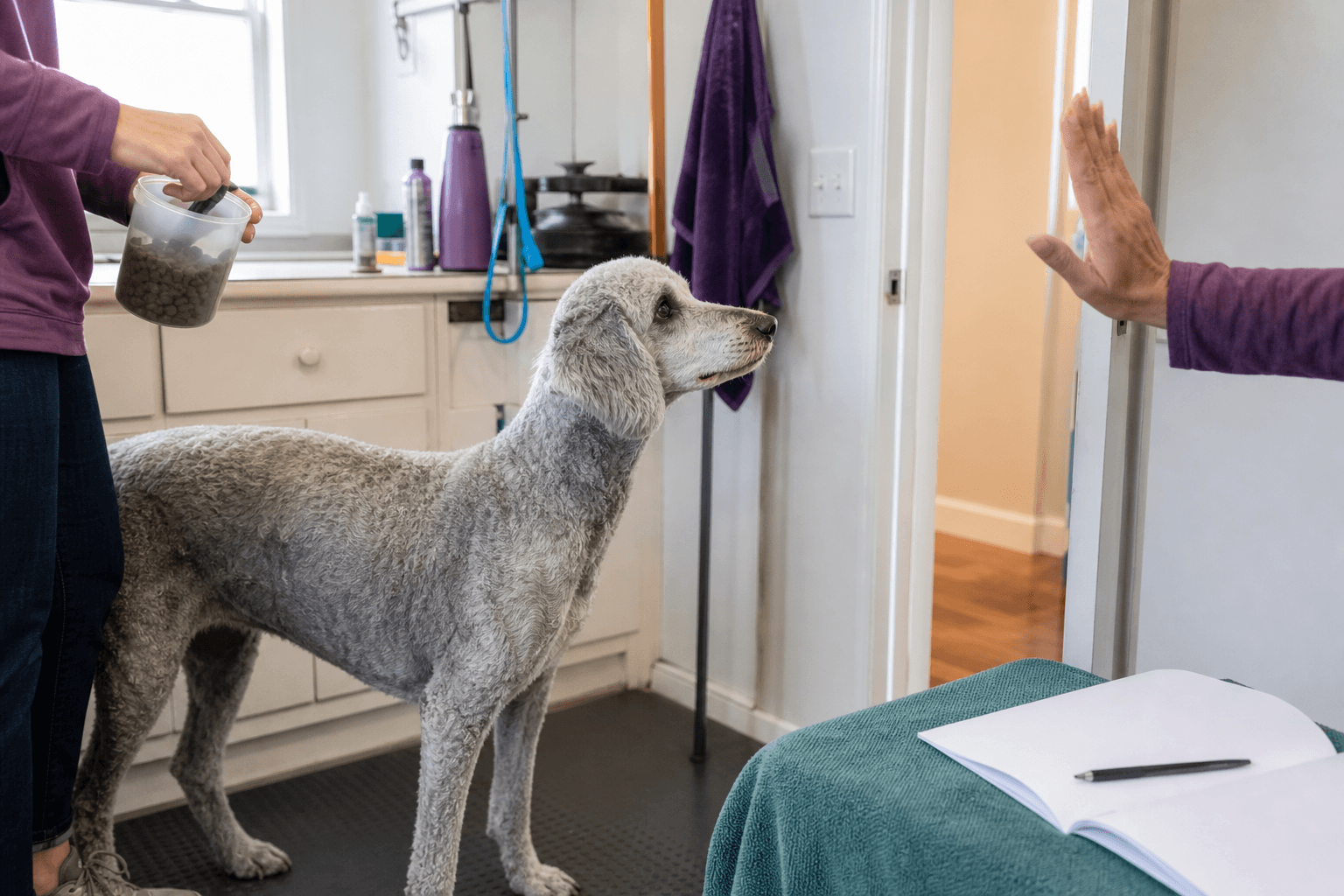
Do not crowd them, wave objects near their face, or force them out of a corner. A calm voice and a familiar invitation are enough for an initial observation. If they disengage easily and the moment does not repeat, write it down without assuming a cause.
The pattern deserves more attention when it is new, happens repeatedly, lasts longer than usual, or comes with other changes in daily life. An older dog who sleeps more is not automatically developing cognitive dysfunction. Hearing loss, arthritis, urinary disease, medication effects, and ordinary changes in stamina can also alter behavior. The combination of timing, repetition, and impact matters more than one unusual pause.
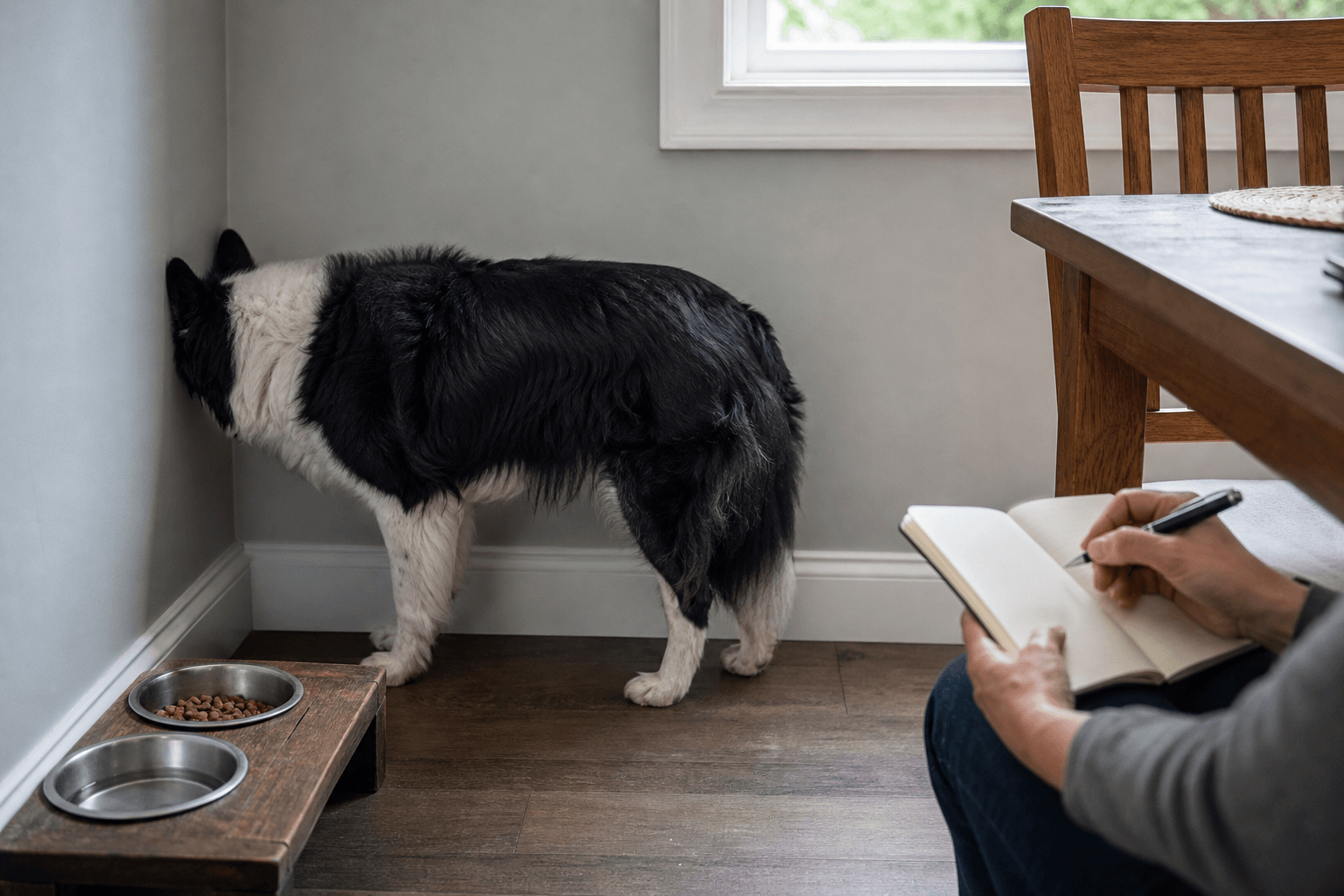
What makes standing in a corner more concerning?
Use this simple comparison rather than trying to label the behavior at home:
| Observation | A quiet pause may look like | A pattern to discuss with your veterinarian may look like | |---|---|---| | Response | Your dog responds to a familiar voice or invitation | Your dog repeatedly seems difficult to redirect or does not respond as expected | | Location | They pause in an ordinary resting spot | They repeatedly stand in the same corner or face a wall in familiar rooms | | Timing | It happens occasionally, with an obvious reason such as tiredness | It appears at different times or follows a new daily pattern | | Recovery | They return to their usual activity | They seem unsure what to do next or need more help returning to routine | | Daily effect | Eating, resting, toileting, and movement remain usual | The episodes occur alongside changes in those activities |
This is a decision aid, not a diagnosis. Cognitive changes become more concerning when new behaviors continue to progress and interfere with daily life. A veterinary evaluation is needed to sort cognitive changes from other possible explanations.
What should you record at home?
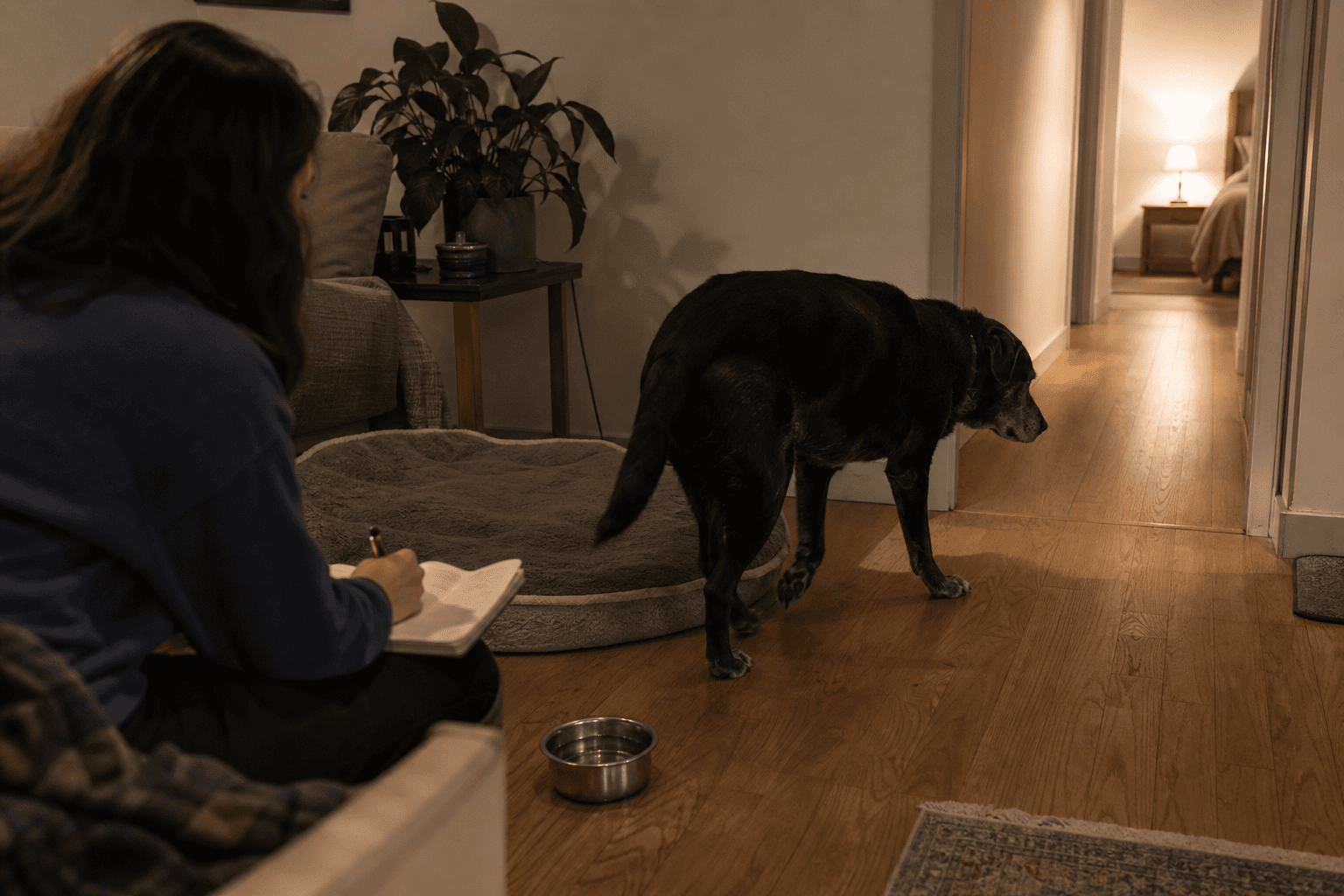
A short, consistent log is more useful than trying to remember every detail. For three days, record each episode in the same format:
1. Date and time: Note when it began and when your dog returned to a usual activity. 2. Place: Write the room and whether your dog faced a wall, corner, doorway, or another object. 3. What came before: Include waking, eating, a walk, grooming, visitors, medication, or a change in lighting. 4. Response: Record what happened when you used their name or offered a familiar invitation. 5. Movement afterward: Note whether they walked normally, hesitated, wandered, or went to a familiar place. 6. Other changes that day: Include appetite, water intake, sleep, toileting, pacing, stairs, and interactions with family.
A short video can preserve details that are hard to describe, provided you can record without startling or restraining your dog. Keep the camera at a comfortable distance and avoid staging the behavior.
You can use a plain note on your phone. The goal is not to create a perfect medical record. It is to show whether the behavior is isolated or part of a broader change.
For more help organizing senior-dog observations, you can also browse Dogevera’s senior-dog care resources and use the same observation-first approach for rest, movement, and daily routines.
Which details should you bring to the veterinary appointment?
Bring the log, any video, and a current list of everything your dog receives. Include prescription medicines, over-the-counter products, supplements, treats, and recent food changes. Do not stop or change a prescribed treatment based only on a behavior log.
Tell the veterinarian:
- When you first noticed the staring or corner-standing
- Whether the frequency or setting has changed
- Whether your dog can be redirected
- Whether they appear confused in familiar areas
- Whether sleep, appetite, toileting, walking, or social behavior has changed
- Whether there have been recent illnesses, injuries, household changes, or medication changes
If the behavior began suddenly, is accompanied by marked distress, weakness, collapse, trouble walking, repeated vomiting, or another abrupt change, contact a veterinary clinic promptly rather than waiting to complete the log. Keep your dog away from stairs and other hazards while you arrange advice.
How can you make the home safer while you observe?
Keep the daily layout predictable. Leave pathways clear, avoid moving beds and food bowls unnecessarily, and use steady lighting in areas your dog visits at night. Put gates or other barriers near stairs if your dog seems uncertain around them. Offer calm guidance rather than repeated corrections when they pause.
Continue familiar, low-pressure activities that your dog can manage comfortably. Short walks, gentle interaction, and regular rest can help you notice changes without turning observation into a test. If a toy, game, or food activity seems frustrating, simplify it and stop when your dog loses interest.
Avoid buying a cognitive-support product as a substitute for finding out what changed. If you are comparing daily-care items, read the full label and keep the product list for your appointment. The Dogevera store can be one place to review available options, but a product page cannot determine why your dog is staring at a wall or standing in a corner.
FAQ: Senior dog staring at a wall or standing in a corner
Should I interrupt my dog when they stare at a wall?
Use a calm voice or familiar invitation from a comfortable distance. If they respond and return to a normal activity, record that response. Do not physically pull them away or startle them.
Does standing in a corner prove my dog has cognitive dysfunction?
No. One behavior does not establish a cause. Hearing changes, pain or mobility limits, urinary disease, medication effects, and other changes can affect an older dog’s behavior, so the full pattern needs a veterinary discussion.
How long should I observe before calling the veterinarian?
Call when the behavior is new, repeated, progressing, or affecting daily life. A three-day log can make the conversation more specific, but you do not need to delay a call if the change is sudden or your dog seems unwell.
For individual health questions, your veterinarian remains the best partner.