TL;DR
When a dog hesitates before going up stairs, do not rely on a single difficult trip to judge the change. Time the pause, note which front or rear leg moves first, and record what happens on the same staircase for four weeks.
A brief, consistent log can show whether the hesitation is occasional, tied to a particular time of day, or becoming more frequent. A sudden change, a fall, vocalizing, or an inability to use the stairs calls for a veterinary conversation promptly.
What does a pause at the stairs look like?
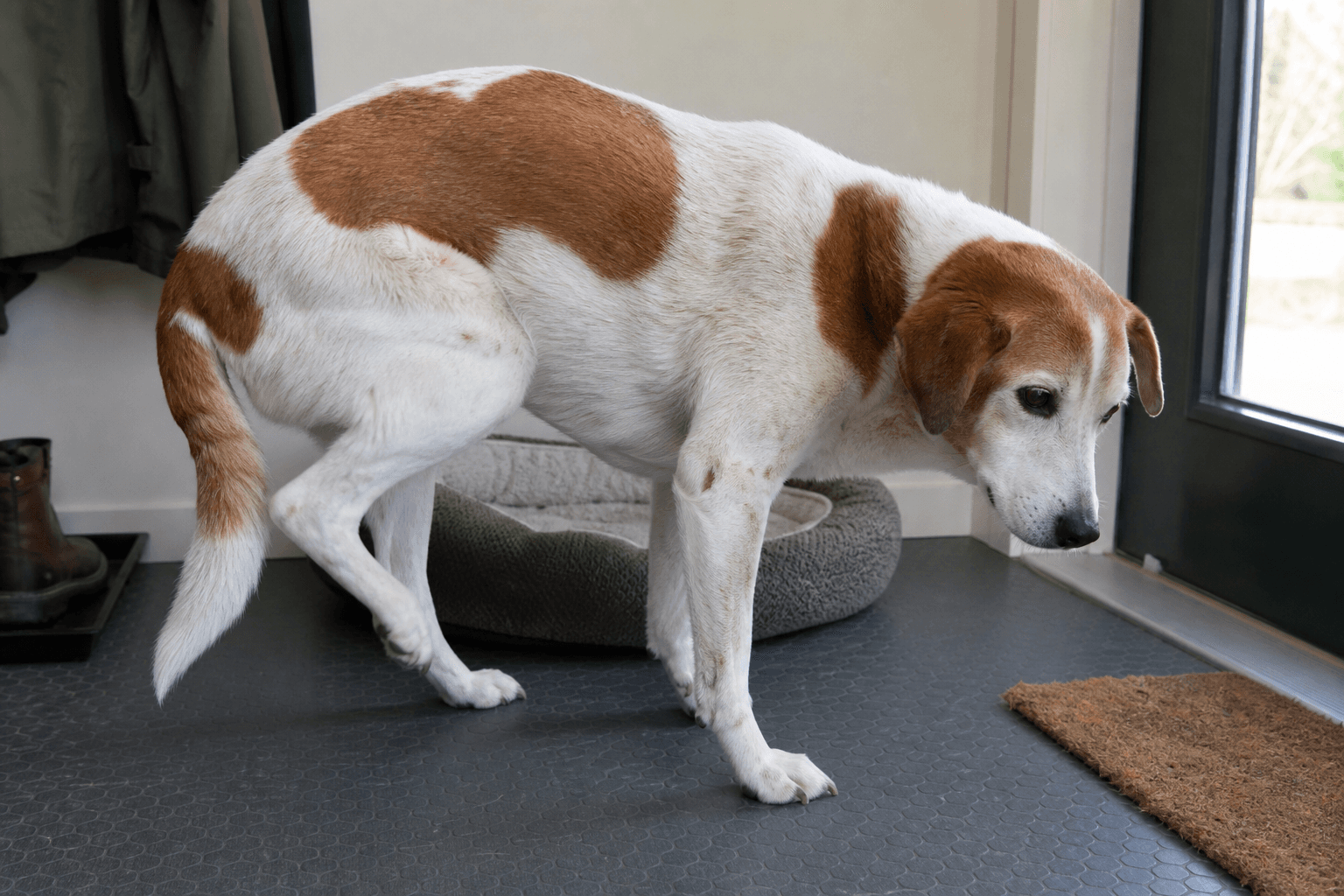
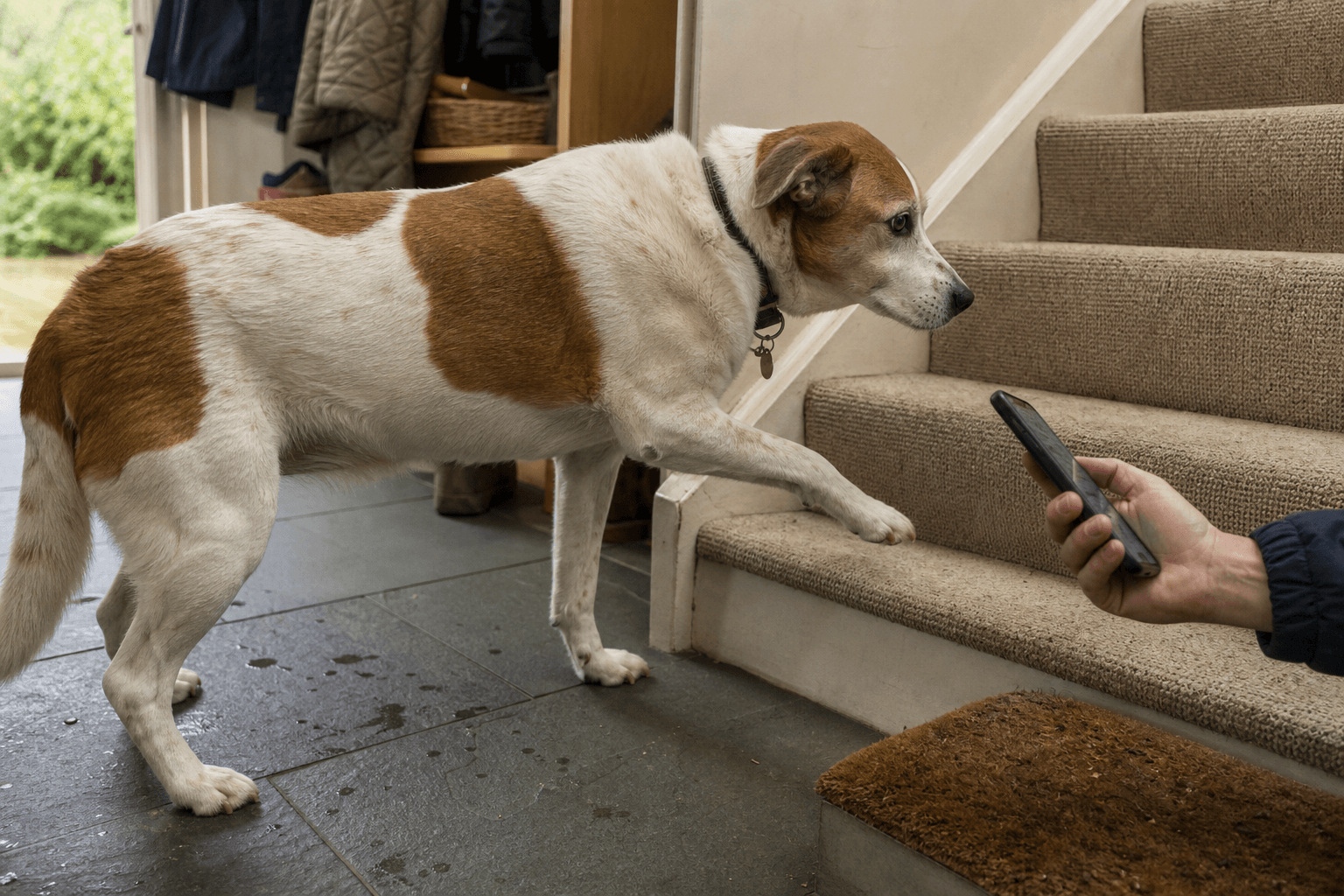
Stair hesitation is often easy to miss because it can be subtle. Your dog may stop at the first step, look upward, shift weight from side to side, take one step and retreat, or wait for you to move first. Some dogs climb slowly but steadily. Others pause only when going up, only when coming down, or only after a walk.
Focus on what happens before the first step rather than deciding whether your dog seems “good” or “bad” on stairs that day. Small details make the pattern clearer:
- Does your dog stop before the bottom step or after placing a paw on it?
- How long do they wait before moving?
- Which leg reaches forward first?
- Do they lead with the same leg on most trips?
- Do they take each step one at a time or alternate their feet?
- Do they turn their head toward you, the floor, or the railing?
- Is the hesitation different in the morning, after resting, or later in the day?
Use the same flight of stairs whenever possible. A carpeted staircase, slick wood steps, outdoor porch stairs, and steep basement steps can each create a different challenge.
Measure the hesitation, not just the outcome
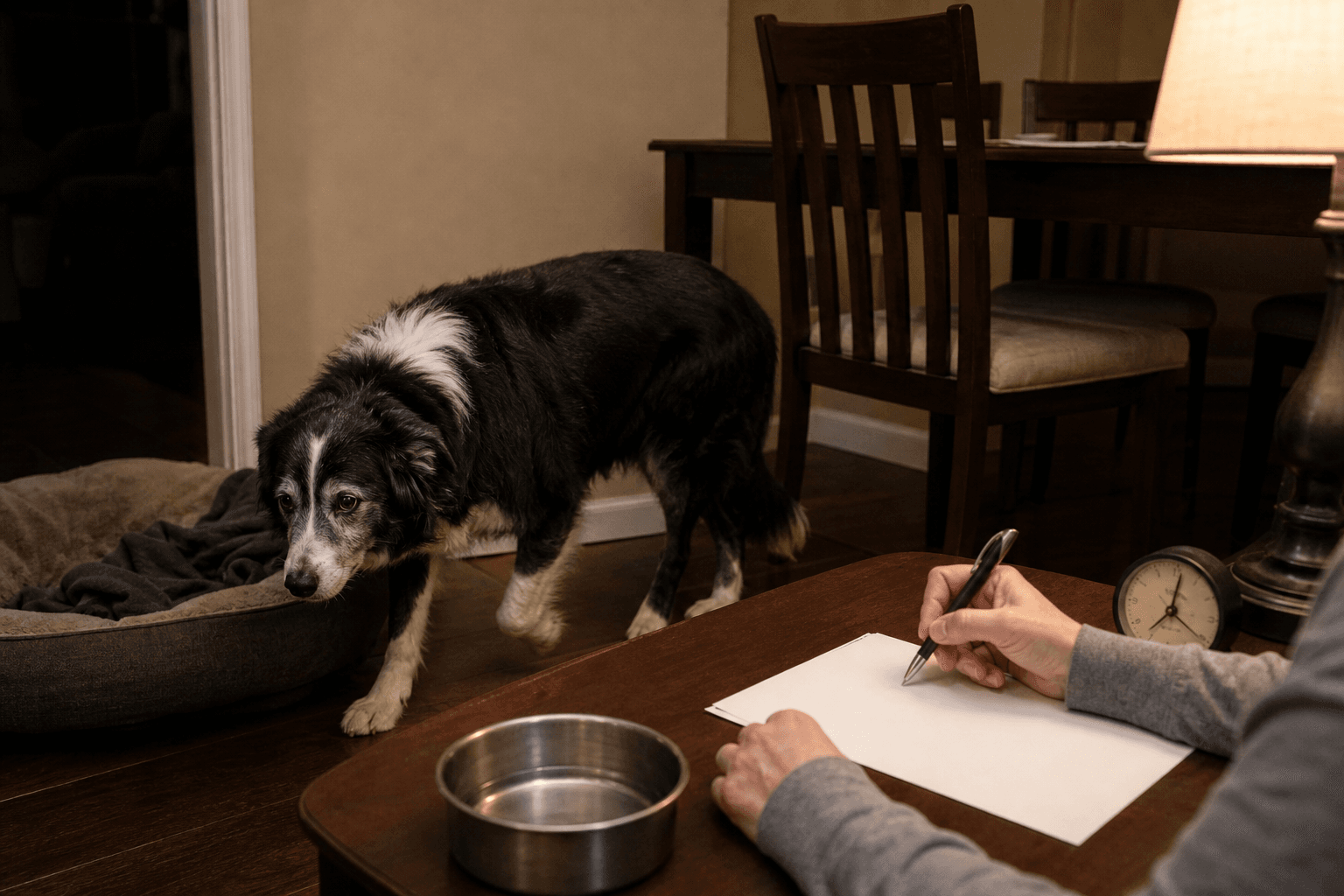
A dog who reaches the top has still given you useful information about how they got there. Start timing from the moment your dog arrives at the first step until they place a paw on that step. You do not need special equipment. A phone timer and a note on your phone are enough.
Use a simple entry each time you observe a normal stair trip:
| What to record | Example note | | --- | --- | | Date and time | Tuesday morning | | Stair direction | Going up | | Pause before first step | Brief pause | | First leg forward | Right front leg | | Step style | One step at a time | | Surface and conditions | Carpeted, dry, lights on | | What happened afterward | Continued upstairs without stopping |
Keep the words consistent. If you call one pause “brief,” use that term the same way throughout the log. If you prefer, time the pause in seconds. The goal is not perfect measurement. It is a fair comparison between similar stair trips.
A short video can also be useful when your dog is comfortable with you recording and you can do so without blocking their path. Film from the side or behind, stay out of the stairway, and do not ask your dog to repeat the trip for the camera.
How can you track stair hesitation for four weeks?
Choose ordinary stair trips that already happen in your household, such as the morning trip downstairs or the evening trip to bed. Avoid turning stairs into a test. Your dog should not be coaxed, rushed, or repeatedly called up and down just to create notes.
For four weeks, make an entry when you naturally see your dog use the stairs. At the end of each week, look for these comparisons:
1. Frequency: Did hesitation happen on more stair trips than before? 2. Direction: Is going up different from going down? 3. Lead leg: Is your dog repeatedly starting with one particular leg? 4. Recovery: Does your dog move differently after a pause, walk, or long nap? 5. Environment: Does the pattern change with lighting, noise, visitors, or a slippery surface?
Write down changes in routine beside the stair notes. A moved rug, a dim bulb, wet paws after rain, or a busy household can matter. This context helps prevent you from assuming every pause has the same cause.
At the end of the fourth week, read the entries in order rather than relying on memory. A pattern that is new, worsening, or interfering with normal household movement is worth bringing to your veterinarian, along with the log or a few clear videos.
Make the staircase easier to read and use
While you observe, make low-risk changes that reduce avoidable uncertainty. Keep the steps clear of shoes, laundry, toys, and trailing cords. Turn on reliable lighting before your dog approaches the stairs, especially at night. Dry wet steps and paws before a trip indoors.
Look closely at traction. Smooth steps can feel less predictable than carpeted ones, and loose runners can shift underfoot. A securely fitted non-slip covering may be a practical household adjustment, but check that its edges lie flat and do not create a new tripping point.
Give your dog time at the first step. Standing close enough to guide them calmly is different from pulling on a collar, lifting unexpectedly, or pressing from behind. If they choose not to use the stairs, do not force the trip. Set up water, bedding, and family time on the floor they can reach safely until you have a clearer plan.
For more everyday setup ideas, browse the Dogevera senior-dog care journal. Keeping a home routine simple and consistent makes stair observations easier to compare.
When is stair hesitation more urgent?
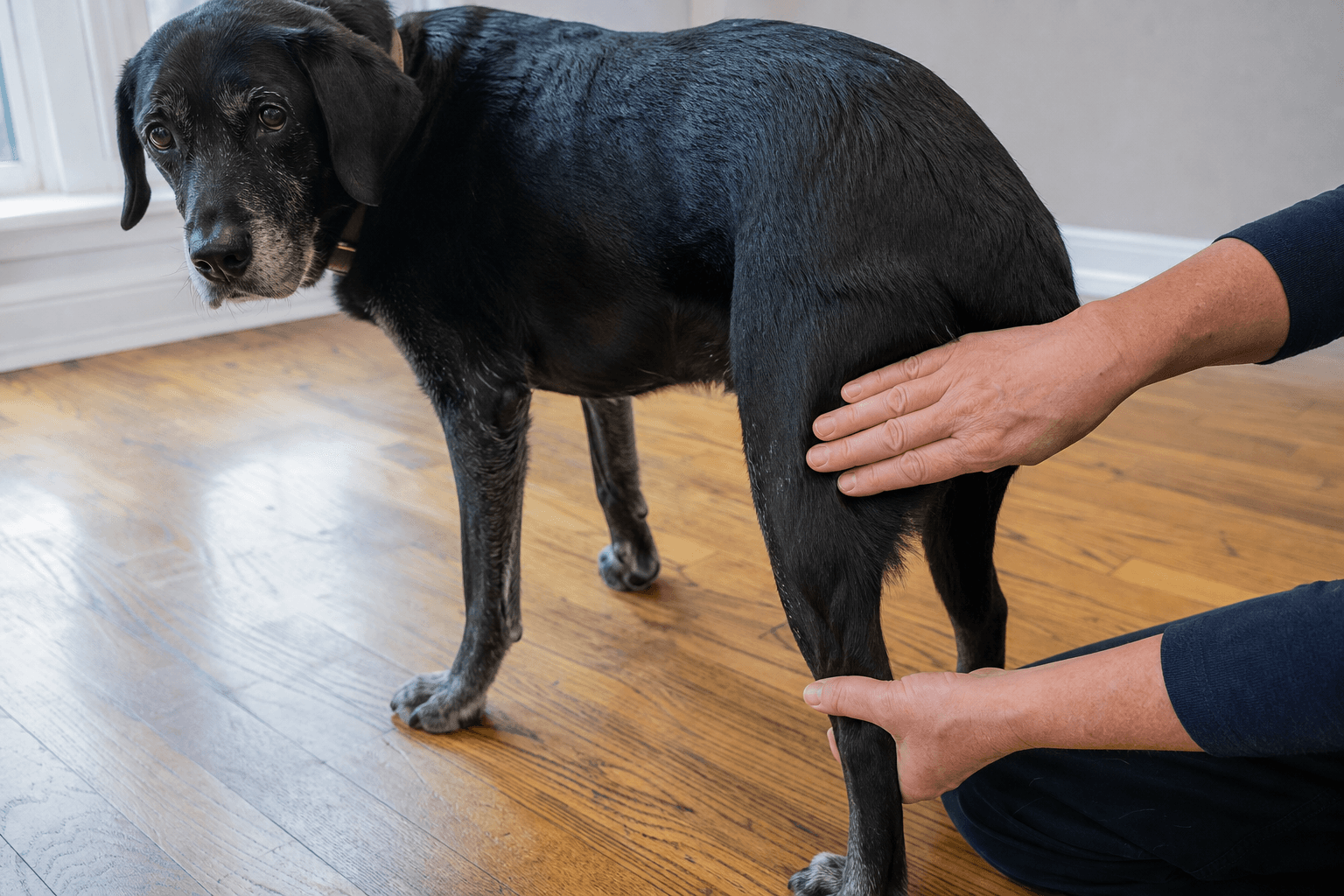
Contact your veterinarian promptly if the hesitation is sudden, your dog falls, cries out, cannot manage a previously normal stair trip, or seems unsteady. Also make note of changes that occur alongside a clear shift in appetite, rest, walking, or willingness to move around the home.
Bring your four-week log if you have one, but do not wait to complete it when the change is abrupt or your dog seems distressed. A useful summary is often just a few lines: when you first noticed it, whether it affects going up or down, which leg tends to lead, and what has changed at home.
Your notes do not need to explain the reason for the hesitation. Their value is in showing what you have actually seen over time.
FAQ
Should I carry my dog up the stairs?
Only do so if you can lift and carry your dog safely without risking a fall for either of you. Avoid an unstable carry on a staircase. If stairs are becoming hard to manage, limit unnecessary trips and ask your veterinarian about the safest plan for your dog and household.
Why does my dog pause only at night?
Night-only hesitation may be connected to a darker stairway, a quieter environment, tiredness after the day, or a changed evening routine. Record lighting, stair surface, and the time of day before drawing conclusions.
Is one hesitant stair trip a problem?
One pause can happen for many ordinary reasons, including distraction or an unfamiliar object on the stairs. Watch for repetition, a change from your dog’s usual movement, or signs that the hesitation is spreading to more trips.
For additional practical observation topics, visit Dogevera’s senior-dog resources.
For individual health questions, your veterinarian remains the best partner.