TL;DR
When a dog needs a run-up to jump on the couch, or stops trying altogether, treat that change as a reason to lower the everyday barrier. Create a steady alternative route, keep the landing area clear, and notice whether the change is limited to the couch or shows up elsewhere.
A new, sudden, or worsening change in movement is worth discussing with your veterinarian.
Why does my dog need a run-up to jump on the couch?
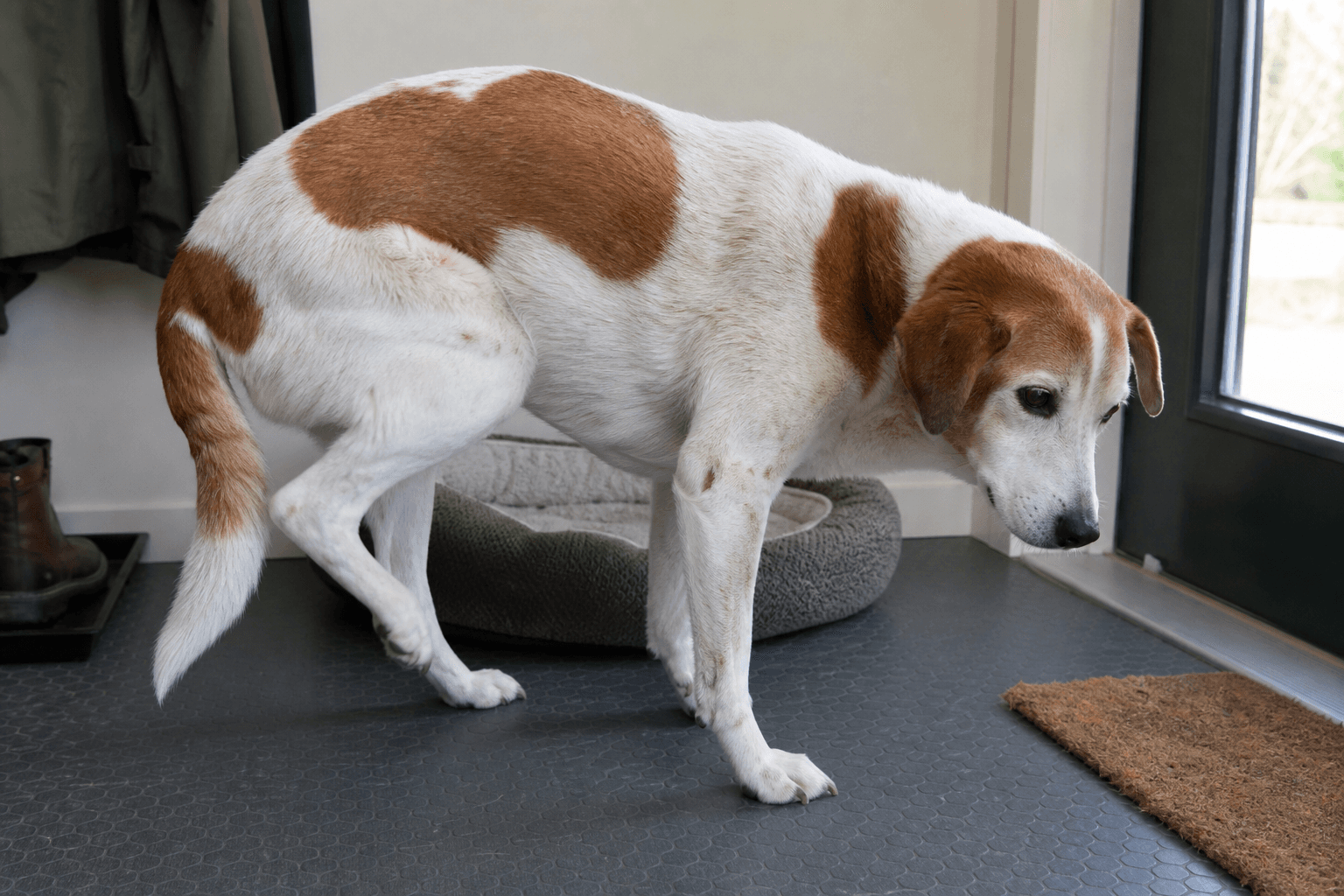
That quick burst of speed can be a way for your dog to make a familiar jump feel more manageable. Some dogs pause, circle, take several steps back, or make one unsuccessful attempt before deciding whether to try again. Others simply wait beside the couch and look at you.
The important home observation is the change from your dog’s usual pattern. A dog who has always launched onto the couch may be different from a dog who used to step up calmly but now needs space to build momentum. Likewise, a dog who still jumps onto one low piece of furniture but avoids a higher couch is giving you a useful clue about which daily setup has become difficult.
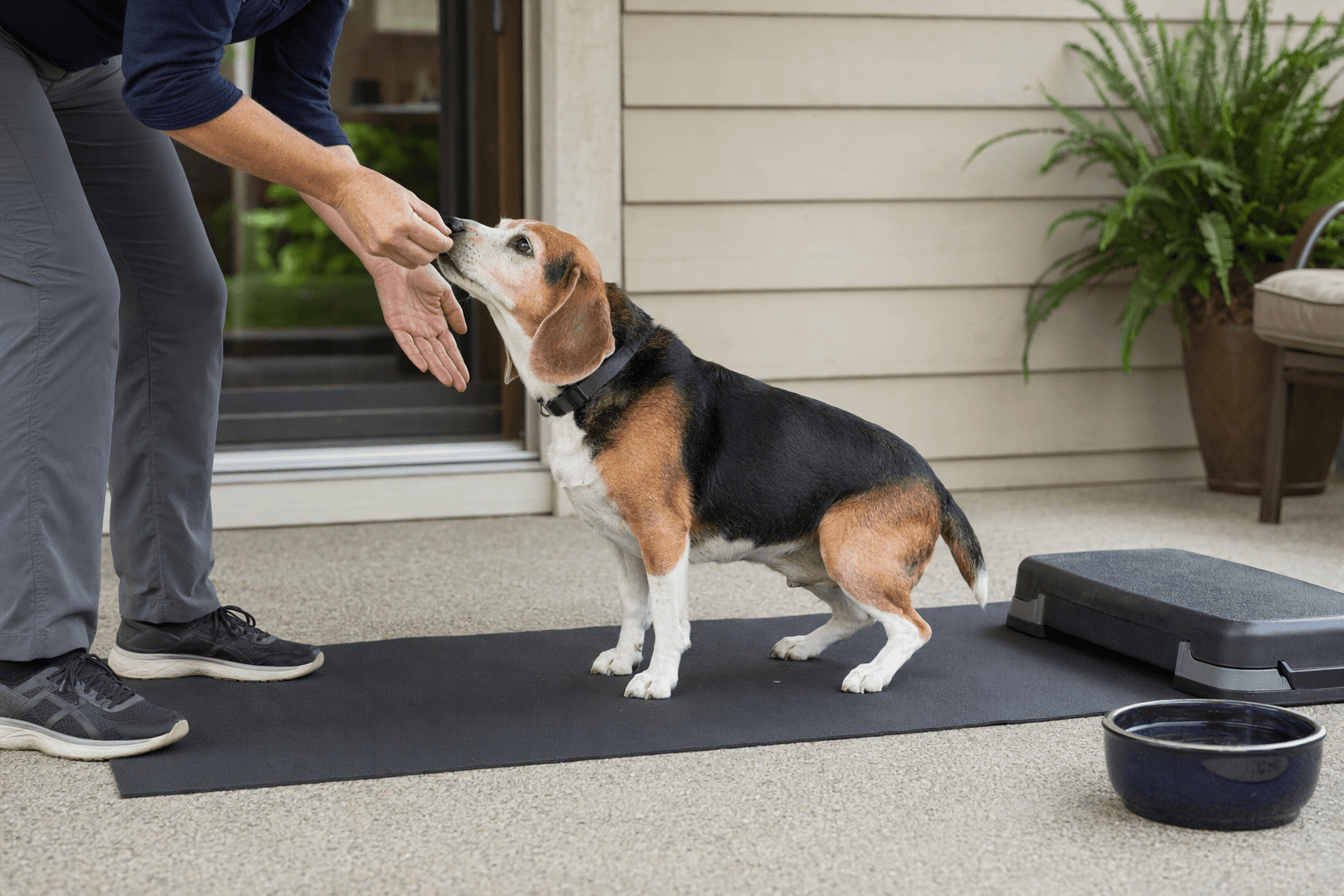
Avoid turning the moment into a test. Repeatedly calling your dog up, tossing a treat onto the couch, or encouraging a jump after they hesitate can make the favorite resting place feel like a challenge rather than a choice.
Can I make couch access easier without asking my dog to jump?
Yes. The simplest option is to give your dog a comfortable place at floor level that stays close to the family. Put a supportive bed, folded blanket, or familiar mat beside the couch so your dog can settle near you without having to get up and down from furniture.
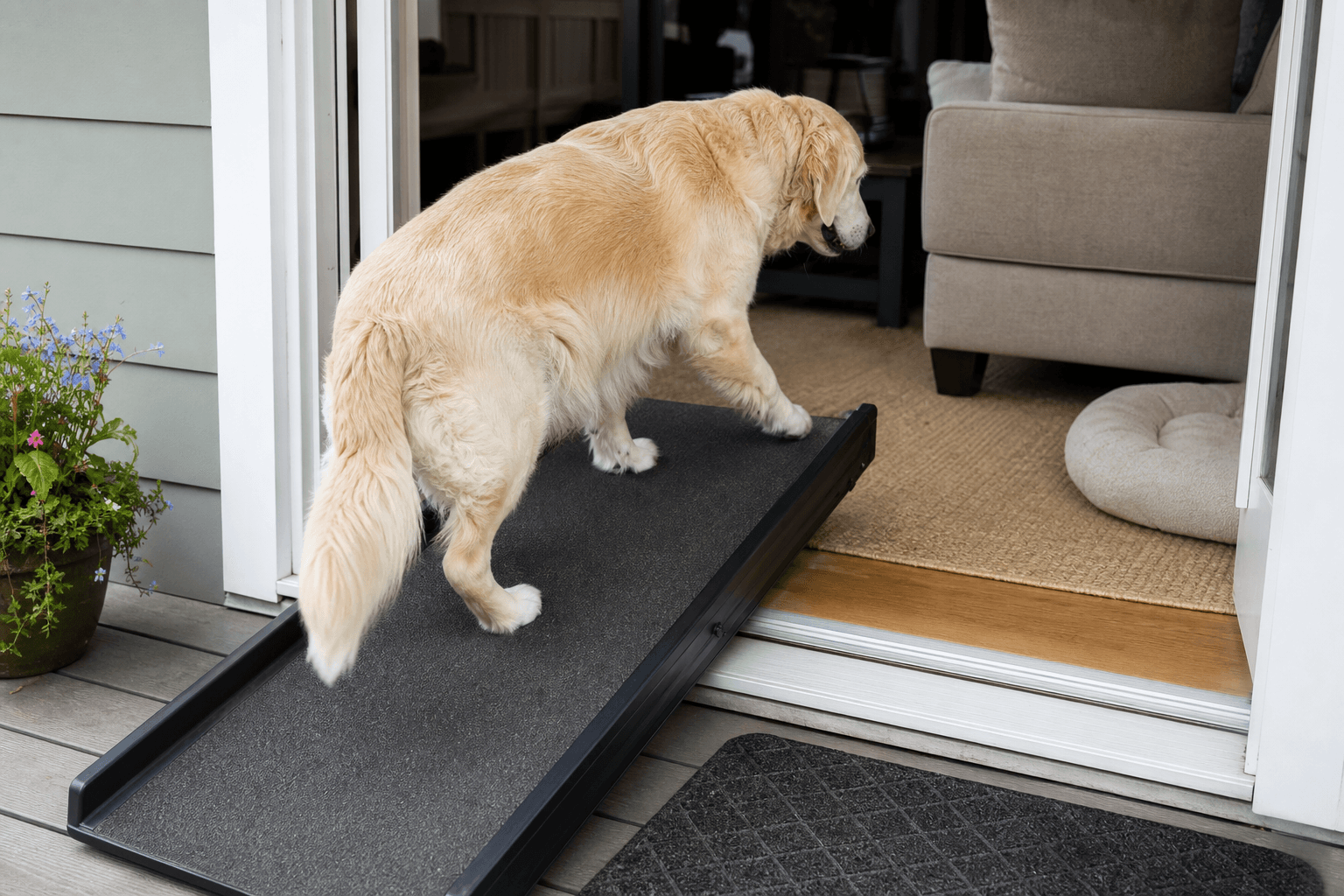
If your dog strongly prefers the couch, consider a purpose-made pet ramp or wide steps that are stable on the floor and do not shift when your dog approaches. Choose a route with a grippy walking surface, rather than a slick cover or bare polished floor. Keep the ramp or steps in the same place so your dog can learn one predictable path.
Start with the route available and let your dog investigate at their own pace. Sitting beside them, speaking calmly, and placing a familiar blanket on the couch can make the new setup feel less unfamiliar. Do not pull your dog up the ramp or place them at the top before they are ready to use it.
Which couch route is safest for daily use?
Look at the full route, not only the furniture. A ramp or steps can be less useful if your dog must cross a slippery floor, squeeze around a side table, or turn sharply before reaching it.
Use this quick couch-access checklist:
- Clear shoes, baskets, cords, and low tables from the approach.
- Place a nonslip rug or runner where your dog starts and where they land.
- Keep the couch route separate from busy walkways, especially during meals or arrivals home.
- Check that the ramp or steps stay steady before inviting your dog near them.
- Keep blankets from hanging over the edge where paws could catch.
- Make the floor-level resting spot appealing too, so the couch is not your dog’s only place to be close.
A low, open route is usually easier to understand than a narrow path wedged between furniture. If the room cannot accommodate a stable route, moving your dog’s favorite bed beside the couch may be the more practical choice.
What changes should I notice beyond the couch?
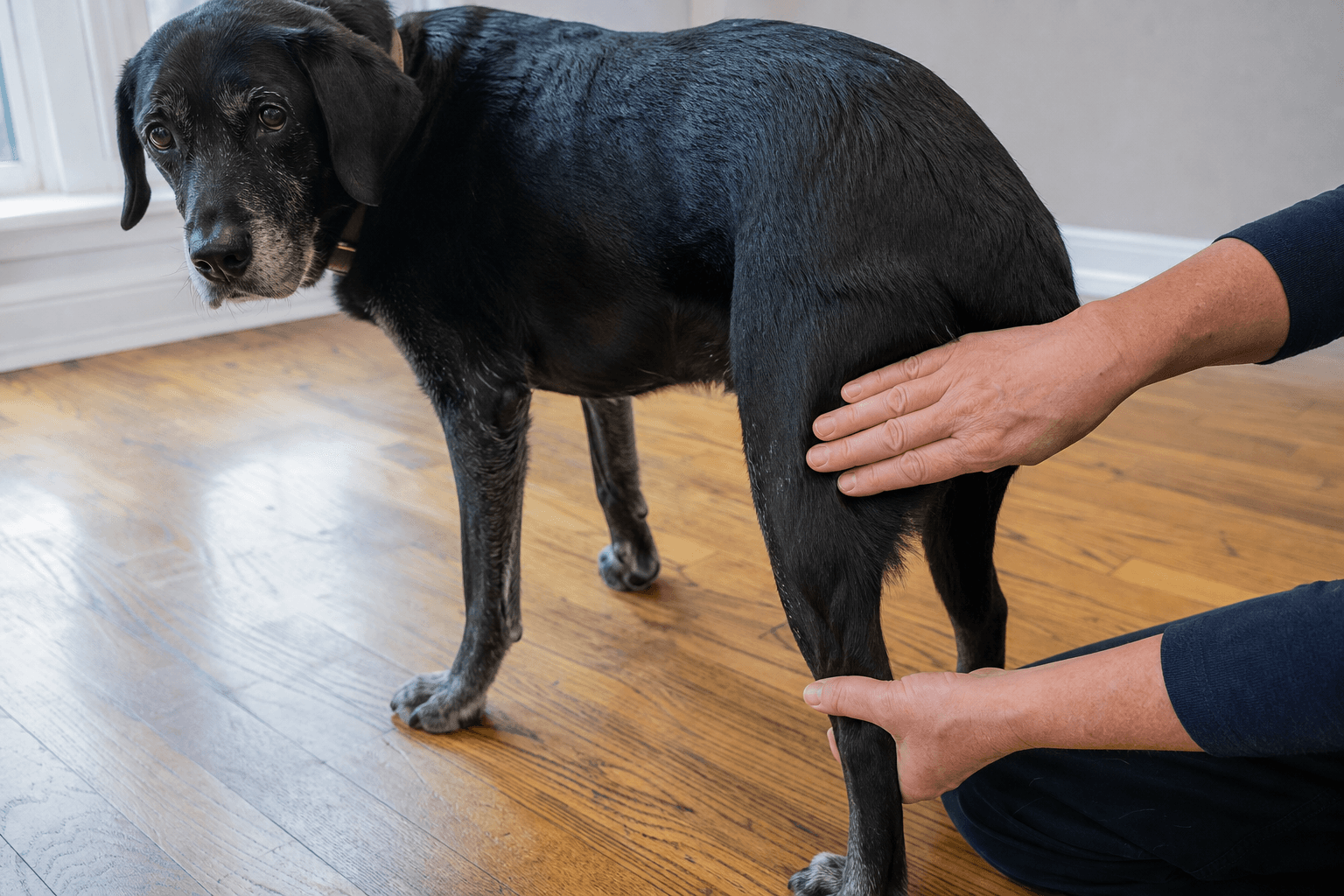
Watch what happens during ordinary transitions: getting out of bed, stepping over a doorway threshold, entering the car, turning around in a tight space, or choosing where to rest. You are not trying to name the cause at home. You are looking for a pattern that makes the next decision clearer.
For example, note whether your dog hesitates only before going up, only after resting, or at different times of day. Notice whether they use the new route willingly, avoid it, or seem unsure where to place their feet. A reluctance that appears in several familiar activities is more useful to record than a single missed couch jump.
For broader ideas on adapting daily routines around changing movement, browse the Dogevera senior-dog care guides.
How should I track a couch-jumping change at home?
Use a short three-day note rather than relying on memory. Each time your dog approaches the couch, write down what happened in a few words: jumped easily, needed a run-up, paused and walked away, used steps, or settled on the floor bed.
Add the setting around the moment. Was the floor bare or covered? Was the room busy? Had your dog just woken up, returned from outside, or been resting beside you? A brief note can show whether the issue is connected to one surface, one time of day, or the height of a particular piece of furniture.
Take a clear photo of the couch area and any new ramp or steps. This helps you review whether the route is crowded or slippery, and it can make a veterinary conversation more concrete if the change continues. You can also find related observation ideas in Dogevera’s mobility and home-routine articles.
Keep the couch from becoming a daily obstacle
The goal is not to persuade your dog to keep doing a jump that has become uncertain. It is to preserve the companionship that the couch represents: being near you, sharing a room, and choosing a familiar place to rest.
Leave the floor-level bed in place even after adding steps or a ramp. Your dog may prefer different options at different times. Keep water, toys, and resting areas easy to reach without requiring a climb. If your dog waits to be invited or looks toward the couch without attempting the jump, respond by joining them at floor level sometimes rather than making the couch the only social spot.
Small home changes can remove a recurring decision from your dog’s day: try the jump, gather speed, or give up. A clear route and an equally valued floor-level option let them choose comfort instead.
FAQ
Should I keep letting my dog jump on the couch?
If your dog now needs a run-up, hesitates, or abandons the attempt, make an easier option available rather than encouraging the jump. A floor bed, stable steps, or a ramp can reduce the need for that repeated choice.
Can I use household boxes or stacked cushions as dog steps?
Avoid makeshift steps that can slide, collapse, or change shape under your dog. Use a stable, purpose-made option or keep a comfortable resting place on the floor.
What if my dog ignores the new ramp or steps?
Check whether the route feels steady, open, and familiar. Keep it in one place, remove nearby clutter, and let your dog explore without pressure. A floor-level bed beside you remains a good option while they decide whether they want to use the new route.
For individual health questions, your veterinarian remains the best partner.