TL;DR
Most supplements are changed or stopped over reactions that could have been traced with better records. Start only one new product at a time, watch appetite, stool, energy, and skin for the first several days, and keep a short daily note. Stop the supplement and call your veterinarian if you see vomiting, repeated diarrhea, swelling, hives, labored breathing, or a sudden collapse.
You started a new supplement. Now something looks different.
You added a scoop or a chew to the bowl three days ago. This morning your dog left part of breakfast, or scratched more than usual, or the stool was softer than normal. The obvious question is whether the new product caused it. The honest answer is that you usually cannot know from one morning, but you can absolutely narrow it down with a simple process. That is what this is for: separating a likely supplement reaction from the ordinary day-to-day variation every senior dog has.
Why one change at a time matters
If you start a joint chew, a new food, and a dental powder in the same week, a reaction is impossible to attribute. Anything could be the cause, and you may end up removing all three products when only one was the problem, or none.
The one-change rule is simple:
- Add only one new product, food, or treat at a time.
- Leave at least one to two weeks before starting anything else, so a reaction has room to show itself.
- Keep everything else in the routine as fixed as you can, including treats and table scraps.
This also works in reverse. If a reaction appears, stop only the most likely product rather than overhauling the whole routine, then watch whether things settle.
What a reaction can look like
Reactions fall into a few visible groups. You do not need to diagnose any of them; you only need to recognize the category and act.
Digestive changes. Softer stool, looser stool, more gas, mild nausea, or leaving food. These are the most common everyday complaints and often appear within a day or two of starting.
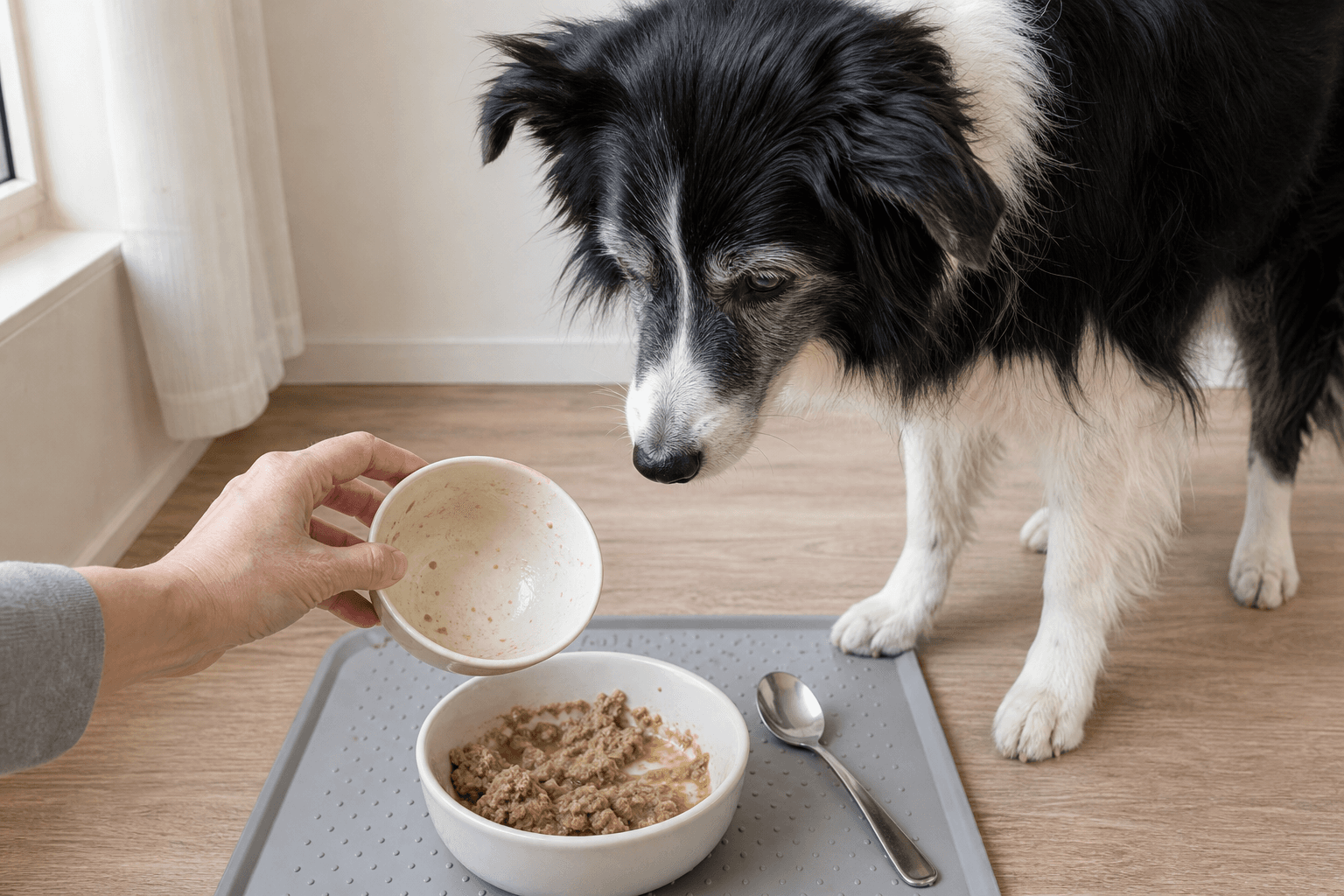
Appetite and eating changes. Picking around the bowl, eating slowly, or refusing food that used to vanish. Sometimes the issue is the taste or smell of the product rather than a true reaction. If refusal is the main sign, our guide to changing how you feed a supplement covers mixing, smell, and gradual introduction before you blame the product itself.
Skin and itch. More scratching, licking at the paws, redness, or hives. Skin reactions can develop over days, so a pattern across several days matters more than one itchy afternoon.
Energy and movement. Being quieter than usual, reluctance on walks, or restlessness at night. These overlap heavily with ordinary senior-dog changes, which is exactly why written notes matter.
Urgent signs. Facial swelling, hives that spread quickly, labored breathing, repeated vomiting, or collapse. These are stop-now-and-call situations, not observe-and-record situations.
A three-day observation record
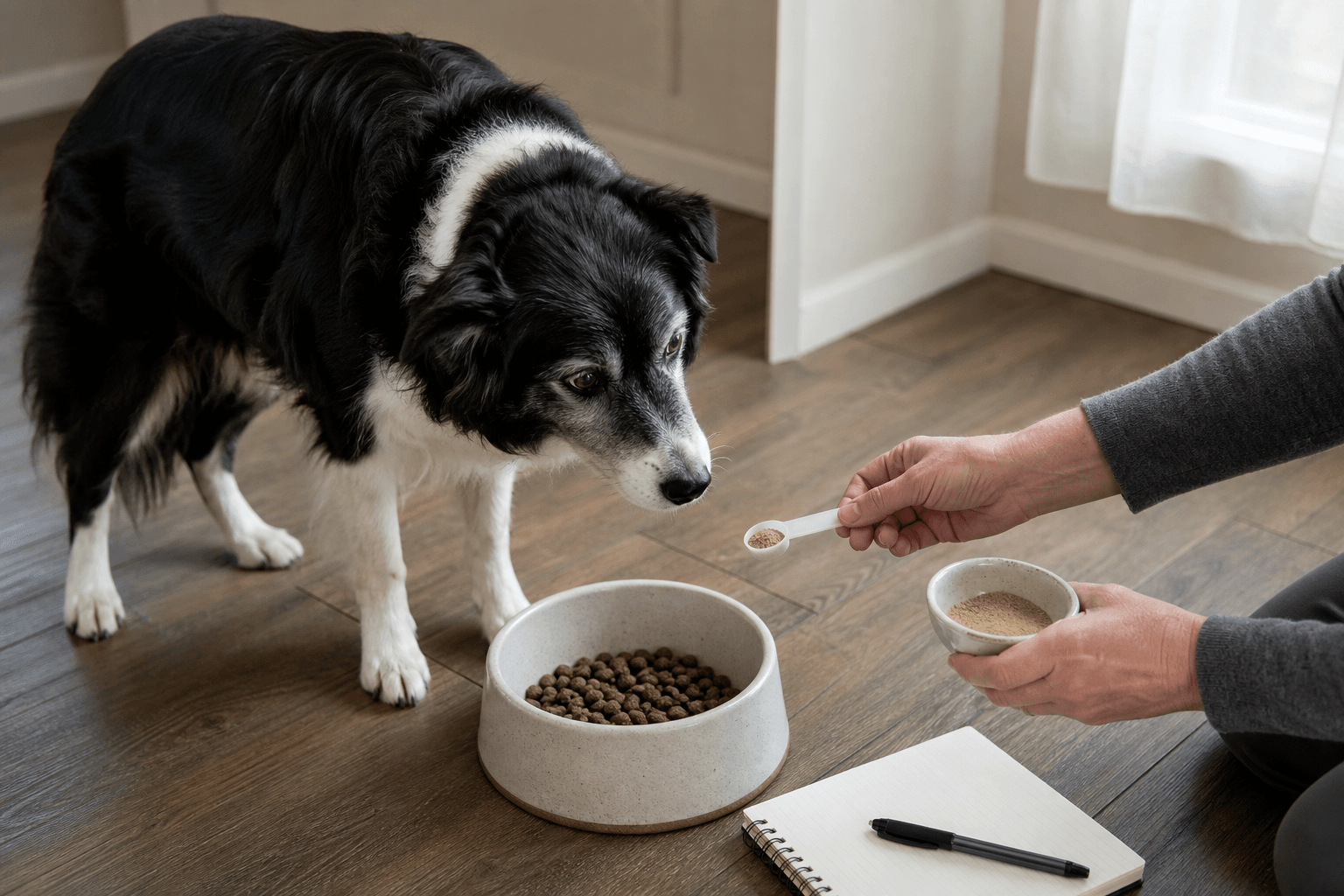
Write one short line per day. Three days is enough to see a direction; a week gives you a firmer pattern. For each day, note:
1. Appetite: finished normally, hesitant, left food. 2. Stool: firm, soft, loose, or unchanged. 3. Energy: same as usual, quieter, more restless. 4. Skin and coat: any new scratching, redness, or licking. 5. The product: how much was actually eaten, and when.
Then apply this decision aid:
- Unchanged across three days: continue as planned and recheck at the interval the label suggests.
- One mild change that stays mild and stable: keep the note, continue only if eating and drinking normally, and mention it at your next veterinary visit.
- A change that worsens day over day: stop the supplement and call your veterinarian.
- Any urgent sign from the list above: stop immediately and call.
If refusal is the only issue, the record should track whether your dog finished the dose, because a partially eaten product tells you very little either way. Our piece on making sure your dog actually finishes a supplement is not in the archive you need here, so the practical step is simple: mix powder into a small portion of food first and confirm the bowl is clean before judging anything.
How long should you judge a supplement?
This depends on the type of product. Digestive tolerance usually shows up within days. Benefits, when they exist, usually take longer, and joint products in particular need a patient timeline. If you are tracking a mobility product, the day-based comparison in our guide to how long joint supplements take to show changes gives you a Days 0, 14, and 28 structure instead of judging in week one.
Reassuringly, supplements can be tolerated for long periods when they suit the dog. In one study, dogs received a daily oral supplement supplying 32 mg/kg nucleotides and 17 mg/kg AHCC, and the daily intake of the supplement over two years proved safe and well tolerated. That finding does not promise that any given product will suit your dog, but it shows that long-term tolerance is a realistic expectation when a product agrees with them.
When to stop and call the veterinarian
Stop the supplement and call promptly if you notice:
- Vomiting more than once, or any vomiting with lethargy.
- Diarrhea that is watery, bloody, or lasts beyond a day.
- Swelling of the face, lips, or eyes, or spreading hives.
- Labored breathing, wheezing, or collapse.
- Refusal of all food, not just the product.
- A clear worsening pattern across your daily notes.
Bring your notes to the call or the appointment. Dates, the product name, the amount eaten, and the timeline of changes are far more useful to your veterinarian than a general impression that "something seemed off."
Does a reaction mean the supplement is bad?
Not necessarily. It means that product, at that time, in that dog, did not go smoothly. A mild stomach upset may pass with slower introduction or feeding with food. A true allergic-type reaction means that product is off the list for your dog. And sometimes the timing is coincidence: a senior dog has plenty of other things going on, which is why the one-change rule and the written record exist. Our overview of whether dog joint supplements actually work explains why results vary widely between products, which is another reason a single dog's reaction to one product tells you little about a whole category.
FAQ
How soon after starting a supplement would a reaction show up? Digestive changes often appear within a day or two. Skin reactions and slower patterns can take several days to a week or more, which is why a week of notes beats a single morning of worry.
Should I stop the supplement at the first sign of soft stool? One mild, stable change does not require an immediate stop, but it does require continued watching. Stop if it worsens, if your dog stops eating, or if you are unsure. A phone call to your veterinary clinic is always a reasonable choice.
Can I restart a supplement after a reaction? For a mild digestive upset, some owners retry later with food and a slower introduction. After swelling, hives, or breathing trouble, do not restart that product; discuss it with your veterinarian first.
One calm reminder: this guide is about observation and everyday decisions, and your veterinarian is the right person for any diagnosis or treatment question.
For individual health questions, your veterinarian remains the best partner.