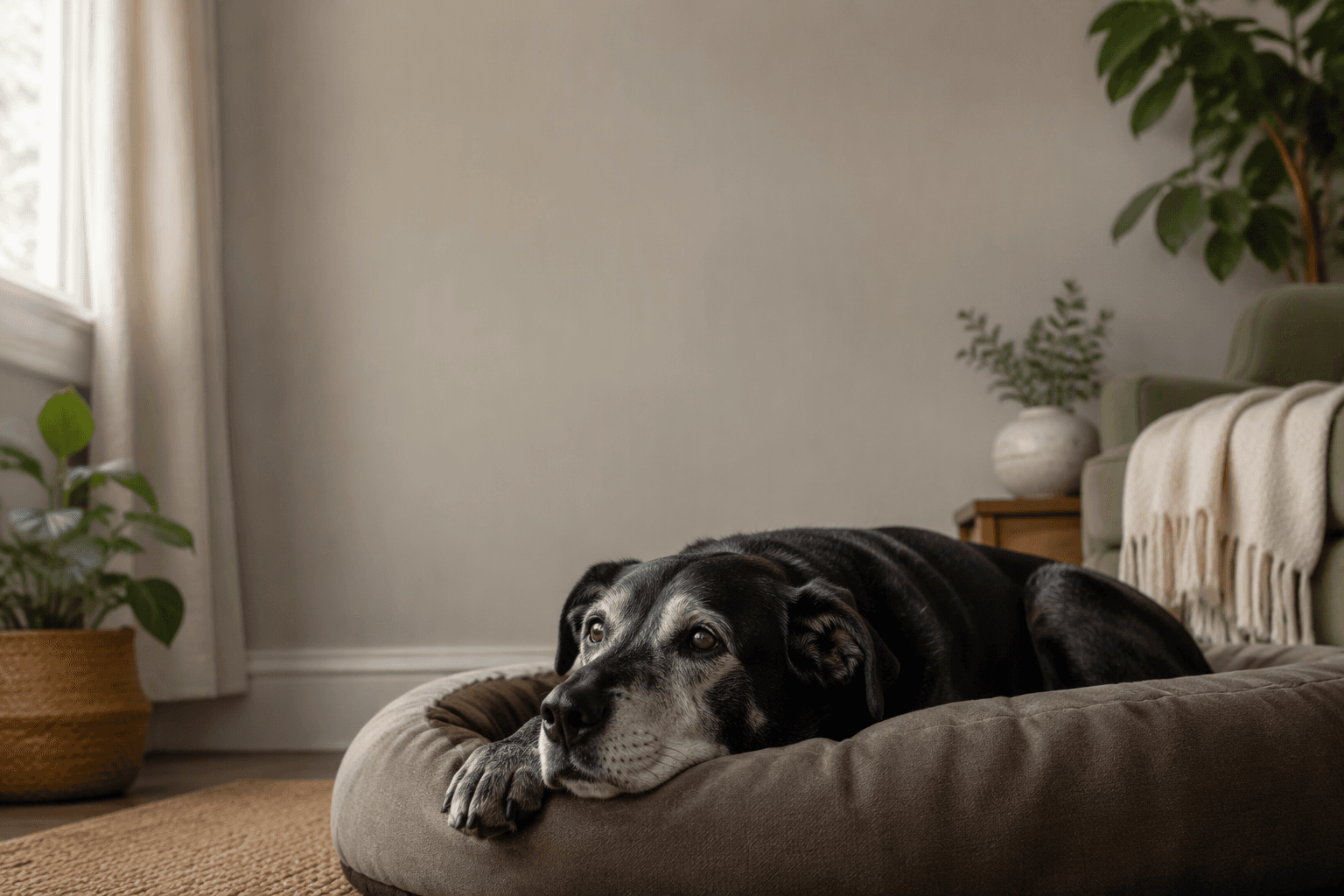
As dogs enter their senior years, their daily behavior may gradually change. Rather than focusing on just one moment, pay attention to their appetite, water intake, movement, rest, bowel movements, tolerance for grooming, and willingness to interact, and make a simple note of any changes. These specific observations can help you discuss things more accurately with your veterinarian and make it easier to identify which daily arrangements help your dog relax.
Start with Observable Details
You can gently observe your dog's condition at relatively consistent times each day. Note whether it is willing to get up, whether it moves more slowly, whether it more often seeks out quiet places, whether eating seems more difficult than usual, and whether it avoids being touched or groomed. Record-keeping does not need to be complicated; simply write down the day's appetite, activity, rest, and unusual changes.
If a change continues to occur, gradually worsens, or clearly makes your dog uncomfortable, consider telling your veterinarian as soon as possible. Do not guess at the cause based only on appearances, and do not change medications, supplements, or dietary arrangements on your own.
Make Activity Easier to Adapt To
For senior dogs, activity can place more emphasis on pace and comfort than on distance or speed. Consider scheduling outdoor and indoor activities during times when your dog is generally feeling better, and give it plenty of time to get up, turn around, and rest. On walks, choose familiar, level routes with fewer sources of stimulation; if your dog appears tired, hesitant, or unwilling to continue, end the activity and observe its condition afterward.
At home, try to reduce pathways that require frequent going up and down or sharp turns. Food and water bowls and the resting area can be placed where they are easy to reach. Nonslip floor coverings, stable mats, and resting items that are not easily pushed aside may make everyday movement more comfortable. Before using any assistive item, you can ask your veterinarian or a professional whether it is suitable for your dog and how to help it adapt gradually.
Pay Attention to Getting Up and Resting
Observing your dog move from lying down to standing and from standing to turning around is more specific than simply seeing whether it can walk. If it needs more time or is noticeably hesitant on certain surfaces, tell your veterinarian about these situations. The resting area should be quiet, dry, and easy to enter and leave. You can also pay attention to the indoor temperature and ventilation so your dog can choose a more comfortable spot on its own.
Arrange Meals Gently
For diet, it is helpful to record what your dog normally eats, how quickly it eats, whether its appetite has changed, and whether there are differences in its water intake or bowel movements. Do not suddenly change food just because your dog is getting older, and do not add supplements on your own based on online advice. Before making adjustments, tell your veterinarian about the current diet, treats, and changes in your dog's condition, and ask for help assessing the right direction.
The eating environment is also worth noting. Food bowls should be placed where your dog can reach them easily and will not be frequently disturbed. If it eats more slowly, stops repeatedly, or loses interest in food it was previously willing to eat, record when this happened and how long it continued, and consult your veterinarian. Noticeable changes in water intake or bowel movements should also be described specifically, rather than simply saying that your dog “doesn't seem well.”
Make Grooming a Relaxed Daily Routine
Grooming is not only about tidying the coat; it is also a time to observe the body's surface and build trust. Choose a time when your dog is calm and willing to interact, and keep the process short and gentle. Look for matted fur, changes on the skin's surface, the cleanliness of the paws, and whether your dog particularly resists being touched in a certain area.
If your dog becomes tense, hides, or does not tolerate the process, stop for now and try a shorter session later. Before trimming the nails, cleaning the ears, or providing oral care, consider asking your veterinarian about suitable tools and techniques. Do not force the process to completion, and do not interpret resistance simply as “being disobedient.”
Make Small Adjustments to the Home
A senior dog's comfort often comes from stability and predictability. You can keep furniture in relatively fixed positions so it is easier for your dog to find its resting area, water, and routes through the home. Stairs, slippery floors, narrow corners, and objects that are easy to knock over are all worth checking again from your dog's perspective.
If you add a mat, ramp, or other item to the home, first let your dog sniff it, approach it, and make brief contact without pressure. Observe whether it is willing to use the item, then gradually adjust its position. Comfort items are not a substitute for veterinary advice; they help you create an environment better suited to your dog's everyday activities.
Maintain Mental Engagement That Suits Your Dog
Mental engagement does not have to be strenuous. Familiar sniffing, simple games of finding food, calm companionship, and spending time with family in a quiet environment can all be part of the daily routine. When choosing an activity, observe whether your dog wants to participate, whether it can finish easily, and whether it remains relaxed afterward.
If it no longer enjoys games it used to like, try lowering the difficulty, shortening the duration, or switching to a more familiar form of interaction. Do not make the number of tasks completed the goal; safety, interest, and rest are equally important. Any sudden behavior change can be recorded and described to your veterinarian.
Keep Care Records That Make Communication Easier
A simple record can include appetite, water intake, activity, sleep, bowel movements, grooming reactions, willingness to interact, and environmental adjustments you have made. Rather than writing the vague note “uncomfortable today,” record which movement, at what time, and in what environment the change appeared. Bringing these observations to a veterinary consultation generally makes it easier to discuss specific issues.
Caring for a senior dog does not require a complicated process. Start with observations and adjustments you can carry out consistently each day, then make changes gradually based on your dog's response. A gentle pace, familiar environment, and timely professional communication can help you support your dog's daily life more attentively.
For individual health questions, your veterinarian remains the best partner.


