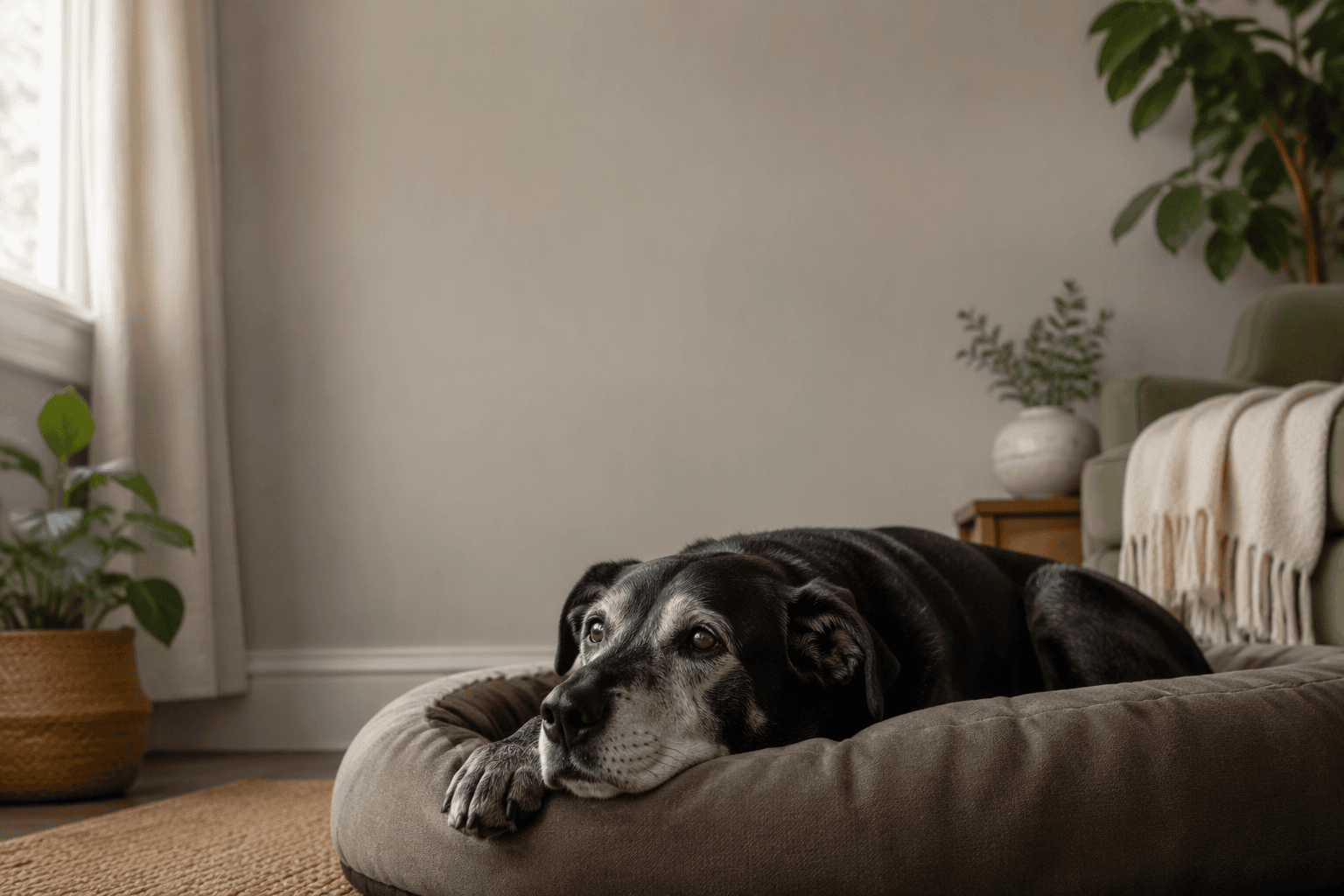
Caring for a dog as it grows older does not require changing every aspect of its routine all at once. Senior dog care can begin with the small things you can see each day: whether it is willing to eat, whether it gets up and turns as usual, where it rests, and which activities make it seem hesitant. Writing down these details can help you review changes and make conversations with your veterinarian more specific.
Start With Observable Details of Daily Life
At relatively consistent times, you can pay attention to appetite, water intake, bowel movements, rest, and movement. The goal is not to draw conclusions about every behavior, but to understand the dog’s usual rhythm and notice differences that are new or persistent.
For example, you can record whether it takes longer to get up, avoids a certain section of flooring, stops frequently during walks, or seems reluctant to move after waking. You can also observe whether it has changed its usual resting spots and how it responds to grooming, touch, or wearable gear.
When taking notes, include the situation in which something occurred, how long it continued, and what activity was taking place at the time. If convenient, you can also prepare photos or videos and ask your veterinarian during an appointment whether these changes need further evaluation.
Make Frequently Used Spaces Easier to Reach
Start by looking at the routes your dog travels repeatedly each day, including the places where it sleeps, eats, drinks, and goes outside. Consider reducing clutter along these routes, and pay attention to slippery floors, thresholds, corners, and changes in height that must be crossed.
Frequently used items do not need to be moved often. Relatively consistent placement makes it easier to observe whether the dog can approach them without difficulty. If it often pauses, takes a detour, or slips in a particular place, record the exact location, then consider whether a nonslip surface, ramp, or other mobility aid might be suitable. Before choosing one, ask your veterinarian about its size, placement, and the responses to watch for during use.
Check the Resting Area
A dog bed can be placed in a quiet, easily accessible location that does not obstruct walkways. Observe whether the dog has enough room to lie down, turn over, and get up, and note whether the bed shifts as the dog moves.
Good support is not only about feeling soft. A more practical way to assess it is to see whether the dog is willing to use it, can get on and off independently, and can rise smoothly after resting. If the dog repeatedly avoids its original bed, organize questions about the material, location, and edge height, and ask your veterinarian for advice.
Plan Gentle Activities Around How the Dog Feels That Day
Activities can remain familiar, steady, and easy to adjust. Before going out, observe how the dog gets up and walks. Along the way, pay attention to stride length, speed, pauses, and willingness to return home. Rather than aiming for a fixed distance, consider shortening the route, slowing the pace, or adding rest based on how the dog performs that day.
Indoor activities can also take forms that are familiar and easy for the dog to complete. Avoid simply interpreting hesitation as disobedience, and do not urge the dog to complete movements it is clearly unwilling to make. If new movement changes appear after an activity, or existing changes persist, pause any attempts to increase intensity on your own and ask your veterinarian how to arrange activities more appropriately.
Turn Grooming Into an Opportunity to Observe
While brushing, wiping paws, and performing routine cleaning, you can also check the coat, skin, paws, and nails and observe how the dog responds to touch. Keep your movements slow, and adjust how much you handle each time according to the dog’s tolerance.
If the dog suddenly avoids having a particular area touched, has difficulty maintaining its usual standing posture, or no longer accepts a previously familiar grooming routine, first record the area and action rather than forcing the process to continue. Your veterinarian can help determine whether an examination is needed and recommend a more appropriate approach to care.
Maintain a Clear Feeding Routine
Relatively consistent feeding locations and times make it easier to identify changes in appetite or eating behavior. You can record the food actually eaten, the time needed to eat, and whether the dog picks through food, drops it, or walks away partway through a meal.
Do not make major food changes, add supplements, or change portion sizes on your own based only on age. If body condition, appetite, water intake, or bowel movements differ from usual, bring your records when consulting your veterinarian. When preparing questions, include the form of the food, the eating environment, current treats, and any supplements being used at home.
Choose Everyday Mobility Aids Carefully
Ramps, nonslip mats, raised or lowered supplies, and wearable support devices all need to be considered in relation to the dog’s size, frequently used spaces, and actual responses. Mobility aids should not be treated as therapy and cannot replace a veterinary evaluation.
During a trial, observe whether the dog is willing to approach the item, can use it steadily, and shows any new hesitation afterward. If the dog needs ongoing physical assistance, or if you are unsure how to provide support, ask your veterinarian to demonstrate a more appropriate method.
Changes That Warrant Prompt Veterinary Consultation
Any new, sudden, or persistent changes are worth reporting to your veterinarian, especially if the dog is clearly unwilling to eat or drink, has difficulty getting up, slips and falls repeatedly, cannot complete normal activities, responds unusually to touch, or shows obvious changes in its patterns of rest and movement.
Rather than trying to determine the cause at home, prepare a concise record: when the change was first noticed, the situations in which it occurs, whether it affects eating, resting, or going outside, and whether food, the environment, or supplies have recently been changed. Clear observations can help your veterinarian understand the dog’s daily circumstances.
There is no single senior dog care plan that works for every dog. Keeping the environment easy to use, respecting the dog’s pace on a given day, and continuing to record subtle changes are generally easier to put into practice than adding many new arrangements all at once. When you are uncertain, turn your observations into specific questions and discuss the next steps with your veterinarian.
For individual health questions, your veterinarian remains the best partner.