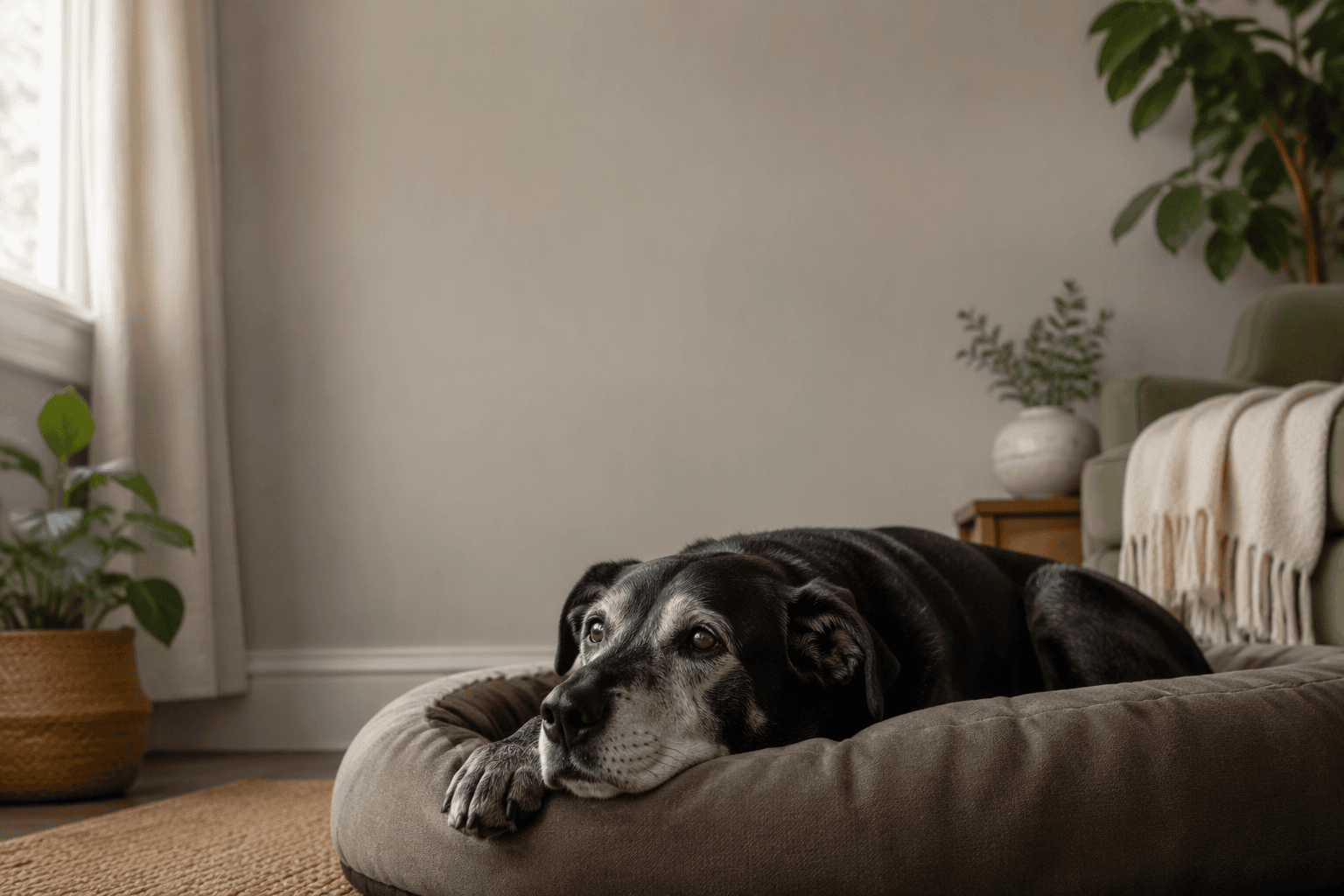
As dogs grow older, their daily rhythm may slow down, and their habits around resting, activity, eating, and grooming may also change. Senior dog care does not have to begin with complicated arrangements. Start by paying attention to details you can observe every day and briefly recording changes. This can help you care for your dog more specifically and make it easier to communicate with your veterinarian.
Start with Changes You Can Observe Every Day
You can pay attention to your dog’s appetite, water intake, bowel movements, walking, going up and down steps, sleep, and interactions with family members. The focus is not only on how your dog behaves on a particular day, but on whether it is different from usual. For example, does your dog prefer to rest more, need more time to get up, avoid places it used to enjoy, or seem uncomfortable during grooming or when touched?
Consider using a simple method to record the date, activity, and noticeable changes. The record does not need to be complicated; a few sentences or a daily photo can work. If a change persists, is pronounced, or affects eating, walking, or resting, bring the record to your veterinarian and ask them to help determine whether an examination or adjustments to the care routine are needed.
Make It Easier to Transition Between Activity and Rest
Senior dogs still need activity that suits them, but comfort should come first. Observe whether your dog can rest calmly after walking, sniffing, or playing, and notice whether it stops frequently during activity, changes its gait, or avoids certain surfaces. Rather than pursuing a fixed amount of activity, adjust the pace according to your dog’s condition that day and provide sufficient opportunities to rest.
At home, keep frequently used resting places quiet, dry, and easy to reach. Food and water bowls and the bed do not need to be far from the areas where family members spend time, reducing the need for your dog to go back and forth repeatedly when tired. If your home has slippery floors, thresholds, or places that require jumping to reach, observe whether your dog hesitates when passing through, then consider how to make moving through those areas steadier.
Pay Attention to Nutrition and Eating Habits
Plan meals based on your dog’s actual eating habits. Notice whether it eats as usual, chews more slowly, gets distracted easily, or reacts differently to foods it has been familiar with. Do not change the diet or add new supplements on your own just because you notice a change, and especially do not decide the amount to give without professional guidance.
If there are persistent changes in appetite, water intake, weight, or eating habits, prepare the relevant records and ask your veterinarian whether the food, mealtimes, or feeding method should be adjusted. If you are considering everyday products, you can also learn about the product information first and then discuss specific choices with your veterinarian. Dogevera’s everyday products can be viewed on the store page, but products should not be treated as a form of treatment and cannot replace veterinary advice.
Make Grooming a Gentle Part of the Routine
Grooming is not only time for cleaning; it is also an opportunity to observe the skin, coat, paws, and physical responses. Choose a time when your dog is relatively relaxed, start with brief, gentle contact, and notice whether it avoids you, becomes tense, or does not want to continue. The ears, paw pads, claws, and abdomen are especially suitable areas to observe slowly while your dog is calm.
If the coat tangles easily or your dog is notably sensitive to touch, stop pulling and ask your veterinarian or an appropriate professional groomer about gentler ways to handle it. Everyday care such as trimming claws and cleaning teeth can also be introduced gradually. When your dog shows discomfort, record what happened first, then ask your veterinarian whether the approach should be adjusted.
Adjust the Home Environment Instead of Asking Your Dog to Adapt to Everything
Small changes at home can sometimes make daily care go more smoothly. Check whether the routes your dog commonly uses are free of clutter, whether the resting area is easy to enter and leave, and whether water is easy to find. Keep furniture placement as stable as possible so your dog does not need to repeatedly adapt to new paths through the home.
If your dog likes to stay by a window, near the door, or close to family members, observe whether it can enter and leave those areas easily. Consider placing easy-to-clean mats in commonly used areas, and regularly check whether they are damp, slippery, or out of place. Make one adjustment at a time, then observe whether your dog is more willing to use the new location.
Questions to Bring to Your Veterinarian
Before an appointment, prepare a brief record covering recent changes in eating, activity, rest, grooming, and the home environment. When speaking with your veterinarian, you can ask: Are the changes currently observed worth evaluating further? Which activities are more suitable for the dog’s current condition? Do its diet or daily care need to be adjusted? Which areas of the home should be improved first? Which changes mean the veterinarian should be contacted promptly?
The focus of caring for a senior dog is not making every day exactly the same, but continuing to observe, making gentle adjustments, and seeking professional advice when uncertain. A consistent routine, an easy-to-reach living space, activity suited to your dog’s condition, and patient daily contact can all help you better understand what your dog needs at the moment.
For individual health questions, your veterinarian remains the best partner.