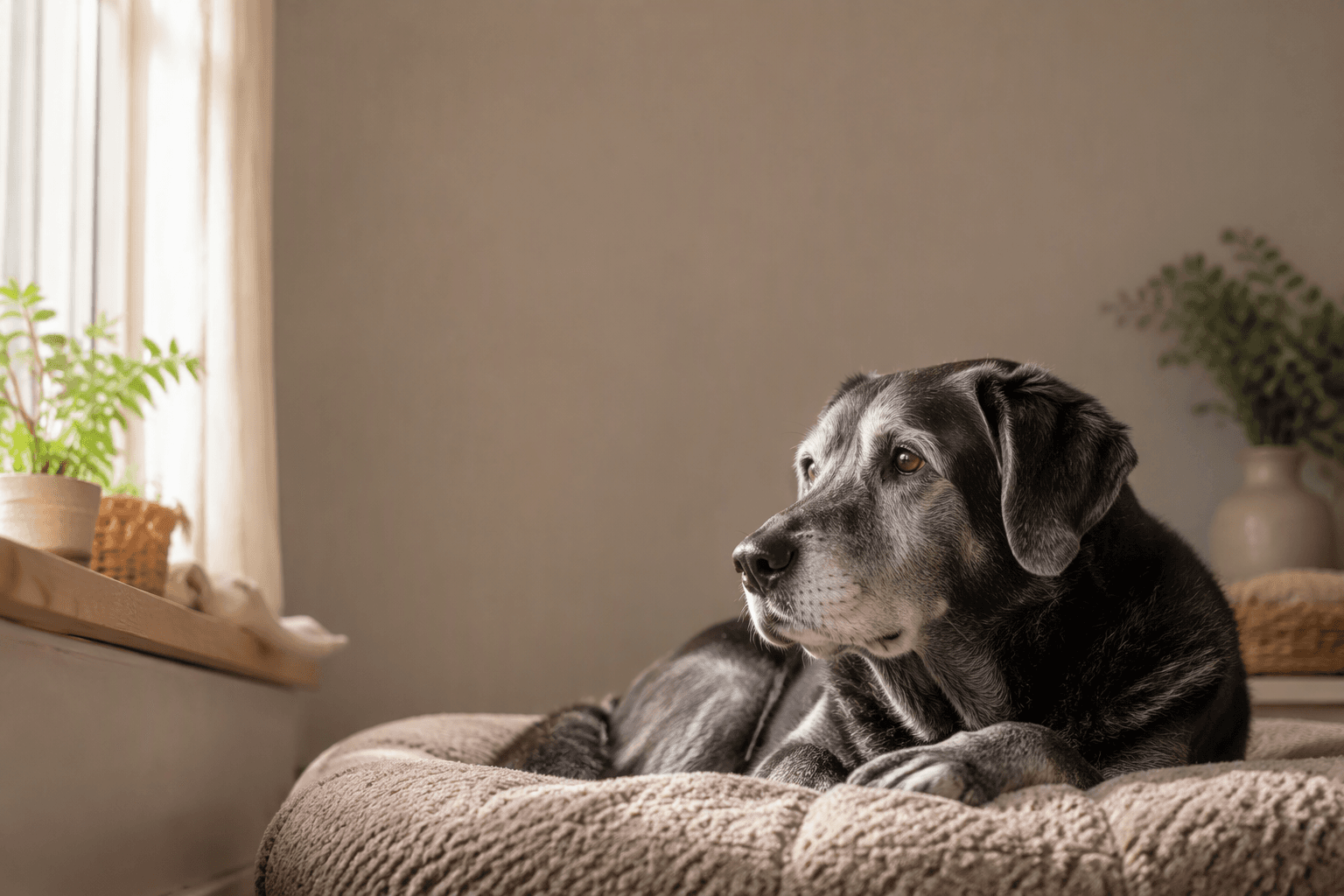
After entering the senior stage, a dog’s diet may require more careful observation. Rather than rushing to find one fixed plan suitable for every senior dog, start by recording how much it usually eats, whether it eats comfortably, whether its activity level has changed, and whether its water intake and bowel movements differ from normal. This daily information can help you and your veterinarian discuss feeding arrangements more specifically.
This article focuses on senior dog diets and organizes practical ideas for food selection, portion observation, ingredient considerations, water intake, and the process of changing food. It cannot replace individualized veterinary advice; if your dog experiences ongoing changes in eating or overall condition, you can bring your records to a consultation.
Start with Changes You Can Observe
Before adjusting feeding, you can begin keeping a simple daily record. The focus is not on making every entry complicated, but on staying consistent over time. You can pay attention to the following:
- Whether your dog is still interested in foods it was previously familiar with.
- Whether it needs more time to eat or seems reluctant to chew.
- Whether its activity, rest, and walking patterns during the day have changed noticeably.
- Whether its body condition appears to be gradually getting lighter, rounder, or otherwise different from before.
- Whether its water intake, bowel movements, and comfort after eating have changed.
These observations cannot be used to determine a specific cause, but they can make communication more precise. If a change persists, recurs, or concerns you, describe to your veterinarian when it happened, how often it occurs, and its relationship to food, rather than simply saying “poor appetite” or “lower energy.”
To organize daily observations more systematically, you can refer to Dogevera’s daily dog care resources, then keep the record items that are genuinely useful for your own dog.
When Choosing Food, Prioritize Overall Fit
Food suitable for a senior dog should not be judged only by the age label on the package. Pay attention to whether the food fits the dog’s current lifestyle and whether the dog is willing to eat it. Activity level, body condition, previous dietary experience, and concerns raised by the veterinarian all deserve consideration.
Look for a Complete Formula and Clear Information
When shopping, you can review the ingredients and nutrition information, giving priority to formulas with clear sources, complete labeling, and suitability for a dog’s daily feeding. Do not ignore the balance of the entire food and the dog’s actual acceptance simply because a particular ingredient sounds especially appealing.
If your dog already has dietary restrictions or areas of concern identified by a veterinarian, confirm that the new food is suitable before making a change. This is especially important when you plan to move from a familiar formula to a different type, as asking in advance can reduce the frustration of repeated trial and error.
Consider Energy and Texture Based on Lifestyle
A senior dog’s activity schedule may differ from before, but the changes are not the same for every dog. Therefore, portions and food type can be considered around actual body condition and daily activity, rather than mechanically copying how other dogs are fed.
Texture also deserves attention. If your dog eats more slowly than before or shows less interest in a certain texture, record the observation and ask your veterinarian whether a more acceptable form should be considered. Do not repeatedly switch among several foods based on a single refusal to eat, or it will be difficult to determine which change affected eating.
Adjusting Portions: Watch the Trend, Not Just One Meal
Portion considerations in a senior dog’s diet should be viewed as part of the overall trend over a period of time. Eating more or less at one meal may not indicate a long-term need; however, when body condition, activity, and appetite change at the same time, it is worth recording carefully.
You can start with the existing feeding method, record how much is actually eaten each time, and note whether treats make up a considerable portion of daily intake. If you want to adjust portions, discuss it with your veterinarian first, then observe the response through stable, gradual changes. Do not suddenly reduce food substantially just to pursue a particular appearance or weight change.
A scheduled, quiet feeding environment can also help with observation. Place the food where the dog can reach it easily, reduce distractions during feeding, and try to keep the daily routine consistent. This makes it easier to notice genuine changes and provide specific information during a consultation.
Water Intake Is Also Part of Daily Care
In addition to food, pay attention to whether your dog is willing to drink and whether its drinking habits differ from normal. The accessibility and cleanliness of the water bowl, as well as the dog’s drinking behavior after resting and activity, can all be included in daily observations.
If you notice ongoing changes in water intake or urination, do not rely only on changing food to address them. Record when they occur and any other circumstances that appear at the same time, then consult your veterinarian. Do not overlook persistent changes in water intake simply because your dog is temporarily eating normally.
Allow Time for Adjustment When Changing Food
When you decide to change food, consider gradually adding the new food to the existing food while observing appetite, bowel movements, and overall condition. The specific proportions and pace of adjustment should be based on your dog’s situation, with veterinary advice sought when needed. For dogs that have had discomfort during food changes in the past or have dietary restrictions, communicating in advance is especially important.
During the transition, it is not advisable to introduce several new treats, new nutritional products, or a new feeding method at the same time. Changing only one major variable at a time makes it easier to determine whether your dog is adapting. If persistent abnormalities occur or you cannot determine what to do next, pause further attempts and contact your veterinarian for advice.
Turn the Plan into an Easy-to-Follow routine
A practical senior dog diet plan should be something the caregiver can follow consistently. You can prepare a simple record sheet and note the food type for the day, eating behavior, water observations, activity, and questions that need follow-up. Different caregivers in the household should also try to use the same recording method.
When purchasing daily care supplies, you can first view daily dog care products in the Dogevera store, then make a decision based on veterinary advice and your dog’s actual needs. No product should replace a proper diet, careful observation, or professional consultation.
Finally, a senior dog’s diet does not need to be complicated. Start with a stable feeding routine, clear observation records, and food choices suited to the individual; when you notice a change, organize the information promptly and ask your veterinarian. This approach is gentler and easier to continue in daily life.
For individual health questions, your veterinarian remains the best partner.