TL;DR
Senior dog back legs shaking when standing is worth noticing, especially if it is new, getting worse, or paired with weakness, pain, stumbling, or a change in bathroom habits. Brief, mild shaking that stops when your dog sits or lies down can be recorded while you improve footing and reduce demanding movements, but sudden or severe changes need prompt veterinary guidance.
A veterinarian can help sort out a new movement change, particularly when your dog cannot stand normally or seems distressed.
Is your dog shaking, weak, cold, or uncomfortable?
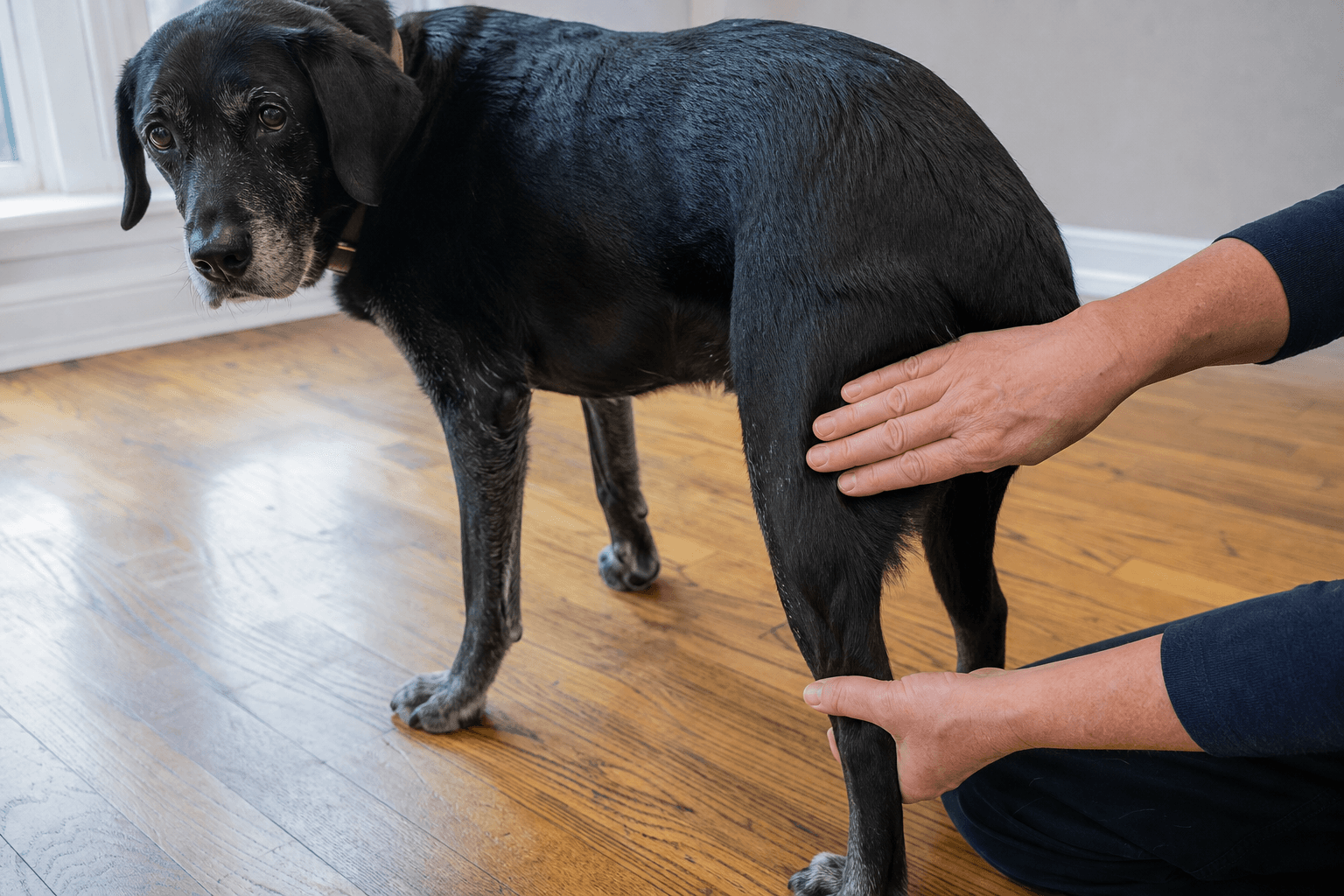
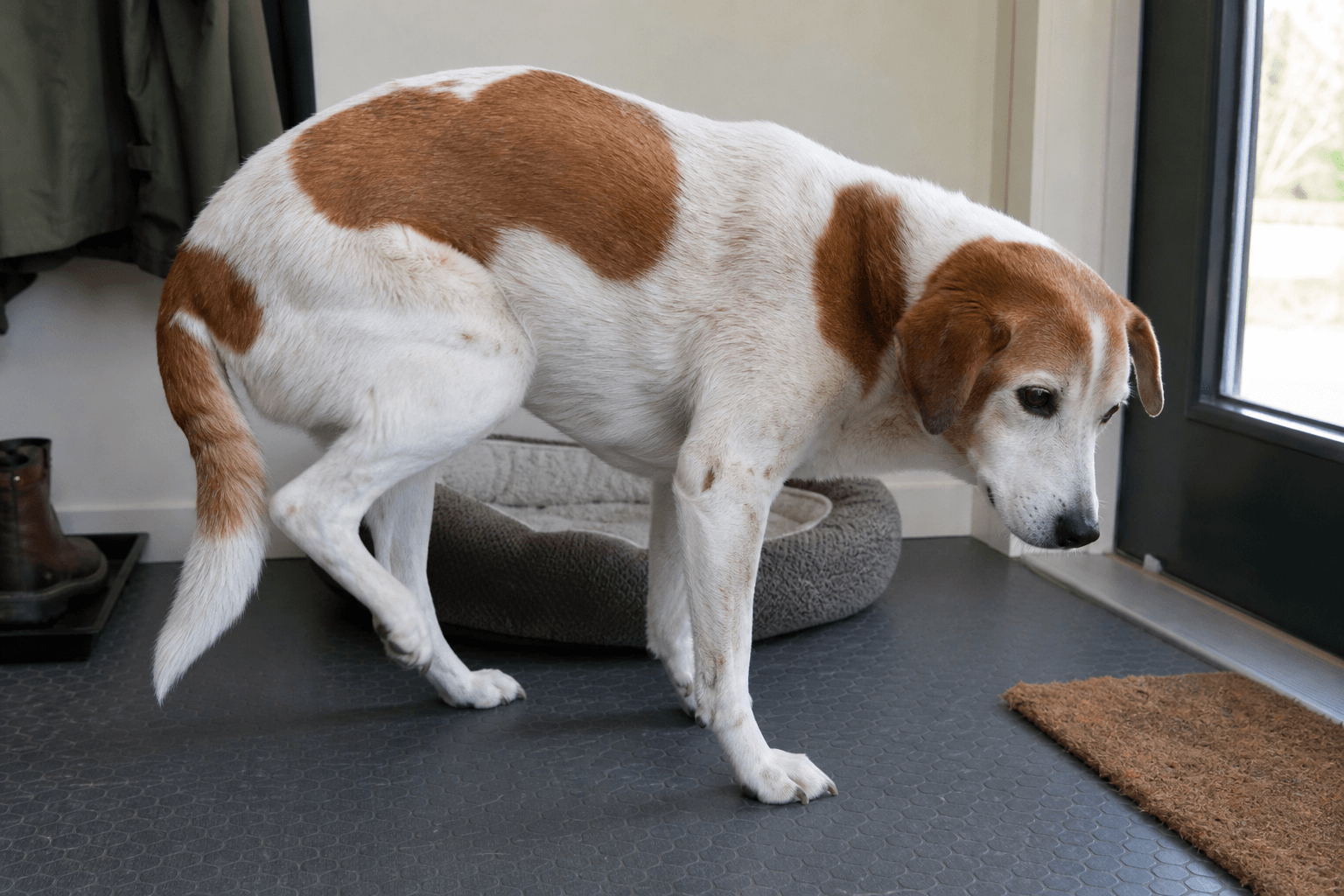
Back-leg shaking is an observation, not a single explanation. An older dog may tremble after holding a standing position, when rising from a bed, during a stressful moment, or after more activity than usual. Shaking can also appear alongside soreness, reduced muscle strength, a balance problem, or changes involving the nerves that control movement.
Start by watching the whole moment rather than focusing only on the legs:
- Does the shaking begin as your dog rises, after standing for a while, or during a walk?
- Does it stop when they sit, lie down, or shift their weight?
- Are both back legs involved, or does one leg seem different?
- Is your dog reluctant to turn, squat, climb, or put weight on a leg?
- Do they seem alert and like themselves, or unusually quiet, restless, or distressed?
A dog who shakes briefly after a long outing may need a quieter day. A dog who now shakes during ordinary standing in the kitchen deserves closer attention, even if they can still walk.
When should a senior dog see a veterinarian the same day?
Arrange a same-day call or visit if the shaking is new and persistent, appears to be worsening, or comes with a clear change in how your dog uses their back legs. Do not wait to see whether a difficult pattern passes if your dog is repeatedly slipping, knuckling a paw, dragging a foot, crying out, refusing to rise, or suddenly unable to manage a familiar short walk.
Seek urgent veterinary help if your dog cannot stand, collapses, has a sudden loss of coordination, has trouble urinating or passing stool, or seems in severe distress. These are not situations for home exercises, supplements, or waiting for a routine appointment.
It is also sensible to call the same day when shaking follows a fall, a jump that went badly, or another possible injury. Keep your dog in a quiet, secure area while you arrange care. Avoid testing whether they can handle stairs, a longer walk, or another attempt at getting into the car.
Use a three-day standing check
For mild shaking without urgent signs, a short record can reveal whether there is a repeatable pattern. Choose ordinary moments, such as standing for breakfast, waiting at the door, and returning from a brief familiar walk. Do not encourage extra activity just to observe them.
For three days, note:
1. Where it happened: hard floor, rug, grass, curb, or stairs. 2. What came before it: waking, eating, toileting, grooming, walking, excitement, or resting. 3. What the legs did: fine trembling, larger shaking, shifting weight, lifting one foot, slipping, or sitting down. 4. How long the moment lasted: a few seconds, until they changed position, or through the activity. 5. What else changed: appetite, drinking, sleep, bathroom routine, confidence on walks, or willingness to be touched.
A short phone video can also be useful when it is safe to take one. Film from the side and include the floor surface if possible. Do not hold your dog in place or position their legs for the camera.
Make standing easier today
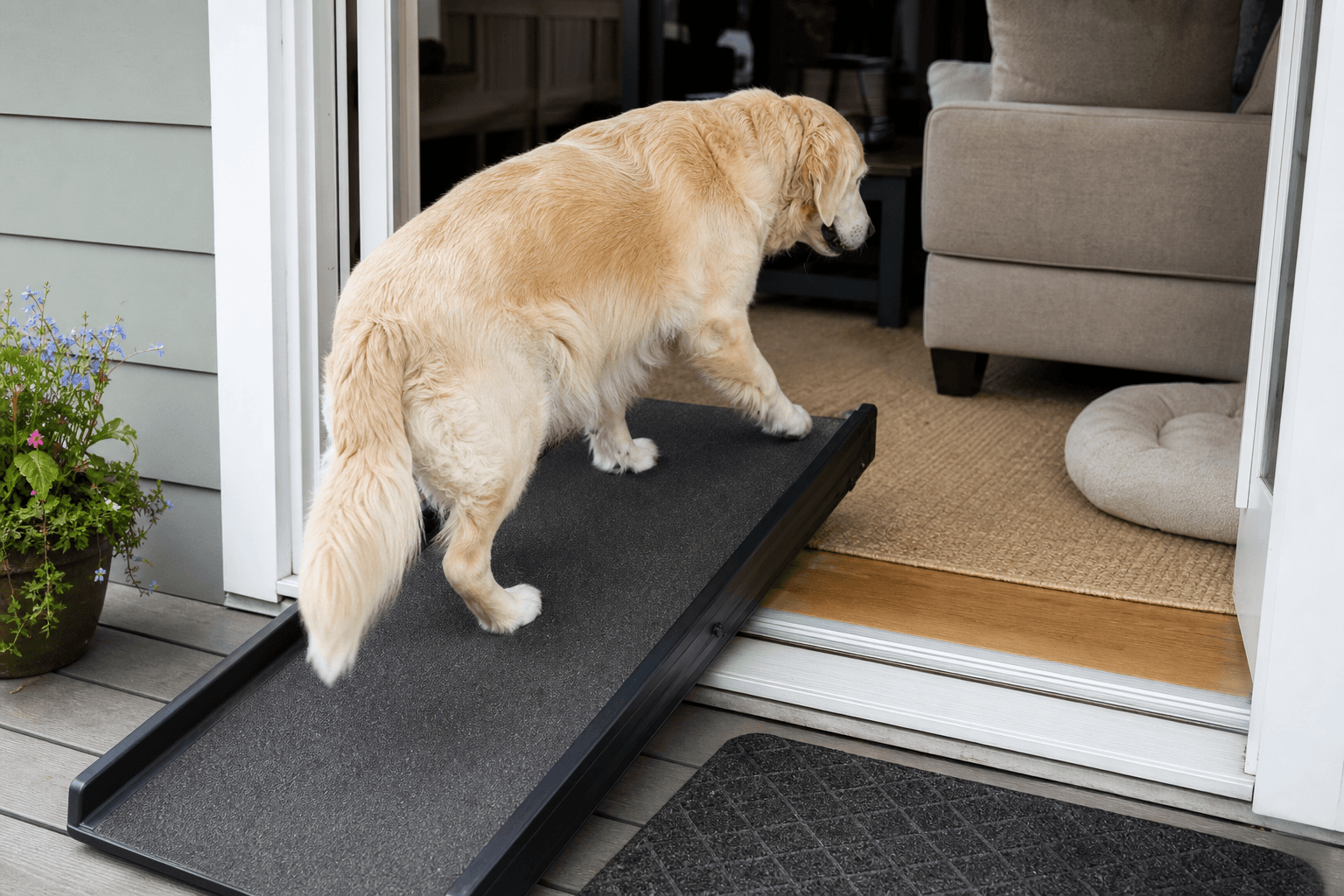
Small home changes can reduce slipping and the effort of waiting upright. Put non-slip runners or mats where your dog stands most often, such as beside the bed, food bowl, door, and favorite resting spot. Keep pathways clear of shoes, cords, and low furniture that requires sharp turns.
Offer a supportive bed that is easy to step into rather than one with a high edge. Place water and meals where your dog does not need to navigate stairs or slick floors. If standing for meal preparation leads to shaking, give them a nearby bed or mat and invite them to settle instead of waiting at your feet.
For walks, choose level, familiar ground and let your dog set a comfortable pace. A shorter outing with plenty of time to sniff may be a better choice than trying to maintain an old route. If they have also begun to lag behind, use one consistent route to note changes in pace and pauses, as described in this walking baseline guide.
Do not use shaking as a reason to push activity
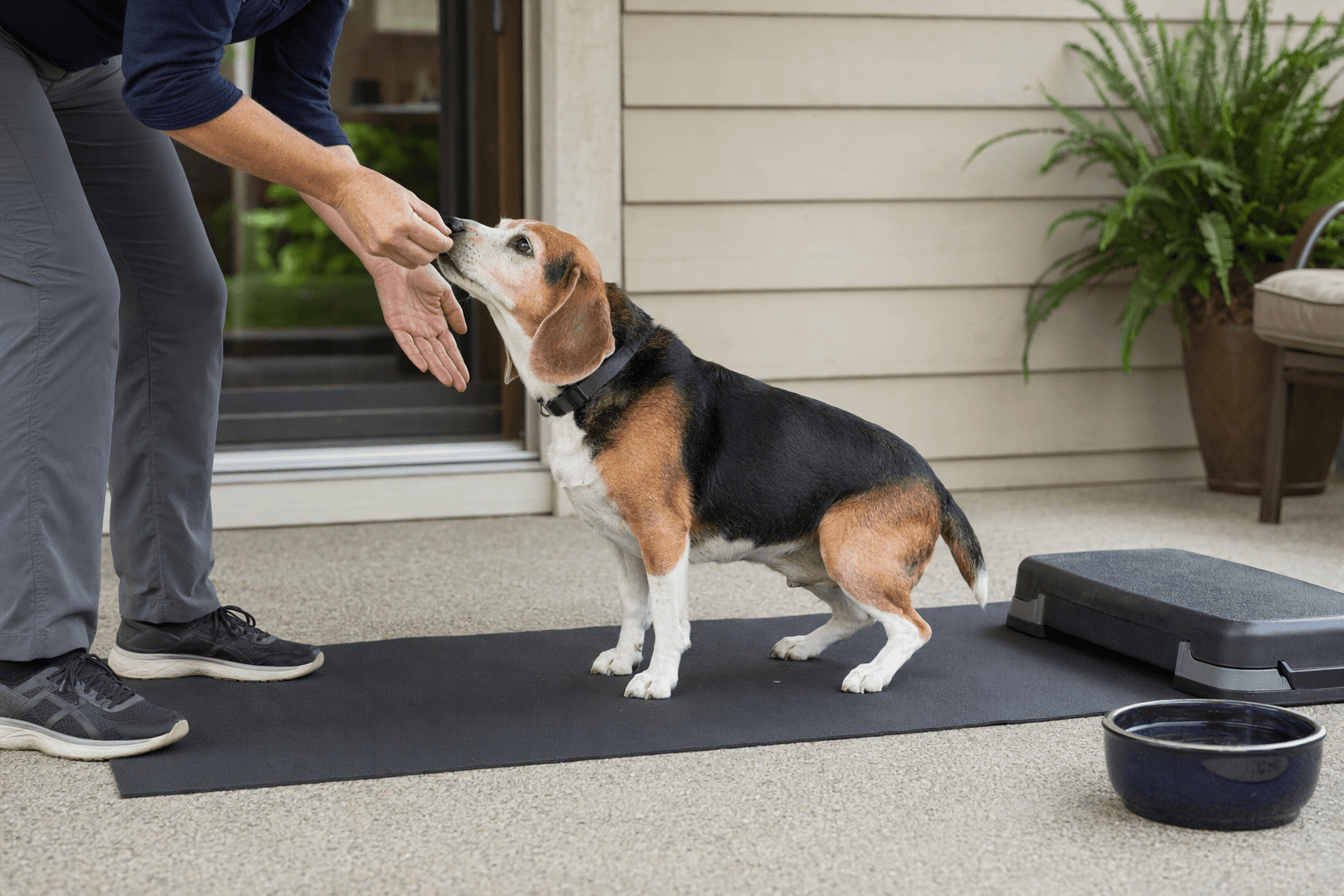
It can be tempting to encourage more walking or repeated sit-to-stand practice when an older dog's legs look unsteady. Until you know why the shaking is happening, avoid making them repeat a movement that seems difficult. Skip jumping into vehicles, fast turns during play, and unnecessary stair trips.
This does not mean your dog must stay inactive. Gentle daily routines, calm sniffing time, and easy access to rest can help you maintain companionship without turning movement into a test. If your dog's thighs also look noticeably narrower, treat that as a separate observation to share with the veterinarian. Changes in back-leg muscle shape and shaking may occur together, but one does not explain the other on its own.
What details help at the appointment?
Bring your three-day notes, any safe video, and a list of recent changes. Include new foods, treats, supplements, medications, falls, changes in household routine, and any differences in eating, drinking, urination, or stool.
Be ready to describe what your dog could do before the shaking began and what now looks different. For example, “She shakes after waiting by the door and sits down within a minute” is more useful than “Her legs seem bad.” If stairs are part of the pattern, record whether your dog hesitates going up, down, or both. A focused record of senior dog stair struggles can make that conversation clearer.
FAQ
Can an older dog’s back legs shake from being tired?
Shaking after an unusually busy day may be easier to understand than shaking during normal household standing, but the pattern still matters. Give your dog a quieter routine, improve traction, and record whether the shaking returns during low-effort activities.
Should I massage my dog’s legs when they are shaking?
Do not press, stretch, or manipulate a leg that seems painful, unstable, or newly weak. If your dog enjoys gentle petting, let them choose the position and stop if they move away, tense up, or seem uncomfortable.
What if the shaking only happens on tile or hardwood?
Flooring may be part of the picture if your dog braces or slips on smooth surfaces. Add secure non-slip mats in key standing areas, then note whether the shaking changes on a rug, outdoors, or while standing on a stable surface. Continue to mention the pattern to a veterinarian if it is new or recurring.
For individual health questions, your veterinarian remains the best partner.