

Daily Dental Cleaning Powder for Dogs
700 mg Ascophyllum nodosum, 750 million CFU probiotics and 100 mg sodium hexametaphosphate per 4 g reference serving.
HK$226.49
Why dog parents switch
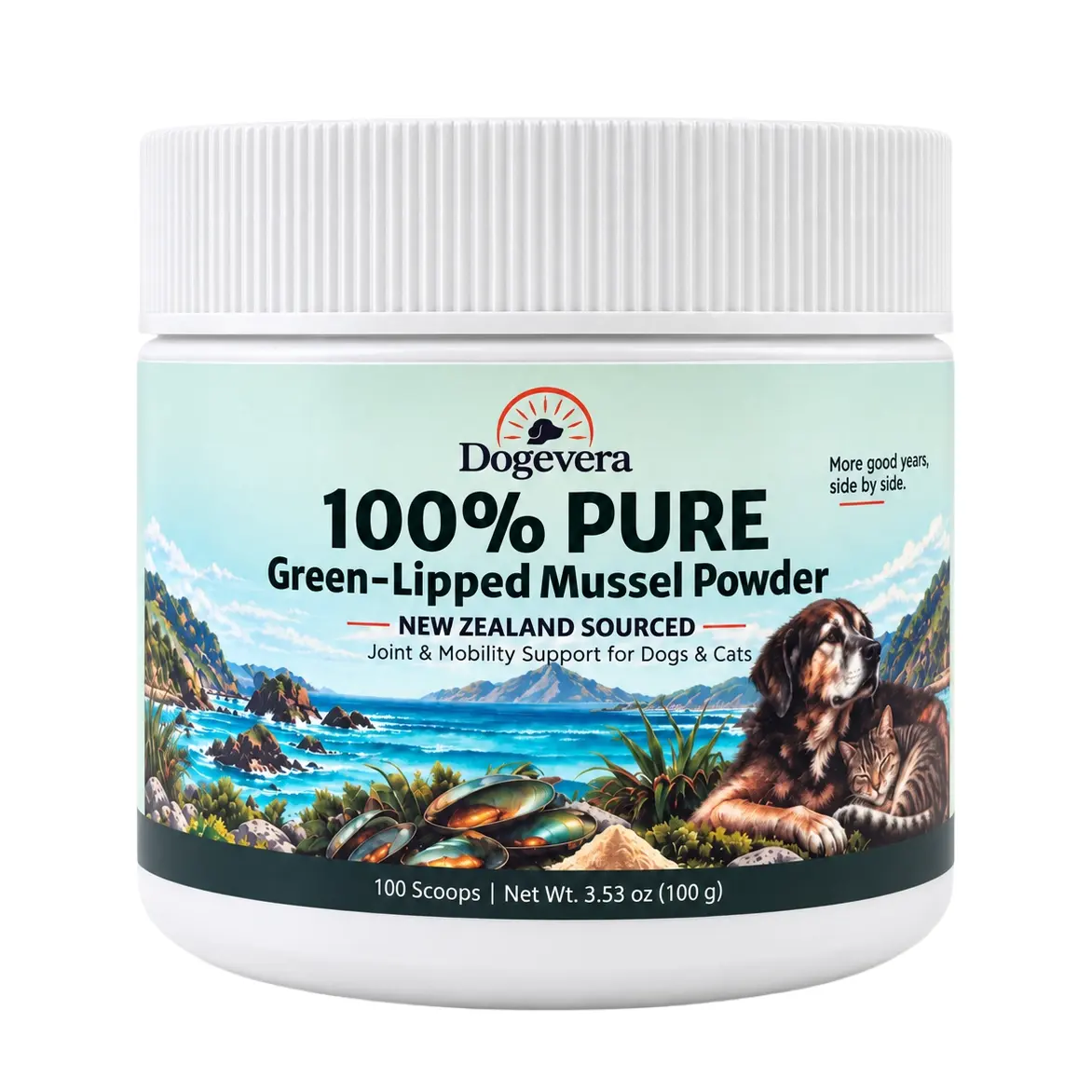
100% Pure
Whole NZ green-lipped mussel. Zero fillers.
4-in-1 Joint Matrix
Natural omega-3s (ETA/EPA/DHA) & chondroitin in every 1 g scoop.
100-Day Guarantee
No results? Full refund on your first purchase.
Why dog parents switch
100% Pure
Whole NZ green-lipped mussel. Zero fillers.
4-in-1 Joint Matrix
Natural omega-3s (ETA/EPA/DHA) & chondroitin in every 1 g scoop.
100-Day Guarantee
No results? Full refund on your first purchase.
1 / 12 · Overview
One ingredient
Amount printed on the label
New Zealand origin
Cold-processed, not deodorised
100 days
Change your mind, full refund
You bought green-lipped mussel.
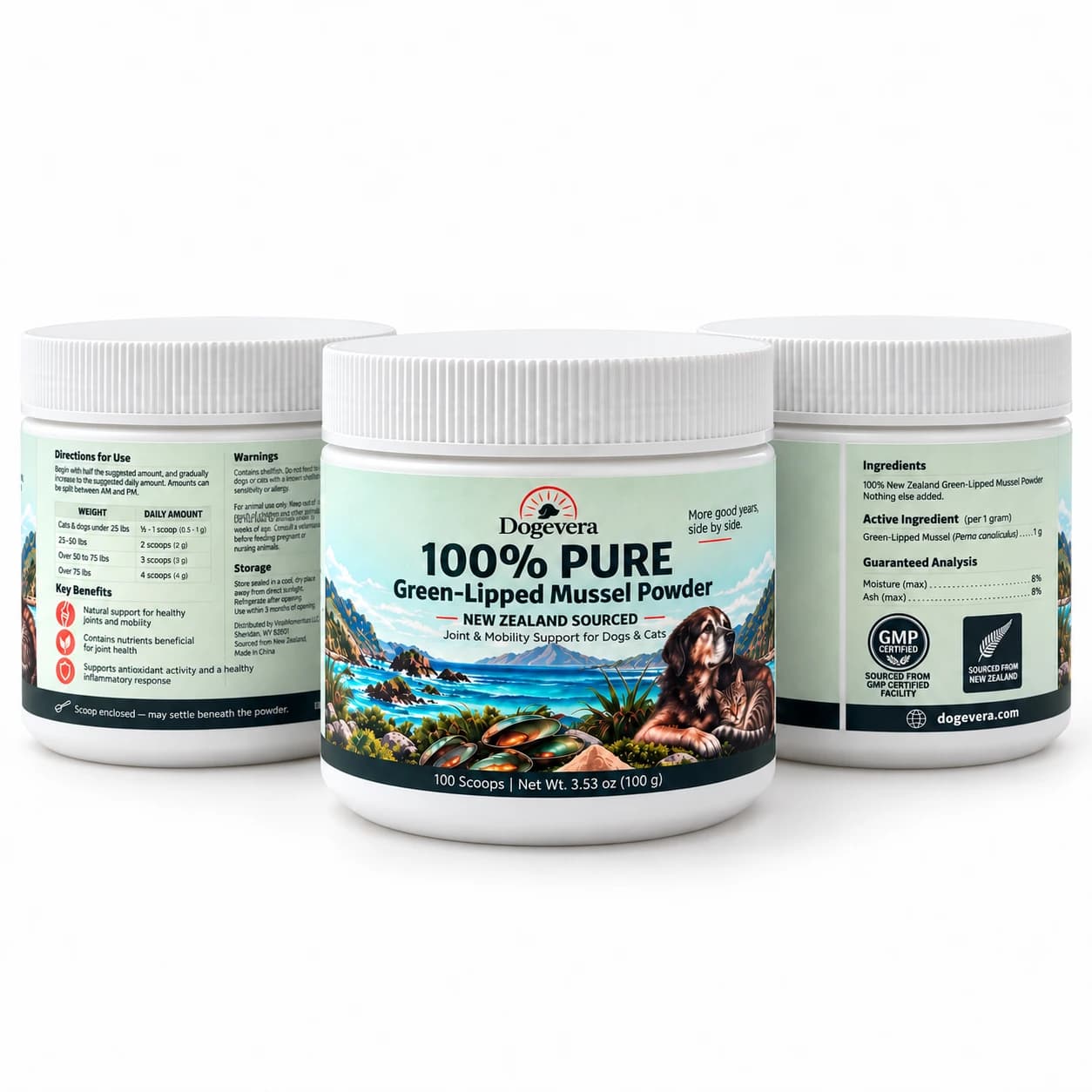
DOGEVERA
TYPICAL PET SUPPLEMENTS
100% GREEN-LIPPED MUSSEL
1 g scoop = 1 g pure mussel.
BIG SCOOP. SMALL MUSSEL DOSE.
A 5 g scoop can mean just 600 mg of mussel.
NO "PROPRIETARY BLEND" TRICKS
No fillers. No carriers. No flavoring.
HIDDEN BEHIND OPAQUE LABELS
Your scoop is mostly cheap fillers and flavoring.
WORKS IN WEEKS
Vets reported improvement in 94% of dogs.
See the evidenceCAN TAKE MONTHS TO NOTICE
Underdosed formulas lead to hit-or-miss results.
NOURISHES THE JOINT AT THE SOURCE
Targets mobility and cartilage—not just temporary comfort.
BUILT AROUND SURFACE-LEVEL RELIEF
Temporary band-aids without meaningful joint nutrition.
TRY IT FOR 100 DAYS
Opened jar included.
30-DAY RETURN WINDOW
Unopened only. Good luck testing it.
5 g scoop. 600 mg mussel. What happened to the other 88%?
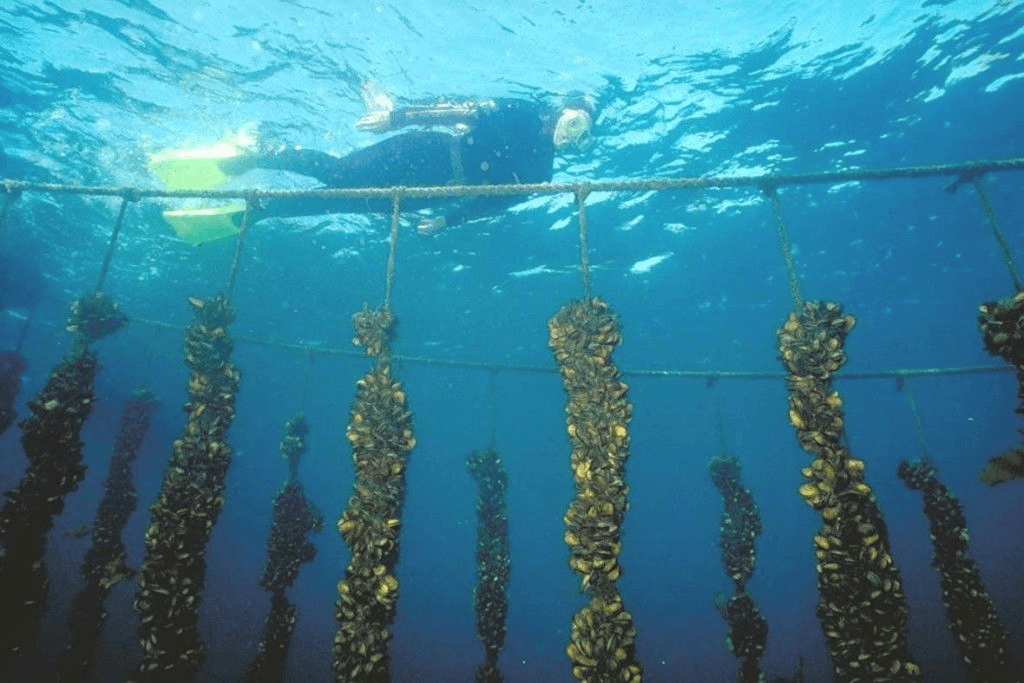
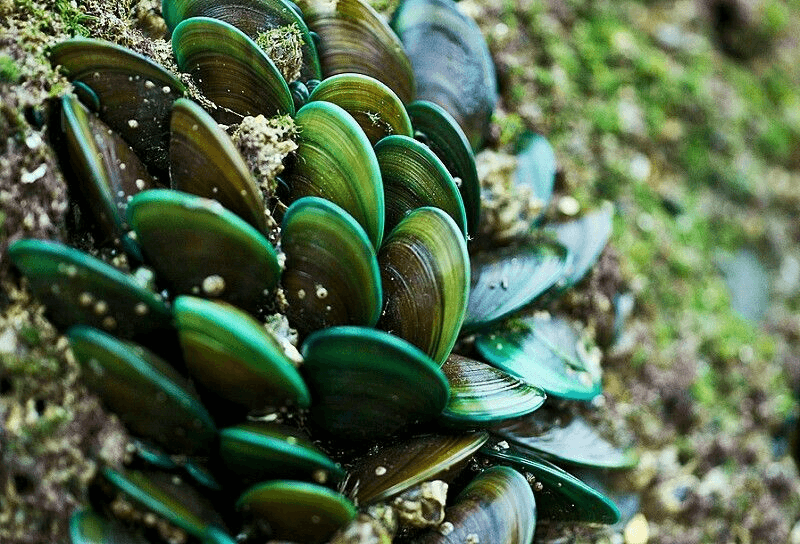
Perna canaliculus, and nowhere else.
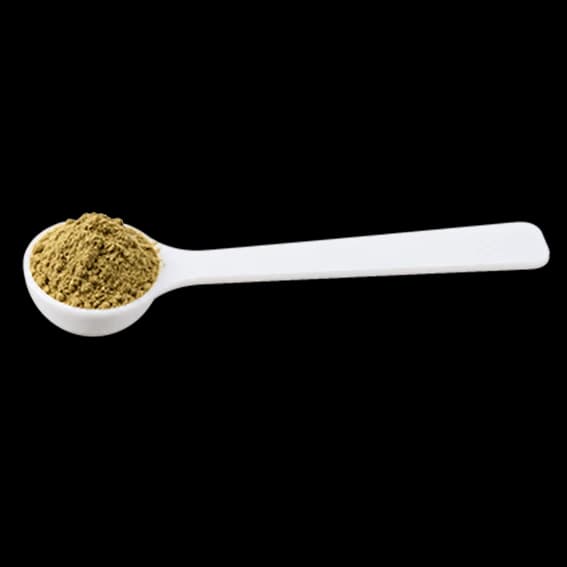
The green-lipped mussel is native to New Zealand waters and the species grows nowhere else. Ours is New Zealand-sourced mussel, dried and milled into powder with nothing added on the way — which is also why the colour and smell shift a little from batch to batch.
Formula and routine details
Dried mussel smells like dried mussel. Powders that smell like bacon or beef get that smell from flavourings, and flavourings take up room that mussel would otherwise occupy. A strong marine smell is the most honest signal you have that there is nothing else in the jar.
Stir the powder through wet food, broth, or anything with moisture. On dry kibble the powder slides to the bottom of the bowl, and powder at the bottom of the bowl is a serving your dog did not get.
New Zealand green-lipped mussel (Perna canaliculus) powder — 100%
That is the end of the ingredient list.
Illustrative of the category, not any particular brand. The point is not that blends are bad — it is that when a label reads like the column on the right, you cannot tell how much mussel you are actually buying.
The first four weeks
Daily nutrition does not announce itself. The owners who can tell whether anything changed are the ones who noted where they started. Pick three ordinary moments and write them down on day 0, day 14 and day 28.
What it actually costs
One 100 g jar contains 100 portions of 1 g. The cost below is per 1 g portion, not a fixed daily dose. Daily use and supply duration depend on the label weight band and the number of dogs.
1 scoop = 1 g; one jar contains 100 g. Label daily amounts are 0.5–1 / 2 / 3 / 4 g for the four pound ranges. Stock estimates use 1 g/day for the smallest band, giving approximately 100 / 50 / 33 / 25 days per jar. For your household estimate, use the dog and supply selector above.
In one go, or a pause halfway?
How long after lying down for an hour?
How far before they want to turn back?
Peer-reviewed work on green-lipped mussel in dogs, cited properly — not customer quotes about somebody else's product.
The Journal of Nutrition
85 dogs with arthritis ate a green-lipped mussel diet for 50 days. Arthritis scores fell by about a third, and vets reported improvement in 94% of the dogs.
10.1093/jn/136.7.1995SNew Zealand Veterinary Journal
Double-blind, placebo-controlled trial; 81 dogs. 67% improved on green-lipped mussel extract by day 56, and when the placebo dogs switched over, 91% of them improved.
10.1080/00480169.2006.36622Evidence-Based Complementary and Alternative Medicine
Randomised, double-blind study; 45 dogs over 8 weeks. Mobility and owner-assessed scores improved compared with placebo.
10.1093/ecam/nem136Canadian Journal of Veterinary Research
23 dogs with arthritis: after switching to a green-lipped mussel diet, force-plate gait scores and owner-measured function improved.
PMCID: PMC3525174New Zealand Veterinary Journal
Double-blind crossover study in working farm dogs, tracking everyday activity with accelerometers on green-lipped mussel versus placebo.
10.1080/00480169.2024.2379966Before you order
Begin with half the suggested amount mixed into food, then gradually increase to the suggested daily amount. Amounts may be split between AM and PM. If your dog refuses it, contact us.
Because there is nothing in the jar except dried green-lipped mussel. The smell is the mussel. Products with a mild or savoury smell have something else in them producing it.
Give it four consistent weeks before you judge, and write down where you started so you have something to compare against. Responses differ between individual dogs, and some owners notice nothing. Your veterinarian can advise for your dog specifically.
Go by your dog's weight. One scoop is 1 g: ½ to 1 scoop a day up to 25 lb, 2 scoops for 25 to 50 lb, 3 scoops for 50 to 75 lb, and 4 scoops over 75 lb. Give half that amount for the first week, then move to the full amount. One 100 g jar lasts about 100 days for a small dog, 50 days at 2 scoops and 25 days at 4.
Yes. It is one of the most studied joint supplements for dogs. In a 2002 study, 83% of dogs given green-lipped mussel powder with their food improved their arthritis score by 30% or more within 6 weeks, against 7% on the same food without it. It is a single ingredient, so it is easy to add to an older dog's bowl. Our founder Morty has raised seven pugs, and every one developed joint trouble with age; Morty's corgi now takes this powder every day as prevention.
Ask your veterinarian before adding anything new to the diet of a dog on medication. That applies to this powder and to every other supplement.
Do not use it. Green-lipped mussel is shellfish, and this product is 100% green-lipped mussel.
A blend contains several ingredients at amounts you often cannot see, plus whatever carries and flavours them. This is one ingredient at 100%, so you can read the whole label in a second and know exactly what your dog is getting.
Glucosamine is the most common joint ingredient, but a 2022 review of 72 joint trials in dogs and cats found no convincing pain relief from glucosamine and chondroitin. Green-lipped mussel has several positive placebo-controlled trials in dogs. Fish oil supplies far more omega-3 than mussel powder, so the two do different jobs, and you can give both.
Customer feedback
Not ready to decide?
Get the free 5-minute monthly check, then a plain-English research note every other week.
Daily Dental Cleaning Powder for Dogs
700 mg Ascophyllum nodosum, 750 million CFU probiotics and 100 mg sodium hexametaphosphate per 4 g reference serving.
HK$226.49

Brain & Cognitive Support Soft Chews for Dogs
90 mg DHA per 2-chew reference serving, with eight named actives for everyday cognitive support.
HK$304.59
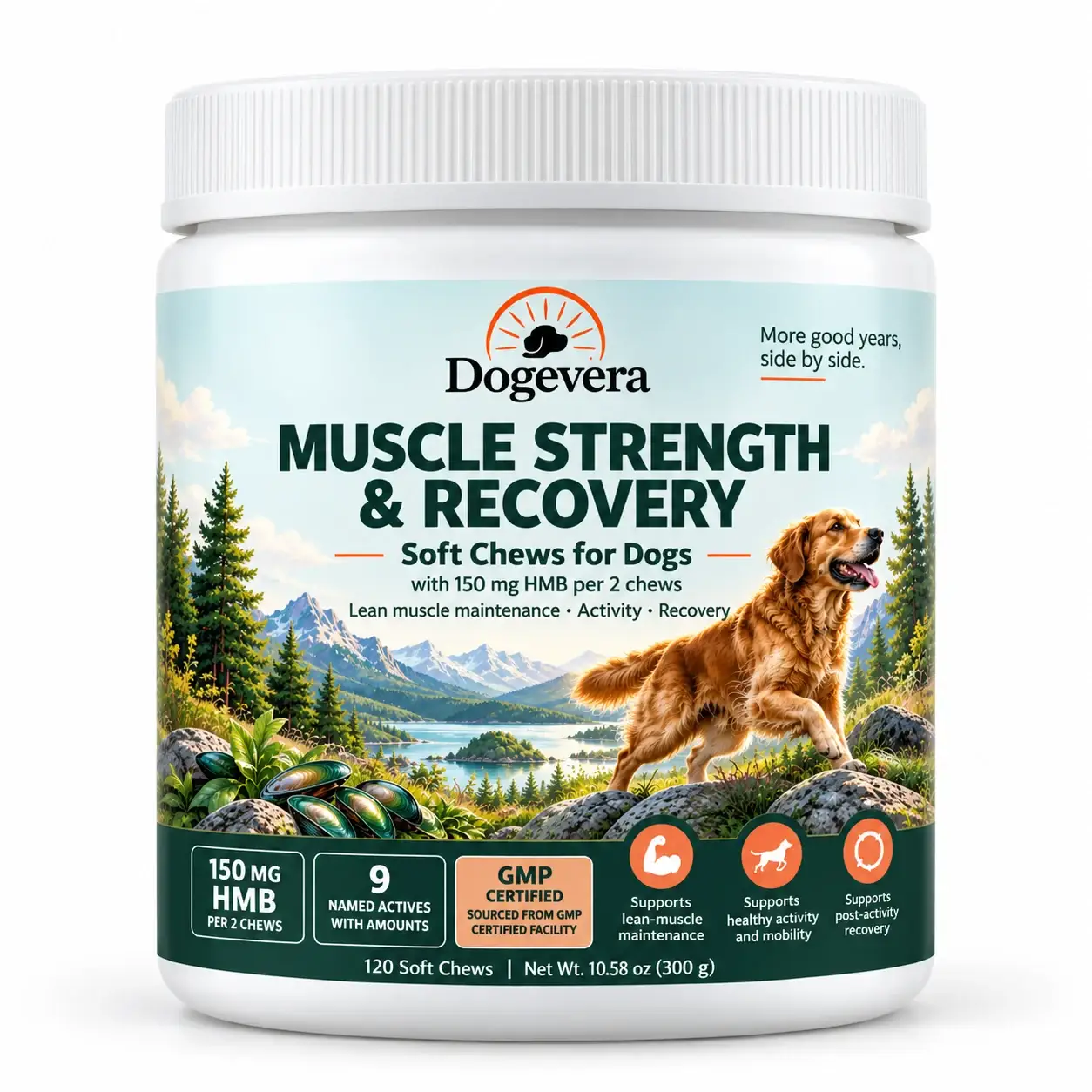
Muscle Strength & Recovery Soft Chews for Dogs
150 mg calcium HMB per 2-chew reference serving, with leucine, amino acids, salmon oil and green-lipped mussel.
HK$328.02