TL;DR
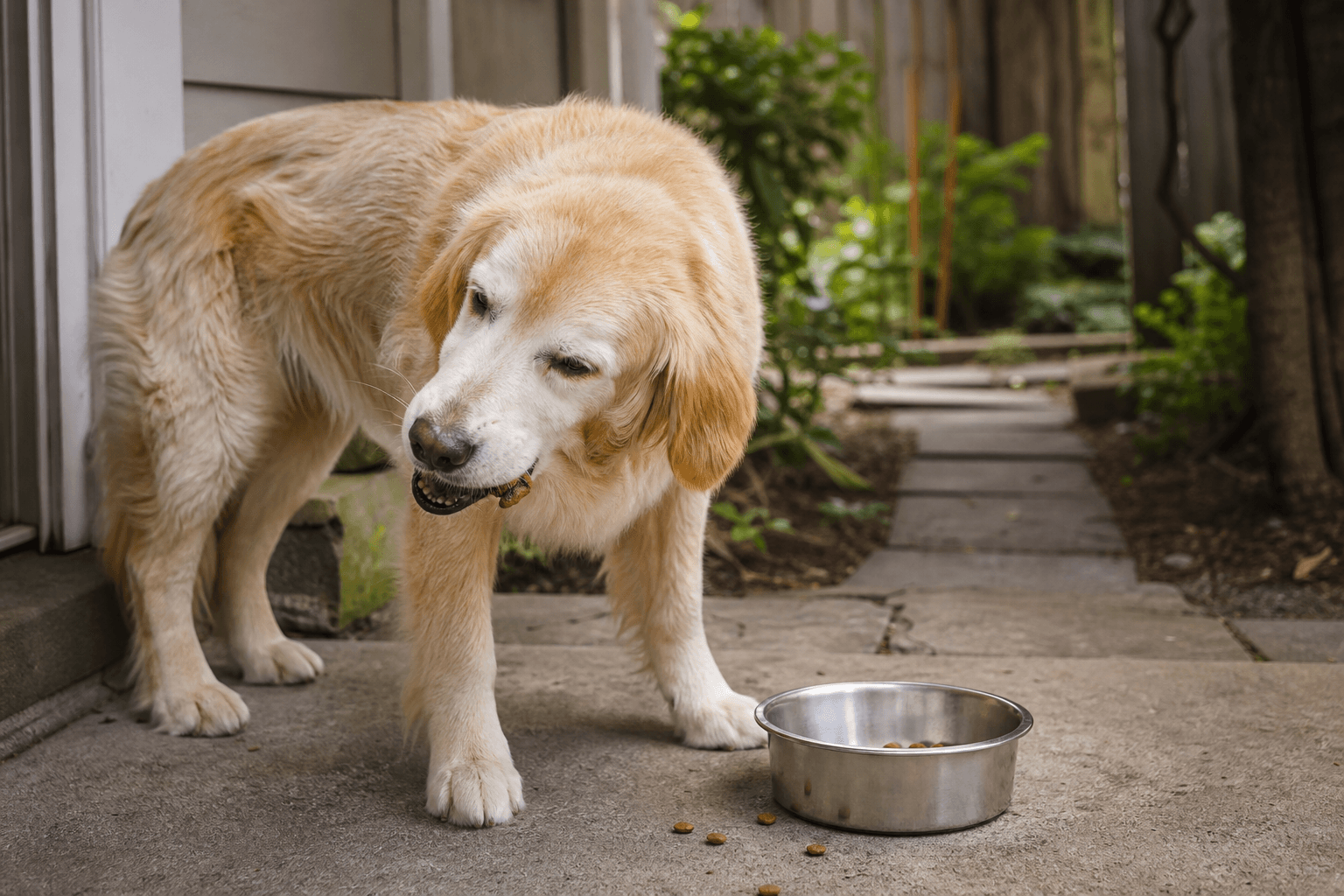
At breakfast, your dog may pick up food, chew only on one side, or drop pieces from the other side. Dog chewing on one side of the mouth is usually a sign of mouth discomfort, not a harmless habit, so arrange a veterinary examination rather than trying to solve it with a dental product at home. Until then, avoid forcing their mouth open, hard chews, and brushing around the sore area.
A brief observation log can help you describe what changed and how your dog is managing day to day. It cannot identify the cause.
Why is my dog chewing on one side of the mouth?
One-sided chewing can happen when using one side feels more comfortable than using the other. Possible sources include a painful tooth, irritated gums, something caught in the mouth, a mouth injury, or discomfort involving the jaw. You may not be able to see the problem from the outside, and a dog may continue to eat even when chewing has become awkward or uncomfortable.
Look for a change from your dog’s normal eating pattern, not just whether they finish the bowl. Useful details include:
- Turning the head while chewing
- Taking longer to finish familiar food
- Dropping kibble or treats
- Carrying food away before eating
- Avoiding one side when picking up a toy
- Pawing at the mouth or rubbing the face
- Excessive licking, drooling, or a new odor
- Resisting touch around the muzzle
These observations do not tell you which condition is present. They do tell you that normal mouth use has changed, which is enough reason to contact your veterinarian.
What should I check at home?
Keep the check gentle and brief. Watch your dog eat from a comfortable distance, then note whether the chewing pattern changes with soft food, dry food, treats, or toys. Do not offer hard objects just to test the mouth, and do not repeatedly ask your dog to bite or retrieve something.
If your dog willingly allows a quick look, lift the lips only as far as they comfortably permit. You might notice swelling, bleeding, a broken-looking tooth, a visible object, or an area your dog protects. Do not put your fingers into a painful mouth, pull at anything lodged there, or try to scrape away buildup. A frightened or uncomfortable dog may react suddenly even if they are normally gentle.
Use this simple record before you call:
| Observe | Write down | | --- | --- | | Eating | What food caused difficulty, and whether they finished | | Chewing | Which side they appeared to use | | Mouth signs | Drooling, pawing, odor, blood, or swelling | | Behavior | Changes in play, rest, touch, or mood | | Timing | When you first noticed the change and whether it is continuing |
A short phone video of the chewing pattern can be useful if the behavior is intermittent. Record from a distance and do not delay care to capture footage.
When does one-sided chewing need urgent attention?
Call your veterinary office promptly when the chewing change is new, persistent, or accompanied by other mouth or behavior changes. Tell the staff exactly what you saw, whether your dog is eating and drinking, and whether there was a possible injury or object in the mouth.
Seek urgent veterinary guidance if your dog cannot eat or drink, has significant bleeding, marked facial swelling, trouble breathing, severe distress, or a sudden inability to close or open the mouth normally. Do not give human pain medicine, and do not attempt to remove a deeply lodged object yourself.
If your dog seems comfortable between meals, that still does not make one-sided chewing a good problem to watch indefinitely. Mouth discomfort can interfere with eating, drinking, sleep, play, and ordinary handling. A prompt examination is more useful than guessing from a photograph or trying several home remedies in sequence.
Why should daily dental care wait?
Brushing, dental chews, and mix-in products are designed for routine care when a dog is comfortable enough to accept them. They are not a substitute for finding out why your dog has suddenly changed how they chew. Brushing a tender area, encouraging a hard chew, or repeatedly handling the mouth can make the experience more stressful and may worsen irritation.
This is also why a dental powder should not be treated as the next step for a dog who is chewing on one side. A daily product may belong in a long-term routine after your dog’s mouth has been assessed and they can comfortably tolerate routine care. It cannot explain a new chewing pattern, remove the need for an oral examination, or replace treatment recommended by your veterinarian.
Until the appointment, keep meals calm and easy to access. Follow your veterinary team’s instructions if they advise a temporary change in food. Otherwise, avoid making repeated diet experiments, adding supplements, or using leftover medication to cover up the change. Note what your dog can manage and report it clearly.
What can the veterinary visit clarify?
A veterinary examination can assess the mouth more fully than a home look, including areas your dog will not allow you to inspect. Depending on what they find, the team may discuss additional evaluation or treatment. Your job is not to identify the exact tooth or condition beforehand. Your job is to report the change, protect your dog from extra mouth handling, and arrange appropriate care.
Bring the observation record, a list of current medications or supplements, and a note about any recent fall, chew, toy, grooming event, or change in appetite. If you already have a regular dental routine, describe what your dog normally accepts and when you last completed it. That context can help separate a sudden change from an established pattern.
Can I wait to see whether it goes away?
If the behavior happened once and immediately returned to normal, keep watching closely and record what you saw. If it repeats, continues, or comes with drooling, bleeding, swelling, food dropping, or reluctance to eat, contact your veterinary office rather than relying on home care.
Should I brush my dog’s teeth while they are chewing on one side?
Pause brushing and other mouth-focused routines until your dog has been assessed, especially if they resist, flinch, bleed, or seem distressed. Do not force the mouth open or use a hard chew as a test.
Is one-sided chewing always a dental problem?
It is a mouth-use change that may have several possible sources, including discomfort in or around the mouth. Only an examination can clarify the cause, so describe the pattern instead of assuming it is simply tartar or a tooth problem.
For individual health questions, your veterinarian remains the best partner.