TL;DR
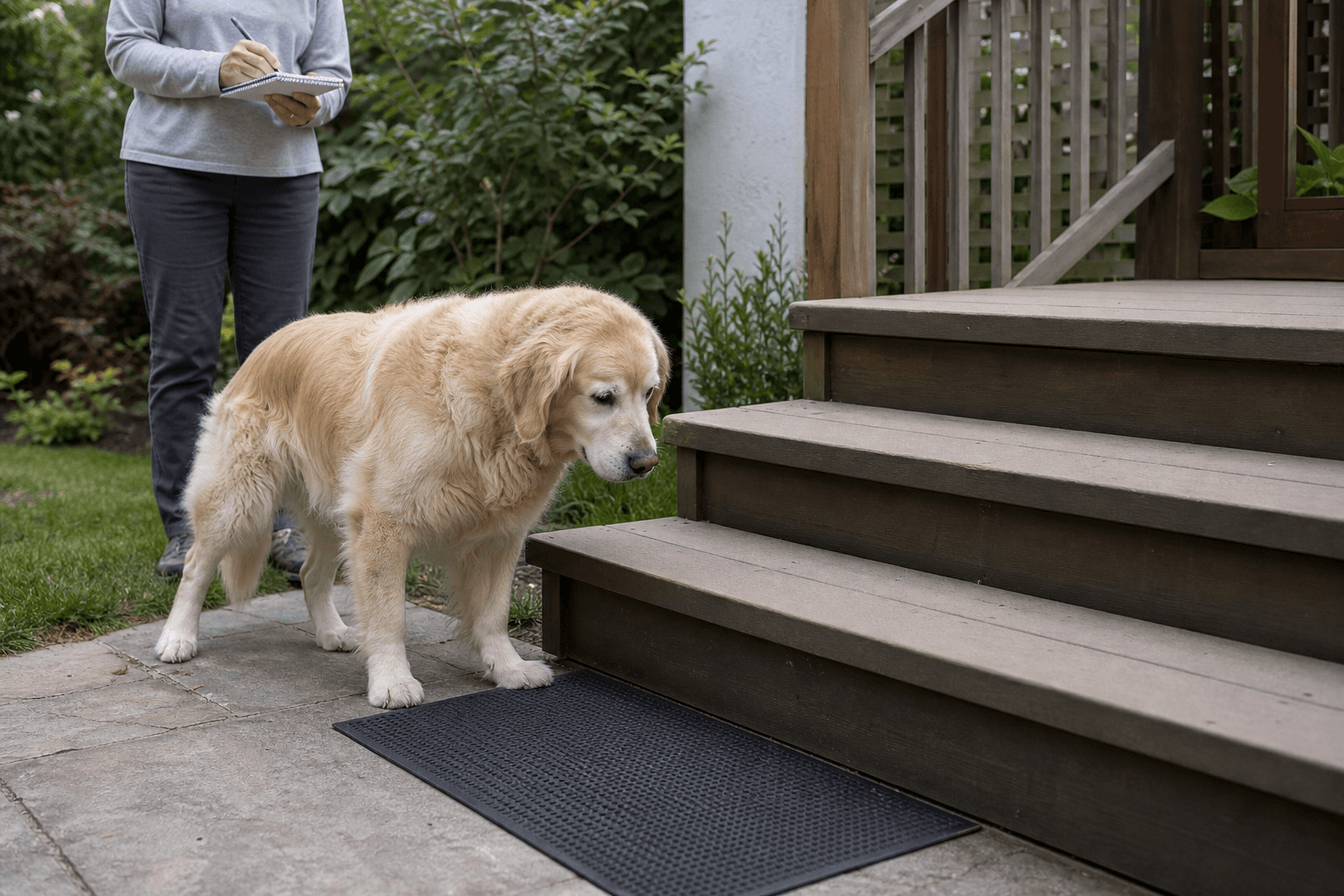
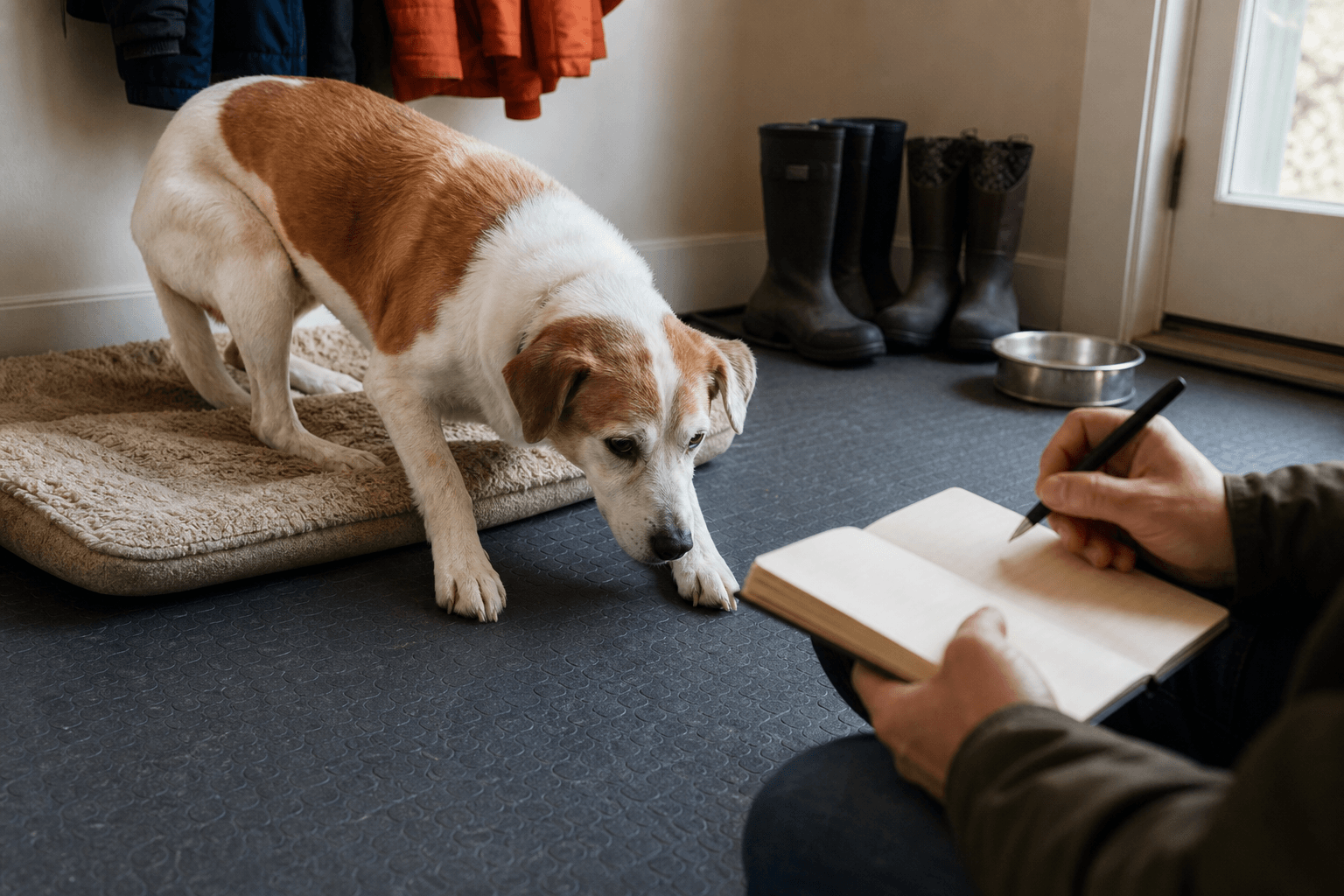
If your senior dog is slow to get up after lying down, record the moment instead of relying on memory. Note how long they remain still, what happens when they rise, and how they move afterward, using the same gentle routine each day. A clear pattern gives you more useful information to discuss with your veterinarian.
Why is my senior dog slow to get up after lying down?
You may notice it when your dog wakes from a nap: they shift their weight, pause, push up carefully, or stand for a moment before walking. It is tempting to call this normal aging, especially when they seem comfortable once they are moving. A change that repeats is worth observing rather than explaining away.
The useful question is not simply, “How slow were they?” It is, “What exactly happened before, during, and after getting up?” Your notes can show whether the pattern is occasional or becoming part of ordinary daily life. They can also help separate a difficult rise from a broader change in walking, resting, appetite, or willingness to use familiar spaces.
This is an observation routine, not a way to diagnose the cause. If the change is sudden, severe, or worrying, contact your veterinarian rather than waiting for a log to be complete.
What should I record when my dog gets up?
Keep the record brief enough that you will actually use it. For each observed rise, write down:
- When it happened: morning, after a nap, after a meal, or after a longer rest.
- Where they were lying: a firm floor, a bed, a rug, or another surface.
- How they started: did they shift position, sit first, rise in one motion, or pause?
- What their legs did: did they seem steady, slip, spread their feet, or need several attempts?
- What happened next: did they walk normally for them, move slowly, avoid a turn, or return to resting?
- What changed around the event: note unusual activity, a different sleeping place, a missed meal, or any other noticeable routine change.
Use ordinary descriptions rather than labels such as “stiff” or “painful” unless you are quoting what you observed. For example, “front end up, paused, then took short steps” is easier to review than “bad arthritis.”
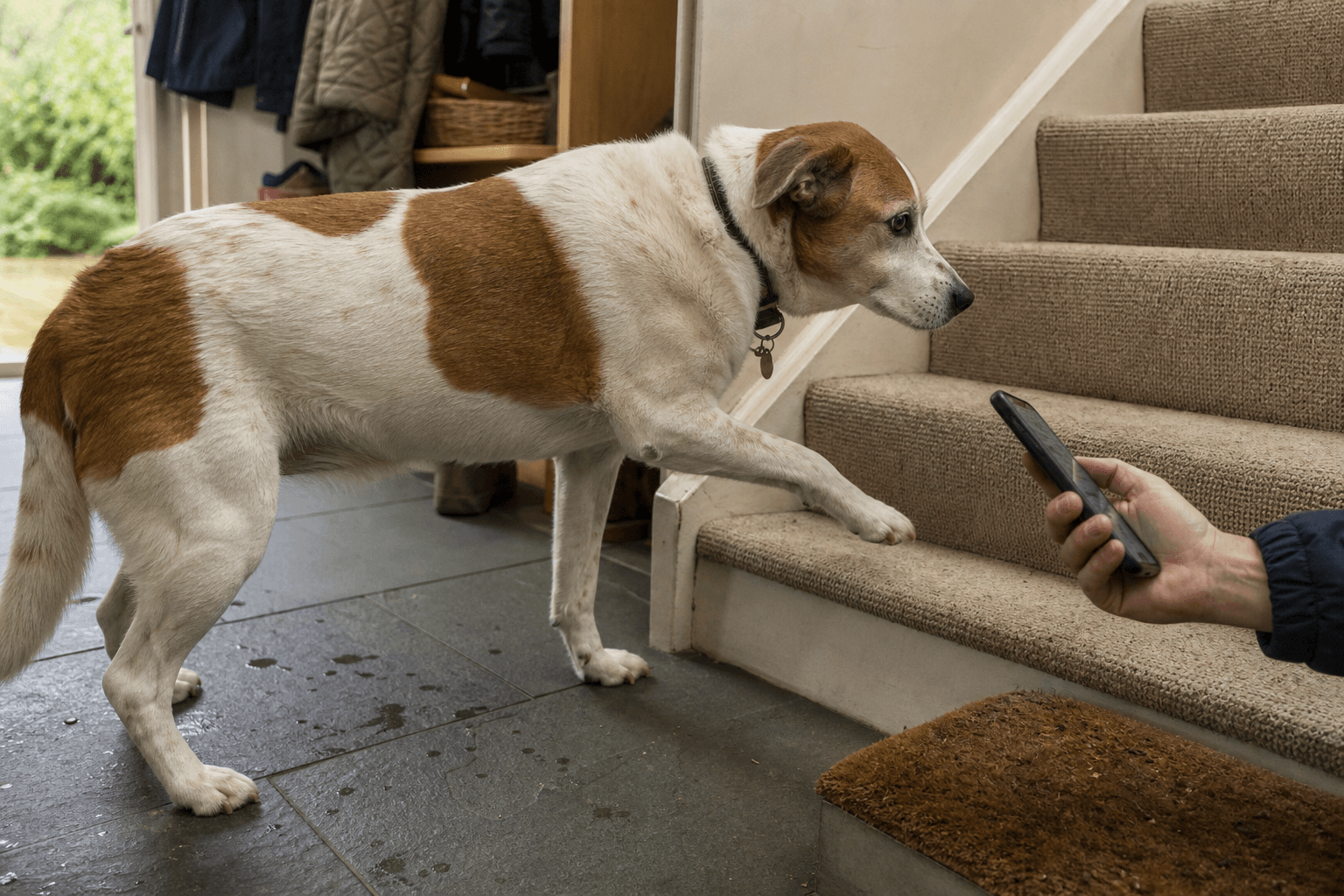
Do not repeatedly prompt your dog to stand just to collect data. Observe natural moments, and avoid pulling, lifting, or repositioning them. A short phone video from a safe distance may help you remember the movement, but do not delay care to create one.
How can I make the observation more consistent?
Consistency matters more than precision. Choose a few natural opportunities, such as getting up in the morning, rising from an afternoon rest, and standing after an evening nap. Record the same details each time for three days, then look for a pattern. You can continue longer if the change is mild and your dog is otherwise acting as usual.
Try to keep these conditions similar:
1. Observe from the same room or angle when practical. 2. Record the surface and bed location. 3. Note whether your dog had just been resting briefly or for a longer period. 4. Describe the first steps without calling, luring, or rushing them. 5. Compare your dog with their own recent routine, not with another dog.
A simple table can keep the record readable:
| Date and time | Resting place | Getting up | First steps | Other notes | |---|---|---|---|---| | Monday morning | Bed | Paused, one attempt | Short steps | Normal breakfast | | Monday afternoon | Rug | Rose steadily | Usual pace | Slept longer |
The point is not to produce a medical measurement. It is to make a vague concern specific enough to notice whether it repeats, varies by surface, or appears alongside another change.
Which patterns deserve a closer look?
A single slow rise may not tell you much. Repeated changes are more informative, especially when they occur in several ordinary situations. Look for patterns such as:
- rising more slowly after longer rest than after a brief nap
- repeated attempts to stand
- slipping or avoiding a particular floor surface
- taking shorter first steps before settling into their usual movement
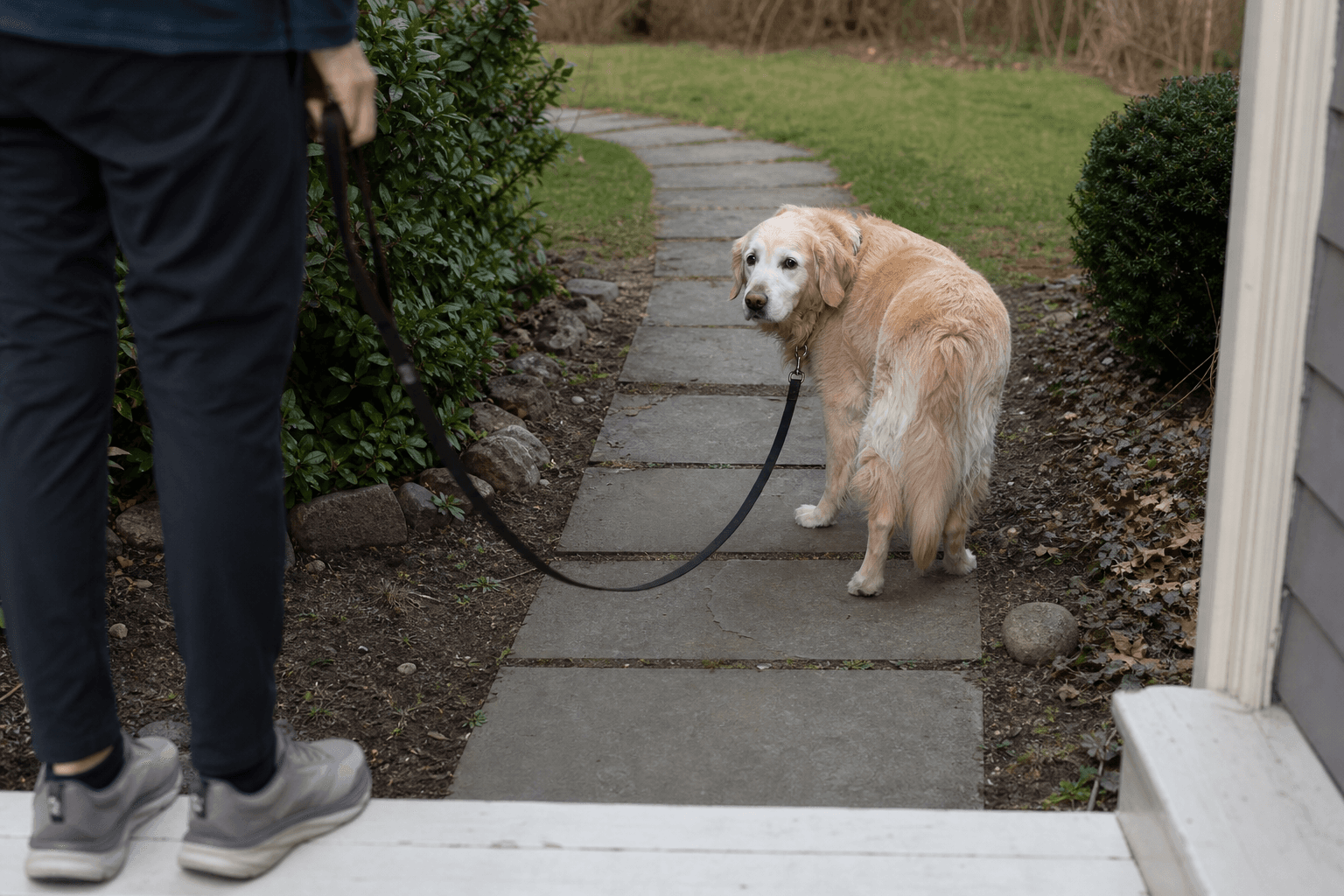
- hesitating before walking, turning, stepping outside, or climbing into the car
- choosing a different resting place or avoiding a bed they previously used
- moving less after getting up, even if they eventually walk
Also record changes that do not involve movement. Appetite, sleep, toileting, interaction, and willingness to be touched can provide useful context. Avoid treating any one observation as proof of a particular condition. A log shows what is happening at home; it does not establish why.
If your dog cannot rise, repeatedly collapses, appears distressed, or has a sudden major change in movement, seek veterinary guidance promptly rather than continuing routine observation.
Low-risk ways to make daily movement easier
While you observe the pattern, make the immediate environment easier to navigate without forcing extra exercise. Keep frequently used paths clear, place a secure nonslip surface where your dog commonly stands, and check that their bed is easy to enter and leave. Reduce unnecessary jumping by keeping daily essentials within comfortable reach.
Let your dog choose their pace when standing and walking. Avoid dragging them by the collar, pushing their hips, or encouraging a reluctant dog to keep going. If a change in activity, bedding, flooring, or routine seems to affect getting up, write that down rather than repeatedly testing it.
You can also prepare a short summary for an appointment: when the pattern began, how often you see it, whether it varies by surface or time of day, and what your dog does afterward. Dogevera’s senior dog care articles can help you organize related home observations without turning them into a diagnosis.
FAQ: senior dogs and slow rises
Should I time every time my dog gets up?
No. A simple description is usually more practical than timing every rise. If you choose to time an event, use the same starting and ending points and treat the result as a home observation, not a clinical measurement.
Is a slow rise always a joint problem?
Not necessarily. The cause cannot be identified from this one behavior alone. Record the wider pattern, including surfaces, first steps, walking, rest, and other routine changes, then share it with your veterinarian.
Should I wake my dog to check how they stand?
No. Observe natural waking and rising moments. Waking or rushing them can change the behavior you are trying to understand and may make the experience less comfortable.
What should I bring to the appointment?
Bring your dated notes, a list of routine changes, and a short video if you already have one recorded safely. Tell the veterinarian what is different from your dog’s usual movement, when you first noticed it, and whether the pattern is becoming more frequent.
For individual health questions, your veterinarian remains the best partner.