TL;DR
Bad breath in a senior dog usually signals plaque, hardened tartar, or an underlying health problem such as infection, kidney disease, or an oral tumor. Start by lifting your dog's lip to check gum color, look for brownish buildup on the teeth, and notice whether the smell is getting worse quickly. If you see pale gums, bleeding, loose teeth, or a fruity or ammonia-like odor, call your veterinarian the same day.
The three most common sources of bad breath
When an older dog's breath smells off, the cause usually falls into one of three categories: soft plaque that is still forming, hardened tartar that has already built up over weeks or months, or a medical condition that produces odor from infection, organ dysfunction, or a growth in the mouth. Each one looks and smells slightly different, and recognizing which you are seeing can help you decide whether to schedule a routine dental exam or call your veterinarian right away.
Plaque is the sticky, pale film that forms on tooth surfaces every day. It is made of bacteria, saliva, and food particles, and it is the earliest stage of dental buildup. Tartar, also called calculus, is plaque that has hardened and turned brown or yellow. It cannot be brushed away. Medical causes include kidney or liver disease, diabetes, oral tumors, abscesses, and severe gum infection. These conditions often produce breath that smells unusually sweet, fruity, metallic, or like ammonia, rather than the typical mouth-bacteria odor.
What plaque looks and smells like
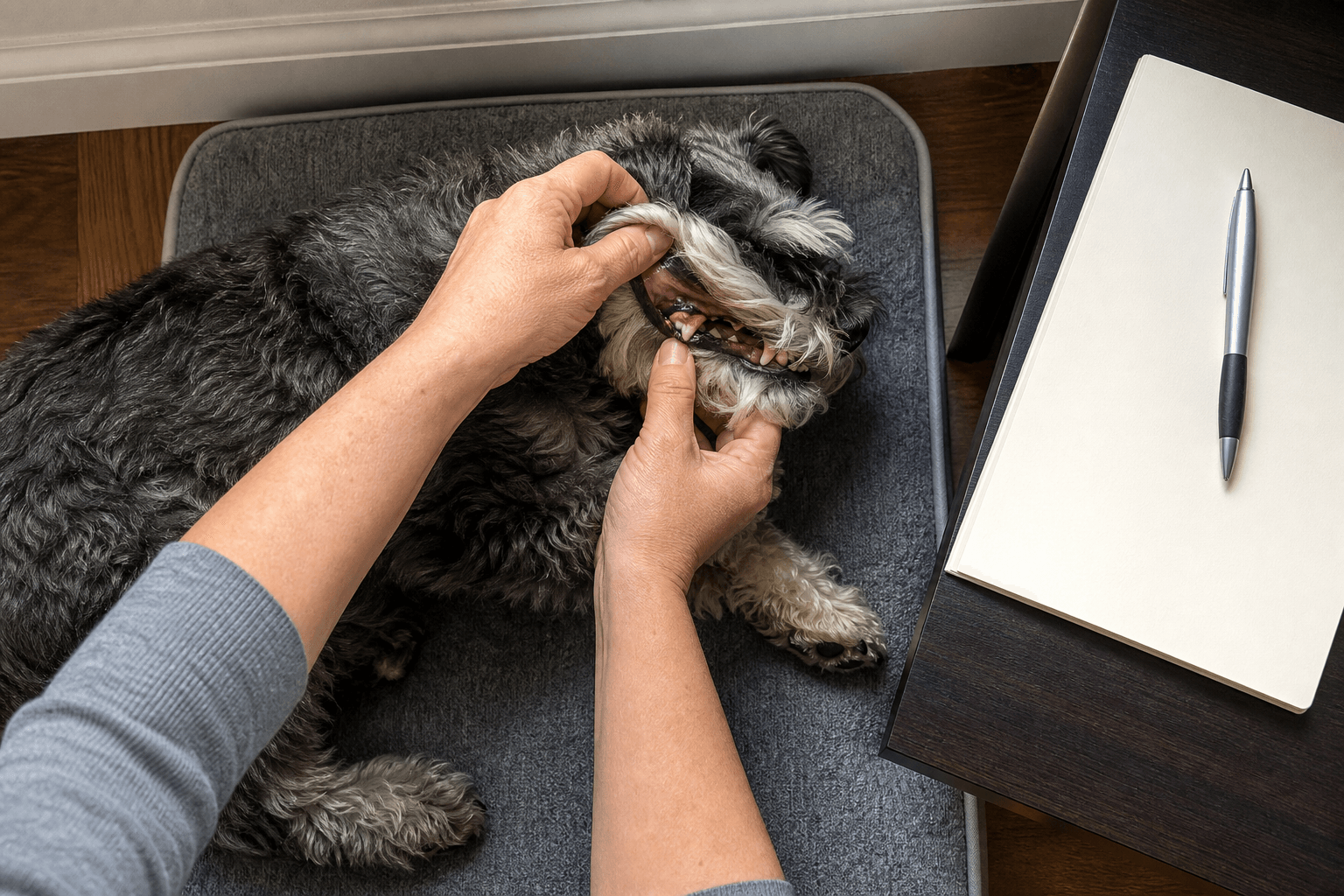
Plaque forms along the gumline and on the back molars, where chewing does not naturally scrape it away. If you lift your dog's lip gently and look at the teeth nearest the cheek, you may see a thin, whitish or pale yellow film. The gums should be pink and firm. Plaque-related breath smells stale or sour, similar to morning breath in people, but it is not sharp or overwhelming.
This stage is reversible. Brushing, dental wipes, or a mix-in daily dental cleaning powder can slow plaque formation when used consistently. A powder will not remove tartar that has already hardened, but it may make daily care easier for dogs who resist brushing.
What tartar buildup looks and smells like
Tartar appears as a brown, yellow, or grayish crust along the gumline, especially on the upper back teeth. It feels rough if you touch it gently with a gloved finger, and it does not wipe away. As tartar accumulates, the gums may look red or swollen, and they may bleed when your dog chews a toy or eats kibble. The breath smell becomes stronger and more unpleasant, often described as fishy or rotten.
Tartar requires professional removal under anesthesia. Home products cannot scrape or dissolve it safely. If you see visible brownish buildup, schedule a veterinary oral exam to discuss what a professional cleaning involves and what it costs.
When bad breath signals a medical emergency
Some odors and symptoms mean you should call your veterinarian the same day, rather than waiting for a routine appointment. Look for breath that smells fruity or sweet (which can indicate diabetes), breath that smells like ammonia or urine (which may point to kidney disease), or a metallic smell combined with drooling or difficulty eating (which may suggest an abscess or oral tumor).
Other urgent signs include pale or white gums, gums that are deep red or purple, excessive drooling, a visible lump or swelling in the mouth, a tooth that looks loose or broken, blood in the saliva or water bowl, sudden refusal to eat, pawing at the mouth, or a noticeable change in breath odor over just a few days. Any of these findings should prompt a same-day call, because they may indicate infection, organ disease, or a growth that requires immediate diagnosis.
A home assessment sequence you can follow
Start by choosing a calm moment when your dog is resting. Lift the lip gently on one side and look at the back teeth and gumline. Note the gum color: healthy gums are pale to medium pink. Check for brownish buildup on the teeth, redness or swelling along the gumline, and any bleeding. Smell your dog's breath up close and decide whether it is mildly stale, strongly fishy, or unusual in a way you have not noticed before, such as sweet or chemical.
Next, watch how your dog eats and chews over the next two or three days. Does he drop food, chew on one side only, or avoid hard treats he used to enjoy? Does he drool more than usual, or paw at his face? Write down what you notice, including which teeth look affected and whether the breath smell is constant or worse at certain times of day.
If you see only mild plaque and no gum changes, a routine veterinary dental exam is a reasonable next step. If you see tartar, redness, or bleeding, schedule an exam within the next week or two. If you see any of the urgent signs listed earlier, call your veterinarian the same day.
FAQ
Can I remove tartar at home with a scraper or dental tool? No. Tartar removal requires specialized instruments and anesthesia so the veterinarian can clean below the gumline safely. Attempting it at home can injure the gums, break a tooth, or push bacteria deeper into the tissue.
Is bad breath in senior dogs always a dental problem? No. While plaque and tartar are common, bad breath can also signal kidney disease, liver disease, diabetes, or an oral tumor. If the smell is unusual or came on suddenly, a veterinary exam is the only way to rule out a systemic condition.
How often should I check my senior dog's mouth at home? Once a week is a useful starting point. Lift the lip, check gum color, look for new buildup or bleeding, and smell the breath. Consistent weekly checks make it easier to notice changes early.
Will changing my dog's food improve bad breath? Food alone will not remove plaque or tartar, and it will not treat an underlying medical condition. If bad breath persists after a diet change, a veterinary exam is still necessary.
What to do next
Bad breath in a senior dog is not something to ignore or dismiss as normal aging. The smell is evidence of bacteria, buildup, or disease, and each of those has a distinct pattern you can observe at home. Check your dog's mouth once a week, write down what you see, and use those notes to decide whether you need a routine exam or a same-day call. Your veterinarian will take it from there.
For individual health questions, your veterinarian remains the best partner.