TL;DR
If your dog refuses brushing, start with the least stressful option they will reliably accept, but do not treat any home product as a complete replacement for an oral exam or professional cleaning. Dental chews, food additives, powders, and chew toys each have limits, so rank them by fit, safety, and the quality of evidence for the specific product rather than by marketing language.
This guide supports everyday choices, not diagnosis; a veterinarian should assess mouth pain, chewing changes, bleeding, or persistent bad breath.
What can you do when your dog refuses brushing?
First, separate two situations:
- Your dog dislikes the toothbrush but eats and chews normally. You can try a non-brushing routine while continuing to watch their mouth and eating habits.
- Your dog has newly stopped chewing, avoids hard food, drops food, or chews on one side. Do not use a dental chew or force a mouth-care session to test the problem. Record what you notice and arrange a veterinary conversation. The pattern described in Dog Suddenly Not Eating Hard Treats? What to Check can help you compare a treat preference with a broader eating change.
A refusal that is new, intense, or paired with a change in eating deserves more attention than an ordinary dislike of a brush.
The realistic options, ranked by role
This is a practical ranking, not a promise that one option will clean every tooth.
1. An oral exam and professional cleaning when there are visible or behavioral changes
Home care is not the right first step when your dog appears uncomfortable. A professional visit can determine what is happening in parts of the mouth you cannot easily see. It also gives you a starting point for a gentler daily routine later.
Look for changes such as reluctance to chew, new mouth sensitivity, bleeding, swelling, or a noticeable breath change. These signs do not identify a cause by themselves, but they are useful reasons to stop experimenting with chews and ask for an assessment.
2. A dog-labeled dental chew or food designed for chewing
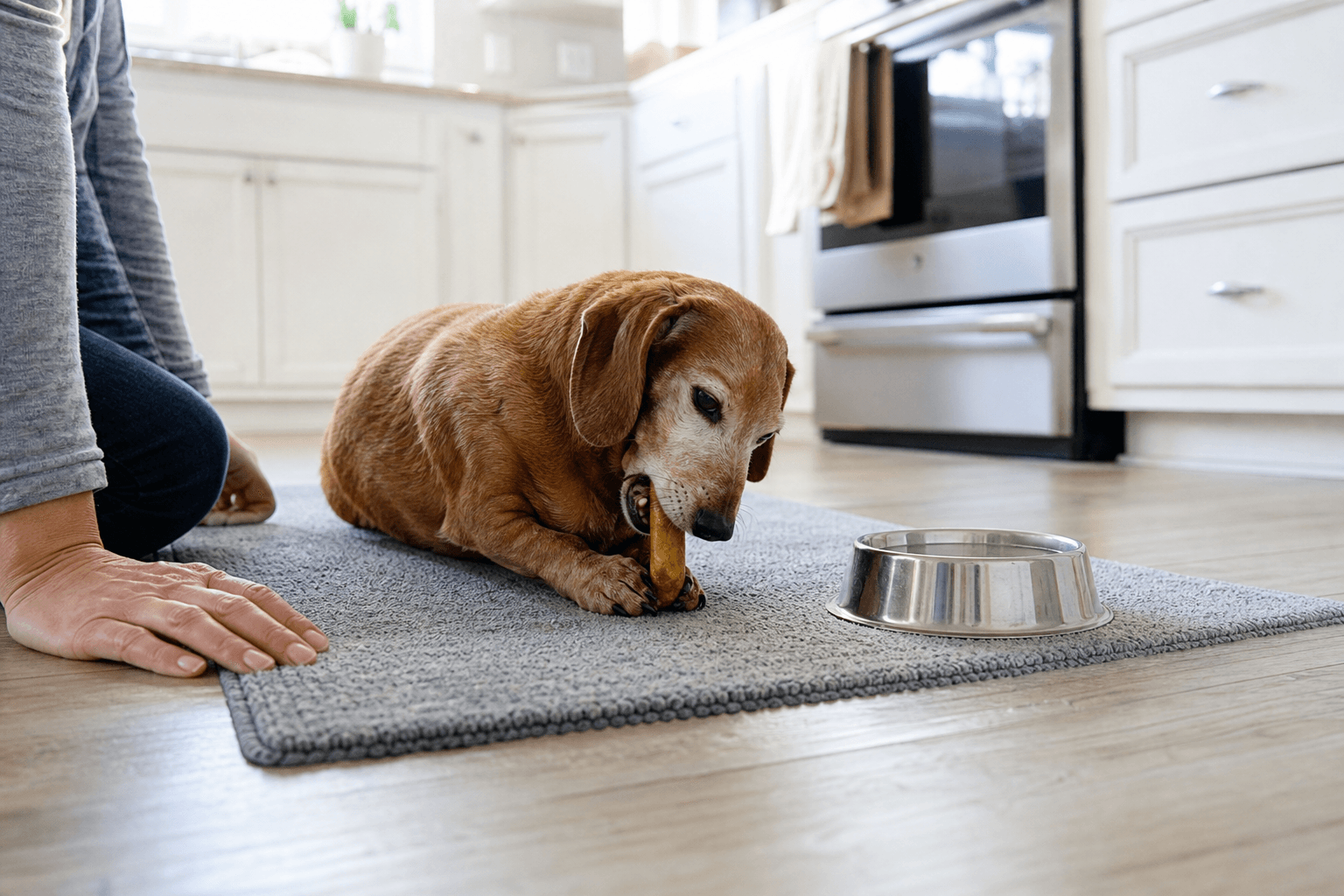
This is often the most practical non-brushing choice for a dog who enjoys chewing and can handle the texture comfortably. The limitation is important: chewing does not give you a reliable way to inspect or reach every area of the mouth. A chew can also be a poor fit for a dog who swallows large pieces, has trouble chewing, or has recently changed how they eat.
Choose a size and texture that match the package directions and your dog’s habits. Stay nearby the first time, remove the item if they try to swallow large pieces, and do not use a chew to distract from a new chewing problem.
3. A powder or food additive
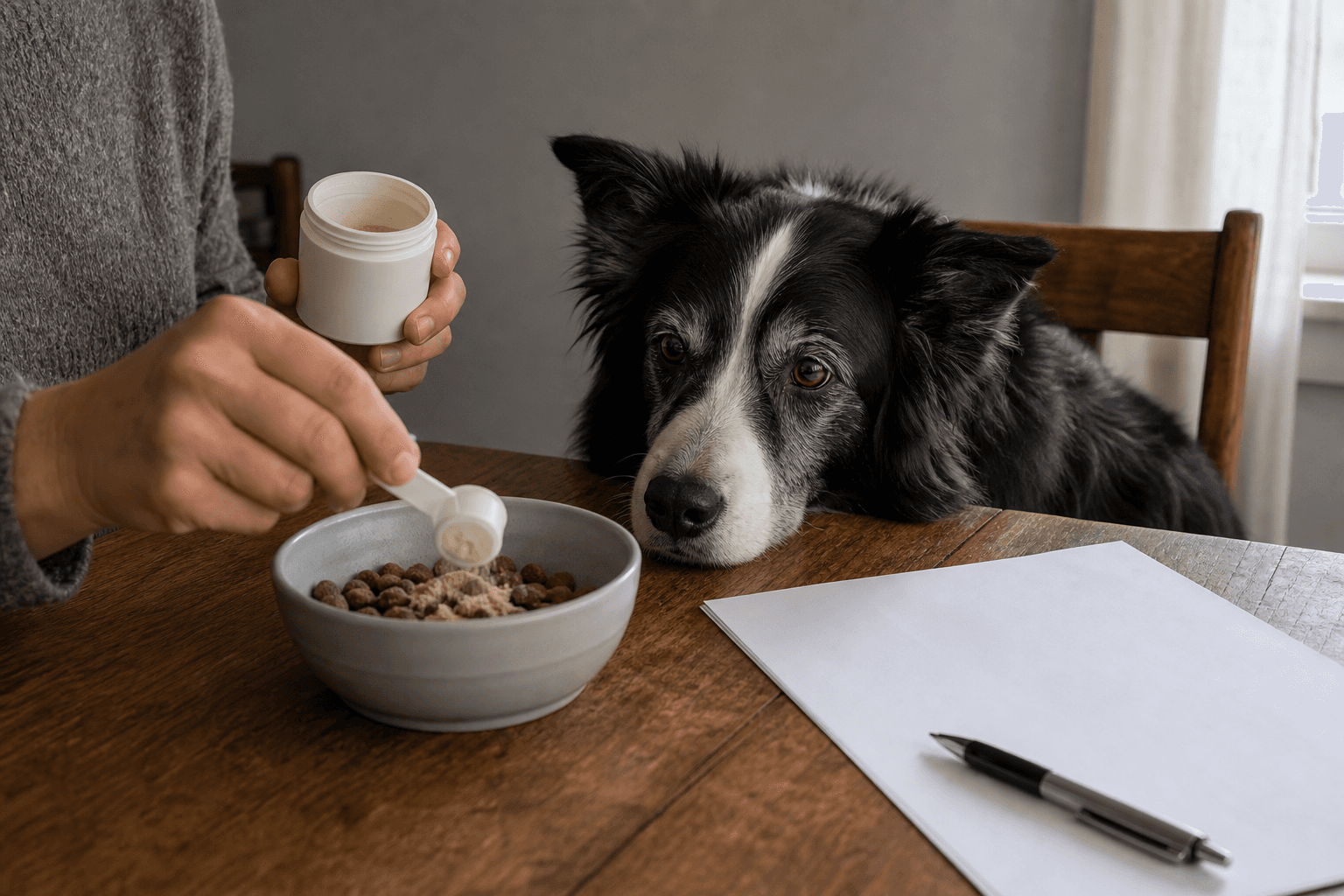
A powder is useful mainly because it may be easier to include in a routine than a brush. That convenience is not the same as proof that it removes established tartar. The existing evidence discussion on dental powder for dogs explains why an ingredient study or product claim should not be stretched into a guarantee about every powder.
For a powder, check the full ingredient panel, the feeding instructions, and whether your dog actually finishes the portion containing it. A product such as Daily Dental Cleaning Powder for Dogs may fit a mix-in routine, but it should remain one part of daily care, not a tartar-removal substitute or a reason to postpone an oral exam.
4. A dental toy or textured object
A toy may give a willing chewer something appropriate to interact with, but its dental effect is difficult to judge at home. It may contact only a few surfaces, and wear or damage can create a safety problem.
Inspect the toy regularly. Replace it when pieces break off, the surface becomes damaged, or your dog can remove chunks. Skip hard objects that your dog cannot dent or that make them chew forcefully.
5. Wipes or a soft cloth, only if your dog accepts gentle handling
A wipe can be a smaller step than a toothbrush, especially if your dog tolerates a brief touch around the lips. It is not a useful option if they pull away, tense up, or show discomfort. Do not turn a reluctant dog into a wrestling match. A short, calm interaction that ends before resistance is better than forcing a longer session.
How do you choose between a chew, powder, and toy?
Use this quick decision aid:
| If your dog... | Start by considering... | Main limit | |---|---|---| | Enjoys chewing and eats normally | A suitable dog-labeled dental chew | It cannot reach or show you every mouth area | | Rejects mouth handling but accepts food normally | A food additive or powder | It does not automatically remove established tartar | | Likes toys and does not destroy them | A supervised dental toy | The contact and effect are hard to judge | | Has changed how they chew or eat | An oral check before home dental products | The problem may not be simple brush refusal |
When comparing products, ask four questions: What exactly was studied? Was the finished product studied, or only an ingredient? What result does the label claim? What does the product clearly say it cannot replace? If those answers are vague, keep your expectations modest.
What should you record at home?
A simple three-day log can make your decision more specific. Write down:
1. Whether your dog eats their regular meal normally. 2. Whether they accept their usual treats and chew on both sides. 3. Whether they drop food, paw at the mouth, or avoid being touched near the face. 4. What their breath seems like compared with their usual baseline. 5. Which option they accepted, how they used it, and whether they tried to swallow pieces.
Do not scrape tartar from the teeth yourself. Do not force the mouth open to inspect areas your dog protects. A clear video of eating or chewing, taken from a comfortable distance, may be more useful than repeated handling.
When should you stop trying home options?
Pause chews, toys, and mouth-handling attempts if your dog suddenly avoids them, seems sore, or changes how they eat. The same applies if a previously manageable breath change becomes persistent or is joined by other mouth changes. Dog Chewing on One Side of Mouth: What to Do explains why one-sided chewing is a pattern to take seriously rather than train through.
For routine care, choose one low-stress option your dog accepts, follow its label, and review the routine when their eating or chewing pattern changes. The goal is consistent observation and sensible support, not forcing a perfect brushing session.
FAQ
Can dental powder replace brushing?
No. A powder may be easier to mix into food, but it should not be treated as a replacement for brushing, an oral examination, or professional cleaning. Its usefulness depends on the specific product and the result it has actually been shown to produce.
Are dental chews safe for every dog?
No single chew suits every dog. Consider how your dog bites, chews, and swallows, follow the package directions, supervise use, and stop if they try to swallow large pieces or show discomfort.
What if my dog refuses every dental product?
Stop cycling through products if your dog is distressed. Keep meals and treats familiar, record the refusal and any eating changes, and ask for an oral assessment if the pattern is new or persistent.
Does bad breath always mean a dental problem?
No. Breath alone does not identify a cause. A new or persistent change is useful information to record, especially when it appears with altered chewing, eating, or mouth sensitivity.
For individual health questions, your veterinarian remains the best partner.