TL;DR
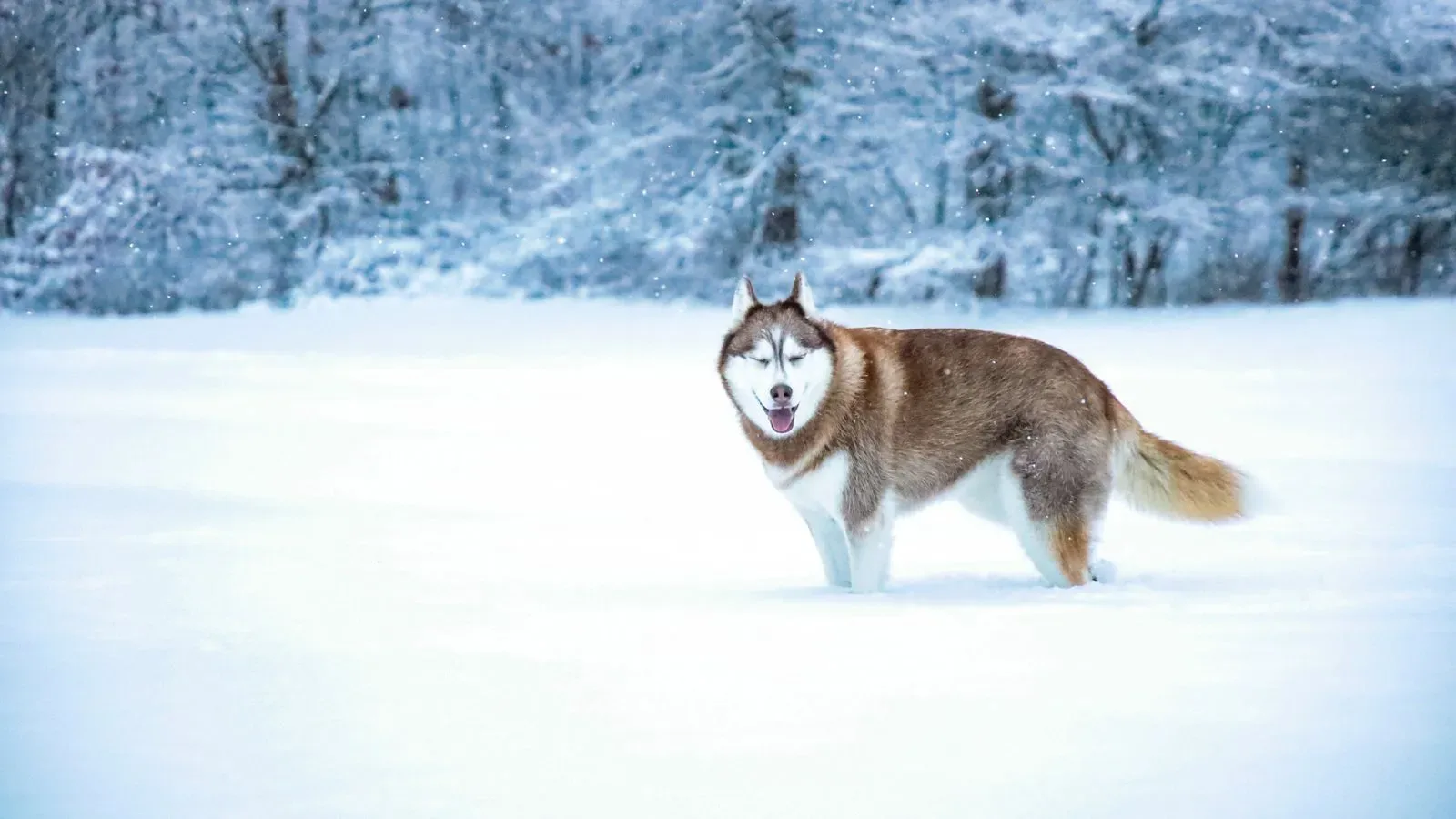
The typical Siberian Husky lifespan is about 10 to 12 years. In a 2024 UK study of 584,734 dogs, Siberian Huskies had a median lifespan of 11.9 years, about the same as the 12.0 years of mixed breeds, based on 1,947 deaths. UK life tables gave a lower life expectancy at birth of 9.53 years, reflecting dogs that died young. Health risks with good evidence in the breed include inherited cataracts, which are common in Northern breeds, and idiopathic epilepsy, for which a major genetic risk region was identified in 2026. A Husky is a senior from about 8.9 years.
How long do Huskies live?
| Measure | Siberian Husky | Mixed breed |
|---|---|---|
| Median lifespan, 2024 UK study (1,947 deaths) | 11.9 years | 12.0 years |
| 95% confidence interval | 11.7 to 12.0 years | 12.0 to 12.1 years |
| Life expectancy at birth, UK life tables | 9.53 years | 11.82 years |
| Senior from about (last 25% of lifespan) | 8.9 years | 9 years |
Why the two figures differ: the median describes the age by which half of Huskies had died, while life expectancy at birth is pulled down by dogs that die young, from accidents or illness. A Husky that reaches adulthood in good health has a good chance of living to around 12.
Husky age in human years
| Dog's age | Life stage | Roughly like a person aged |
|---|---|---|
| 4 years | Mature adult | 27 |
| 5 years | Mature adult | 33 |
| 6 years | Mature adult | 40 |
| 7 years | Mature adult | 46 |
| 8 years | Mature adult | 53 |
| 9 years | Senior | 60 |
| 10 years | Senior | 66 |
| 11 years | Senior | 73 |
| 12 years | Senior, past the median | 80 |
| 13 years | Senior, past the median | 86 |
| 14 years | Senior, past the median | 93 |
| 15 years | Senior, past the median | 100 |
This uses the share of the breed's typical lifespan a dog has lived, compared with US human life expectancy of 79 years. For puppies and young dogs, the DNA-based method in the calculator below is more accurate. Try any age:
Dog age calculator
Enter your dog's age and breed. Choose "Mixed breed" if you are not sure.
Human age (DNA method)
64
From age-related DNA changes in Labradors compared with people (Wang 2020). Least reliable for puppies under a few months.
Same point in a human life
53
Your dog has lived about 67% of the typical 12.0-year lifespan for this group. The same share of a 79.0-year US life expectancy is age 53.
Life stage
Mature adult
AAHA: from maturity until the last 25% of expected lifespan, about 9.0 years for this group.
Mixed breed (crossbreed): median lifespan 12.0 years (95% CI 12.0 to 12.1), senior from about 9.0 years.
Lifespans: UK study of 584,734 dogs (McMillan 2024). Life stages: AAHA. Every dog ages differently; health, weight and lifestyle all matter.
Common Husky health problems
Cataracts
Inherited cataracts are common in Northern breeds such as the Siberian Husky, Alaskan Malamute and Samoyed. A 2025 genetic study identified variants in the CPT1A gene strongly associated with bilateral posterior polar subcapsular cataracts in Siberian Huskies. Cataracts cloud the lens and can affect vision; signs include a cloudy or bluish-white pupil, bumping into things, or hesitating on stairs. Annual eye checks help catch them early.
Epilepsy
Idiopathic epilepsy, recurrent seizures without another cause, occurs in Huskies. In a 2026 genetic study of 113 Siberian Huskies, with 57 more in a follow-up group, a region of chromosome 3 containing the KCNIP4 gene was strongly associated with epilepsy. Among carriers, males had higher odds of epilepsy and earlier seizures. If your Husky has a seizure, film it, time it and see your vet.
Weight and joints
Huskies are working dogs built to run. Bored, under-exercised Huskies can gain weight and develop behavior problems, and the joints take years of wear in active dogs. Keep your Husky lean and well exercised, and support the joints as it ages. In a 2006 trial, 67% of dogs with joint disease improved on green-lipped mussel extract by day 56, against 41% on placebo. Our green-lipped mussel powder is a single-ingredient topper. See senior dog exercise.
Heat
Huskies have thick double coats designed for cold. On hot days, walk early or late, give shade and water, and watch for heavy panting, weakness or collapse, which can mean heatstroke.
What a practising vet sees
We asked a small-animal vet Morty has known for years, who asked us not to use their name, about Huskies. Their view: "Huskies, Samoyeds and Malamutes are the breeds we see most with eye problems, mainly cataracts and dry eye. Check their eyes regularly." The second issue is the gut: "Huskies have sensitive stomachs. Diarrhea and gut inflammation from food intolerance are common, so don't feed them whatever is to hand." Change foods slowly, and skip table scraps.
How to help a Husky live longer
- Exercise every day, with running or pulling sports for young dogs and gentler activity as it ages.
- Keep it lean. In a lifelong study of Labradors, dogs fed 25% less lived a median of 13.0 years, against 11.2 years for their littermates.
- Check the eyes yearly for cataracts.
- Know what to do in a seizure and see your vet after the first one.
- Protect it from heat in summer.
- Twice-yearly vet checks from about 8.9 years.
FAQ
How long do Huskies live?
Most Siberian Huskies live about 10 to 12 years. A 2024 UK study of 584,734 dogs found a median lifespan of 11.9 years for the breed.
Is 10 old for a Husky?
A Husky is a senior from about 8.9 years. At 10 it has lived about 84% of the breed's median lifespan, roughly like a person aged 66.
What health problems do Huskies have?
Inherited cataracts and idiopathic epilepsy are the best-studied problems in the breed. Weight gain, joint wear and heat stress are other things to watch.
Do Huskies live longer than other large dogs?
They live about as long as the average dog. Their median of 11.9 years in the 2024 UK study was close to mixed breeds (12.0 years) and to large purebreds overall (11.9 years).
How can I help my Husky live longer?
Give it plenty of exercise, keep it lean, have its eyes checked yearly, protect it from heat and book twice-yearly vet checks from about 8.9 years.
References
- McMillan KM, et al. Longevity of companion dog breeds: those at risk from early death. Scientific Reports. 2024. PMID: 38302530
- Teng KT, et al. Life tables of annual life expectancy and mortality for companion dogs in the United Kingdom. Scientific Reports. 2022. PMID: 35484374
- Ricketts SL, et al. Common variants in the CPT1A gene are associated with cataracts in Northern breeds of domestic dog. PLOS ONE. 2025. PMID: 40184359
- Smith TA, Potisk L. A novel CFA3 locus encompassing KCNIP4 is associated with idiopathic epilepsy in Siberian Huskies. Genes. 2026. PMID: 42074577
- Kealy RD, et al. Effects of diet restriction on life span and age-related changes in dogs. Journal of the American Veterinary Medical Association. 2002. PMID: 11991408
- Pollard B, et al. Clinical efficacy and tolerance of an extract of green-lipped mussel in dogs presumptively diagnosed with degenerative joint disease. New Zealand Veterinary Journal. 2006. PMID: 16751841
For individual health questions, your veterinarian remains the best partner.