TL;DR
A supplement for large breed senior dog care can cost more each month when the label sets servings by weight, because a larger dog may use more product per day. Compare the container price with its total number of servings, then multiply the daily cost by your planned feeding days to see the real monthly expense. Check the final package directions and ask your veterinarian whether a supplement fits your dog’s routine.
Why does a large dog finish a supplement faster?
The jar size does not tell you how long it will last. The serving directions do.
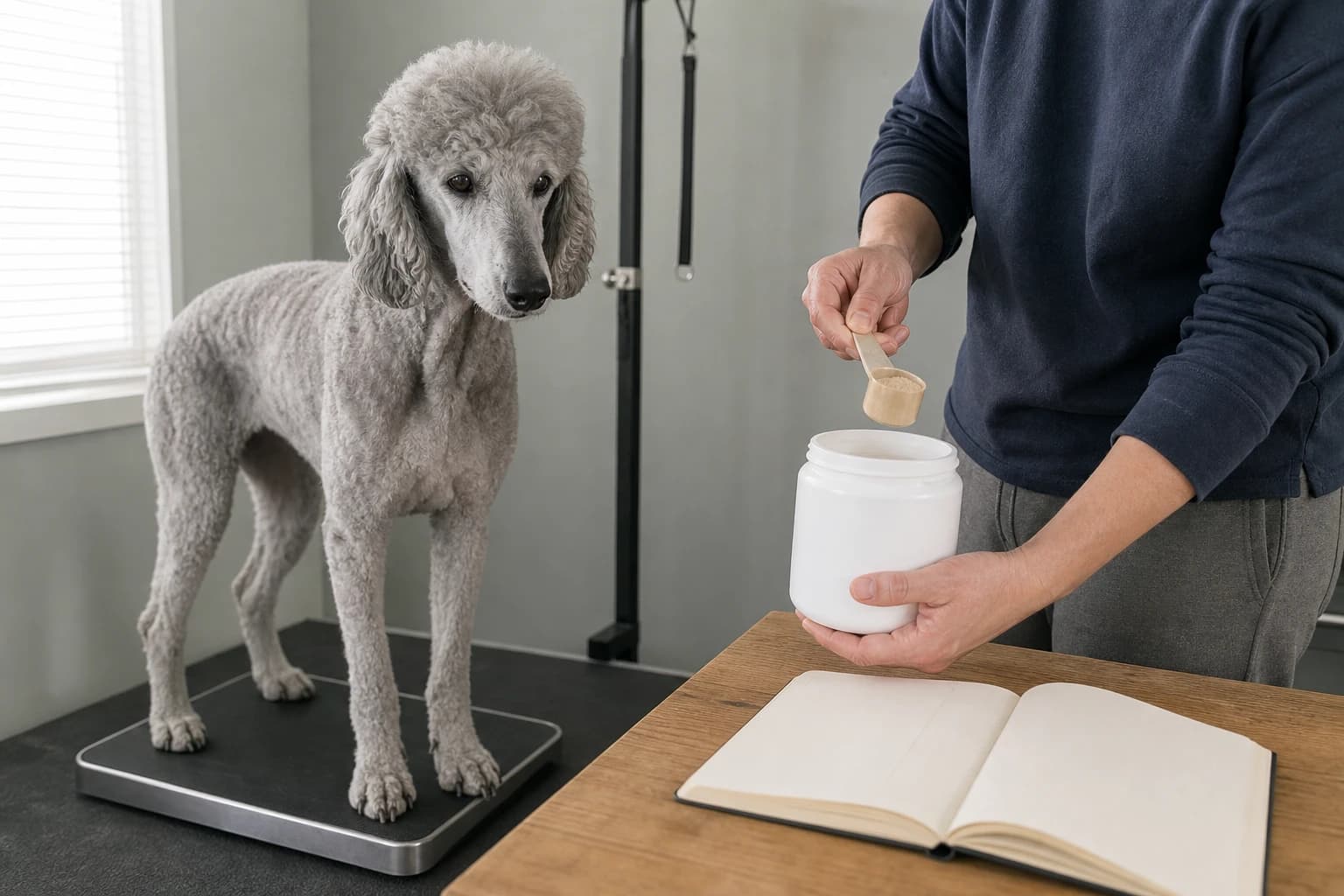
Many dog supplements use weight ranges. A smaller dog may fall into a lower serving range, while a large senior dog may fall into a higher one. If both dogs receive the same product, the larger dog can use the container sooner even though the purchase price is identical.
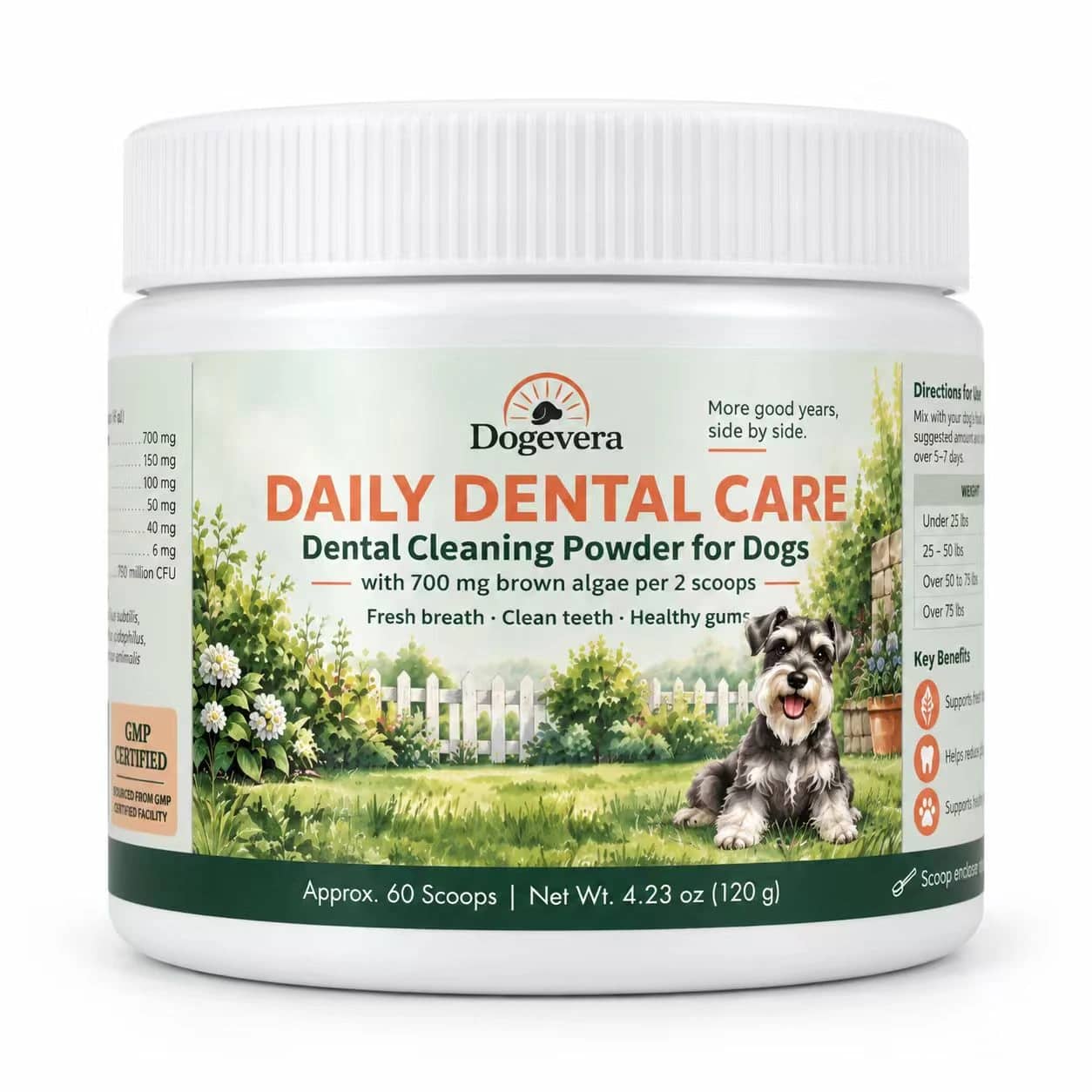
For example, a container labeled as 60 servings does not always mean 60 days of use. If the label defines one daily serving as multiple chews, scoops, capsules, or measured portions for your dog’s weight range, count the complete daily serving. Do not treat the number of pieces in the container as the number of days it will last.
The same issue applies when a product has separate morning and evening instructions. Count everything your dog receives in one day before estimating how long the container will last.
How do you calculate the real monthly cost?
Use the package information and a calculator rather than comparing jar prices alone.
Cost per serving
`container price ÷ total labeled servings = cost per serving`
Estimated daily cost
`cost per serving × daily servings for your dog = daily cost`
Estimated 30-day cost
`daily cost × 30 = estimated monthly cost`
If the label gives only the number of chews, scoops, or capsules, first determine how many complete daily servings the container provides for your dog’s weight range. A $30 container may be less economical than a $40 container if the second option provides substantially more complete servings for your dog.
For a household with more than one dog, calculate each dog separately before adding the totals. The monthly supplement cost guide for multiple dogs expands on container yield, weight-based servings, and the difference between a shared purchase and a shared daily cost.
Which supplement format is easiest to compare?
The best comparison depends on how the product is measured and whether your dog reliably finishes it. Use the same cost-per-day method for every format.
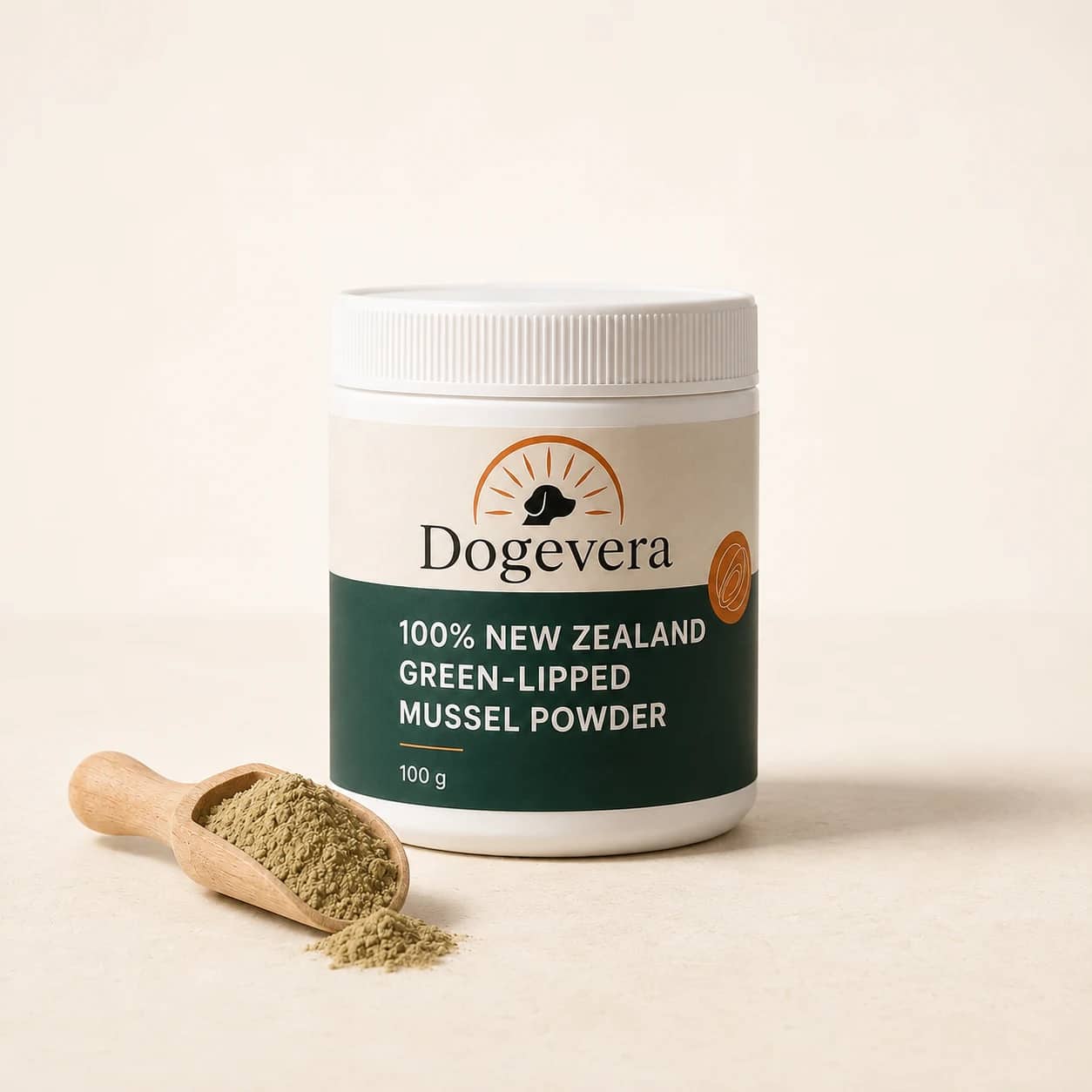
| Format | What to check | Common budgeting question | |---|---|---| | Soft chews | Number of chews in the container and the complete daily serving | How many chews does my dog need each day? | | Powder | Net amount, scoop size, and servings per container | Does the stated serving match the scoop I actually use? | | Capsules | Capsules per container and complete daily serving | How many full days does one container cover? | | Liquid | Bottle volume, measuring instructions, and servings per bottle | Will the bottle provide the labeled number of servings at this amount? |
Do not compare a chew, powder, capsule, or liquid by package weight alone. A heavier container is not automatically a better value, and a lower-priced package is not automatically cheaper to use. The useful figure is the cost of one complete labeled serving for your dog.
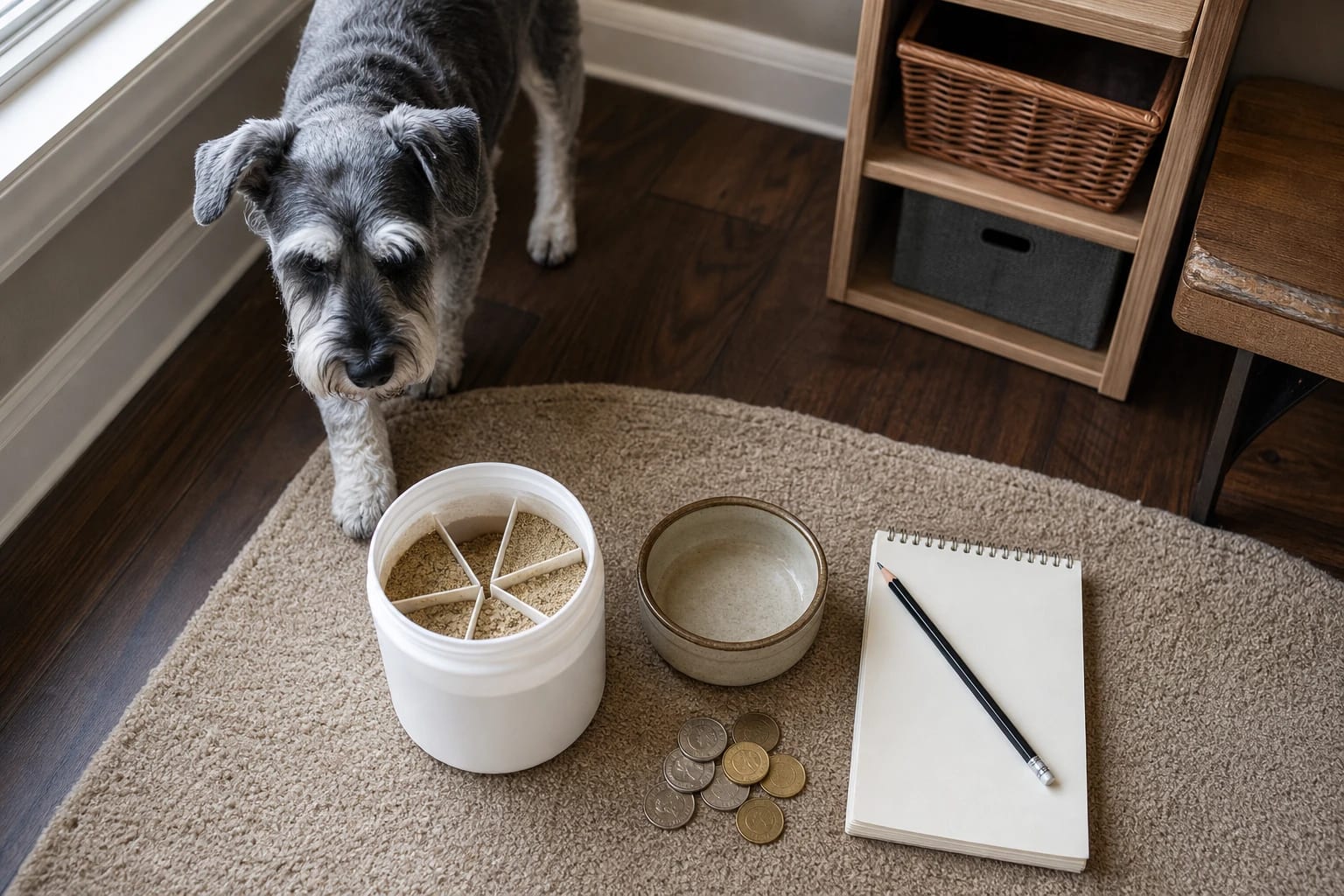
Also check whether the format creates waste. Powder left in a measuring spoon, liquid that is difficult to measure, or chews your dog refuses can reduce the practical number of servings. Keep the label nearby and record how many complete servings remain when you open the container and again when it is nearly empty.
What should you check before buying a supplement for a large senior dog?
Use this short comparison checklist:
- Weight range: Find your dog’s current weight category on the final package.
- Serving unit: Note whether the label uses chews, scoops, capsules, pumps, or another measure.
- Container yield: Calculate complete daily servings, not just the number of pieces.
- Monthly cost: Multiply the daily cost by 30 for an easy comparison.
- Ingredients: Read the full panel, including flavorings and other added ingredients. The dog supplement ingredient label guide explains why a named headline ingredient is only one part of the label.
- Feeding routine: Decide whether your dog will finish the product mixed into food or offered separately.
- Change tracking: If you start something new, change one product at a time and write down appetite, stool, and willingness to eat. If your dog develops diarrhea or another concerning change, stop to review the routine and contact your veterinarian. These practical steps are also covered in what to do after starting a supplement.
A clear label should let you identify the serving unit, weight range, ingredients, and container yield without guessing. If those details are missing or confusing, the lowest price may not be the lowest-cost choice.
FAQ: supplement costs for large senior dogs
Does a larger dog always need more supplement?
Not necessarily. Follow the final product label for your dog’s weight range. A larger dog may use more when the serving is weight-based, but products differ.
Is powder cheaper than soft chews?
Not automatically. Compare the cost of one complete daily serving, then consider whether your dog finishes the measured amount consistently.
Should I buy the largest container?
Only if the label is clear, the product fits your planned routine, and your dog can use it before storage limits or expiration become concerns. A larger package can lower the purchase frequency without lowering the daily cost.
What if my dog will not finish the serving?
Do not count an unfinished portion as a completed serving. Review the feeding method, avoid changing several products at once, and contact your veterinarian if the refusal continues or comes with other changes.
For individual health questions, your veterinarian remains the best partner.