TL;DR
Supplement cost for multiple dogs depends on each dog’s label-based serving, not simply the number of pets in your home. Add the daily servings for every dog, convert each container into days of supply, and compare the monthly total rather than the jar price alone.
Start with the household decision
You are standing in the kitchen with two dogs, one container, and a label that gives different serving ranges by weight. The important question is not just, “Which product costs less?” It is, “How many days will this container last for my dogs at the servings the label gives them?”
For a multi-dog household, make the calculation before buying. Write down each dog’s current weight, the serving range that applies to them, and whether they would use the product every day. Then check how much product one container contains and how the label defines a serving.
Keep the dogs separate in your notes. A smaller dog may use less per day, while a larger dog may use more. Combining them too early can hide the reason the monthly total changes.
For a refresher on reading weight-based directions, see Dog Supplement Dosage by Weight: Read the Package. Use the final package in your hands, since labels and serving units can differ between products.
How do you calculate supplement cost for multiple dogs?
Use this repeatable worksheet:
1. List each dog. Record their name, current weight, and the label serving that matches their weight range. 2. Convert the serving into a daily amount. For example, note scoops, chews, or other units exactly as the label describes them. 3. Add the daily amounts. This gives the household’s total daily use. 4. Find the container yield. Divide the total amount in the container by the amount used each day. 5. Estimate the monthly use. Multiply the daily household use by the number of days in the month you are budgeting for. 6. Compare the cost. Divide the purchase price by the number of days the container lasts, then multiply that daily cost by the number of days in your monthly budget.
A simple formula is:
`container price ÷ days of supply = daily household cost`
`daily household cost × budgeted days = monthly household cost`
If the product uses chews, count the total chews in the container. If it uses powder, check the total weight and the serving unit. Do not compare a “jar” of one product with a “bag” of another unless you first convert both into days of supply for your own dogs.
Which label details change the monthly total?
The largest cost differences often come from label details rather than the front-of-package claims.
- Serving unit: A scoop, chew, teaspoon, or packet may represent a different amount of product.
- Weight range: Two dogs may fall into different serving ranges, even when they are close in size.
- Container quantity: A larger-looking container does not automatically provide more daily servings.
- Single-dog versus household use: A container that lasts one month for one dog may last much less time when shared across several dogs.
- Feeding schedule: If the label gives a daily serving, do not assume that using the product only on selected days produces a useful comparison with a product intended for daily use.
- Actual consumption: A powder left in the bowl or a chew not finished changes the amount your dog receives and the container’s real life.
Write the label information down before calculating. A note such as “30 scoops, one scoop per day” is more useful than “large container.” If the package is unclear about the serving unit or total amount, treat that lack of clarity as a comparison issue, not a detail to guess around.
How should you compare two products for several dogs?
Compare products in the same order each time:
- Question: What is the serving unit?; Product A: ; Product B:
- Question: What serving applies to each dog?; Product A: ; Product B:
- Question: How much is in the container?; Product A: ; Product B:
- Question: How many days will it last for this household?; Product A: ; Product B:
- Question: What is the daily household cost?; Product A: ; Product B:
- Question: What is the monthly household cost?; Product A: ; Product B:
- Question: Is the label easy to follow?; Product A: ; Product B:
Then ask whether the products are genuinely comparable. They may have different ingredients, purposes, or directions. A lower monthly cost does not make two products interchangeable, and a higher price does not establish that a product is a better choice.
For a broader way to weigh price, label clarity, and a specific observation, read Are Dog Supplements Worth the Money?. In a multi-dog home, apply that same review to the household total, not just one dog’s daily cost.
Build a low-waste household routine
Cost calculations work best when the routine is easy to verify. Keep the container, scoop, and feeding notes in one place. Mark the opening date and the date the container runs out. That gives you the actual days of supply instead of relying only on the package estimate.
Use a separate line for each dog when more than one dog eats from the same bowl or receives the same type of chew. This helps you notice whether one dog regularly leaves part of the serving behind. It also prevents an accidental double serving when different family members feed them.
Introduce only one new supplement at a time if you decide to try one. Record the start date, the amount offered according to the label, whether each dog finished it, and any noticeable change in appetite, stool, or behavior. If a dog reacts after a new supplement, Dog Reaction to New Supplement: What to Watch offers a one-change observation approach. Digestive changes also deserve a clear record, as described in Dog Diarrhea After Starting a Supplement: What to Do.
At the end of the month, compare three things: the planned cost, the actual replacement cost, and whether the routine was practical for every dog. A product that looks inexpensive but is frequently wasted may not be the economical choice for your household.
FAQ
Should I divide the container price by the number of dogs?
No. Divide the container amount by the combined daily use for all dogs. A larger dog may use a different label serving from a smaller dog, so an equal split can give the wrong estimate.
Is a lower price per container always cheaper?
No. Compare the cost per day of supply for your dogs. Container size, serving unit, weight range, and unfinished servings can all change the real monthly total.
Can I use one dog’s serving directions for another dog?
Do not assume that. Match each dog’s current weight to the directions on the final package, and ask your veterinarian how a product fits into their overall routine when you are unsure.
What should I do if one dog will not finish the serving?
Record what they actually consume and avoid silently treating an unfinished serving as a completed one. Check the product’s directions and discuss a reaction or ongoing refusal with your veterinarian.
Keep a household cost sheet
For each dog, record the relevant label directions, expected use and price paid. Calculate cost from the actual net contents and intended amount, separating subscription discounts, shipping and tax. Update the date when the price or package changes. Do not apply one dog's directions to another.
What does the calculation look like with actual amounts?
Suppose the confirmed product directions for the dogs in your household add up to 6 g each day, for example 2 g for one dog and 4 g for another. These are arithmetic inputs, not recommended doses for unidentified dogs. Keep each dog's directions separate even when adding them for budgeting.
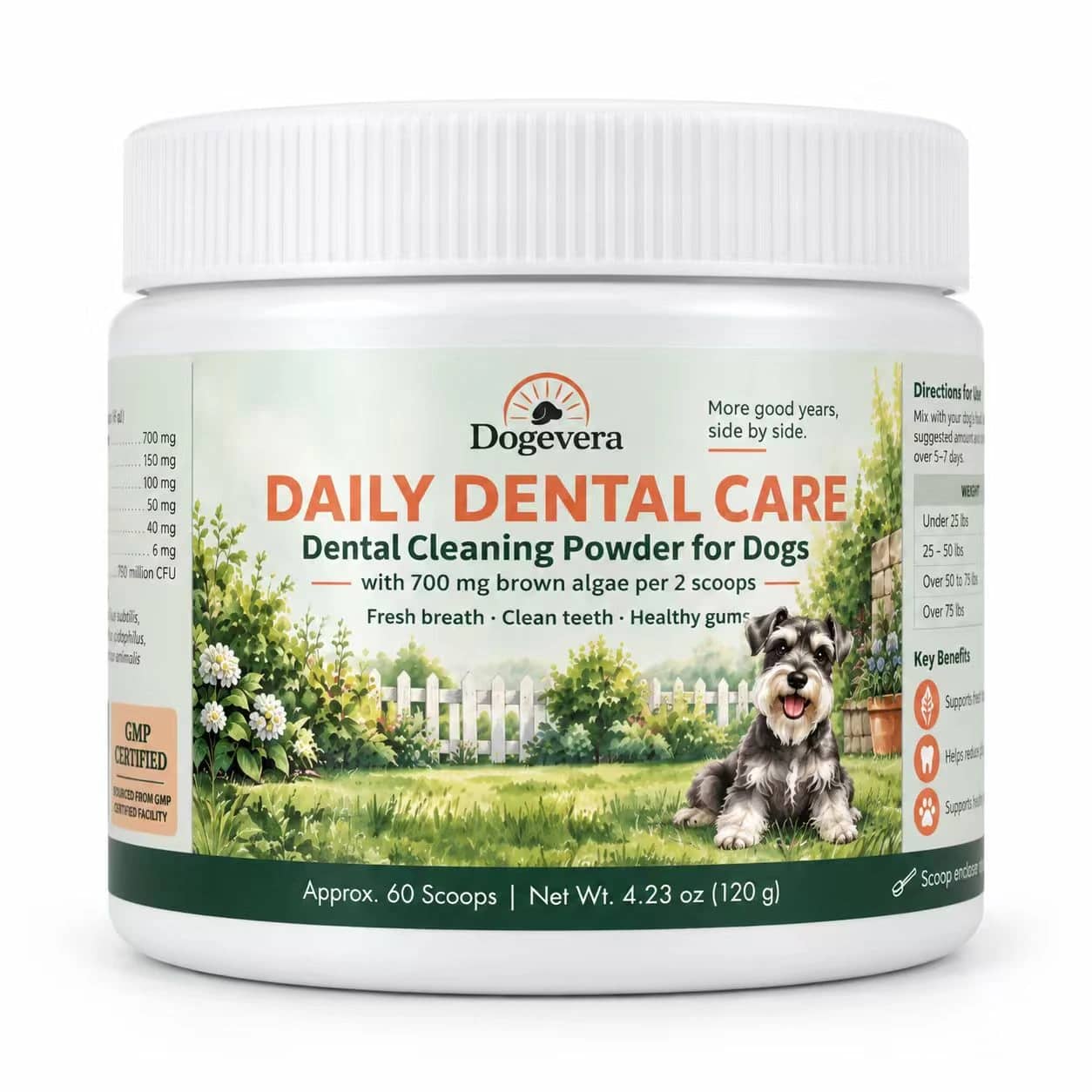
Using Dogevera's listed single-jar price of $29.99 for 100 g, checked on September 30, 2026:
- Calculation: Household daily amount; Result: 2 g + 4 g = 6 g
- Calculation: Days from a single jar; Result: 100 g / 6 g = approximately 16.7 days
- Calculation: Product used over 30 days; Result: 6 g x 30 = 180 g
- Calculation: Allocated cost over 30 days; Result: $29.99 / 100 x 180 = $53.98
This is the value of product consumed, not a promise that checkout will charge that amount. You buy whole packs. Any leftovers carry into the next period if stored correctly and still within their usable life.
Compare household supply without losing the feeding record
Write each dog's name beside their own serving and mark who actually ate it. Shared bowls make the budgeting calculation easier than the feeding calculation: an empty communal bowl does not show how much each dog received.
Before ordering a larger bundle, compare total grams, final price, expiry and storage instructions, and whether the dogs reliably accept the product. Subscription frequency should follow actual use rather than assuming a jar is always a month's supply. See how to confirm a supplement was eaten and current Dogevera pack options.
Related reading
References
- Veterinary Pet Supplements and Nutraceuticals. Nutrition today. 2020. PMID: 33446942. DOI: 10.1097/nt.0000000000000399.
- AAHA Senior Care Guidelines for Dogs and Cats — Journal of the American Animal Hospital Association (2023). DOI: 10.5326/JAAHA-MS-7343.
- WSAVA: global nutrition guidelines and label-selection resources.
For individual health questions, your veterinarian remains the best partner.