TL;DR
If a new supplement is followed by a concerning change, pause it and contact your veterinary team for advice. Keep the package and note what was eaten and when. Difficulty breathing or collapse requires emergency veterinary care immediately, not an observation trial.
You started a new supplement. Now something looks different.
You added a scoop or a chew to the bowl three days ago. This morning your dog left part of breakfast, or scratched more than usual, or the stool was softer than normal. The obvious question is whether the new product caused it. The honest answer is that you usually cannot know from one morning, but you can absolutely narrow it down with a simple process. That is what this is for: separating a likely supplement reaction from the ordinary day-to-day variation every senior dog has.
Why one change at a time matters
If you start a joint chew, a new food, and a dental powder in the same week, a reaction is impossible to attribute. Anything could be the cause, and you may end up removing all three products when only one was the problem, or none.
The one-change rule is simple:
- Introduce changes only as the product label and your veterinary team advise.
- Avoid starting several optional products together.
- Record any changes to food, medicines and supplements.
- Do not change prescribed medication without instructions.
If a possible reaction appears, pause the new optional supplement and ask the clinic what to do next. Do not deliberately give it again to test whether the reaction returns.
What a reaction can look like
Reactions fall into a few visible groups. You do not need to diagnose any of them; you only need to recognize the category and act.
Digestive changes. Report new vomiting, diarrhea, reduced appetite or other changes. Timing alone does not establish that the supplement caused them.
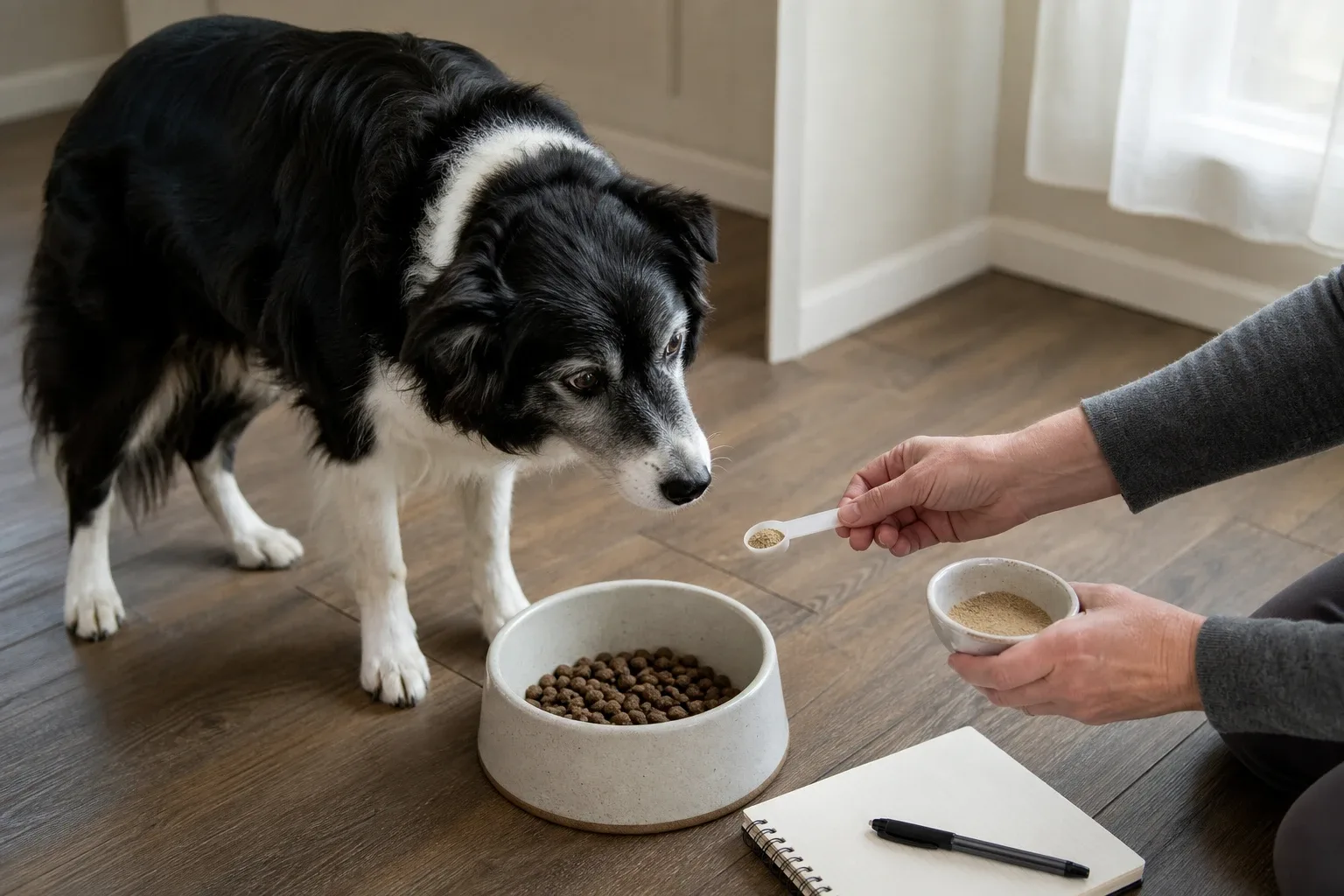
Appetite and eating changes. Picking around the bowl, eating slowly, or refusing food that used to vanish. Sometimes the issue is the taste or smell of the product rather than a true reaction. If refusal is the main sign, our guide to changing how you feed a supplement covers mixing, smell, and gradual introduction before you blame the product itself.
Skin and itch. More scratching, licking at the paws, redness, or hives. Skin reactions can develop over days, so a pattern across several days matters more than one itchy afternoon.
Energy and movement. Being quieter than usual, reluctance on walks, or restlessness at night. These overlap heavily with ordinary senior-dog changes, which is exactly why written notes matter.
Urgent signs. Difficulty breathing, collapse or severe distress requires immediate emergency care. Rapid swelling or other concerning reactions need prompt veterinary advice. Do not delay to finish a record.
A record to share with the clinic
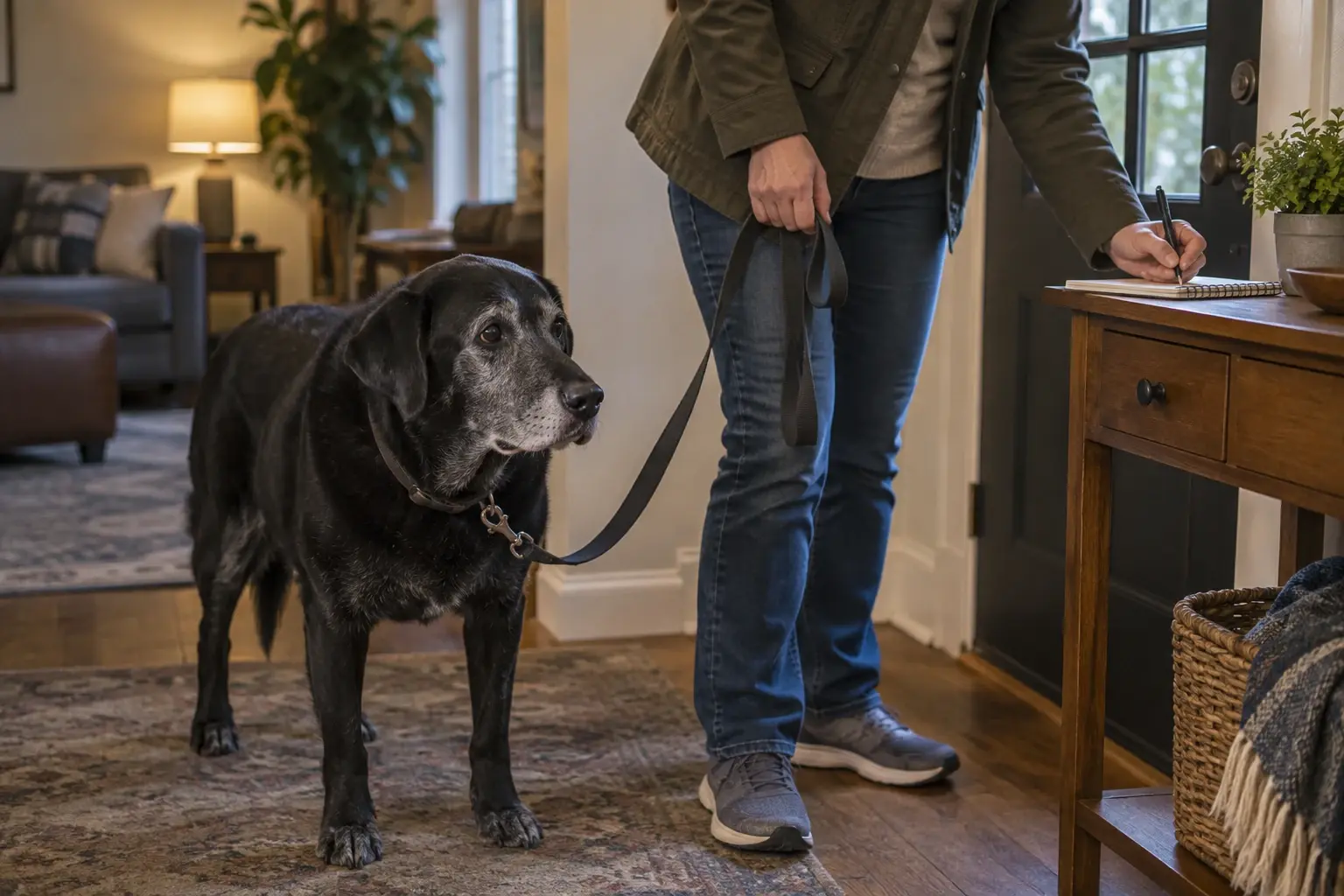
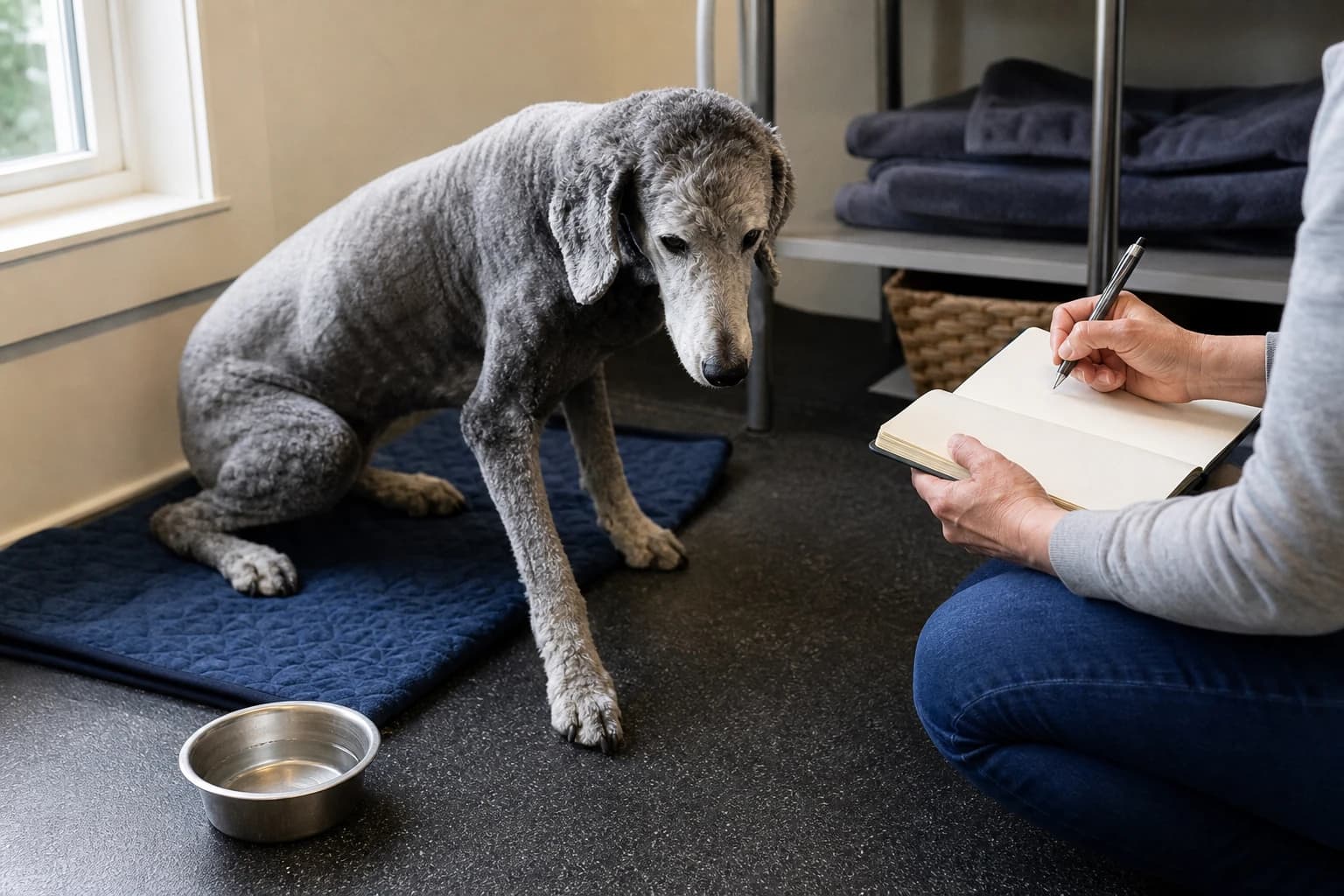
Write down what you have observed so far. You do not need several days of notes before calling. Include:
1. Appetite: finished normally, hesitant, left food. 2. Stool: firm, soft, loose, or unchanged. 3. Energy: same as usual, quieter, more restless. 4. Skin and coat: any new scratching, redness, or licking. 5. The product: how much was actually eaten, and when.
Then apply this decision aid:
- No concerning change: follow the agreed label or veterinary plan.
- A new possible adverse reaction: pause the optional supplement and contact the clinic for advice.
- A worsening or severe change: seek prompt veterinary care.
- Breathing difficulty or collapse: seek emergency care immediately.
If the issue is food acceptance without signs of illness, record how much was actually eaten. Do not automatically replace a partly eaten serving. See how to check a supplement serving for the practical difference between an offered and consumed portion.
How long should you judge a supplement?
The appropriate follow-up depends on the product and your dog. A possible adverse reaction should not be pushed through to complete a planned supplement trial. For observation methods, see keeping a supplement response log.
When to stop and call the veterinarian
Pause the new optional supplement and contact your veterinary team when you notice concerning changes such as:
- Vomiting, diarrhea or a decline in appetite.
- Swelling, hives or unusual itching.
- A marked change in energy or comfort.
- A worsening pattern or refusal of normal food.
Difficulty breathing or collapse requires immediate emergency veterinary care.
Bring your notes to the call or the appointment. Dates, the product name, the amount eaten, and the timeline of changes are far more useful to your veterinarian than a general impression that "something seemed off."
Does a reaction mean the supplement is bad?
An individual reaction does not establish the cause or describe the quality of every product in a category. Keep the label, lot details and timeline so the clinic can assess the situation. Do not use slower reintroduction as a substitute for that advice.
FAQ
When can a reaction appear? Timing varies. Record when the product was started and when the change appeared, but do not use timing alone to confirm or rule out a reaction.
What if the stool becomes softer? Pause the new optional supplement and ask the clinic for advice if you suspect a reaction or are unsure. Persistent, worsening or severe diarrhea needs assessment rather than continued feeding to test tolerance.
Can I restart a product after a reaction? Ask your veterinary team first. Do not deliberately re-expose your dog after swelling, hives, breathing difficulty or another suspected reaction.
One calm reminder: this guide is about observation and everyday decisions, and your veterinarian is the right person for any diagnosis or treatment question.
Related reading
- Dog Diarrhea After Starting a Supplement: What to Do
- Dog Supplement Allergens: Chicken and Shellfish in the Fine Print
References
- Critically appraised topic on adverse food reactions of companion animals (2): common food allergen sources in dogs and cats. BMC Veterinary Research. 2016. PMID: 26753610. DOI: 10.1186/s12917-016-0633-8.
- Veterinary Pet Supplements and Nutraceuticals. Nutrition today. 2020. PMID: 33446942. DOI: 10.1097/nt.0000000000000399.
- VCA: emergencies in dogs.
For individual health questions, your veterinarian remains the best partner.