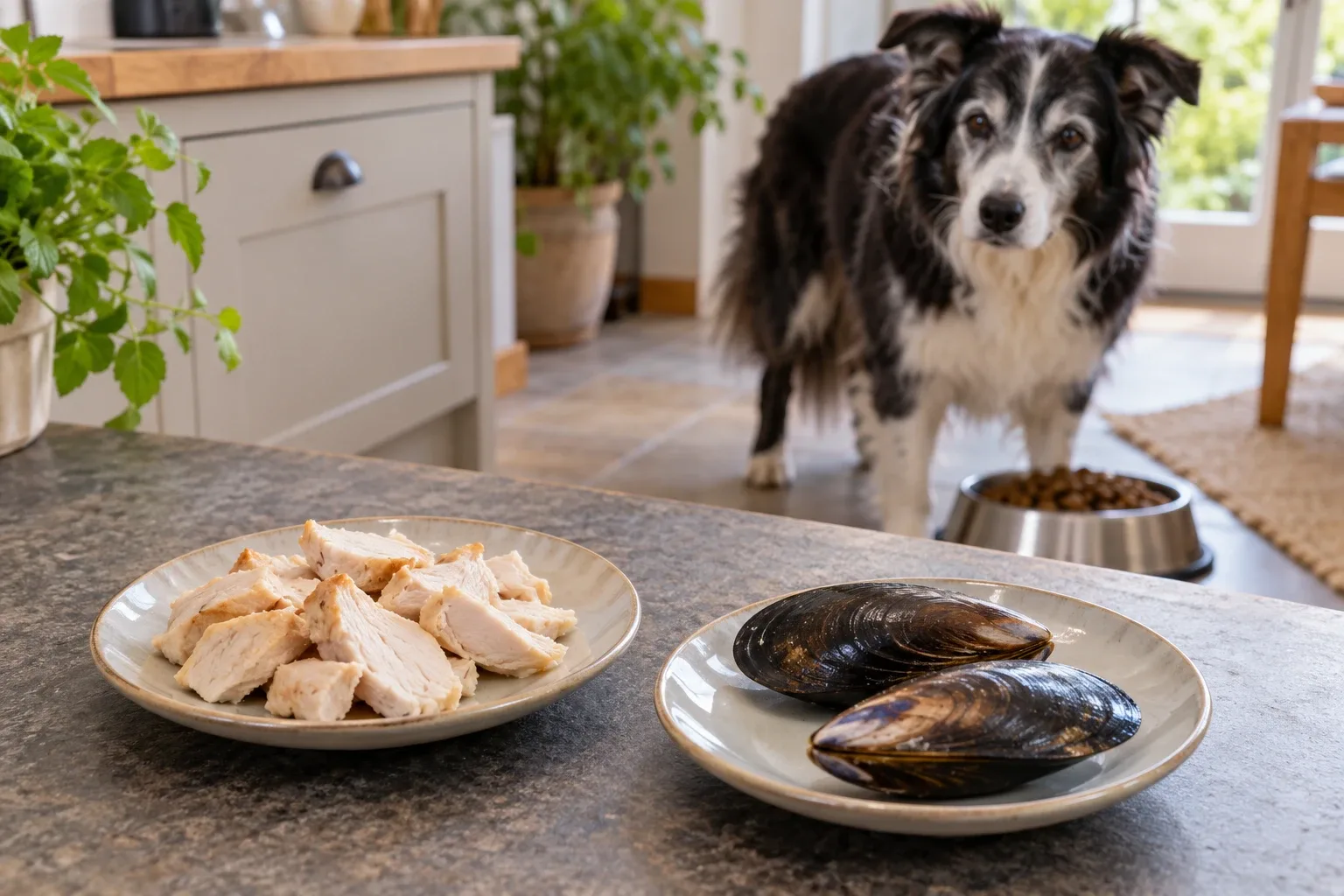
TL;DR
Chicken is one of the most common food allergens in dogs. In a review of 297 dogs with confirmed food allergies, beef was the culprit in 34%, dairy in 17%, chicken in 15% and wheat in 13%. Signs are usually itchy skin, paws or ears, or vomiting and diarrhea. The only reliable way to diagnose it is an elimination diet trial of 8 to 12 weeks with no other foods, treats or flavored supplements, followed by a challenge. Blood, saliva and hair tests are not reliable, and many retail foods contain ingredients that are not on the label. Afterwards, check every chew and supplement, because many are chicken-flavored, and remember that green-lipped mussel is a shellfish.
Signs of a chicken allergy in dogs
VCA Animal Hospitals lists the usual signs of food allergy as:
- Itchy skin, paws or ears, often with recurring ear infections
- Digestive upset: vomiting or diarrhea
- Less often: hyperactivity, weight loss, low energy or even aggression
VCA notes that food allergies usually develop after long exposure to the same food, so a dog can react to a chicken food it has eaten for years.
Food allergy or environmental allergy?
The itch looks similar, so it helps to know the differences the Merck Veterinary Manual describes:
- Environmental allergy (atopy) is more common than food allergy. It usually starts between 6 months and 3 years of age and is often seasonal, worse in pollen season.
- Food allergy itch shows little change from season to season, and it can start at any age.
- Both typically affect the feet, face, ears, front legs and belly.
Fleas, mites and skin infections also cause itching and paw licking, so your vet will usually rule those out first. Some dogs have both a food and an environmental allergy.
How common is a chicken allergy?
A 2016 review pooled studies in which dogs' food allergies were confirmed by feeding the suspected food again. Across 297 dogs:
- Beef: 102 dogs (34%)
- Dairy: 51 dogs (17%)
- Chicken: 45 dogs (15%)
- Wheat: 38 dogs (13%)
- Soy: 18 dogs (6%)
- Lamb: 14 dogs (5%)
- Corn and egg: 4% each
Many dogs reacted to more than one food. The authors note the figures likely reflect what dogs were commonly fed. The review's publication charges were paid by a pet food company.
How to diagnose it: the elimination trial
VCA describes the only accurate method:
- Feed a hypoallergenic diet for 8 to 12 weeks. It must contain no ingredients your dog has eaten before, or use protein broken down too small to trigger the immune system (a hydrolyzed diet).
- Nothing else. No other foods, treats or supplements during the trial, including flavored vitamins and some flavored parasite preventives.
- Challenge. If the signs clear, feed the old food again. If signs return within about a week, food allergy is confirmed. Then test single proteins such as chicken one at a time.
VCA notes that retail "limited-ingredient" foods are not made with the same controls against cross-contamination as veterinary diets. The research agrees:
- Chicken DNA test, 2022: of 15 dog foods tested, 4 did not match their label. Two contained chicken that was not listed, at over 2% and almost 6%; two others did not contain the chicken they claimed.
- Review of 18 studies, 2018: unlisted ingredients were found in a median of 45% of pet foods tested, and in 33% to 83% of foods sold as "novel" or "limited" ingredient. Only one hydrolyzed diet was mislabeled.
How long to wait: a review of the evidence found that more than 80% of allergic dogs improved within 5 weeks and more than 90% within 8 weeks, which is why VCA advises at least 8 weeks. VCA calls the elimination trial the best and most accurate way to diagnose food allergy.
Do allergy tests work for dogs?
Not for food allergy:
- Blood tests: a 2017 review found blood tests for food-specific antibodies (IgE and IgG) had low repeatability and highly variable accuracy in dogs. Merck states blood and skin tests are not reliable for diagnosing food allergy.
- Hair and saliva tests: when researchers sent one company samples from an allergic dog, a non-allergic dog, fake fur and water, the results were no different from chance, and repeat samples gave inconsistent answers.
Save the money for a proper elimination diet.
Dog food for a chicken allergy
Once chicken is confirmed, choose a complete diet without it:
- Veterinary hydrolyzed protein diets
- Veterinary novel protein diets with a protein your dog has never eaten
- Home-prepared diets formulated by a veterinary nutritionist
Read labels carefully: chicken can appear as chicken meal, chicken fat, chicken liver, chicken broth or "poultry". VCA notes dogs with one food allergy may develop others later, and many also have environmental or flea allergies.
Supplements and chicken allergy
Supplements are an easy place for chicken to slip back in:
- Soft chews are often chicken or liver flavored.
- Flavored tablets may use chicken or beef flavor.
- Fish oil is usually chicken-free, but check flavored versions.
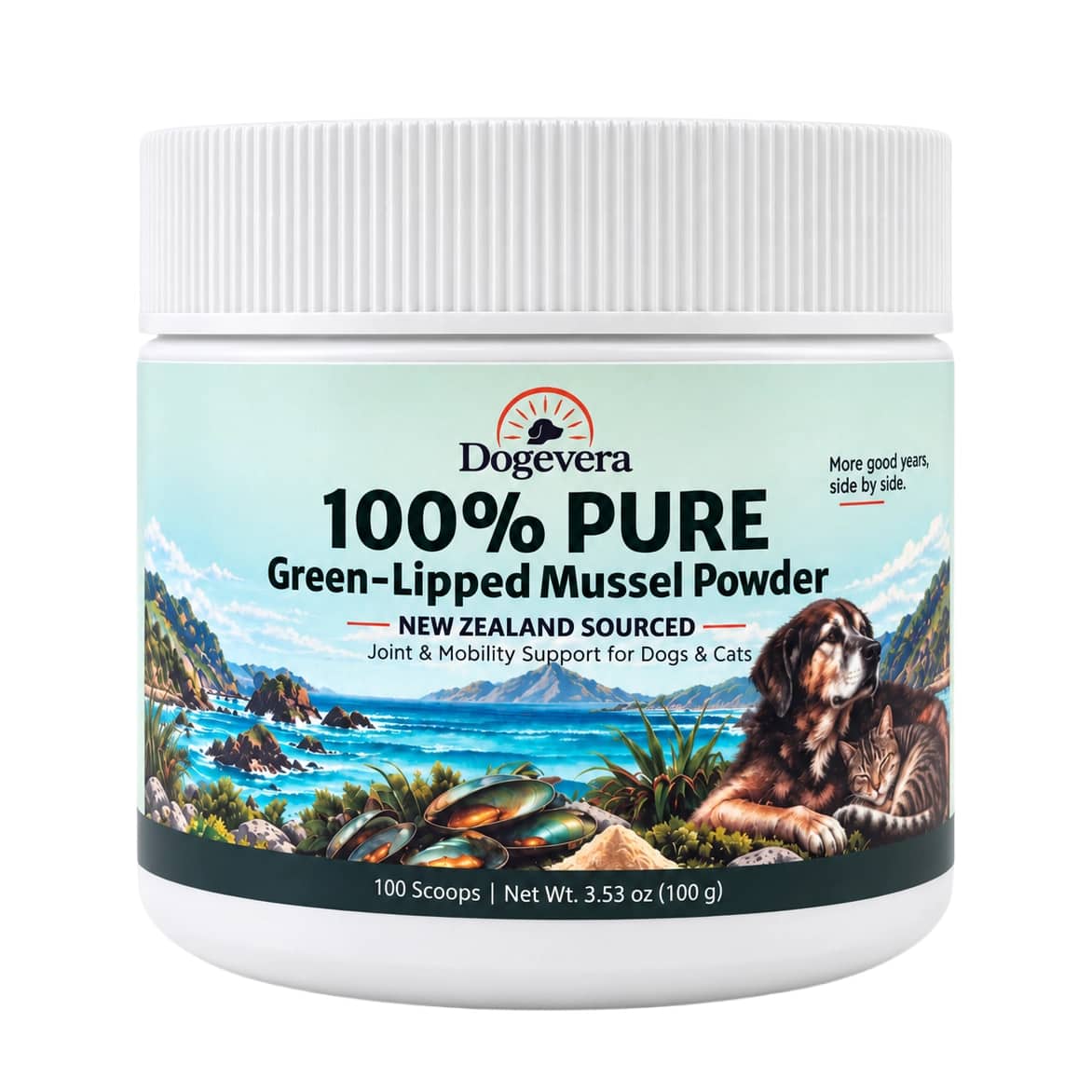
Our Brain and Muscle soft chews are chicken-flavored and contain chicken and soy, so they are not suitable for chicken-allergic dogs. Our green-lipped mussel powder contains a single ingredient and no chicken, which makes it easy to fit around a chicken-free diet once the elimination trial is finished.
Itchy older dog? Rule out other causes first
A chicken allergy is only one reason an older dog itches. The Merck Veterinary Manual notes that fleas, mites and skin infections all cause itching, and that food and environmental allergies look similar. Your vet will usually treat fleas and any infection first, then start an elimination trial if the itch persists.
Helping the skin during and after the trial
- Itch relief: ask your vet about medicine to keep your dog comfortable during the 8-week trial; the 2015 international guidelines for atopic dermatitis set out options for flare-ups and long-term care.
- Fish oil: the same guidelines include essential fatty acids in long-term itch care, and in a 16-dog trial, high-dose marine oil improved itching and coat quality over 6 weeks compared with corn oil. Choose an unflavored fish oil so it does not add chicken. See dog skin and coat supplements.
- Ear checks: itchy, inflamed ears are common in allergic dogs; ask your vet to check the ears at each visit.
Living with a chicken-allergic dog
- Treats: use pieces of the new diet, or single-ingredient treats made from the same protein.
- Medicines: many chewable medicines and parasite preventives are flavored. Ask your vet for unflavored or chicken-free versions.
- Family and visitors: make sure nobody slips your dog chicken scraps, and keep it away from other pets' food bowls.
- Supplements: check every label for chicken, chicken fat, liver and "poultry".
- Flare-ups: if itching returns, look for something new in the diet before assuming a new allergy.
Shellfish allergy in dogs
Green-lipped mussel is a shellfish. VCA advises not to give green-lipped mussel to dogs allergic to shellfish, and to watch for allergic reactions such as irregular breathing, rash, fever, or puffiness and swelling around the face, which can appear even after several uneventful doses. If your dog has reacted to shellfish or fish before, ask your vet before starting a mussel or fish oil supplement.
FAQ
What are the symptoms of a chicken allergy in dogs?
Itchy skin, paws or ears, recurrent ear infections, and sometimes vomiting or diarrhea.
Can a dog suddenly become allergic to chicken?
Yes. Food allergies usually develop after long exposure, so a dog can react to a food it has eaten for years.
Is chicken fat a problem for dogs with a chicken allergy?
VCA notes proteins are the usual culprits, but other food substances can also be responsible. During an elimination trial, avoid every chicken ingredient.
Can a blood or hair test tell me if my dog is allergic to chicken?
No. Blood tests for food allergy are unreliable in dogs, and hair and saliva tests could not tell an allergic dog from fake fur in a published test. An elimination diet trial is the only reliable method.
How long after stopping chicken will my dog improve?
Most dogs with food allergy improve within 5 to 8 weeks of a strict elimination diet; more than 90% have by 8 weeks.
Are some breeds more prone to food allergies?
Any dog can develop one, but Merck notes Labrador Retrievers, West Highland White Terriers and Cocker Spaniels may be at increased risk.
Is turkey or duck safe for a chicken-allergic dog?
Sometimes, but not always. Test a new protein only after the elimination trial, with your vet's guidance.
References
- Mueller RS, Olivry T, Prélaud P. Critically appraised topic on adverse food reactions of companion animals (2): common food allergen sources in dogs and cats. BMC Veterinary Research. 2016. PMID: 26753610
- Olivry T, Mueller RS, Prélaud P. Critically appraised topic on adverse food reactions of companion animals (1): duration of elimination diets. BMC Veterinary Research. 2015. PMID: 26310322
- Mueller RS, Olivry T. Critically appraised topic on adverse food reactions of companion animals (4): can we diagnose adverse food reactions in dogs and cats with in vivo or in vitro tests? BMC Veterinary Research. 2017. PMID: 28854915
- Olivry T, Mueller RS. Critically appraised topic on adverse food reactions of companion animals (5): discrepancies between ingredients and labeling in commercial pet foods. BMC Veterinary Research. 2018. PMID: 29357847
- Biel W, et al. Detection of chicken DNA in commercial dog foods. BMC Veterinary Research. 2022. PMID: 35264164
- Coyner K, Schick A. Hair and saliva test fails to identify allergies in dogs. Journal of Small Animal Practice. 2019. PMID: 30371955
- Merck Veterinary Manual. Allergies in Dogs, Itching (Pruritus) in Dogs.
- VCA Animal Hospitals. Food Allergies in Dogs, Implementing an Elimination-Challenge Diet Trial, Perna.
- Olivry T, et al. Treatment of canine atopic dermatitis: 2015 updated guidelines from the International Committee on Allergic Diseases of Animals (ICADA). BMC Veterinary Research. 2015. PMID: 26276051
- Logas D, Kunkle GA. Double-blinded crossover study with marine oil supplementation containing high-dose icosapentaenoic acid for the treatment of canine pruritic skin disease. Veterinary Dermatology. 1994. PMID: 34645070
For individual health questions, your veterinarian remains the best partner.