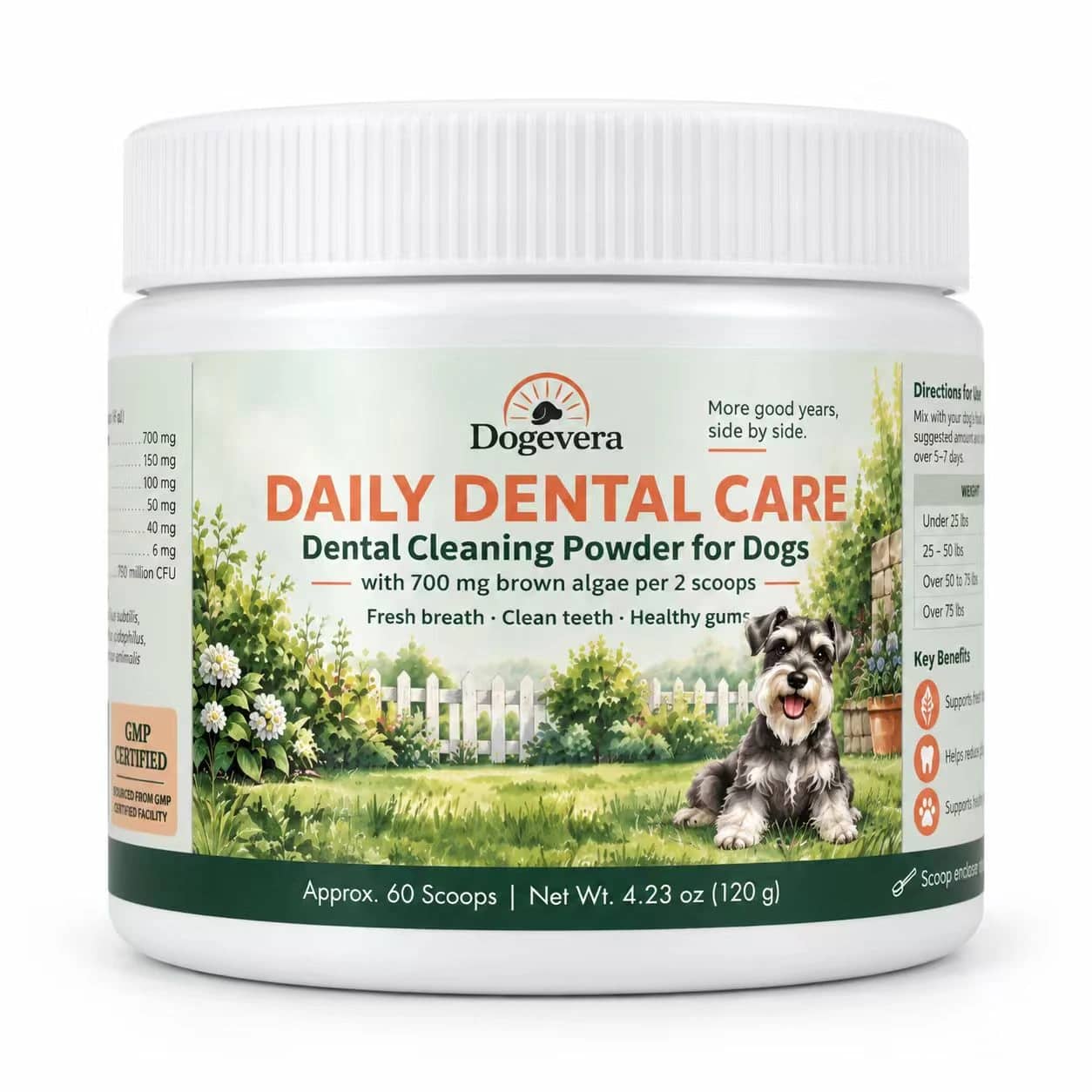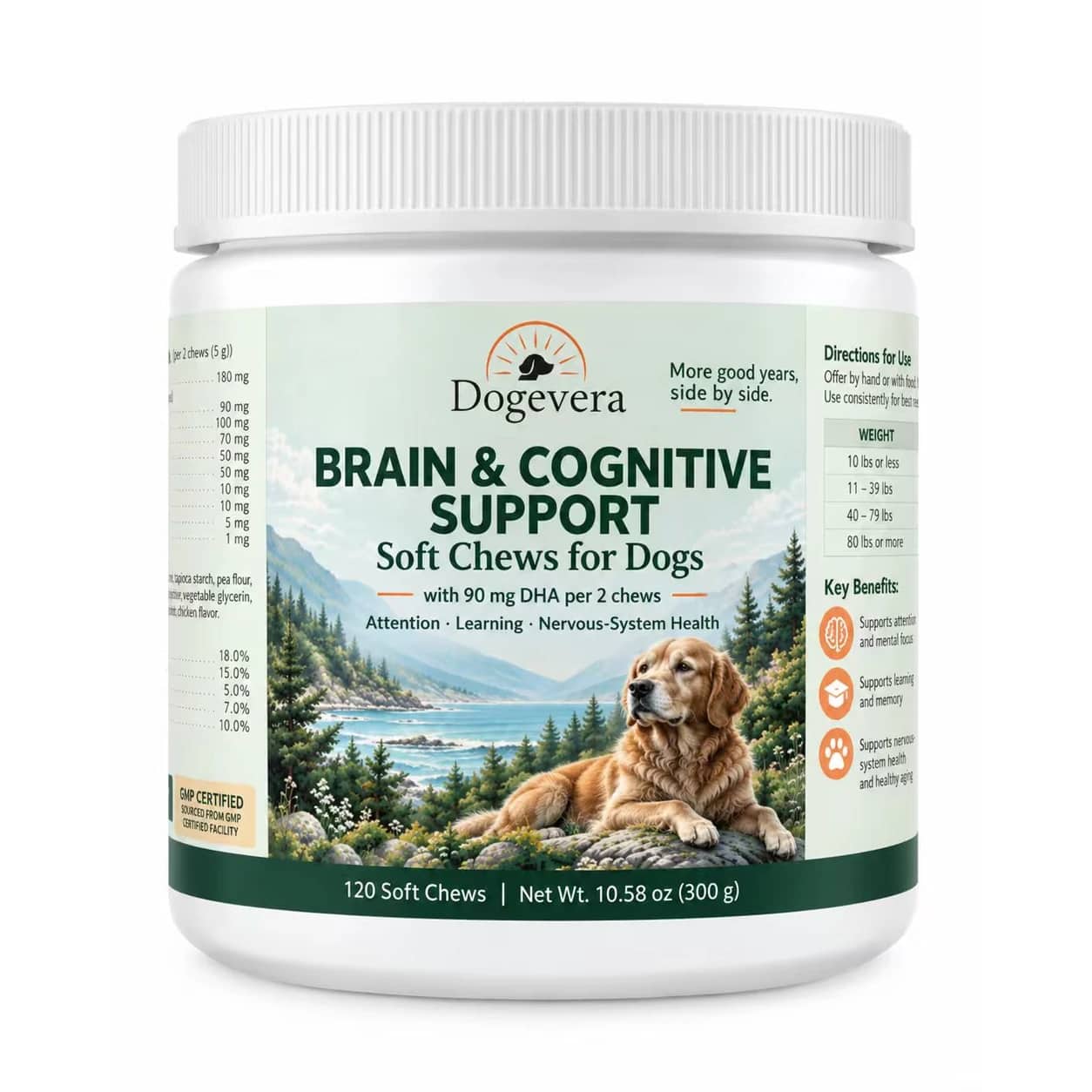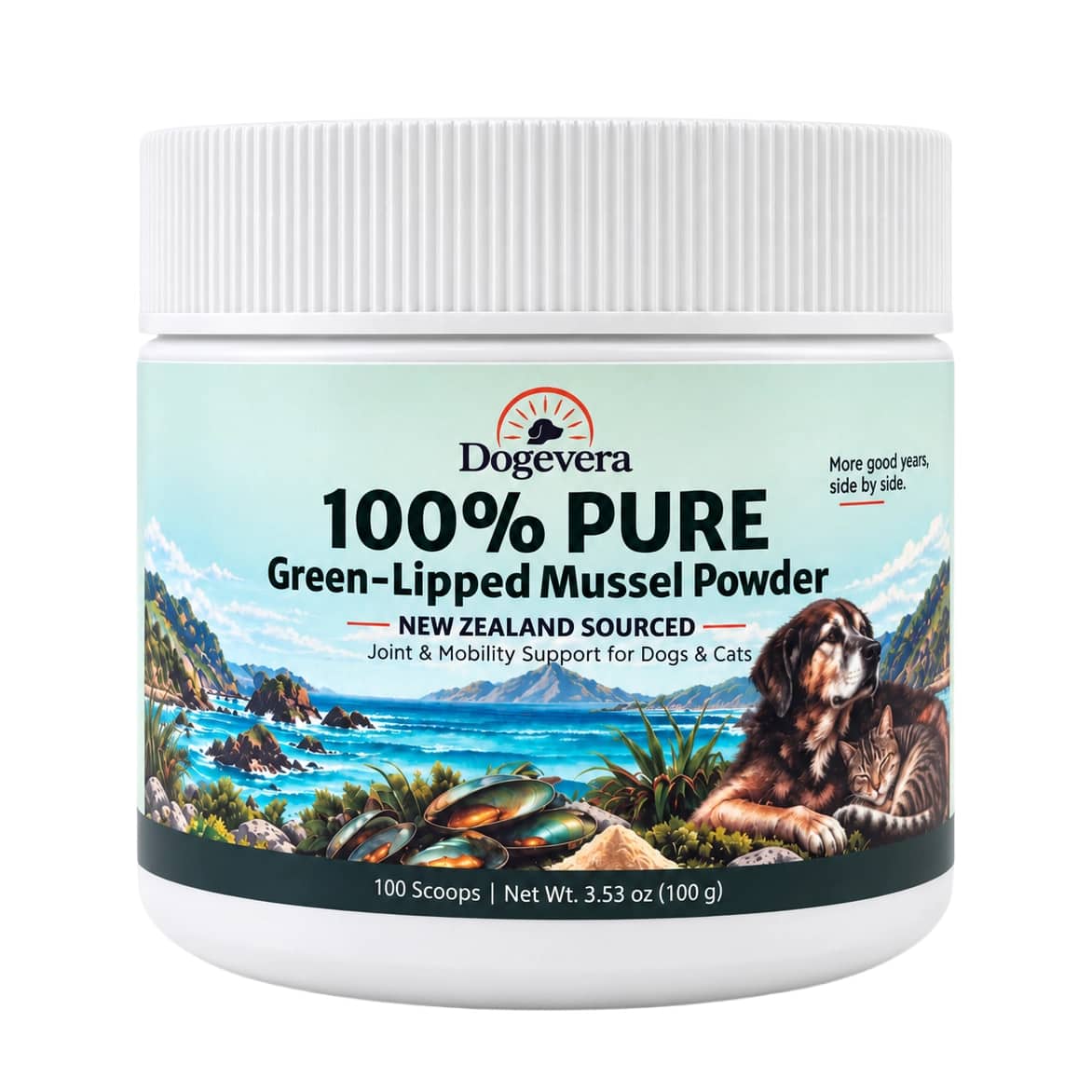
An older dog may already be getting a powder with breakfast, a soft chew at night, and something mixed into dinner. Can you give a dog more than one supplement? Sometimes, but adding products should start with an ingredient inventory, not the number of containers. There is no reliable combined dose to guess from labels alone.
Use this simple rule: keep a second supplement out of the routine until you can explain what each product is for, which active ingredients it contains, and whether any ingredient appears elsewhere in the food, treats, chews, or other supplements.
Start with an ingredient inventory
Write down every product your dog receives, including items that do not look like supplements:
- Complete food and toppers
- Treats and dental chews
- Powders mixed into meals
- Soft chews
- Oils or capsules
- Vitamins, minerals, herbs, and named extracts
- Any product added only on certain days
For each item, copy the label wording rather than relying on the front-of-pack claim. Record the product name, ingredient list, serving directions, and how much your dog actually receives.
This is also a useful time to review the difference between an ingredient identity and the amount provided. Dog dental powder ingredients: how to read a label explains why a label may name an ingredient without giving you enough information to compare products precisely.
Separate overlapping ingredients from separate goals
Two supplements can have different marketing claims while sharing an active ingredient. They can also contain different ingredients aimed at unrelated routines. These are different questions.
Overlapping ingredients
Look for the same or closely related ingredient in more than one place. Compare:
- Exact ingredient names
- Extracts versus whole ingredients
- Added vitamins or minerals
- Oils, powders, and soft-chew forms
- The serving size for each product
- Whether the label gives a quantity for the ingredient or only lists it
Do not combine the amounts by guesswork when the labels use different forms or units. If you cannot make a clear comparison, set the new product aside and bring both labels to the dog’s care team.
Different goals
A dental powder, a gut-focused product, and a mobility-focused product may be intended for different parts of a routine. That does not, by itself, establish that they belong together. Start with the actual care goal and ask whether each product has a distinct purpose.
The dog supplement for gut health label guide is useful when one product is being considered for digestion while another is intended for a different concern.
Check what the label can and cannot establish
A label can help you identify what a product contains and how the maker directs owners to use it. It cannot automatically establish that:
- Two products are suitable together
- The same ingredient is harmless when repeated
- A product will address your dog’s underlying problem
- The evidence for one ingredient applies to every product format
- A broad claim proves a benefit for your individual dog
- A serving can be safely increased because another product has a different serving guide
Also check whether the label clearly identifies the ingredient, quantity, serving unit, and product format. If those details are missing, comparison becomes less dependable.
For a wider explanation of the US rules and label context, see Are dog supplements regulated in the US?. Regulatory information and ingredient disclosure are not the same as proof that multiple products should be combined.
Use a one-change-at-a-time routine
When a new product is being considered, make the routine easy to observe:
1. Keep a current list of everything your dog receives. 2. Choose one specific reason for considering the new product. 3. Compare the complete labels for overlapping ingredients. 4. Ask the dog’s veterinarian or veterinary team to review the labels if the combination is unclear, your dog has a health condition, or your dog takes medication. 5. If the new product is approved for your dog’s routine, make one change at a time. 6. Record whether the full serving was eaten and note any change in appetite, stool, energy, or behavior. 7. Stop and contact the veterinary team if your dog has a concerning reaction. Emergency symptoms need prompt professional care.
Changing one item at a time makes your notes more useful. Adding several products at once makes it harder to tell which change was associated with a new observation.
A quick yes, no, or not-yet checklist
Consider reviewing the combination further when:
- Each product has a clearly different purpose.
- You have copied every ingredient from every label.
- There is no unexplained overlap.
- Each product gives clear serving directions.
- You can track what your dog actually eats.
- Your dog’s care team has the full product information when individual advice is needed.
Keep the second product on hold when:
- The same ingredient appears in multiple products and the total is unclear.
- A label uses a broad blend without identifying the amounts.
- You are adding a product to address a new or unexplained symptom.
- Your dog refuses the food or treat carrying the supplement.
- You cannot tell whether the product was fully eaten.
- The label does not provide enough information for a meaningful comparison.
Keep the routine as simple as the goal
More supplements do not automatically create a better routine. Begin with the concern you are trying to address, identify what is already in the diet and other products, and keep a written record of the decision.
If your list is becoming difficult to follow, the next step is not to add another item. Gather the containers or clear label photos, write down the current routine, and ask the veterinary team to review the combination for your individual dog.
FAQ
Can I give two supplements at the same time?
Do not assume that timing makes two supplements suitable together. Compare their ingredients and serving directions first, then ask the veterinary team when the combination is unclear.
Should I choose supplements with different ingredients?
Different ingredients may indicate different goals, but they do not prove that the products belong in the same routine. Check the full labels and the reason for each product.
What if both products contain the same ingredient?
Do not invent a combined serving. Record the ingredient, form, and amount shown on each label and ask the veterinary team to review the products.
How many supplements should a dog take?
There is no universal number that answers this safely. The useful question is whether each product has a clear purpose, readable label information, and a routine you can track for your dog.
For individual health questions, your veterinarian remains the best partner.