TL;DR
To tell if a dog supplement is working, pick three ordinary things you can observe at home (such as getting up from rest, finishing meals, and settling at night), record them consistently for a set trial period, and compare the first week with a later week rather than judging day to day. If nothing measurable changes after a fair trial, that is useful information to bring to your veterinarian, not a sign you did something wrong.
A short observation log is a low-risk way to answer this question. Nothing here replaces a veterinary exam, but good notes make any conversation about your dog's routine more specific.
What Does "Working" Actually Look Like at Home?
Most supplements do not produce a dramatic transformation. What you are more likely to see is a shift in how easily your dog does ordinary things: getting up after a nap, finishing a meal without hesitation, settling at night, or keeping pace on a familiar walk. Because these changes are gradual, they are easy to miss in the moment and easy to over-credit when you want them to be real.
That is why the question is best answered with a comparison, not a feeling. Ask yourself: compared with a specific week before the supplement started, is anything different now? A vague sense that your dog seems better is the least reliable evidence you can collect. A written note that says "took 20 seconds to stand up on Monday, about 10 seconds by Friday" is worth far more.
The Three Observations Worth Tracking
Choose three things that connect to why you bought the supplement in the first place, and stick with the same three for the whole trial. A simple starting set:
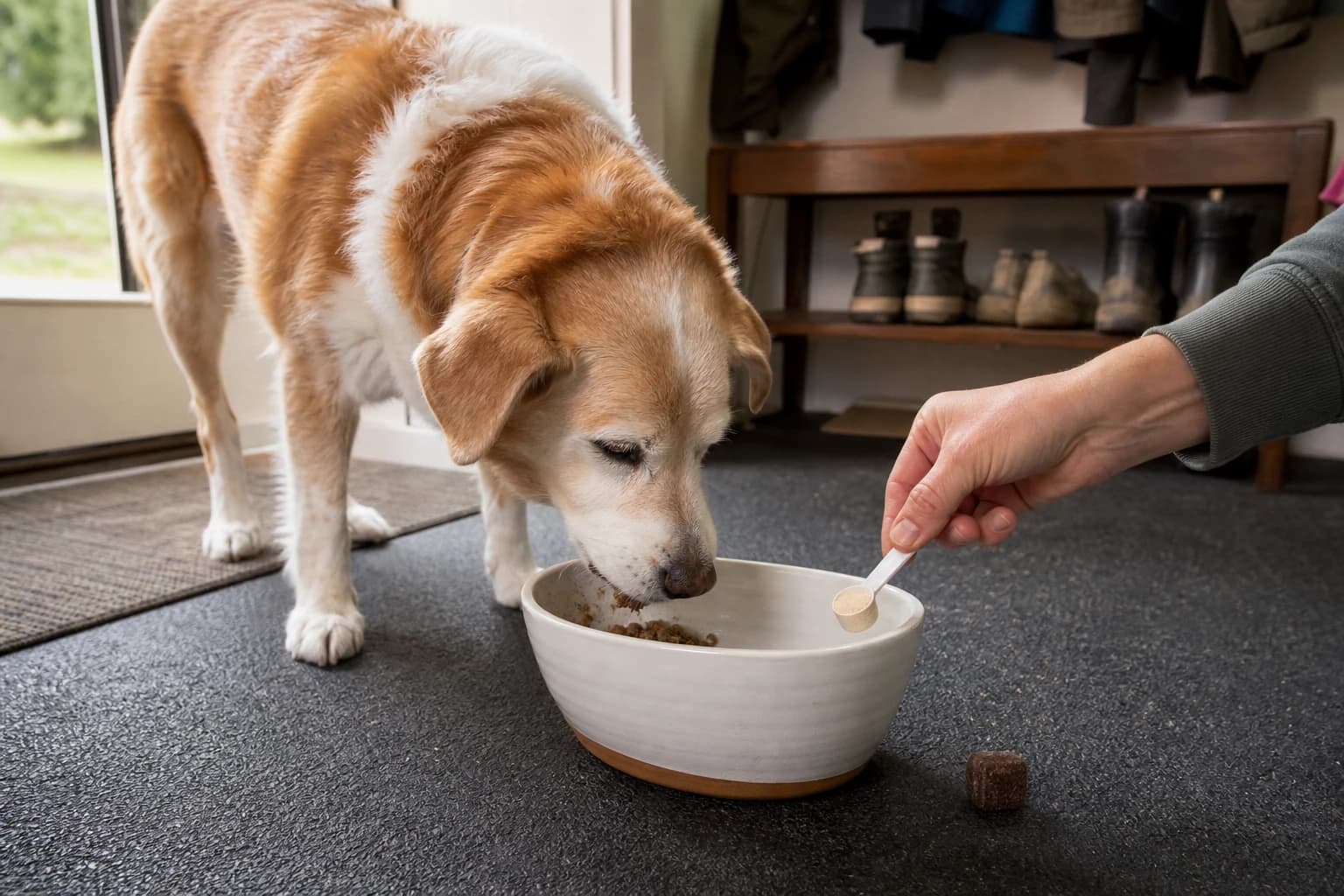
1. Ease of movement. How long it takes to get up from rest, whether stairs or the car need a pause, and how your dog moves on one familiar route. Use the same route and the same time of day so the comparison is fair. 2. Appetite and finishing. Whether meals are finished eagerly, slowly, or left behind. If you mix a powder into food, confirming the bowl is actually cleaned matters, since a serving your dog doesn't finish tells you nothing either way. Our guide on dog supplement dosage covers how to check the package directions and confirm the serving was actually eaten. 3. Rest and settling. How quickly your dog settles at night, whether there is new restlessness, and how long morning stiffness seems to last.
Rate each one simply, for example with a 1-to-5 note or a short sentence. Precision matters less than consistency: the same observer, the same times of day, the same wording.
Why Day-to-Day Changes Mislead You
Dogs, like people, have variable days. A good Tuesday proves very little, and neither does a stiff Wednesday. What you are looking for is a pattern across weeks, not a signal on a single day.
Even in controlled research, individual responses vary more than people expect. In one small canine feeding study, six healthy adult dogs were fed a diet with added beet pulp fiber in a crossover design, meaning each dog spent time on both the fiber diet and the comparison diet. The researchers observed that dietary fiber generally decreased Fusobacteria and increased Firmicutes in the dogs' gut microbes, but these changes were not equally apparent in all dogs. In other words, even a real, measurable effect showed up unevenly from one animal to the next.
Two lessons follow for your own trial. First, small studies like that one describe averages and tendencies, not guarantees for your individual dog. Second, uneven individual response is normal, so a slow or subtle change in your dog is not proof the product is useless, and a quick one is not proof it is a miracle. The crossover design also shows why a before-and-after comparison is more meaningful than a single snapshot: the researchers compared each dog against their own baseline.
How Long Should a Fair Trial Last?
The honest answer depends on the supplement type and your dog, and your veterinarian can give the most useful timeline for a specific product. As a general home practice, avoid judging in the first few days, when your dog is adjusting to something new, and plan a defined review point, such as a month out, rather than an open-ended "we'll see." A fixed end date protects you from two opposite mistakes: quitting early on a product that hadn't had time, and continuing indefinitely with a product that never showed you anything.
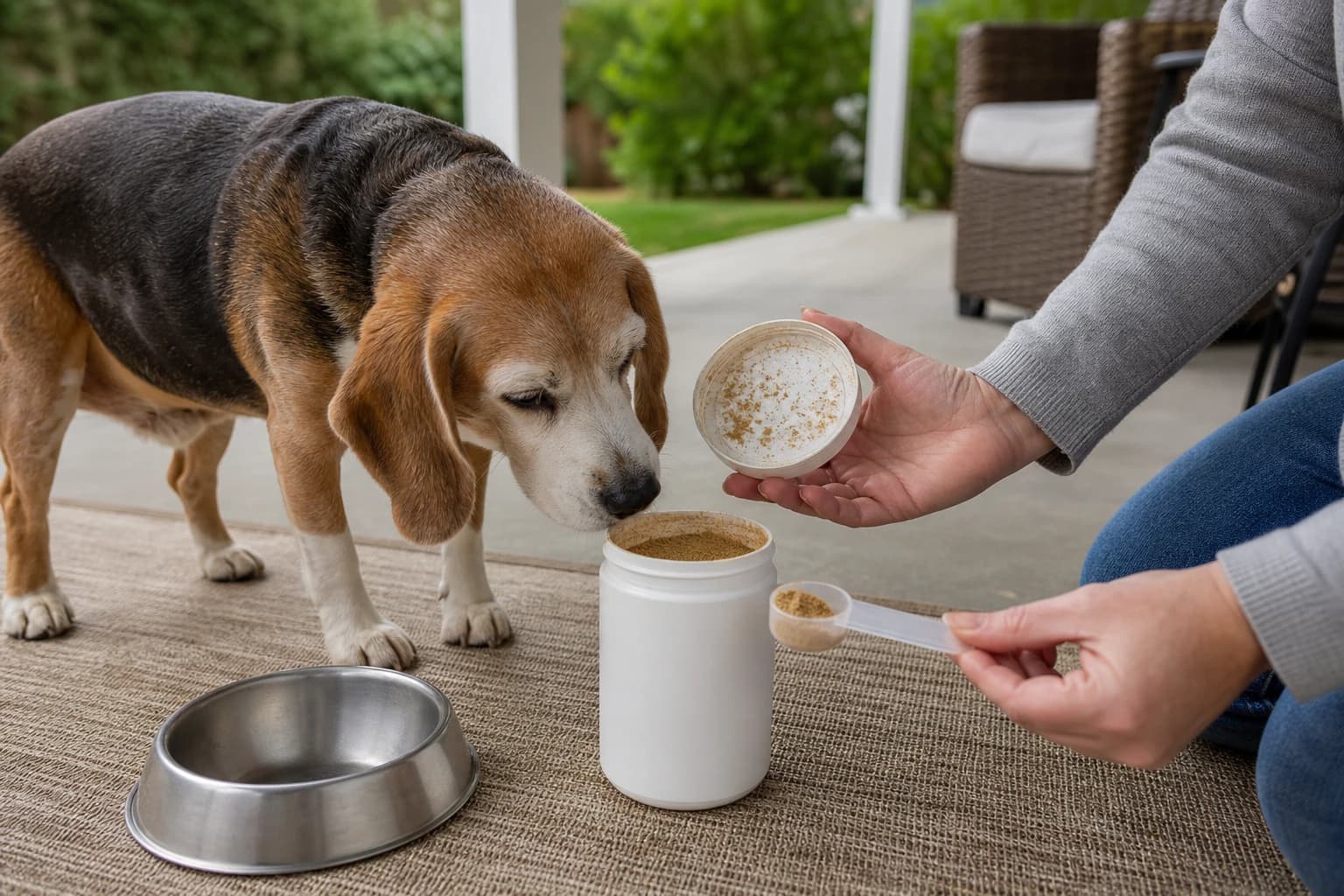
Whatever window you choose, change nothing else during the trial if you can. Starting a new food, a new walking routine, or a second supplement at the same time makes it impossible to know what caused any change. One change at a time is what makes your notes interpretable. For the same reason, pick one format and stay with it; if you are still deciding between formats, the comparison of powder versus soft chews explains how serving accuracy and food acceptance differ, both of which affect whether your dog actually gets a consistent daily serving.
A Simple Tracking Sheet You Can Start Today
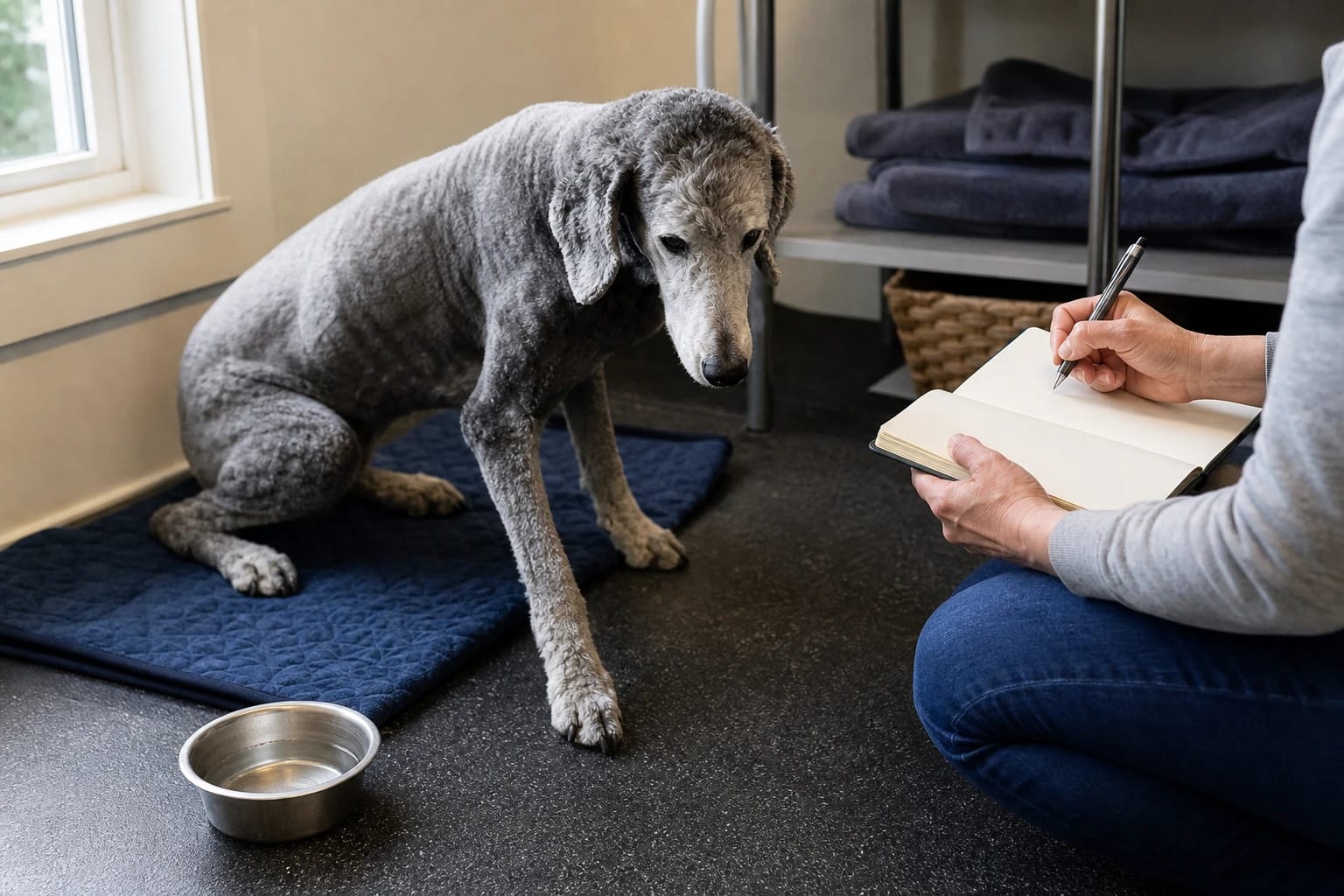
You do not need an app. A notebook or a note on your phone works.
- Day 0, before starting: record your three observations in detail. This baseline week is the most important entry in the whole log.
- Daily, one minute: write one line per observation. Keep it factual: "slow to stand after afternoon nap, about 15 seconds."
- Same conditions each time: same walk, same meal times, same observer where possible.
- Note interruptions: skipped servings, a skipped walk, a stressful day like a storm or houseguests. Context prevents you from over-reading a bad day.
- Midpoint check (around two weeks): compare against Day 0. Ask whether anything has moved consistently, not occasionally.
- End of trial: write a three-sentence summary: what you expected, what changed, what did not.
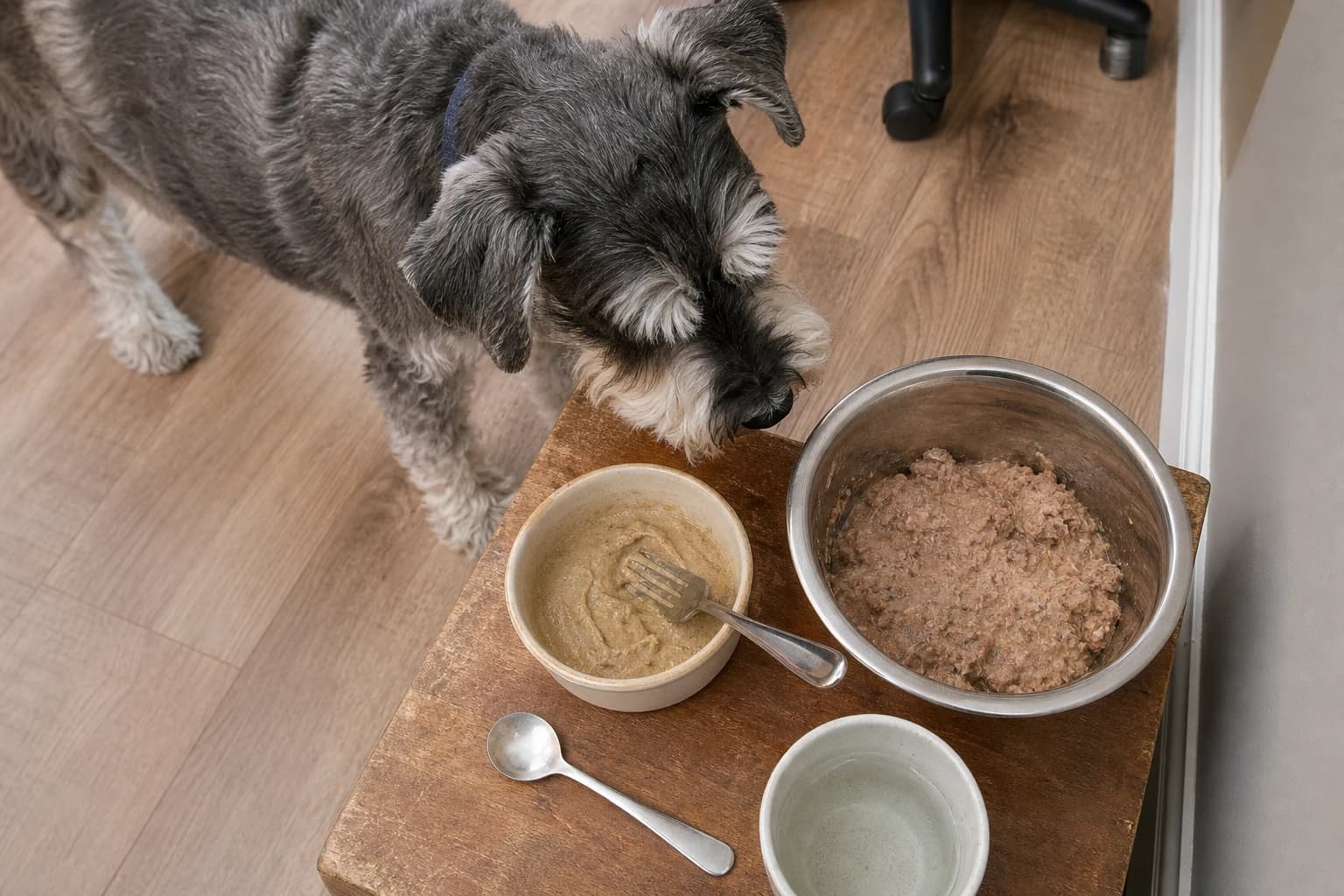
If getting the supplement into your dog at all is the hard part, the notes will show it, and our article on mixing a supplement into wet food addresses the common problem of powder settling or clumping so servings are actually finished.
When to Keep Going, Adjust, or Stop
- Keep going if the log shows a consistent, if modest, direction of change at your review point, and your dog tolerates the product well.
- Stop and call your veterinarian if you notice new digestive upset, a skin or ear change, refusal of food, or anything that worries you, regardless of the trial schedule. Those observations belong in a conversation, not just a notebook.
- Stop and reassess if a full trial window passes with no consistent change in any of your three observations. A supplement your dog tolerates but that shows you nothing is a cost decision, and it is reasonable to discuss alternatives, including whether a different product or goal makes more sense.
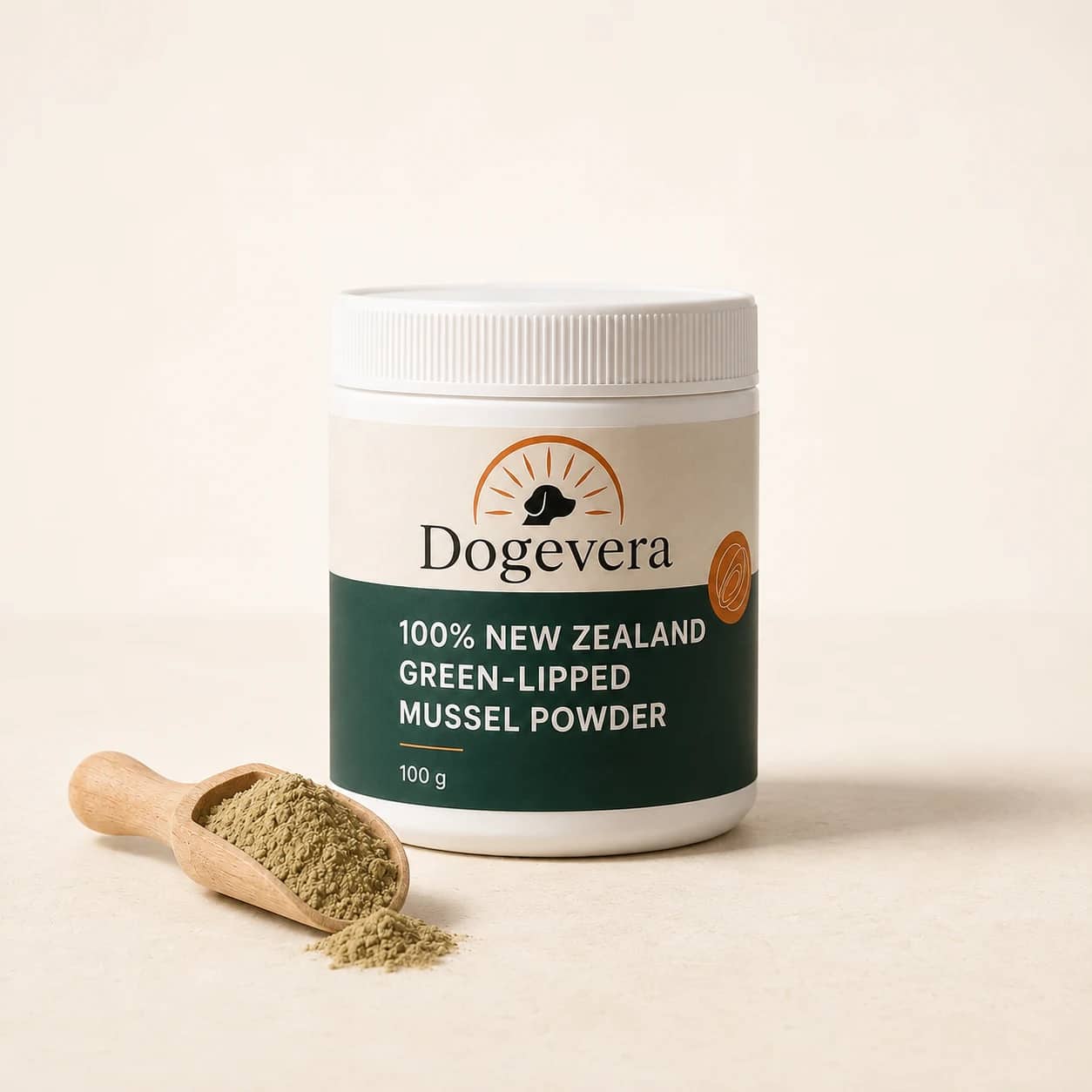
For example, if you started a joint-support product hoping for easier movement and your getting-up notes are flat after a fair trial, that is a legitimate finding to raise at your next appointment. If you are weighing green-lipped mussel specifically, New Zealand Green Lipped Mussel Powder for Dogs is one product in this category, and the same tracking approach applies to it as to any other.
Bringing Your Notes to the Appointment
Bring the log itself, not a summary from memory. Three things make the appointment productive:
1. The baseline and the trial window. "Here is what my dog looked like the week before, and here is the same record four weeks later." 2. The exact product and serving. Bring the package or a photo of the label, including how much you actually serve. 3. Your questions. For instance: is this the right goal for this product, how long is a reasonable trial for my dog, and what would you want to see before continuing?
Veterinarians work with patterns over time, and a clean week-by-week record gives them something real to work with, instead of "I think he seems a little better, maybe."
FAQ
How soon should I expect to notice something?
It depends entirely on the product type and your dog, which is why a fixed review point agreed in advance works better than watching every day. Judge at your planned endpoint, not on individual good or bad days.
What if I see a change right away, in the first few days?
Note it, but treat early changes with some caution. Expectation effects are real for human observers, and some early changes reflect adjustment rather than the supplement's intended effect. The pattern across the full trial is the evidence that counts.
Should I stop the supplement if nothing changes?
A completed trial with no consistent change is a fair reason to stop or switch, and it is worth telling your veterinarian what you observed. Stop sooner and call if you see any new digestive, skin, or appetite changes along the way.
For individual health questions, your veterinarian remains the best partner.