TL;DR
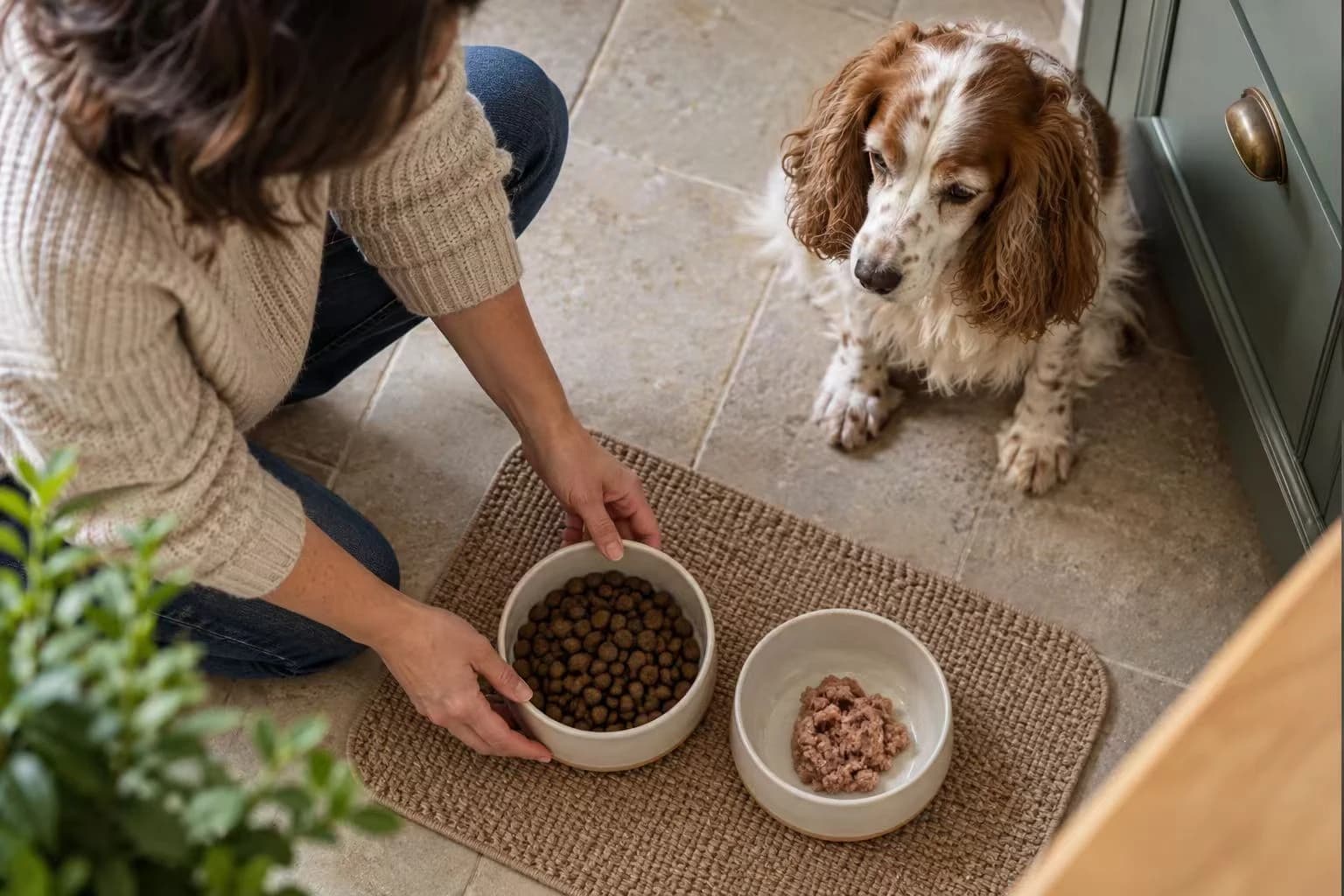
Check that the specific supplement can be mixed with food. Blend the labeled serving into a small portion of familiar food and offer that portion first, then the rest of the meal. Check what was actually eaten. There is no universal introduction or storage schedule for all powders.
Why powder settles and how texture affects acceptance
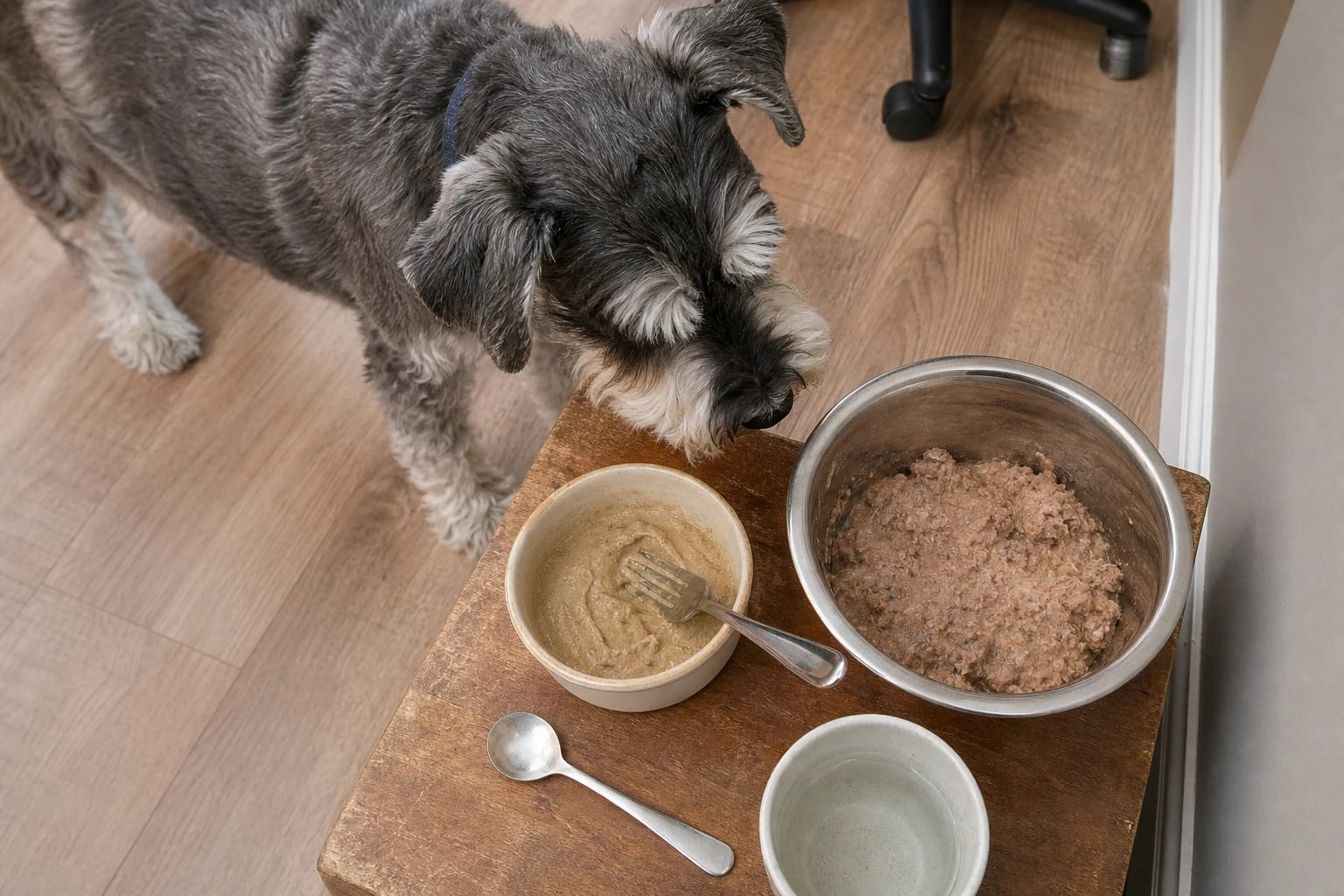
Wet food has more moisture than kibble, which should make mixing easier. In practice, many powders sink straight to the bottom or form sticky clumps that a dog will eat around. The finer the powder, the more likely it is to dissolve unevenly. Coarser textures can sit on the surface or collect in pockets.
A dog who normally finishes every meal may leave the supplement behind without you noticing until you check the bowl. When the powder changes the smell or adds a gritty feel, some dogs lose interest halfway through the serving.
Start with a small portion and mix thoroughly
Measure the amount specified for your dog and this product. Mix it thoroughly into a small portion of familiar food until no dry pockets remain. Offer that portion first so you can check whether it was finished before offering the rest of the meal.
Keeping the initial food portion small can make leftovers easier to see. It does not prove the full serving was consumed; note any residue and do not automatically add another serving.
Add a small amount of warm water if the powder clumps
If the food and supplement directions allow it, a little water may help mixing. Avoid hot preparation unless specifically allowed, and do not assume the same method is suitable for every ingredient.
Offer the mixture promptly at a comfortable food temperature. Do not add new flavorings or heat a product simply to hide an unexplained smell.
Use product-specific introduction instructions
Follow the introduction and serving instructions for the product in your hands, or the plan given by your veterinary team. Do not apply a fixed quarter-to-full-serving schedule to every supplement.
A hesitant eater should still have access to their normal meals. Pause the supplement if mixing leads to refusal, and check whether plain food is accepted comfortably. Do not withhold normal food to force acceptance.
New vomiting, diarrhea or a broader appetite change is a reason to pause the optional supplement and seek veterinary advice. See diarrhea after starting a supplement.
Check the bowl after every meal
Look inside the empty bowl before rinsing it. A fine layer of powder at the bottom, a ring around the edge, or clumps left behind all mean your dog did not finish the supplement. If this happens more than once, adjust your mixing method or try a different vehicle.
Some caregivers find that stirring the supplement into a spoonful of plain canned pumpkin, low-sodium broth, or unsweetened yogurt (if dairy is tolerated) creates a more appealing texture than wet food alone. The goal is not to find the most elaborate recipe, but to identify one reliable method that results in a clean bowl.
Keep a record without delaying care
Record the product, amount offered, amount left and any changes in the usual routine. Agree any follow-up interval with your veterinary team; an adverse change should not wait for a scheduled checkpoint.
If the supplement is intended to support joint comfort, for example, track how your dog gets up from rest, walks, and climbs stairs at each checkpoint. These observations give you a concrete basis for deciding whether to continue. For more guidance on realistic timeframes, see how long it takes for a dog joint supplement to work.
When a product does not mix well, consider a different form
Some powders remain difficult to incorporate no matter how carefully you stir. If your dog consistently refuses meals with a particular supplement, or if you find powder left in the bowl after every feeding, the formulation may not suit wet food. Soft chews, tablets, or liquids can be easier for both mixing and acceptance.
If considering another format, compare the full ingredient list, active amounts, serving units and suitability for your dog. Equal scoop or chew counts do not imply equivalent products. Do not assume evidence for one preparation validates another.
FAQ
How do I know if my dog is refusing the supplement or just the food? Offer the same wet food without the supplement at the next meal. If your dog finishes it, the supplement is likely the issue. If the food is also refused, appetite or the food itself may need attention.
Can I premix food and supplement? Check both labels for preparation and storage requirements. Do not assume a universal refrigerated shelf life; when premixing is not addressed, prepare the portion when needed and ask the manufacturer or clinic for guidance.
What if my dog licks around the supplement no matter how I mix it? Try a much smaller starting portion (one or two bites) mixed very thoroughly, and gradually increase the volume once that small amount is accepted. If selective eating continues, a different supplement form may be more practical.
Should it go in every meal? Follow the directions for that specific product and your dog. Do not split, combine or increase servings based on a general schedule from another product.
A repeatable feeding check
- Before offering food: Confirm the supplement is intended for this dog and can be mixed with food; After offering food: Watch which dog eats the prepared portion
- Before offering food: Measure according to the actual package, using the intended measure; After offering food: Look for dry powder, clumps or food left on the bowl
- Before offering food: Mix into a small portion of familiar food; After offering food: Record finished, partly eaten or refused without guessing the missing amount
- Before offering food: Keep the rest of the normal meal available; After offering food: Do not automatically add another full serving
A practical note is more useful than an assumed success: record the product, what was offered, what remained and any change in appetite. This is a feeding record, not a way to establish a medical response.
Decide whether the format fits before ordering more
If mixing repeatedly changes a meal your dog normally eats into one they refuse, reconsider the format. The powder versus soft-chew guide can help you compare routines. For Dogevera, check the full green-lipped mussel ingredient and feeding information before choosing a pack. Do not mask an unexplained change in smell or texture to persuade a dog to eat it.
Related reading
References
- Veterinary Pet Supplements and Nutraceuticals. Nutrition today. 2020. PMID: 33446942. DOI: 10.1097/nt.0000000000000399.
For individual health questions, your veterinarian remains the best partner.