TL;DR
For dog supplement powder vs soft chews, neither format is automatically better. Choose the one whose label gives a clear serving for your dog, fits how they reliably eat, and makes the daily cost easy to understand.
A powder can be practical when your dog finishes a measured food portion. Soft chews can be simpler when your dog accepts them as part of a routine, but the ingredient panel and serving directions still matter more than the format.
What differs between powder and soft chews?
The biggest everyday difference is how you can confirm that your dog received the intended serving.
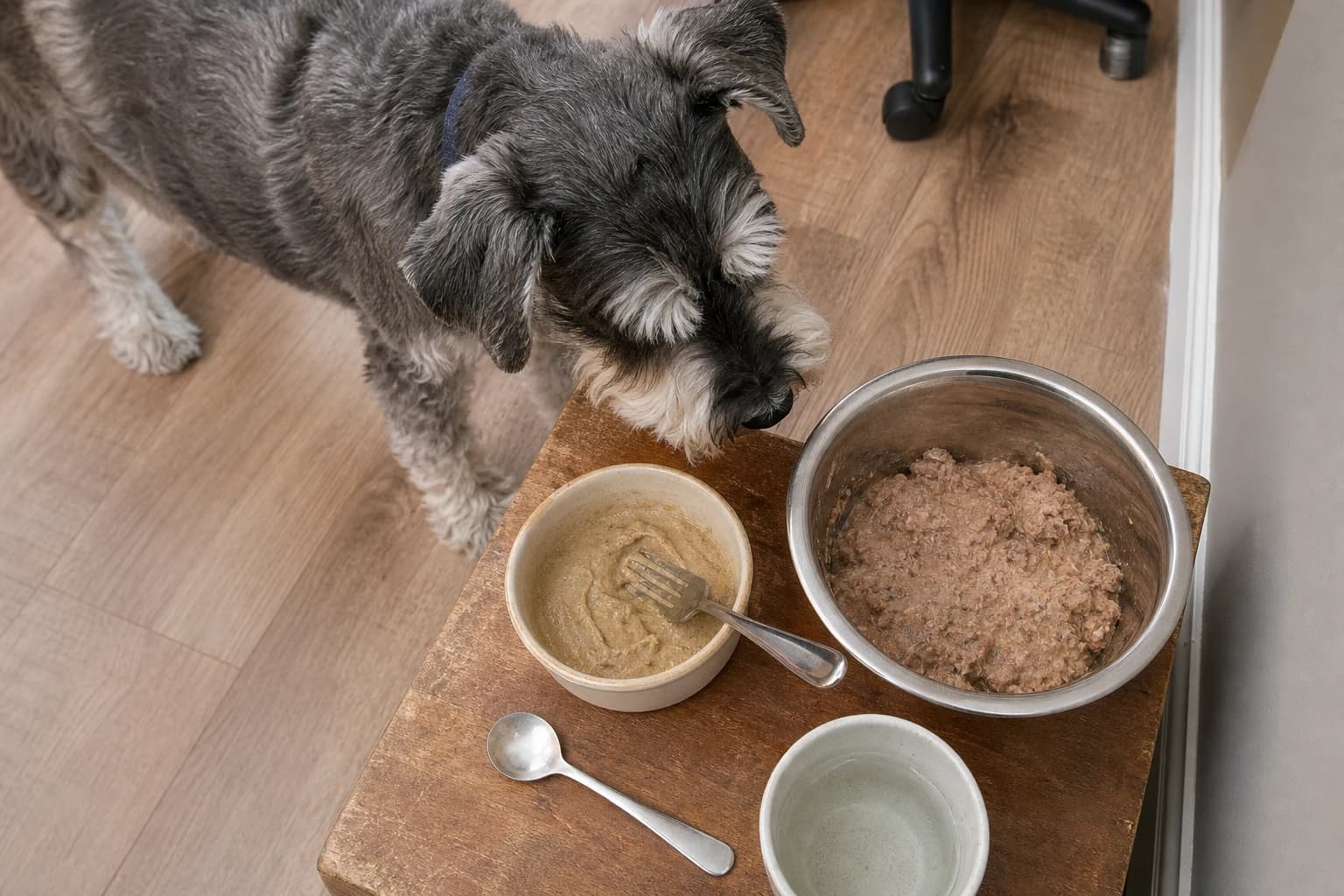
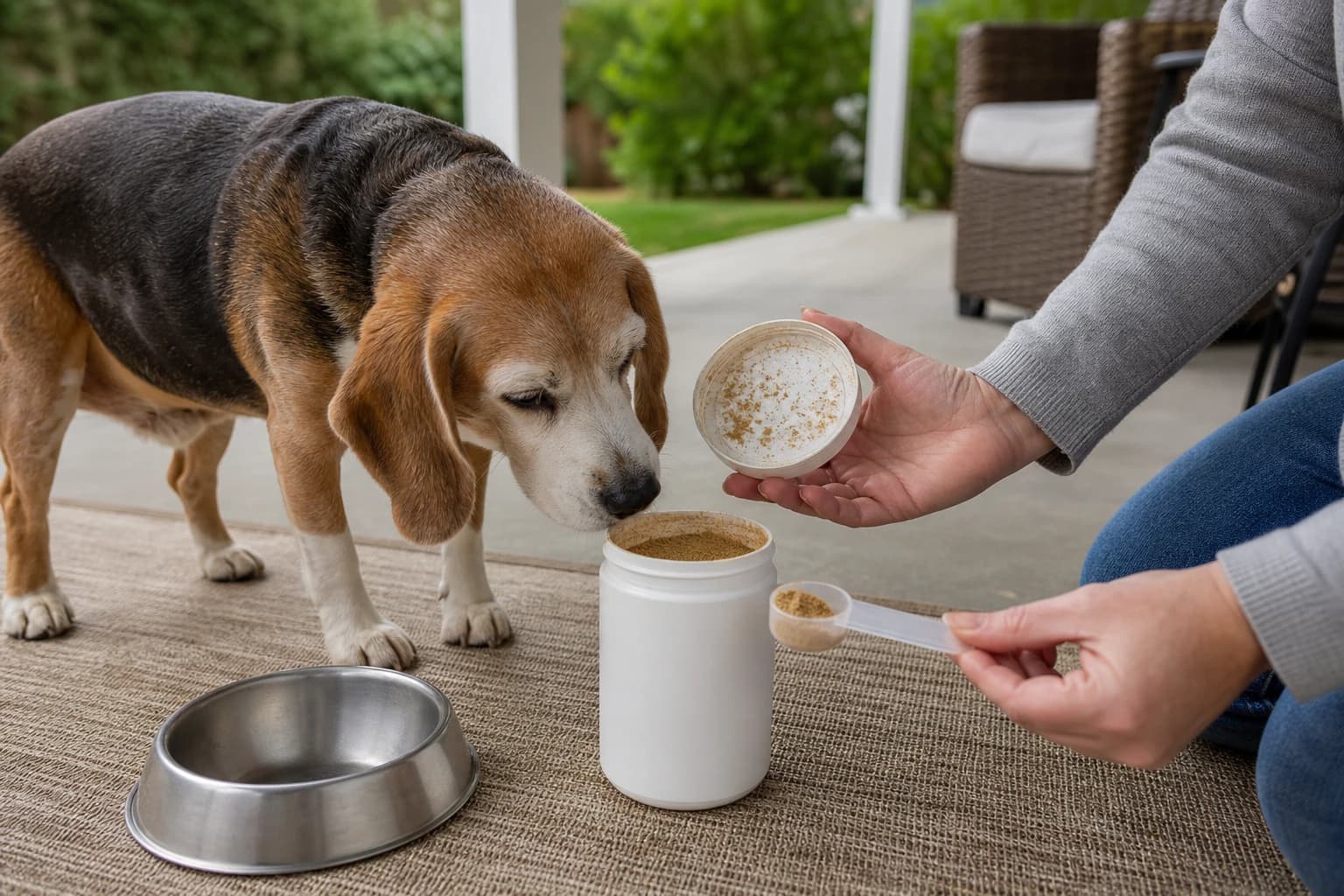
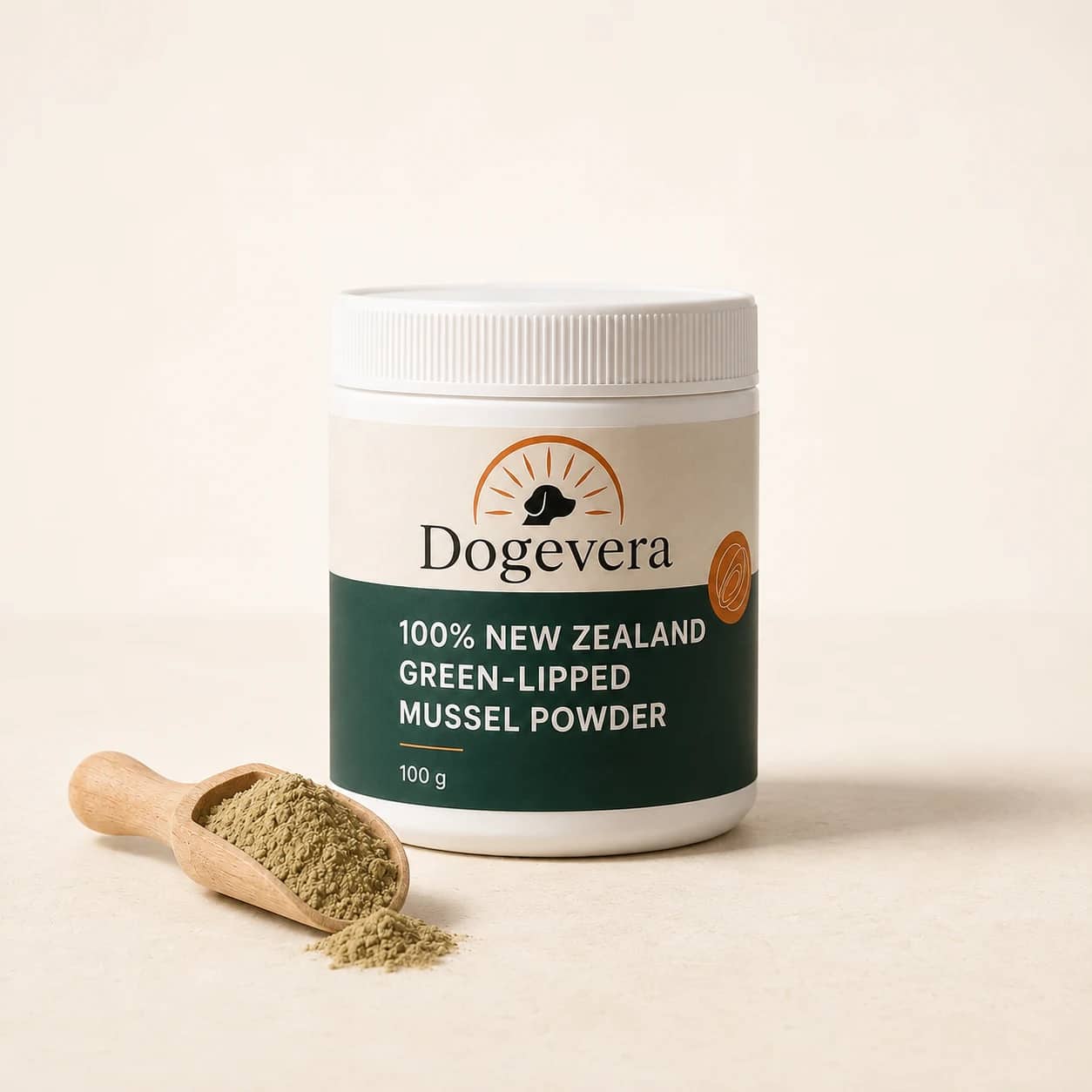
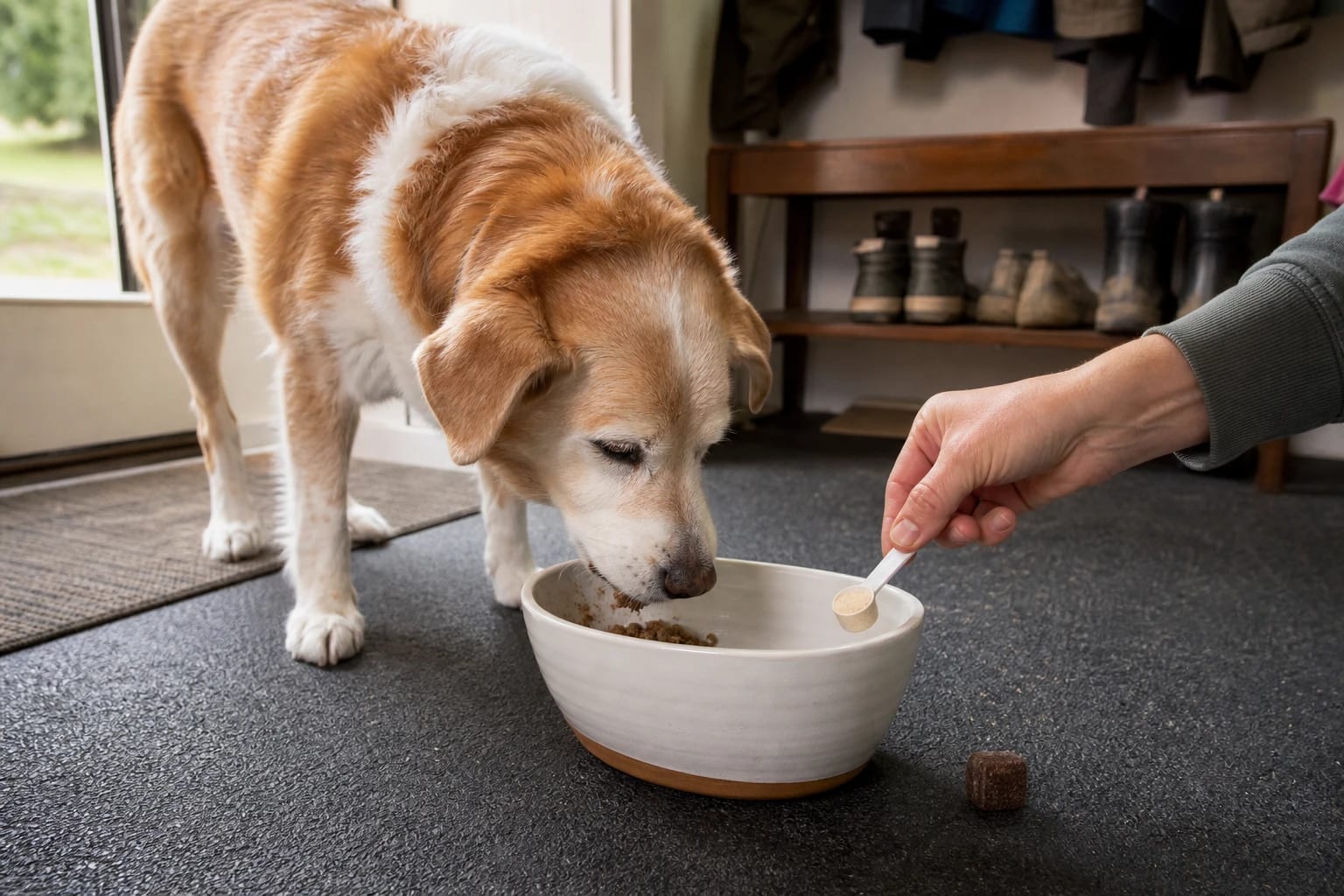
With powder, you measure the serving and mix it into food. This can work well for a dog who consistently finishes meals, especially when you first stir the powder into a small amount of food and then add the rest. If food is left behind, powder may collect in the remaining portion, making it harder to know how much was eaten.
With soft chews, each chew is usually a visible unit. That can make a daily routine feel more straightforward, particularly if your dog takes the chew willingly. Still, a chew that is dropped, hidden, or only partly eaten is not a completed serving.
Before choosing either format, use this simple three-day check:
- Serve the supplement in the same part of the daily routine.
- Watch whether your dog finishes the whole serving without coaxing.
- Check the bowl, floor, bedding, and nearby hiding spots afterward.
- Write down whether the process felt easy enough to repeat every day.
The format that creates the fewest unanswered questions is often the more practical choice.
Which format is easier for a picky dog?
A food-motivated dog may enjoy a soft chew, while a dog who avoids unfamiliar treats may do better with powder blended into a familiar meal. Individual preference matters more than assumptions about what dogs generally like.
For powder, avoid scattering it over a full bowl and walking away. Start with a small amount of the food your dog already eats, mix thoroughly, and confirm that portion is finished before offering the rest. This also helps you notice whether your dog accepts the smell and texture.
For soft chews, consider whether your dog normally eats similarly textured treats. If they suddenly refuse hard treats or seem uncomfortable chewing, do not try to solve the issue by repeatedly offering a new chew. A new refusal that affects regular food as well deserves attention.
If your dog develops a change after starting any new supplement, keep the timeline and the other recent changes in their routine clear. Our guide to dog reactions to a new supplement outlines what to record before you speak with your veterinarian.
Read the label before comparing the format
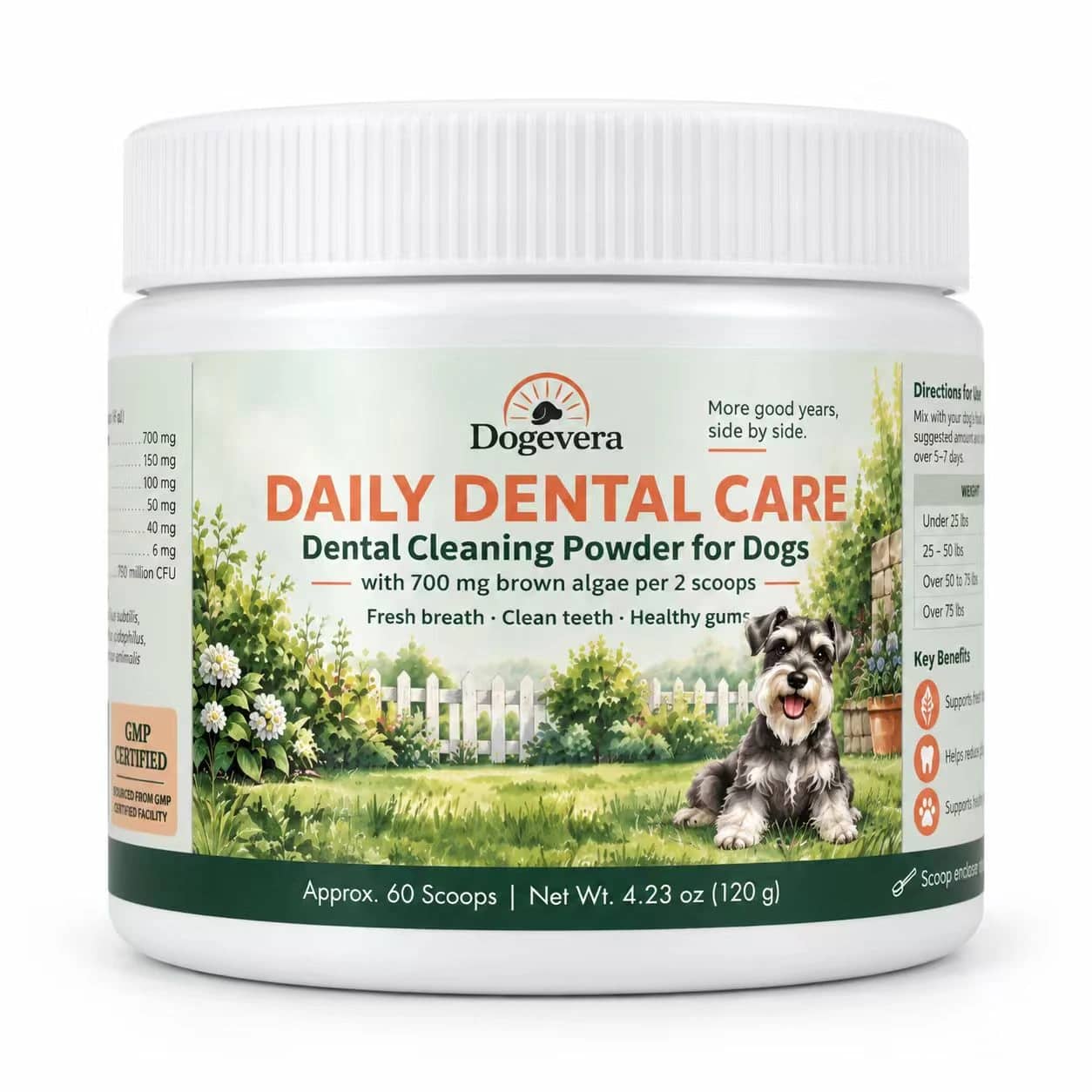
A tidy jar or an appealing chew shape does not tell you what is in the serving. Compare the final package labels side by side, using the serving directions for your dog’s current weight.
Look for these details:
- The named ingredients and the amount listed for the daily serving
- The serving unit, such as a scoop, teaspoon, or number of chews
- Directions based on body weight, if given
- Other ingredients, including flavorings and binders in soft chews
- Allergen information and any storage directions
- The number of servings in the container
Powders may have a shorter-looking ingredient panel because they do not need the same chewable structure. Soft chews may include additional ingredients that help create their texture, flavor, and shape. Neither is automatically a concern or an advantage. The useful question is whether you recognize what is listed and whether it suits your dog’s known needs and food sensitivities.
Do not rely on an old product photo or a retailer description when serving a supplement. Check the label on the package in your home, since serving instructions and ingredients can change.
Cost per serving makes the comparison fair
A lower jar price does not always mean a lower daily cost. Compare products by the number of servings available for your dog, not by container size alone.
Use this quick worksheet:
1. Find the package price. 2. Find the number of daily servings the container provides for your dog. 3. Divide the price by that number. 4. Compare the result with the other format.
For a soft chew, the listed container yield may change if your dog’s serving calls for more than one chew. For a powder, the listed yield may change if the scoop amount varies by weight. This is especially important in homes with more than one dog. The supplement cost guide for multiple dogs shows how to map servings to a household routine.
Also count practical waste. A powder that regularly remains in the bowl or chews your dog will not eat can cost more than a format with a higher sticker price that is actually used consistently.
A reliable routine matters more than convenience claims
Choose one format, follow the package directions, and keep the rest of your dog’s routine steady while you learn whether the process works for your household. Avoid beginning several new foods, treats, or supplements at once, because it becomes difficult to identify what changed.
Keep the container sealed and follow its storage directions. Use the included scoop for powder if one is provided, and avoid estimating with a kitchen spoon unless the package specifically directs you to do so. For soft chews, keep the package out of reach between servings so your dog cannot help themselves.
If your dog has diarrhea after a new supplement is introduced, stop treating it as a format comparison and focus on the timing, what else changed, and whether they are otherwise acting differently. See what to do when a dog has diarrhea after starting a supplement for a calm observation process.
A veterinarian can help you decide how a supplement fits your dog’s individual diet and health needs.
FAQ
Are soft chews more accurate than powder?
Soft chews can be easier to count, but they are only as accurate as the serving directions and your dog finishing them. Powder can also be consistent when you use the provided measure and confirm your dog eats the mixed portion.
Is powder usually cheaper than soft chews?
Not necessarily. Compare the daily cost based on your dog’s serving size, the number of usable servings in the package, and whether your dog actually finishes the product.
Can I switch from powder to soft chews?
Check the new product’s ingredient panel and serving directions rather than assuming the formats are interchangeable. Make one change at a time and note how your dog accepts the new routine.
For individual health questions, your veterinarian remains the best partner.