In this article
TL;DR
A dog ear infection (otitis externa) is inflammation of the ear canal, usually with yeast or bacteria growing in it. The signs are head shaking, scratching at the ear, a bad smell, brown or yellow discharge, redness and pain when the ear is touched. It is one of the most common reasons dogs see a vet: a study of 22,333 dogs under UK veterinary care found that 7.3% had otitis externa in a single year. Dogs with floppy or V-shaped ears had about 1.8 times the odds of dogs with upright ears, and Basset Hounds had nearly 6 times the odds of crossbreeds. Most ear infections need a vet exam and prescription ear drops, and the infection keeps coming back until the trigger underneath, most often an allergy, is treated. A head tilt, loss of balance or a dog that will not let you near its ear needs a vet the same day.
Signs of an ear infection in dogs
| Sign | What you might notice |
|---|---|
| Head shaking | Shaking or flapping the ears more than usual |
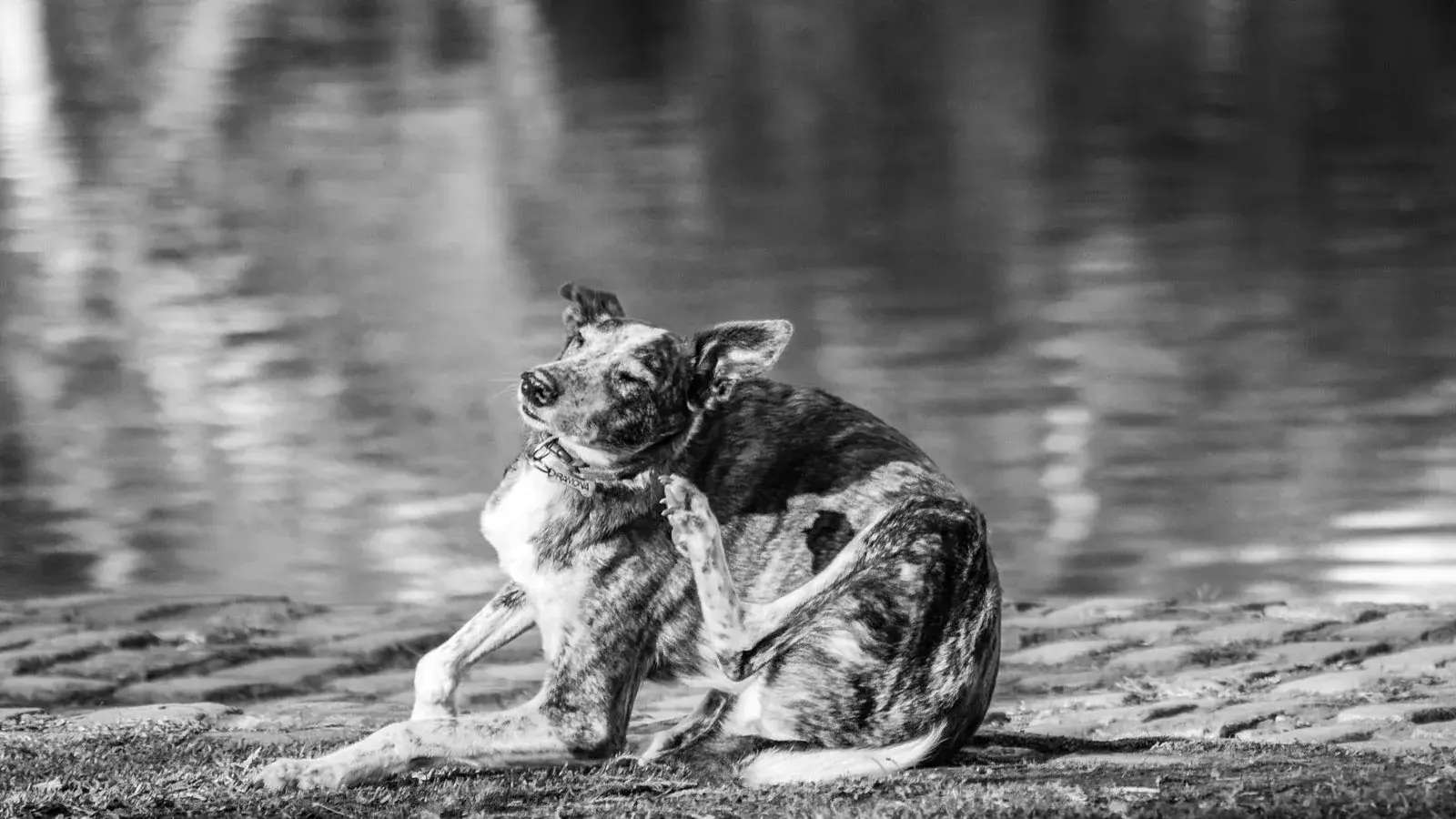
| Scratching | Pawing or rubbing the ear on the floor or furniture |
| Smell | A yeasty, sour or rotten smell from the ear |
| Discharge | Brown, yellow, black or bloody material in the canal |
| Redness and swelling | The inner ear flap and canal look red, hot or thickened |
| Pain | Yelping or pulling away when the ear or head is touched |
| Head tilt | Holding one ear lower than the other |
| Crusts and hair loss | Scabs or bald patches around the ear from scratching |
Go the same day if your dog has a head tilt, walks in circles, loses balance, has flicking eye movements or a drooping face. These suggest the infection has reached the middle or inner ear, which needs different treatment.
A swollen, pillow-like ear flap is usually an aural hematoma, a blood blister caused by violent head shaking. It also needs a vet, and the ear infection behind it needs treating at the same time.
When the infection reaches the middle ear
The middle ear sits behind the eardrum, right next to the organs that control balance. An outer-ear infection that lingers can spread there (otitis media), and the giveaway is often a head tilt.
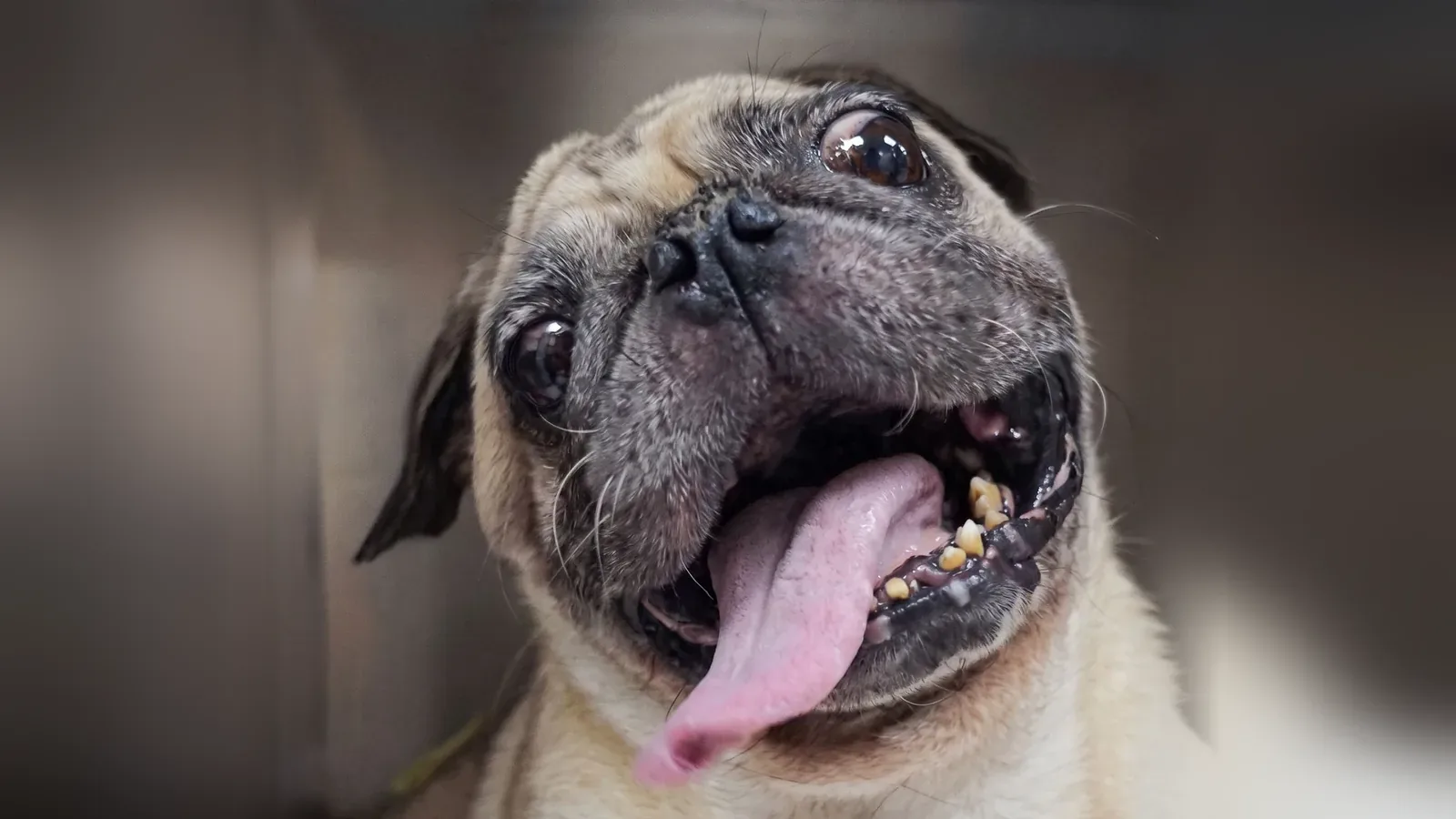
Morty's pug Huajuan, at 8 years old, started holding its head tilted to one side, and the tilt did not go away. The vet examined the ear and found a middle ear infection. The treatment was a thorough ear flush followed by medication, and Huajuan recovered. Morty's lesson: in an older dog, a head tilt is not a quirky new habit, it is a reason to see the vet.
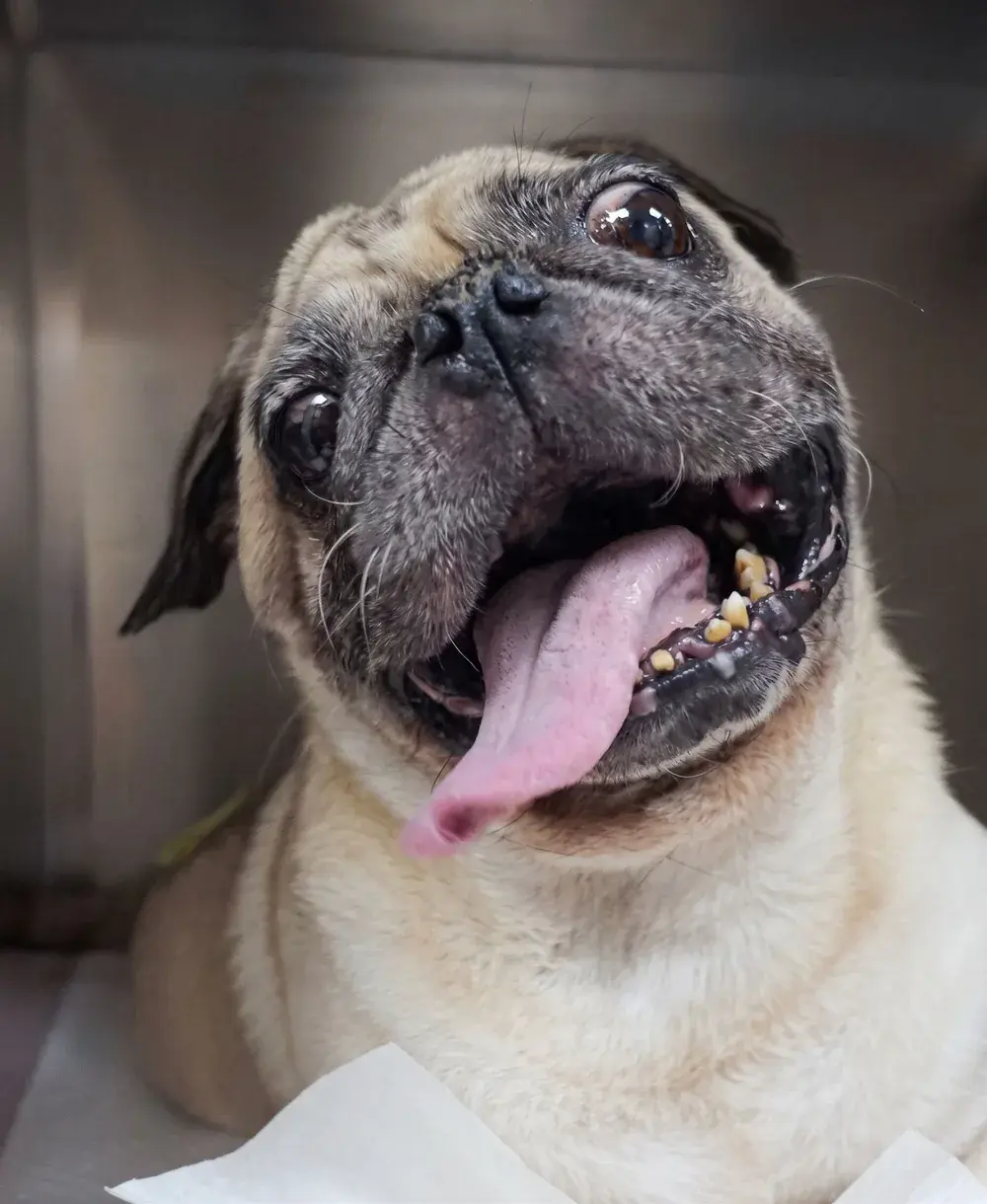
Middle ear infections usually need a deeper clean, often under sedation or anesthesia, and a longer course of medication than outer-ear infections, and sometimes imaging to see behind the eardrum. A head tilt in an older dog can also come from vestibular disease, which looks similar but has different causes; see vestibular disease in dogs.
Which dogs get ear infections most?
In the 2021 VetCompass study of UK dogs, breed and ear shape were the strongest risk factors:
| Breed | Odds compared with crossbreeds |
|---|---|
| Basset Hound | 5.87 times |
| Chinese Shar Pei | 3.44 times |
| Labradoodle | 2.95 times |
| Beagle | 2.54 times |
| Golden Retriever | 2.23 times |
| Chihuahua | 0.20 times (lower) |
| Border Collie | 0.34 times (lower) |
Breeds with pendulous ears had 1.76 times and breeds with V-shaped drop ears had 1.84 times the odds of breeds with upright ears. Designer crosses as a group had 1.63 times the odds of crossbreeds. A separate UK study of Labradors listed otitis externa among the three most common disorders in the breed, next to obesity and joint disease.
What causes dog ear infections?
Vets think of ear infections in layers:
- The trigger. Something inflames the canal first. Allergies (environmental allergies and food allergies) are the most common trigger, which is why itchy ears so often come with itchy paws and skin. Other triggers are ear mites (more common in puppies), grass seeds or other foreign bodies, and in older dogs hormone disease such as hypothyroidism, or a polyp or tumor in the canal.
- The ear itself. Floppy ears, narrow canals and hairy canals hold warmth and moisture.
- The infection. Once the canal is inflamed, yeast (Malassezia) and bacteria that normally live on the skin overgrow. Long-standing cases can involve Pseudomonas, a bacterium that is harder to treat.
Water is a factor too: dogs that swim or are bathed often get more ear trouble if the ears are not dried.
A small-animal vet Morty has known for years, who asked us not to use their name, says skin disease is what they see most in clinic. Ear infections are often part of the same story: a dog with itchy, inflamed skin tends to have itchy, inflamed ears. See dog itchy skin for the skin side.
How vets treat ear infections
- Look and test. The vet checks the canal and eardrum with an otoscope and takes a swab to look at under the microscope (ear cytology). This shows whether yeast, bacteria or both are present, which decides the drug.
- Clean. A medicated ear cleaner removes wax and debris so the drops reach the skin. A very painful ear may be cleaned under sedation.
- Medicate. Most dogs get prescription ear drops that combine an antifungal, an antibacterial and an anti-inflammatory. Some vets place a long-acting gel in the clinic so you do not have to give drops at home. Severe swelling may need tablets as well.
- Recheck. A recheck at about 2 weeks confirms the infection has cleared, not just that the dog seems better. Stopping drops early is a common reason infections return.
- Treat the trigger. If ear infections keep coming back, the vet will look for allergy, hormone disease or a growth in the canal.
Chronic, untreated infections thicken and narrow the canal until it can close off. At that stage the only fix is major surgery to remove the canal, so early treatment matters.
Home care: what helps and what to skip
Helps:
- Clean the way your vet shows you. Fill the canal with a dog ear cleaner, massage the base of the ear for 20 to 30 seconds, let your dog shake, then wipe the outer ear with cotton wool.
- Dry the ears after swimming and bathing.
- Check weekly if your dog is a predisposed breed: look, sniff and note any redness early.
- Treat itch at the root. If your dog has allergies, ear flare-ups usually follow skin flare-ups.
Skip:
- Cotton buds deep in the canal. They push debris down against the eardrum.
- Hydrogen peroxide, vinegar, alcohol or essential oils in an inflamed ear. They sting broken skin, and some are harmful if the eardrum is damaged.
- Leftover drops from a previous infection. The bug may be different this time, and some drops are unsafe with a ruptured eardrum.
Ear infections in older dogs
Senior dogs get ear infections for the same reasons as younger dogs, but a first ear infection in an older dog, or one that suddenly stops responding to treatment, deserves a closer look. Polyps, tumors in the canal and hypothyroidism become more common with age; see hypothyroidism in dogs. Older dogs also hide pain well, so a dog that stops wanting its head stroked may have sore ears rather than a grumpy mood.
FAQ
What does a dog ear infection look like?
The inside of the ear flap and the canal look red and swollen, there is brown, yellow or black discharge, and the ear often smells. The dog shakes its head and scratches the ear.
Will a dog ear infection go away on its own?
Mild redness from a one-off irritation can settle, but a true infection with yeast or bacteria usually gets worse without treatment and can spread to the middle ear. Ear infections are painful, so it is worth a vet visit.
How can I treat my dog's ear infection at home?
You can clean and dry the ears and stop your dog from scratching, but an active infection needs prescription drops chosen after a swab. Do not put peroxide, vinegar or oils in an inflamed ear.
Why does my dog keep getting ear infections?
Recurring infections almost always have a trigger underneath: most often allergies, sometimes ear shape, swimming, a growth in the canal or hormone disease. Treating the trigger is what stops the cycle.
Why is my dog tilting its head?
A head tilt that does not go away usually means the middle or inner ear is involved, either from an ear infection that has spread or from vestibular disease, which is common in older dogs. Both need a vet visit.
Which dog breeds get the most ear infections?
In a large UK study, Basset Hounds, Chinese Shar Peis, Labradoodles, Beagles and Golden Retrievers had the highest odds. Breeds with floppy or V-shaped ears were affected more than breeds with upright ears.
References
- O'Neill DG, et al. Frequency and predisposing factors for canine otitis externa in the UK: a primary veterinary care epidemiological view. Canine Medicine and Genetics, 2021. https://pubmed.ncbi.nlm.nih.gov/34488894/
- McGreevy PD, et al. Labrador retrievers under primary veterinary care in the UK: demography, mortality and disorders. Canine Genetics and Epidemiology, 2018. https://pubmed.ncbi.nlm.nih.gov/30377534/
- Merck Veterinary Manual, Dog Owners. Ear Infections and Otitis Externa in Dogs. https://www.merckvetmanual.com/dog-owners/ear-disorders-of-dogs/ear-infections-and-otitis-externa-in-dogs
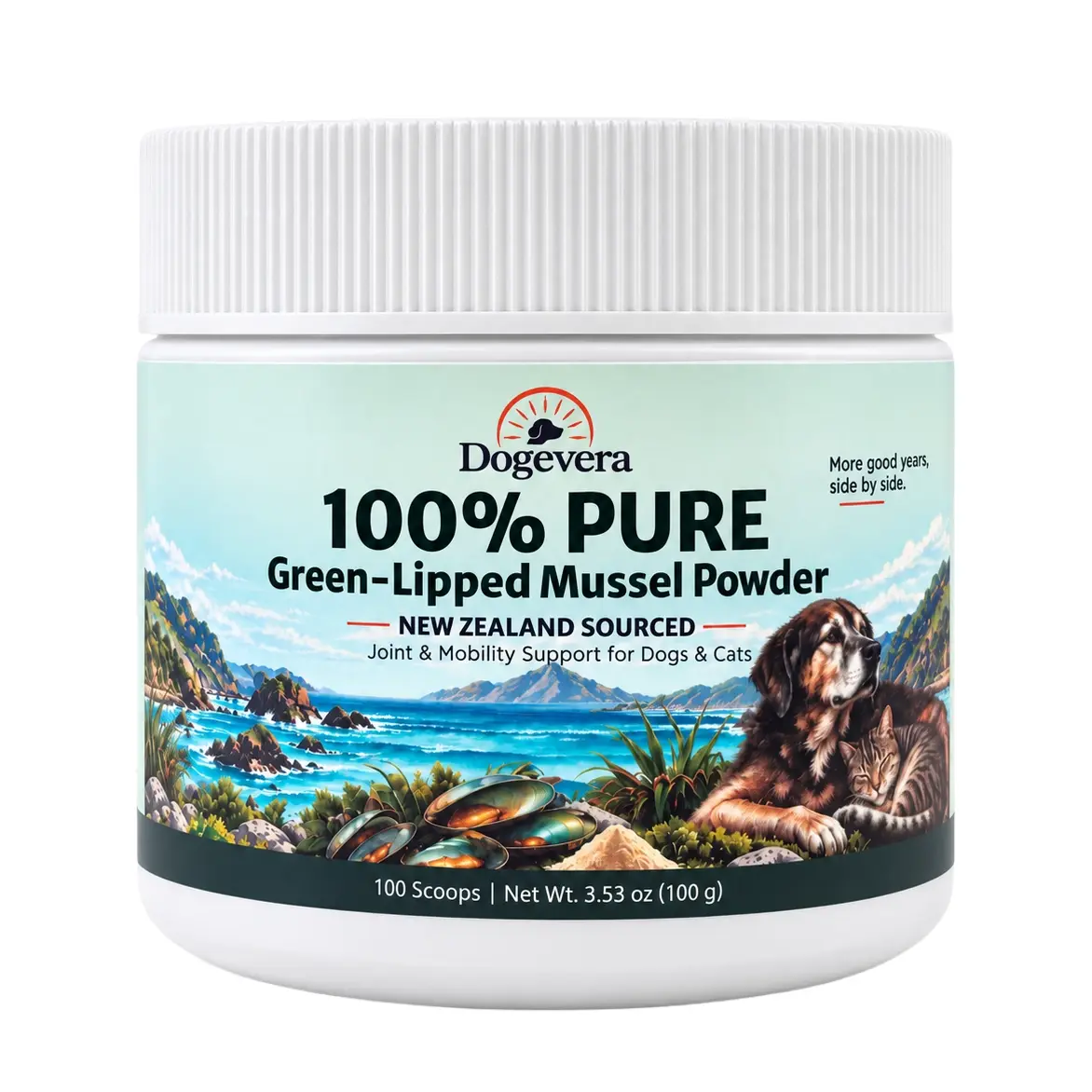
Put this into practice
Daily joint support for senior dogs
100% New Zealand Green-Lipped Mussel Powder for Dogs4.5142 reviews
- 100% New Zealand green-lipped mussel. No fillers, no blends.
- Naturally rich in ETA omega-3s and GAGs for hips and joints
- One scoop on food, dosed by your dog’s weight
Black Friday40% off your first subscription order
Free shipping · 100-day money-back guarantee